Seriously, nothing good will come out of this, save a bit of schadenfreude. It will only enrage the far right even more and replacements will be found. Just like the daft idea of shooting Trump. He survived and made the most of it propaganda-wise. I am completely opposed to any idea of assassination of our opponents.
Let’s wait to see the results of the police investigation. At the time of writing no definitive evidence is in the public domain about the identity of the assassin.
Paul Murphy TD (Dublin South-West, People Before Profit) has issued a deeply mistaken public response, consistent with his party’s previously stated opposition to any military anti-imperialist solidarity action in support of the Ukrainian masses’ fight against a genocidal Russian invasion. Source :
Remember when Micheal Martin called us puppets of Putin?
That was because I was asking for guarantee that Irish soldiers would only be involved in de-mining training.
In light of today's news that they are providing weapons training, his outburst makes a lot more sense. pic.twitter.com/xUK3c4yRwf
This is a grim PBP Left-Evasionist chapter, part of the shocking story: failure to show anti-imperialist solidarity with the masses of Ukraine who are resisting a genocidal Russian invasion.
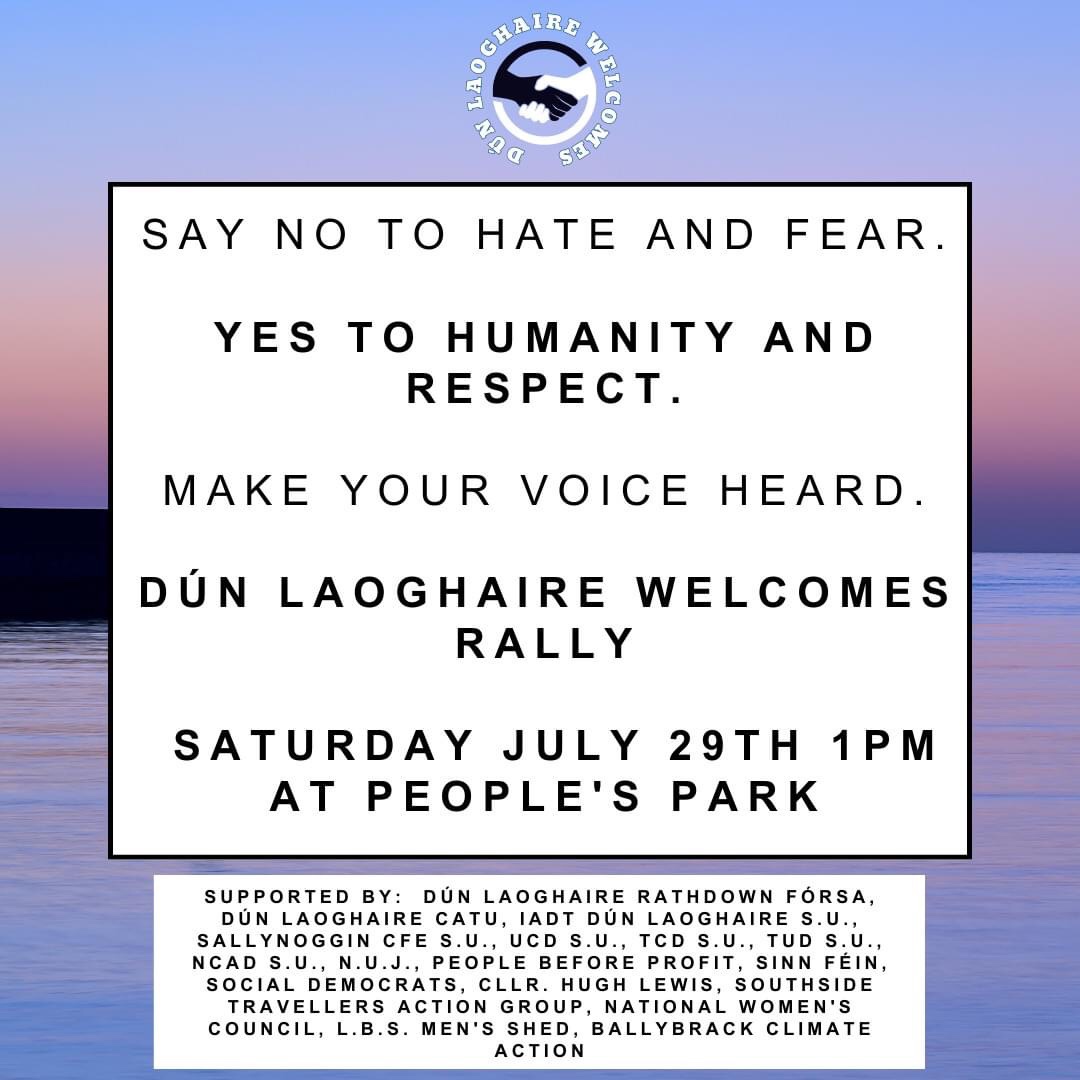
On July 29 2023 the PBP helped to organise a well-supported anti-racist rally in Dún Laoghaire, a town which proudly hosts a magnificent statue honouring the Irish anti-imperialist gun-runner and human rights activist Roger Casement.
PBP speakers drew attention to the many reasons we honour Casement today : but they overlooked a vital fact : this Easter 1916 rebel imported weapons from Kaiser Wilhelm’s German Empire in order to strike a blow against the then mighty British Empire.
Suzi Weissman drew our attention to the tribute below, written by Olivia Gall :
Today Adolfo Gilly, a great among the great historians of the revolution and the post-revolution in Mexico, passed away. Our beloved teacher has also gone. The first time I took class with Gilly was when he came to Mexico from Italy to give some classes at UNAM, before the Mexican government decided to grant him naturalization. The Faculty of Economics class was crowded. Every time he referred to something very critical about Mexican politics he told us “if I say this they’re going to apply the 33″…….. but, he laughed, “there they go.” Later I attended, over several semesters, his Seminar on the History of the Mexican Revolution at the postgraduate degree of the FCPYS. Adolfo was a great teacher, perhaps the best of all the teachers I had back then and ever had. Today also left Gilly my mentor, who accompanied the process of my doctoral research on Trotsky in Mexico very closely. I was fortunate to have his wisdom, his irremediably critical spirit, his ironic gaze, his strong passion for history and politics, his rigorous opinions, his scorn, and his relentless recommendations and warnings. Years later, when Adolfo was talking about Friedrich Katz, he referred to him as “my Katz commander.” Last time I saw him I mentioned his Argentinian origin. He reprimanded me: “Argentinian me? Ain’t no way I’m Mexican! ” Dear Adolfo, we’ll miss you a lot, we’ll always miss you.
Adolfo Gilly in Dublin, September 1979
On August 27 1979, on the same day:
The IRA killed 18 members of the British paratroop regiment at Narrow Water County Down
The IRA killed a British Royal Family member Lord Mountbatten, in Sligo.
A tsunami of ruling class condemnation blitzed across the world’s media. Pope John Paul II joined the chorus. The Narrow Water ambush was not universally unpopular in Ireland.
Left Wing Political Parties from Denmark, Sweden, Finland and Norway show leadership. Political parties in Ireland which identify with the left should adopt a similar policy.
We, the undersigned representatives of the Nordic green left, declare our solidarity with the rightful resistance of the Ukrainian people and emphasise the sole responsibility of the Russian regime for initiating this illegal invasion, escalating it to the point of risking nuclear war, and provoking global re-armament.
We deeply condemn violations of international law and illegal occupations, regardless of whose imperialist ambitions they serve.
To end the war, we demand a complete and immediate withdrawal of the Russian armed forces from all Ukrainian territory. We welcome anti-war resistance and democratic opposition in Russia and Belarus as integral elements of the struggle for peace in the region.
This excellent statement diagnoses a political blight – False Pacifism – which has entered the bloodstream of significant parts of the Irish left and trade union movement. We are dealing with an international phenomenon :
May Day is not only International Workers’ Day but also a day of solidarity with the oppressed peoples and civil disobedience against war. For example, one can remember the 1971 May Day protests against US imperialist aggression in Vietnam in Washington. During that time, the antiwar movement’s stance was clear: halt the war, complete the withdrawal of American troops, and support the right of the Vietnamese people to self-determination. Nowadays the Left is also leaning toward pacifism but its present iteration is much more ambivalent. While it still highlights issues of American imperialism, the prevention of nuclear war, and condemns militarization and war as means of resolving conflicts, it faces challenges in precisely identifying the aggressor and exhibits a willingness to tolerate Russia’s annexation of Ukrainian territory and the continued presence of Russian troops there. Thus this version of pacifism is deprived of real solidarity with the oppressed peoples.
Why do Marxists defend the right of nations to self-determination? What does the struggle for national liberation have to do with the workers’ struggle? Social researcher Grusha Gilaeva analyzes the positions of Marx and Lenin on the national question and explains why the left movement must support the anti-colonial struggle of Ukraine
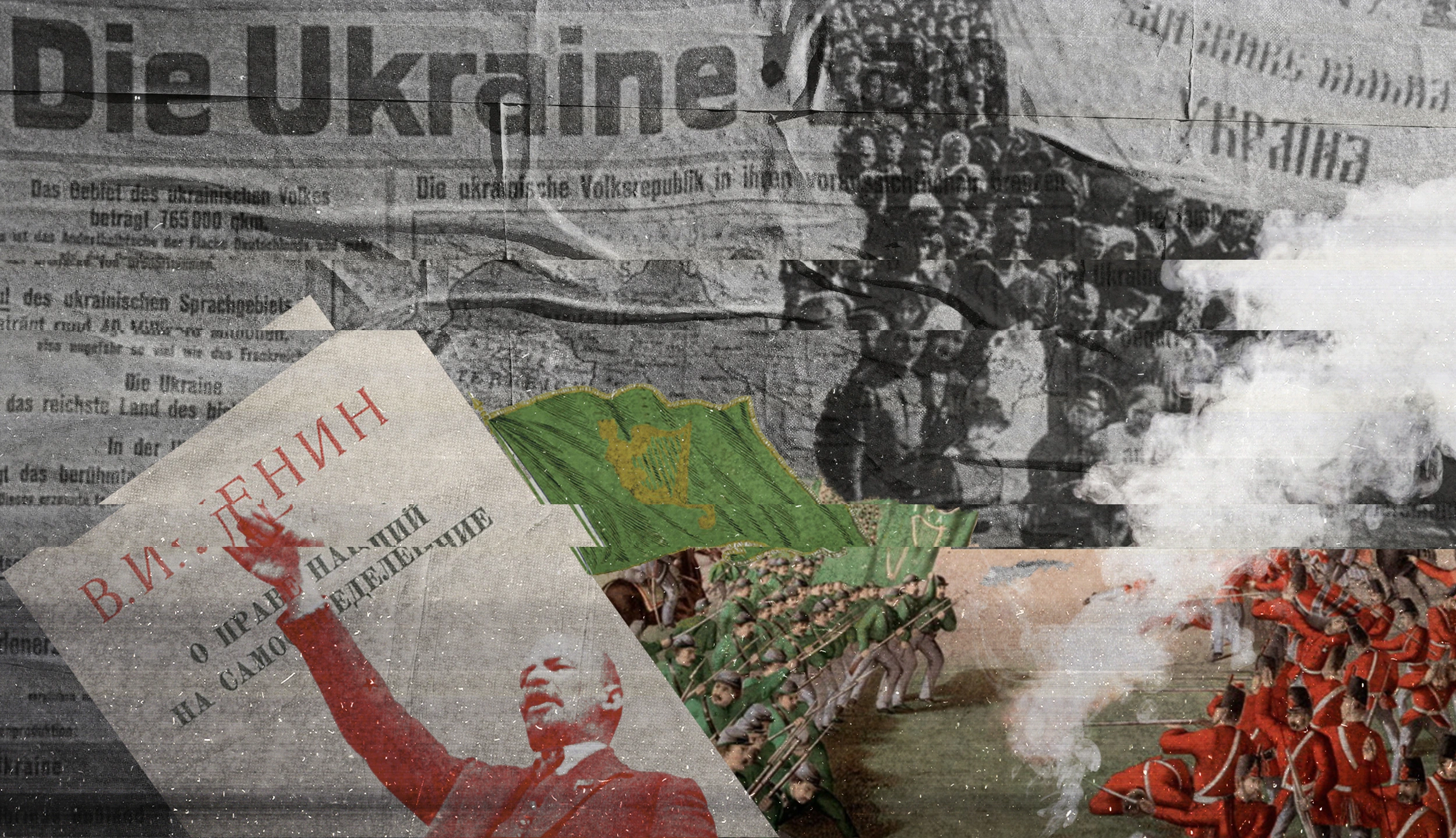
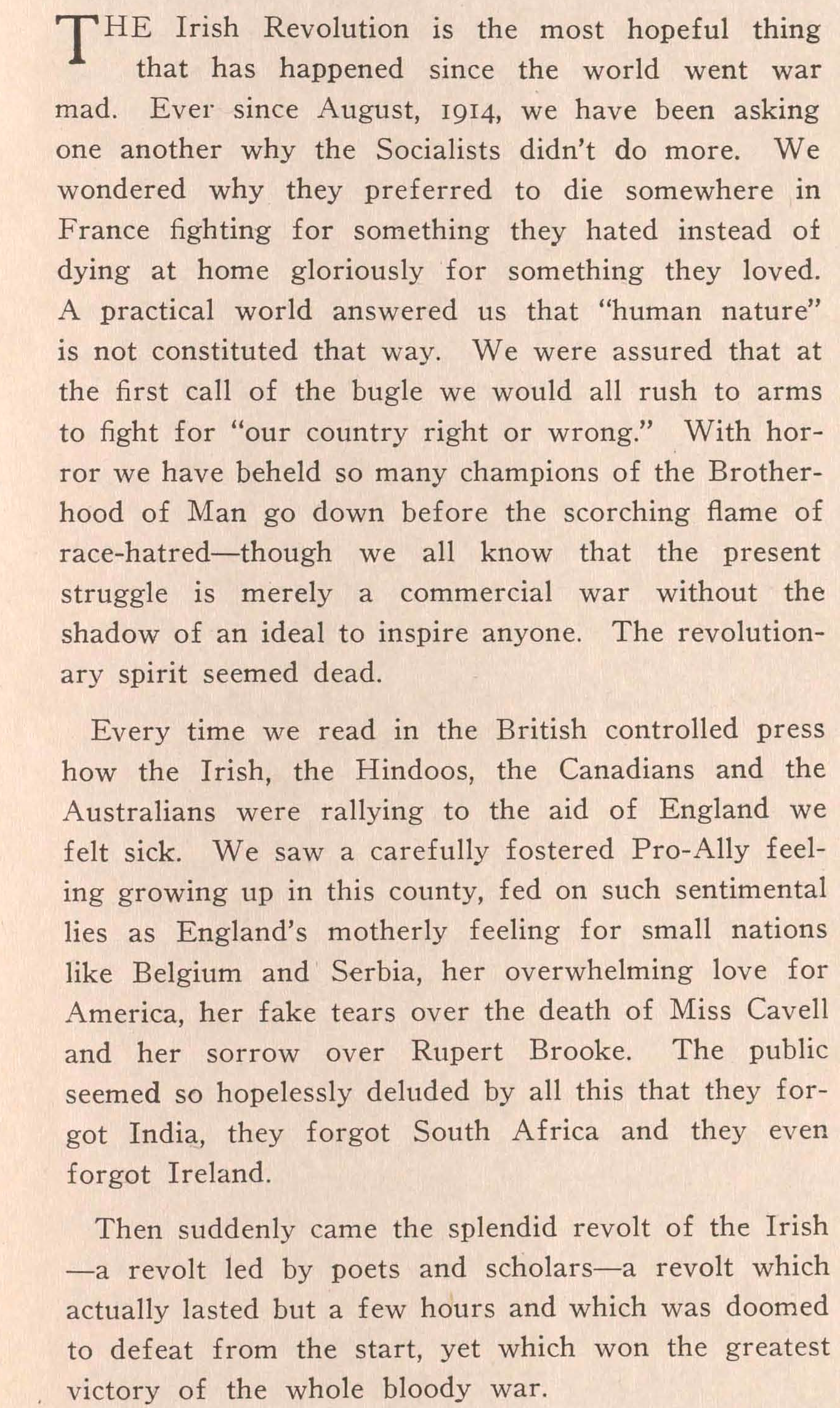
Grusha Gilaveva’s fascinating article comes from the Russian left-wing publication Posle. Gilaveva argues, in a very convincing manner, that Marx and Engels started out in the 1840’s opposing the rights of small nations to self-determination – inspired by a blanket opposition to all nationalism – but changed their policy after 1867. Marx and Engels were heavily influenced by Ireland’s struggle for liberation from the British Empire, and the Phoenix like rise and fall of the Irish Republican Brotherhood (IRB), the Fenians. Policy divisions on the question of self-determination for small nations continued within the Marxist second and third internationals in the twentieth century. Bolshevik leader Vladimir Ilyich Lenin championed a policy favouring the rights of small nations and nationalities – and was opposed by revolutionary comrades such as Karl Radek and Rosa Luxemburg. Once again Ireland featured strongly in the debate among revolutionary Marxists. The Easter 1916 Rising in Dublin, although it was militarily crushed by British artillery, inspired socialists all over the globe who were fighting against the barbaric World War 1. The impact was brilliantly described by the famous North American feminist revolutionary Louise Bryant in “The Masses”, published in July 1916. “The Masses” can be accessed here : https://www.marxists.org/history/usa/pubs/masses/index.htm
Louise Bryant Describes the Global Impact of the 1916 Rising in Ireland
An alliance between the descendants of the IRB (the Irish Volunteers led by Pádraig Pearse) and a brand-new working class actor fighting for Irish Freedom, James Connolly’s Irish Citizen Army (ICA), inflicted devastating wounds on the most powerful empire the world had ever seen in those early years of the 20th century.
The 1917 Russian Bolshevik Revolution began to go badly wrong in the 1920’s. An early sign that all was not well was Great Russian chauvinist suppression of smaller nations such as Ukraine. We live with and suffer from terrible consequences today. We cannot change history, but we can learn from it.
Why do Marxists defend the right of nations to self-determination? What does the struggle for national liberation have to do with the workers’ struggle? Social researcher Grusha Gilaeva analyzes the positions of Marx and Lenin on the national question and explains why the left movement must support the anti-colonial struggle of Ukraine
Ukrainian Socialist Yuliya Yurchenko to speak at Solidarity Meeting in Dublin :
Ukrainian socialist and academic, Yuliya Yurchenko, speaks at a public meeting ‘Ireland – Ukraine International Solidarity of the Left’ in Dublin on Monday November 21.
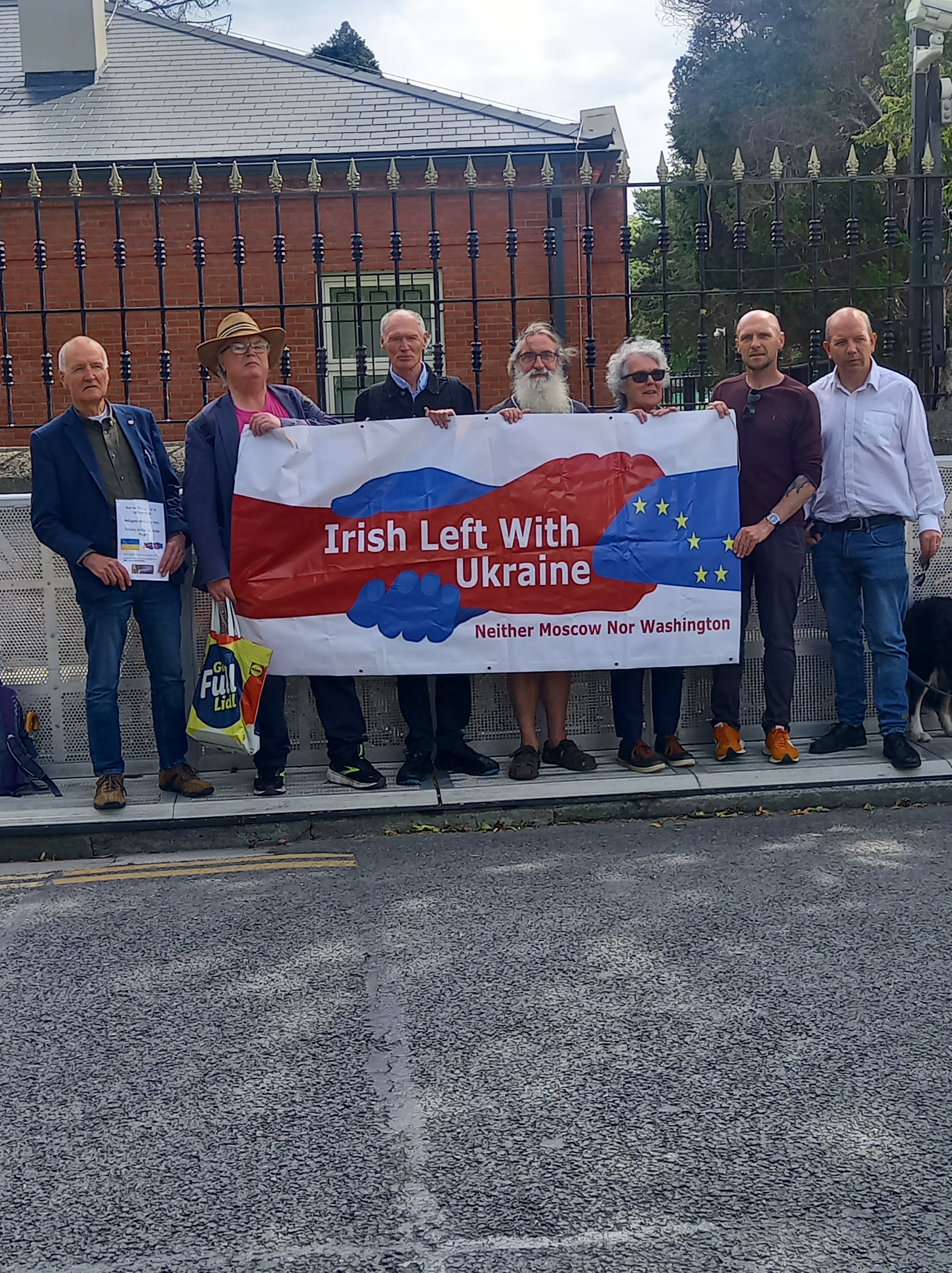
The meeting is organised by Irish Left With Ukraine, which says that the purpose of the meeting is to extend solidarity to the Ukrainian people as they continue to resist the Russian invasion of their country – and to amplify the voices of Ukrainian socialists and trade unionists.
This blog is named after Tomás Ó Flatharta, the first known Irish supporter of the 1920’s Left Opposition which opposed the policies pursued by the Russian Bolshevik government headed by Josef Stalin. Ó Flatharta was a prolific writer, and wrote this fascinating article previewing the partition of Ireland in December 2021. Ó Flatharta looks at “official” Irish-American support for Ireland’s cause, and points out its limitations and hypocrisies. He endorses the policies pursued by the revolutionary marxist James Connolly, a leader of Ireland’s Easter 1916 Rising who was executed by the British imperialists.
Here is a flavour of Ó Flatharta’s analysis, which has a lot of contemporary relevance.
When Connolly led the revolt in Dublin in 1916 some of his comrades in other countries did not understand why he lined up with the Nationalist elements. They claimed that Connolly. lost his original Marxian purity. These elements could not see in the revolutionary opportunism of Connolly the tactic that is today the guiding star of every revolutionary party in the world. Connolly’s idea was to mobilize all the available discontent in Ireland and hurl it at the enemy. Out of the inevitable sacrifice which the Easter Week Revolution entailed would spring a new movement inspired by the example of the martyrs of Easter Week. Connolly knew quite well that national independence alone would never give Ireland independence until the Empire was overthrown, therefore every move made to overthrow the Empire tended to bring about the inevitable revolution. The Citizen Army composed of members of the Trade Unions was pledged not alone to strike for Irish freedom but for the Workers’ Republic. The Nationalist Volunteers had a certain contempt for the men of the citizen army. The former were carried away with their hostility to England into a feeling of sympathy with Germany. The citizen army, however, was just as much opposed to the Kaiser as to King Gorge and hung over its headquarters the banner with the inscription “We serve neither King nor Kaiser.”
When Eoin MacNaill, the leader of the Nationalist Volunteers, issued the countermanding order which kept the full force of the members of that body from participating in the Easter Week revolution, Connolly called out his citizen army. The army of the workers was the backbone of the rising and according to Seamus MacManus in his “Story of the Irish Race,” it was Connolly’s insistence on making a fight that ultimately carried the motion for the insurrection. But since Easter Week Irish labor has been relegated to obscurity and the Irish middle class have been given credit on American platforms and in the Irish journals for the great struggle that has been carried on against British tyranny.
The same issue arises in the Irish state – like Sweden, a member of the European Union, which is under pressure to draw down a new Iron Curtain partitioning the European continent.
See Also, from the European Network for Dolidarity With Ukraine :
Open the borders for Russians refusing military service!
In a situation already tragic beyond the imagination, banning Russian draft dodgers would only add to the tragedy in Europe.
An iron curtain is descending across Europe. But in contrast to the beginning of the Cold War, the curtain is being drawn down by EU countries – not Russia.
Any day now, Finland is poised to ban Russians from entering the country on tourist visas, to keep out men who want to avoid being drafted to fight in Ukraine. Announcing the policy, the country’s foreign minister said Finland was becoming “a transit country for Russians who want to leave their homeland for fear of being forced into war, and this traffic could harm Finland’s international position”. Opinion polls put 70 percent of the public in favour of a ban.
A correspondent, Mary Scully, explains an important difference.
Wonder why so many demand Ukraine negotiate surrender when it would be absolutely unthinkable to propose the same to Palestinians, Kashmiris, Rohingya & amoral to pressure them to reach an accommodation with their oppressors over their human, democratic, & national liberation rights? As Ghassan says, he has never seen such talks between a colonialist power & a national liberation movement. Under a different leadership, when Palestinians did sit down & talk with Israel & the US, it ended up with the Oslo Accords legitimizing occupation & expropriation & justifying genocide. It turned the Palestinian leadership against their own people. That’s what Ghassan meant about a ‘conversation between the sword & the neck’.
Lastly, we wonder how those who demand Ukrainians negotiate the terms of their surrender to Russia feel about holding the exact same position as Henry Kissinger? Do they believe that the Dr. Strangelove of international mass murder actually has peace & the best interests of the Ukrainian people in mind? Will they ask him to speak at their lilliputian rallies against that NATO proxy war?
Above all in politics, listen to the voices of resistance & human liberation like Ghassan Kanafani & Maqbool Bhat & shout down the monsters of war like Kissinger.
“You don’t mean exactly peace talks”
A correspondent, writing for the Cedar Lounge Revolution (CLR) Blog, dismisses shallow blather in Ireland and abroad following the publication of a Sabina Coyne-Higgins letter calling for a negotiated end to the Russian invasion of Ukraine. The CLR author points out that little effort has been made to engage with what was actually said.







 Tomás Ó Flatharta