Archive for the ‘Vladimir Ilyich Lenin’ Category
From Ukraine, Galina Rymbu’s Open Letter to Westminster MP Zarah Sultana – a feminist, anarchist and poet delivers a personal and political address to a leader of the British “Your party”
A feminist, anarchist, and poet living in Ukraine delivers a personal and political address to the leader of Your Party, inviting reflection on what contemporary anti-fascism and genuine strategies of solidarity with the oppressed might look like.
Link :
About Galina Rymbu :
Galina Rymbu’s poems employ history as a discursive tool to understand the present—stories of revolution, movement in time and space, life, and livelihood emerge. Rymbu seeks a radical feminist and leftist poetics that does not condescend to the oppressed, but rather embraces the complexity of every emotion and political position, and of language itself. She opens her poetry to the violence of propaganda, biopolitical manipulation, ideological pressures, as well as the violence of personal intimacy. Life in Space is Rymbu’s first full-length collection in English translation and includes poems selected from her three books as well as more recent work.

Dear Zarah,
Recently, several journalists and left-wing activists reached out to me asking for a comment on your position regarding the suspension of political and military support for the Ukrainian people. Whilst reflecting on how to respond, I decided to write you a personal letter instead. As a leftist and feminist activist from Russia who has been living in Ukraine for the past eight years, this seemed more appropriate than offering a dry neutral comment.
I am addressing you personally also because I see how people like you — those who appear on the global political stage — become a source of hope for many of the oppressed, whose voices and cries are still being drowned out by the speeches of dictators and the “pragmatic” calculations of capitalists who prefer to continue doing their dirty, bloody business with them.
For many younger generations of leftist activists, your name is associated with a promise of future and progress, as so many are tired of politics being made behind the closed doors of elite “men’s clubs,” to which we will never be invited. I know how important this is for my comrades in the UK, and during my visit to London on the eve of the pandemic, we spoke a lot about it —reading political poetry in squats and arguing in small bars about the future of our planet.
From birth until the age of 27, I lived in Russia. I grew up in Western Siberia, in the workers’ settlement of Chkalovsky in the city of Omsk, in a poor working-class family of mixed Moldovan, Romanian, and Ukrainian descent. We lived below the poverty line; we didn’t even have money to pay for electricity, so our home was often dark and without food. My parents still live in Chkalovsky, in a place that successful Europeans would probably call “the social bottom.” My friends, classmates, and lovers still live there. I am now 35, and I am still poor. I remain connected to my class and to the people who are losing their minds in this “prison of nations.” Since childhood, I have faced multiple forms of discrimination and persecution based on my ethnicity—simply because of my name, surname, and appearance. Later, I lived in Moscow and St. Petersburg, where I studied literature and then turned to research in the “philosophy of war,” seeking to understand the foundations of the idea of transforming an “imperialist war into a civil one” (a development best traced in Lenin’s Clausewitz Notebook). [1]
Read the rest of this entry »Conspiracy, Proxy War and the Ghost of Stalinism
We wish to thank Ashley Smith for drawing our attention to this article by Tony McKenna, Counterpunch, March 11 2025.
Link :
Conspiracy Proxy War and the Ghost of Stalinism
In the conflict between Soviet Russia with Joseph Stalin at its head and Nazi Germany, I would have supported Soviet Russia. I suppose you could argue that might make me some kind of Stalinist. After all, I would have been supporting the Stalinist government. Not only that, I may even have hoped the US might provide it with funding to continue to organise its military effort, so you could probably label me an American stooge too. (in fact, the US did supply Soviet Russia with millions of tonnes of food, weapons and equipment during the Second World War).
But a distinction should be made. What one is supporting most fundamentally in this case is not Stalinism but rather the struggles of the Russian people themselves,[1] their imperilled freedoms at the hands of a brutal, barbaric foreign invasion. People fighting and dying – not because they had some great love for Stalin – but because they didn’t want to be bombed and maimed and killed at the hands of a foreign power. Because they didn’t want to live their day-to-day lives under the shadow of foreign occupation.
Of course, one could ignore all this. One could assert, for instance, that the Russian population were simply being manipulated in the interests of the Stalinist government (and vicariously the US itself) and, therefore, it was Stalinism and the US government who were the true objects of international support. Certainly, the defeat of Germany did bolster the imperial power of the US and Russia. But were the millions of Russians who fought and died against fascism – were those lives merely the ‘proxies’ of the interests of Stalin and the United States government who supported him?
Such an assertion most would find obscene. It is obscene because it involves the annihilation of a living content – the struggles and sacrifice of millions of people fighting for their concrete freedoms – in favour of the interests and relationships of a set of given states and governments considered in empty and schematic isolation.
For similar reasons, I support the right of the Ukrainian people to resist foreign occupation. As a necessary corollary, I also support the means by which they might do so – even if that means receiving funding and ammunition from the US and NATO (though if you can suggest some other alternative beyond capitulation at the point of a Russian gun, I really am all ears).
But none of this is the same as saying I support Zelensky, or that I support the US and NATO. At the most basic philosophical level, it simply means to recognise that freedom – as Kant put it – is ‘an end in itself’. It has an objective and social reality whether or not the arms the freedom fighters take up are provided by this particular imperial power or that one. Likewise, freedom has an objective reality whether or not it is being menaced by Russian bombs or Israeli bombs or Nazi bombs.
Read the rest of this entry »Rosa Luxemburg – “one of the most brilliant minds ever drawn to the socialist movement” – Plus Leninist Days – 100 Years Without Him, 100 Years With Him CIEN AÑOS SIN LENIN – CIEN AÑOS CON ÉL
We thank Paul Le Blanc for advertising this series of valuable online meetings.
More about Paul Le Blanc : Paul Le Blanc has for many years been a teacher and activist in Pittsburgh. His writings include “Lenin and the Revolutionary Party” and “A Short History of the US Working Class”. Source ; https://internationalviewpoint.org/spip.php?auteur181
Socialism or Barbarism – Why Rosa Luxemburg Matters Today
With Paul Le Blanc & Helen Scott, co-editors of the acclaimed Rosa Luxemburg: Socialism or Barbarism collection of writings. Rosa Luxemburg was one of the most brilliant minds ever drawn to the socialist movement – an outstanding theorist & a political activist. This forum will look at the relevance of her ideas for transforming a world in crisis today – & how her work was broad in scope tackling capitalism and socialism; globalisation & imperialism; war and peace; social struggles, unions & parties; class, gender, race; the interconnection of humanity with the environment & more. Part of the Socialist Ideas Series – presented by Arise – a Festival of Left Ideas & Labour Outlook.
Why Rosa Luxemburg Matters Today

LENINIST DAYS / JORNADAS LENINISTAS
Read the rest of this entry »Making sense of Russia’s invasion of Ukraine – Paul Le Blanc “I favour the defeat of Vladimir Putin’s invasion and victory for Ukrainian self-determination”
We wish to thank Dick Nichols, European Editor of the Australian Magazine Green Left Weekly, who drew our attention to an important article on Russia’s Invasion of Ukraine, written by the well-known Marxist scholar and historian Paul Le Blanc.
The author takes the side of Ukraine Against Russia :
- I favour the defeat of Vladimir Putin’s invasion and victory for Ukrainian self-determination.
- I oppose imperialism in all its forms – including Putin’s invasion and NATO.
- I oppose capitalism and favour its replacement with the genuine political and economic democracy of socialism everywhere: the United States, Ukraine, Russia etc.
More about the author here : “Paul Le Blanc (born 1947) is an American historian at La Roche University in Pittsburgh as well as labor and socialist activist who has written or edited more than 30 books on topics such as Leon Trotsky and Rosa Luxemburg.[1][2] https://en.wikipedia.org/wiki/Paul_Le_Blanc_(historian)
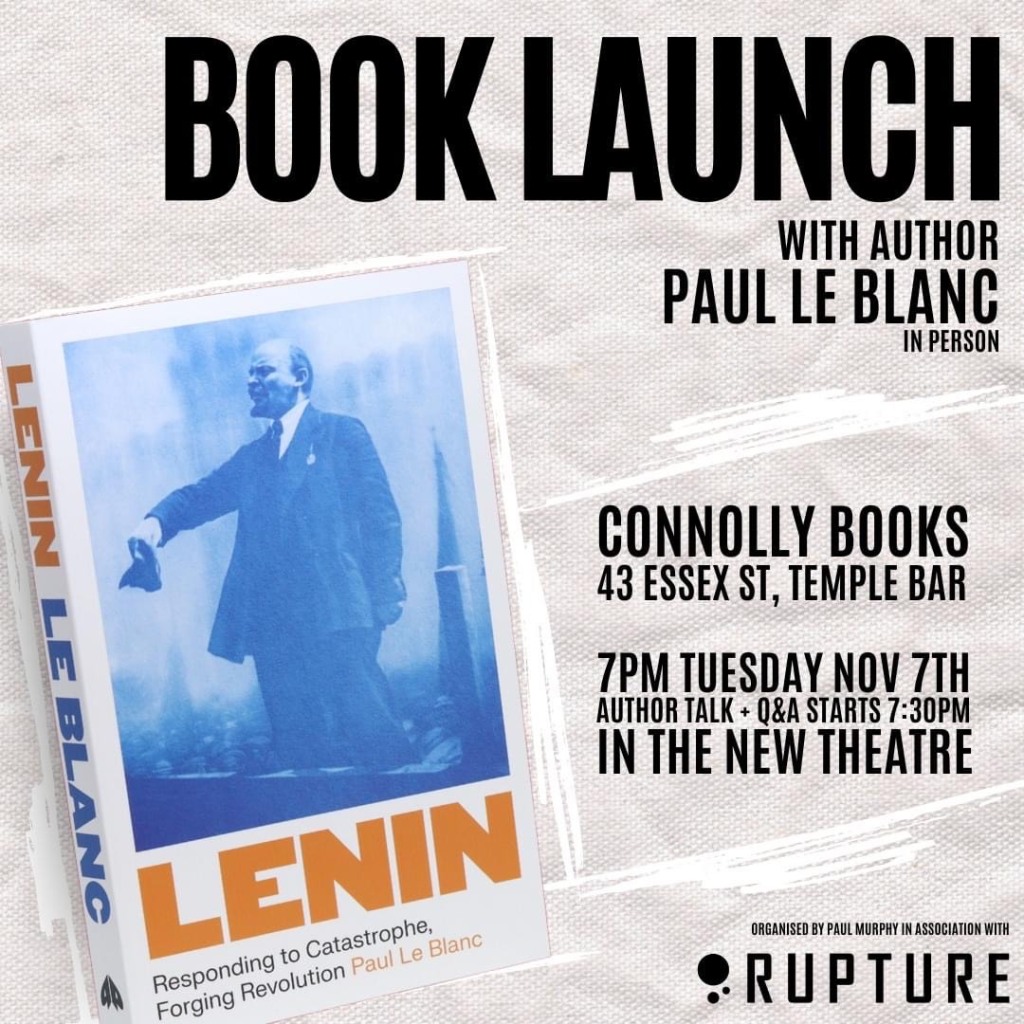
Paul Le Blanc launches his new book, in person, on November 7 2023 in Dublin
Making sense of Russia’s invasion of Ukraine
6 October, 2023

A momentous development has drawn my attention away from the unfolding climate catastrophe on which I have been riveted. Russia’s invasion of Ukraine is a major factor fragmenting the left-wing forces I hoped would become a major force in the revolutionary struggle for climate justice and human survival. Recently, I have met Russians and Ukrainians — and others from Brazil, Argentina and the United States — who have all made it clear to me that I cannot avoid dealing with this issue.1
In this article, I will attempt to do three things:
- Review what some on the left assert either in favour of Russia’s invasion of Ukraine or against the Ukrainian response;
- Review Russian and Ukrainian realities and views on the war; and
- Touch on essential aspects of Ukrainian resistance to Russia’s invasion (including where the weapons come from).
In the footnotes I offer sources that have influenced my analysis and that I believe may be useful for those seeking to make sense of these realities. But I owe it to readers to indicate my own position from the outset. This is my bottom-line:
Read the rest of this entry »Esteban Volkov, Aged 97, Dies in Mexico City – Leon Trotsky’s Grandson Observes : “Capitalism is a complete disaster unable to solve humanity’s problems”
The death of Esteban Volkov, aged 97, in Mexico City :
An American comrade, Suzi Weissman reports :
I just learned that my dear friend Esteban (Sieva) Volkow died today. It is very sad news — I had planned to visit him in January, but my own illness and surgery intervened. I will post more about him in the days to come. Sieva lived his life in the tail of Trotsky’s comet, and what a life!”
Suzi Weissman’s Facebook page

A summary of Esteban Volkov’s life is here :
https://second.wiki/wiki/esteban_volkov
In the interview below Esteban Volkov eloquently describes the assassination of his grandfather Leon Trotsky. He completes the interview explaining his conviction that capitalism “is a complete disaster unable to solve humanity’s problems”
More about Suzi Weissman here :
Did Lenin Сreate Ukraine? On the Right of Nations to Self-Determination and Marxism
Why do Marxists defend the right of nations to self-determination? What does the struggle for national liberation have to do with the workers’ struggle? Social researcher Grusha Gilaeva analyzes the positions of Marx and Lenin on the national question and explains why the left movement must support the anti-colonial struggle of Ukraine
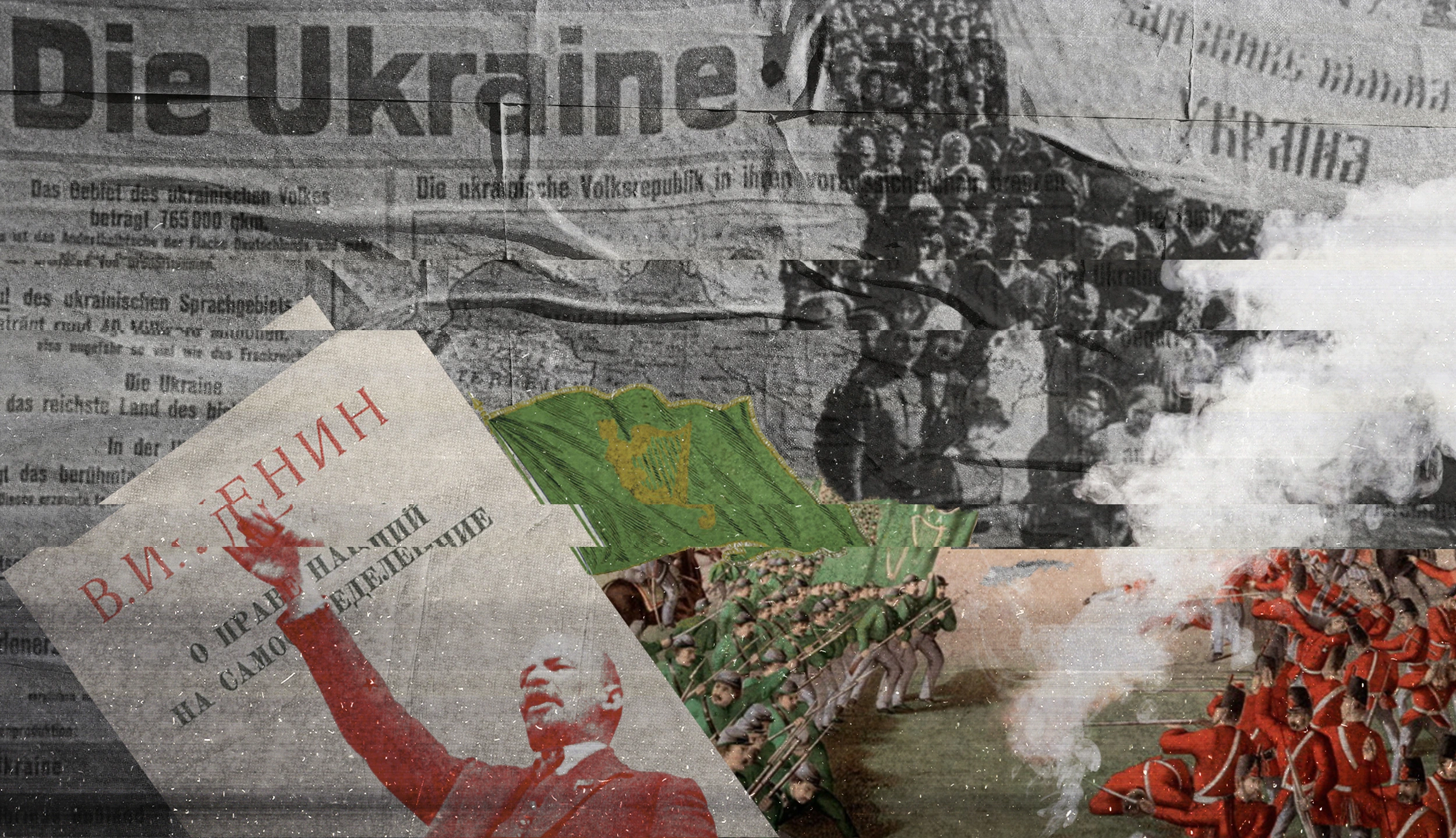

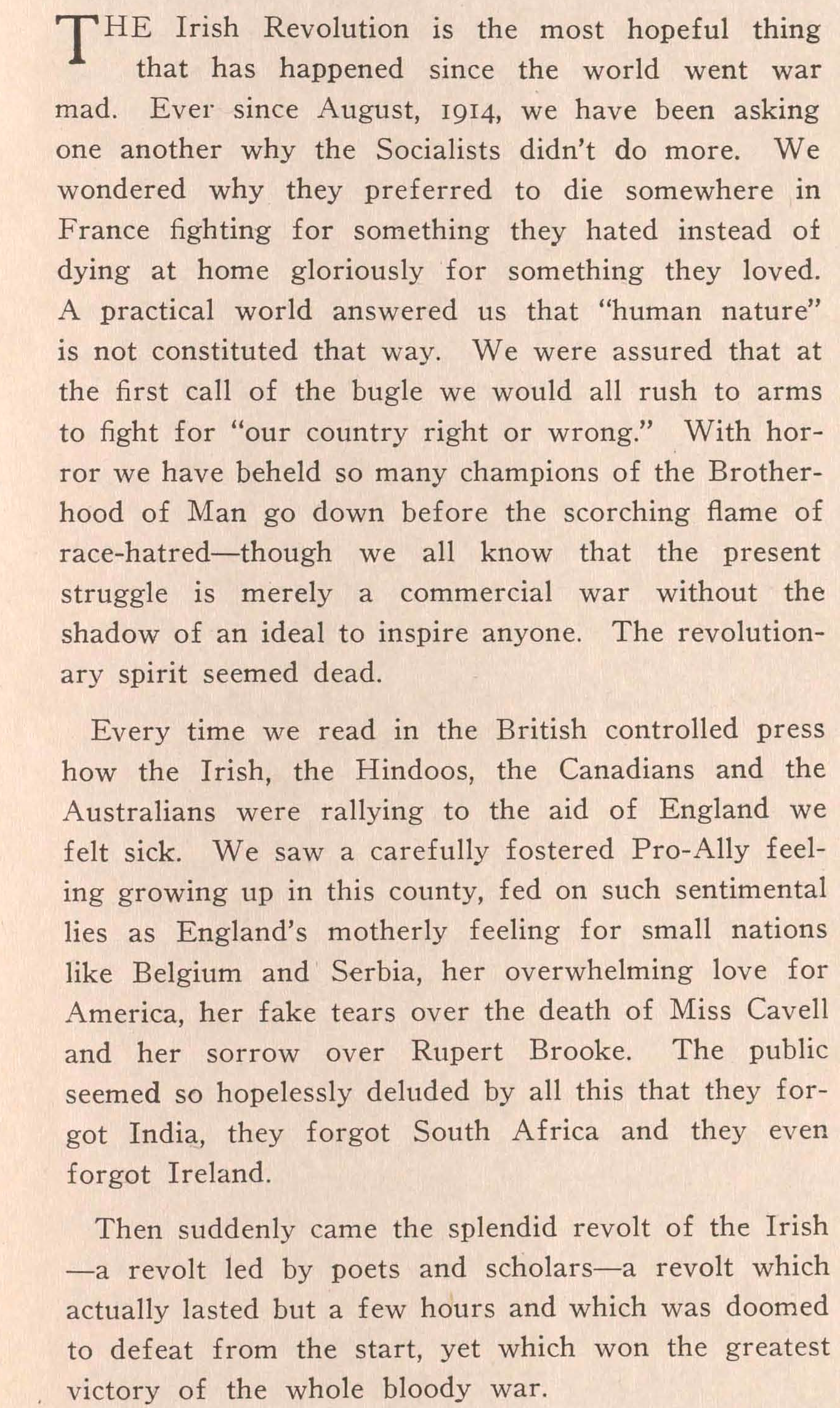
Grusha Gilaveva’s fascinating article comes from the Russian left-wing publication Posle. Gilaveva argues, in a very convincing manner, that Marx and Engels started out in the 1840’s opposing the rights of small nations to self-determination – inspired by a blanket opposition to all nationalism – but changed their policy after 1867. Marx and Engels were heavily influenced by Ireland’s struggle for liberation from the British Empire, and the Phoenix like rise and fall of the Irish Republican Brotherhood (IRB), the Fenians. Policy divisions on the question of self-determination for small nations continued within the Marxist second and third internationals in the twentieth century. Bolshevik leader Vladimir Ilyich Lenin championed a policy favouring the rights of small nations and nationalities – and was opposed by revolutionary comrades such as Karl Radek and Rosa Luxemburg. Once again Ireland featured strongly in the debate among revolutionary Marxists. The Easter 1916 Rising in Dublin, although it was militarily crushed by British artillery, inspired socialists all over the globe who were fighting against the barbaric World War 1. The impact was brilliantly described by the famous North American feminist revolutionary Louise Bryant in “The Masses”, published in July 1916. “The Masses” can be accessed here : https://www.marxists.org/history/usa/pubs/masses/index.htm
An alliance between the descendants of the IRB (the Irish Volunteers led by Pádraig Pearse) and a brand-new working class actor fighting for Irish Freedom, James Connolly’s Irish Citizen Army (ICA), inflicted devastating wounds on the most powerful empire the world had ever seen in those early years of the 20th century.
The 1917 Russian Bolshevik Revolution began to go badly wrong in the 1920’s. An early sign that all was not well was Great Russian chauvinist suppression of smaller nations such as Ukraine. We live with and suffer from terrible consequences today. We cannot change history, but we can learn from it.
John Meehan January 25 2023
Did Lenin Сreate Ukraine? On the Right of Nations to Self-Determination and Marxism
Why do Marxists defend the right of nations to self-determination? What does the struggle for national liberation have to do with the workers’ struggle? Social researcher Grusha Gilaeva analyzes the positions of Marx and Lenin on the national question and explains why the left movement must support the anti-colonial struggle of Ukraine
Read the rest of this entry »“Russian president Vladimir Putin held meetings with the Official IRA during two visits to Belfast in the 1980s.” – Intriguing Report on the Cedar Lounge Blog
Are past events in Ireland a guide to current events?
Source :
Russian president Vladimir Putin held meetings with the Official IRA during two visits to Belfast in the 1980s.
The former KGB intelligence officer was part of two separate delegations from the Soviet Union that visited Ireland in 1986, sources linked to the Official movement have claimed.
On both occasions Mr Putin travelled north where he met with representatives of the republican paramilitary group.
Could it be true?

How about this?
Read the rest of this entry »A 1936 Obituary : The first known Irish Supporter of Trotsky’s Left Opposition – TJ O’Flaherty (Tomás Ó Flatharta) – passed away on Inis Mór ( one of the Aran Islands)

Des Derwin drew our attention to this fascinating obituary.
‘T.J. O’Flaherty Dead’ from New Militant. Vol. 2 No. 22. June 6, 1936.
The New Militant learns with great sorrow of the sudden death in Ireland of comrade T.J. O’Flaherty, an adherent of “Trotskyism” from the first days of the formation of the Left Opposition in the United States and a firm supporter to his dying day of the movement for the Fourth International. On his deathbed all his thoughts and interests were with his comrades in the United States and to the last he had hopes to recover his health and to return to the States to function actively in the movement. He gave full support to the Workers Party of America upon its formation and viewed it as the first step in the process of unification of the genuine revolutionary elements who based themselves on the teachings of Lenin and Trotsky.

His sister, Anna Johnson, in a letter to comrade Martin Abern, writes from the Aran Isles, Ireland:
Letter from His Sister
“You will be surprised to hear that Tom has passed away. He died on May 19 from heart trouble. He came back here on January 15 after 18 months between Dublin and England. He was ill when he got back and got worse every day. You know he always suffered from heart trouble.
Read the rest of this entry »


 Tomás Ó Flatharta