Archive for the ‘Robert Ballagh’s Painting, January the Thirtieth’ Category
Robert Ballagh’s “The Thirtieth of January”: A Bloody Sunday Painting and the Troubles in the Two Bits of Ireland
In this interview the artist Robert Ballagh discusses the painting “The Thirtieth of January”, depicting Bloody Sunday in Derry in 1972. The conversation provides valuable insights into Ballagh’s personal experiences and artistic process, shedding light on the political and social context of the time.
The interview provides a unique insight into the historical and cultural significance of the painting.
Critical issues related to the Irish government’s response to the conflict, the impact of the Bloody Sunday event, and the broader social and political implications are highlighted. Ballagh’s commentary on the role of the Irish government, the impact on nationalist communities, and the establishment of the Special Criminal Court adds depth to the discussion.
Bloody Sunday Painting – the Thirtieth of January – Robert Ballagh
Thursday, January 20 2022. John Meehan interviews the artist Robert Ballagh in Number Five Arbour Hill.
We are talking about Robert’s painting : The Thirtieth of January, a representation of Bloody Sunday in Derry, January 30 1972.
John Meehan :
Why did you zone in on Derry’s Bloody Sunday , and put so much effort into making this painting? What makes it different from so many other big events during “The Troubles” in the north of Ireland, which lasted for 30 years, from 1968 to 1998?
Robert Ballagh
Well, it’s a long time ago now 50 years, but I have to say that it had an enormous effect on me, and I don’t think I’m alone with that historical experience. I suppose one thing I should say, I was only thinking about this, and I haven’t said anything about this experience to others. I’m a Dubliner. I’ve lived all my life in Dublin. But unlike most Dubliners – it wasn’t by design – I had an extraordinary rich knowledge of the North of Ireland, before the conflict began. Because I was a professional musician in a showband. We used to play at least once or twice a week in the north. So I was in every town village or city in the north that had a ballroom or ballrooms. And so I experienced the reality of life in that society, and became very aware of the sectarian differences, shall we say – the nature of the society, which people didn’t appreciate at all. I tell one very short story to illustrate that. We played fairly regularly in one of the very popular ballrooms in Belfast : Romano’s in Queen Street. We developed quite a following! In the show business vernacular the word groupie was used. These girls used follow us, they came down to Dublin once or twice to hear us. And we were playing one night in Romano’s.

After the dance, they came up and we’re talking to us. They asked “When are you playing again in Belfast?”.
I remember saying “Oh, I think we’re here next week.”
“Oh, really?”
“Yeah – we’re playing in a ballroom called the Astor” which I knew was in Smithfield.
And they said, “Oh, we can’t go there.” And I said, “Why?” – because it was a public ballroom. It wasn’t attached to any organization or anything. It was a public ballroom.
They said, “Oh, no, that’s a taig hall”
And it was the first time I realized, and we realized, that our fan base in Belfast was Protestant.
Thousands took to the streets to march on the 50th anniversary of Bloody Sunday – DerryNow Report
The feedback I got all week was that the 2022 Bloody Sunday March in Derry today would be huge. This turned out to be true. An initial report is below.
Here is the intriguing bit. The mass media (e.g. RTÉ Radio Bulletin this morning at 8.00am) reported lots of other stuff – for example, Dublin government taoiseach Mícheál Martin laying a wreath – and said nothing about the march this afternoon at 2.30pm in Derry featuring speeches by Bernadette McAliskey, Éamonn McCann, and others. RTÉ is a public service broadcaster in Ireland largely funded by a license fee. It comes under pressure from the “great and the good” to toe the line and exclude radical voices. And sometimes it gets things spectacularly wrong – today was an example.
What is the key political message today : Prosecute the Generals!
We will keep fighting – and, eventually, we might win. If we don’t fight, we definitely lose.
“There Were Plans in Train for Something Terrible to Happen” Robert Ballagh on Derry’s Bloody Sunday, January 30 1972
“The Thirtieth of January” is a new Robert Ballagh Painting about Derry’s Bloody Sunday, January 30 1972. In a brief interview with the Museum of Free Derry, The artist describes his motivation and his actions at the time in Ireland’s capital city, Dublin. https://youtu.be/9ZZZNhwnpG0
He notes that the British state’s Saville Inquiry found that the people killed by the Paratroop Regiment were innocent – but there is a “nagging question” – “nobody has been proven guilty of anything”. Robert included a reference to this “nagging doubt” in the painting. It is a “shoot to kill” order written by the British Army’s Major General Robert Ford some time before January 30 1972. Ford suggested that several of the Derry “young hooligans” – as the Major-General called them – should be shot.
I am coming to the conclusion that the minimum force necessary to achieve a restoration of law and order is to shoot selected ringleaders among the Derry Young Hooligans
Major-General Robert Ford of the British Army
The artist reproduces these words on an elegantly designed document in the painting. The source for the words is an Éamonn McCann booklet about Britain’s Parachute Regiment.


Bernadette McAliskey and Éamonn McCann Marching in Derry, January 2019
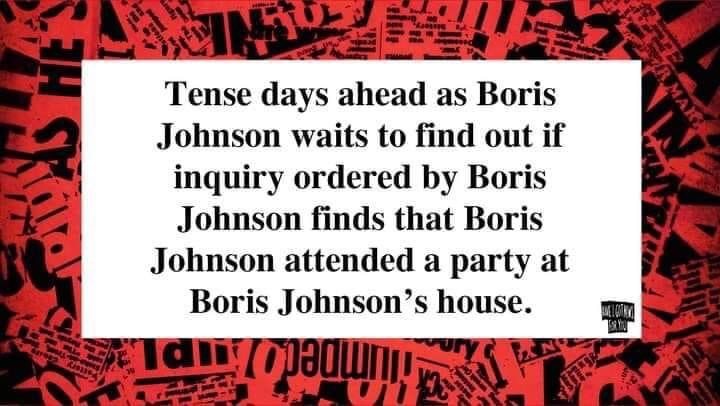
“Some cause happiness wherever they go. Some cause happiness whenever they go” Is British Prime Minister Boris Johnson on the way out?
I asked an interested comrade living in England – how long will Boris Johnson last? The first reply :
He’s clearly in serious trouble, and the Tories are scouting around their stable of horrors for a replacement.
Oscar Wilde’s Verdict “Some cause happiness wherever they go. Some cause happiness whenever they go”
The drama is receiving continuing attention in the Irish mass media. The RTÉ Morning Show hosted by Claire Byrne covered the Downing Street Pantomime. First boxer on the stage was Mr Andrew Bridgen (MP for Hard Brexit) [Bridgen is a competent anti-Johnson backbencher who may ascend to ministerial ranks if Johnson resigns]. Sir Tony Blair’s ex handler, Alistair Campbell (Iraq Dodgy Dossier) was in the opposite corner. Campbell started OK, concentrating on Boris Johnson’s CV – saying partygate is predictable once you knew the CV. Campbell went all Roy Keane after that – take out the player, never mind the ball – once Bridgen mentioned Campbell’s Iraq War Deadly Dossier. Lies about Saddam Hussein’s “weapons of mass destruction” helped cause a hideous imperialist war – millions of innocent civilians dead and injured. Campbell’s behaviour contributed to the hounding of a courageous whistleblower, Doctor David Kelly, who died via suicide. Prime Minister Johnson lies about partying while the mother of a likely child abuse criminal (Queen Elizabeth and Prince Andrew) was grieving over the death of a dangerous driver husband (Prince Philip). Is this an episode in an ongoing drama – the strange death of Brexit Hard Right Britain?
Sources and Images :



Sir Jeffrey Donaldson’s Stormont-Westminster Double-Job Stroke Shot Down
Read the rest of this entry »Jeremy Corbyn in Derry – Marking the 50th Anniversary of Bloody Sunday – January 28 and 29 2022
BREAKING News
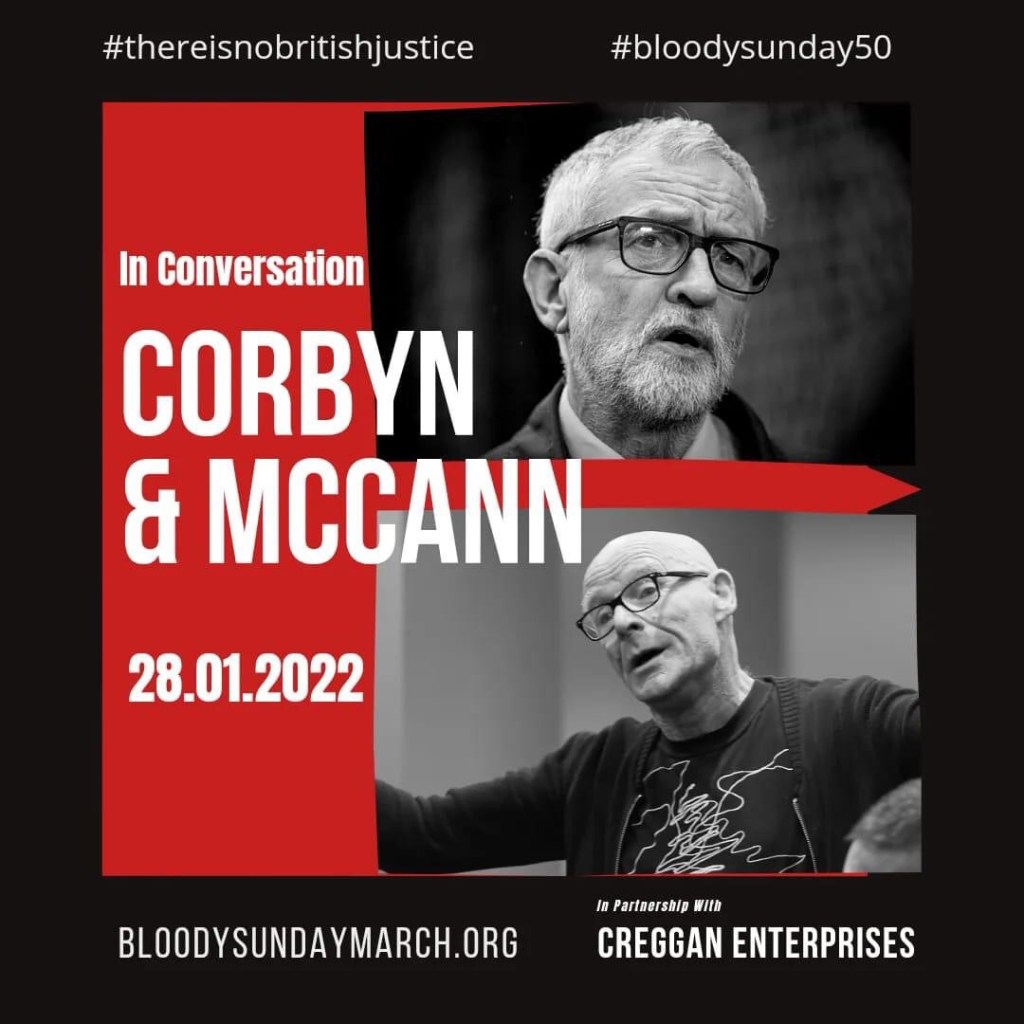
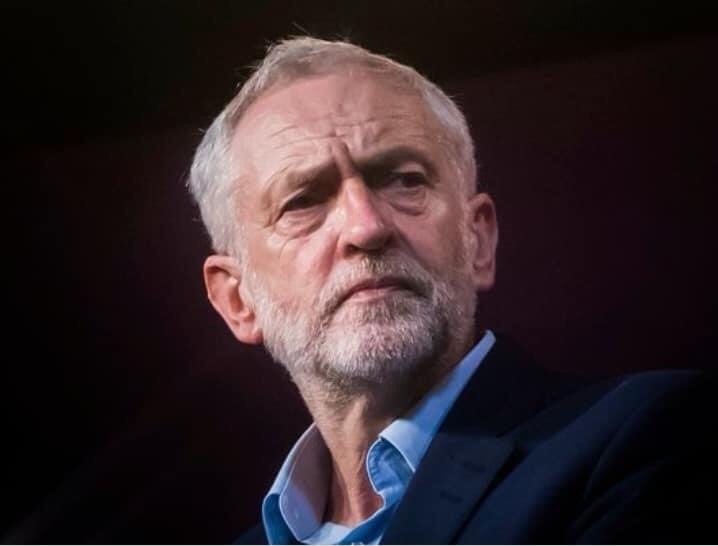
We are honoured to announce that we will co-host, in partnership with Creggan Enterprises, former British Labour Party leader Jeremy Corbyn in conversation with journalist and long time campaigner for Justice for Bloody Sunday, Eamonn McCann. Broad topics for the conversation will be civil rights, legacy and social justice.The event will take place at the Hive Studios at the Ráth Mór Centre in Creggan, on Friday, January 28th January 2022. Start Time 14.00 Eamonn McCann is a longstanding member of the Bloody Sunday March Committee.

Context 2022
There is No British Justice
The “Troubles” have taken more than 3,500 lives over the past 50 years. Every death has diminished us all.
Read the rest of this entry »Derry’s Bloody Sunday – Robert Ballagh’s New Painting on the 50th Anniversary
View the painting at Derry’s Guild Hall

“Robert Ballagh : “Many people of my generation were traumatised by the events that took place on the 30th January 1972. As an artist my response was to create an art work that was controversial and challenging. As the 50th anniversary of Bloody Sunday approached I felt impelled to revisit this atrocity. The painting in the Guildhall is the result of that undertaking”.
https://www.derrystrabane.com/Council/News/Robert-Ballagh-painting-goes-on-display-at-the-Gui?fbclid=IwAR2Ip5caCJr7CGtHcmTjP5lcl4px8MvbLfrAEdQM8Dn4Lvxmd-UNwrQEXMQ
The painting will be available for the public to view from January 14 during the Guildhall opening hours of Monday to Friday from 9am to 8pm and Saturday and Sunday from 9am to 6pm.”
Rachel Ballagh took a photo at “the unveiling of a painting by Robert Ballagh, The thirtieth of January, on public display in the Guildhall Derry”
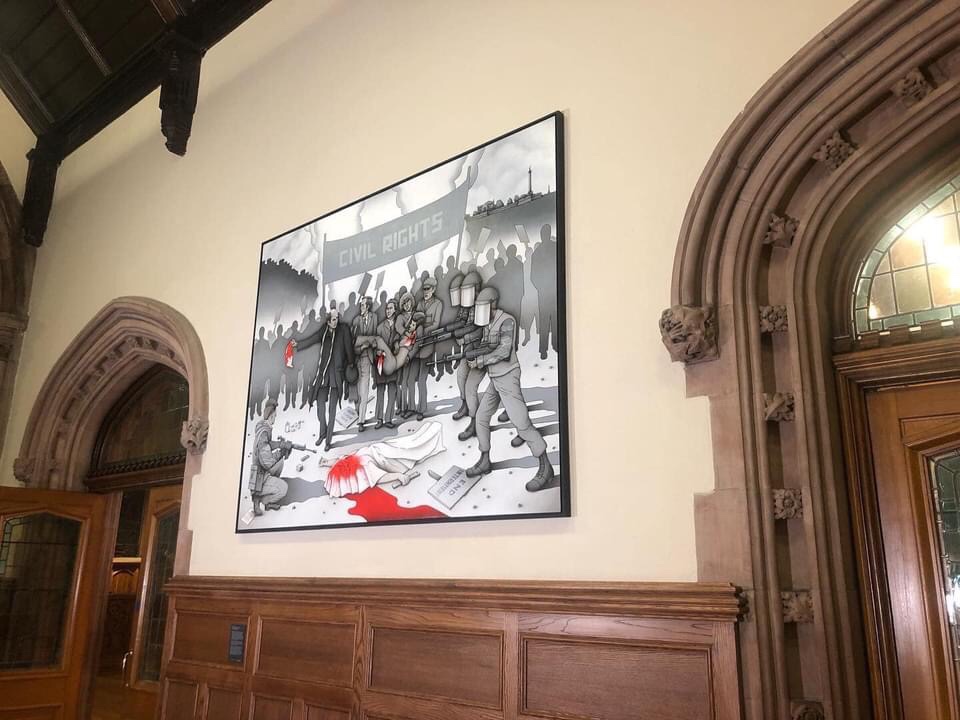
Rachel Ballagh’s photo of Robert Ballagh’s Bloody Sunday Painting, in Derry’s Guild Hall.


 Tomás Ó Flatharta