Posts Tagged ‘referendum’
“Businessman behind smears against Jim Gavin previously spread false claims about rival” – Irish Times report on Kieran Kelly, far-right targeter of Irish presidential candidate
Far-right activist Maria Steen, who failed to secure a nomination for the 2025 Irish presidential election, agrees she spoke with Kieran Kelly.
The 2025 Irish presidential election is toxic and dirty, and that is going to continue, TrumpSteen or no TrumpSteen.
“When contacted by The Irish Times on Monday, (Kieran Kelly) declined to share any evidence for the claims, saying it would be made available at a later date.
Mr Kelly said online that he had a call this month with Maria Steen, the conservative campaigner trying to enter the presidential election.
Ms Steen confirmed the call during a press conference on Tuesday.
She said: “As you can imagine, I’ve been getting calls from lots of different people who I have never met before and have never spoken to before.
“I had a call with Kieran Kelly. He mentioned nothing about Jim Gavin or any other candidate to me. He talked about, I think, that there’s an organisation called the Wild Geese, of Irish people abroad, who are taking an interest in Irish politics.
“That was the sum total of the phone call. I listened to what he had to say, and that was it.”
- Cormac McQuinn and Pat Leahy Irish Times, September 23 2025
The left-wing candidate Catherine Connolly needs to promote a positive anti-racist message.
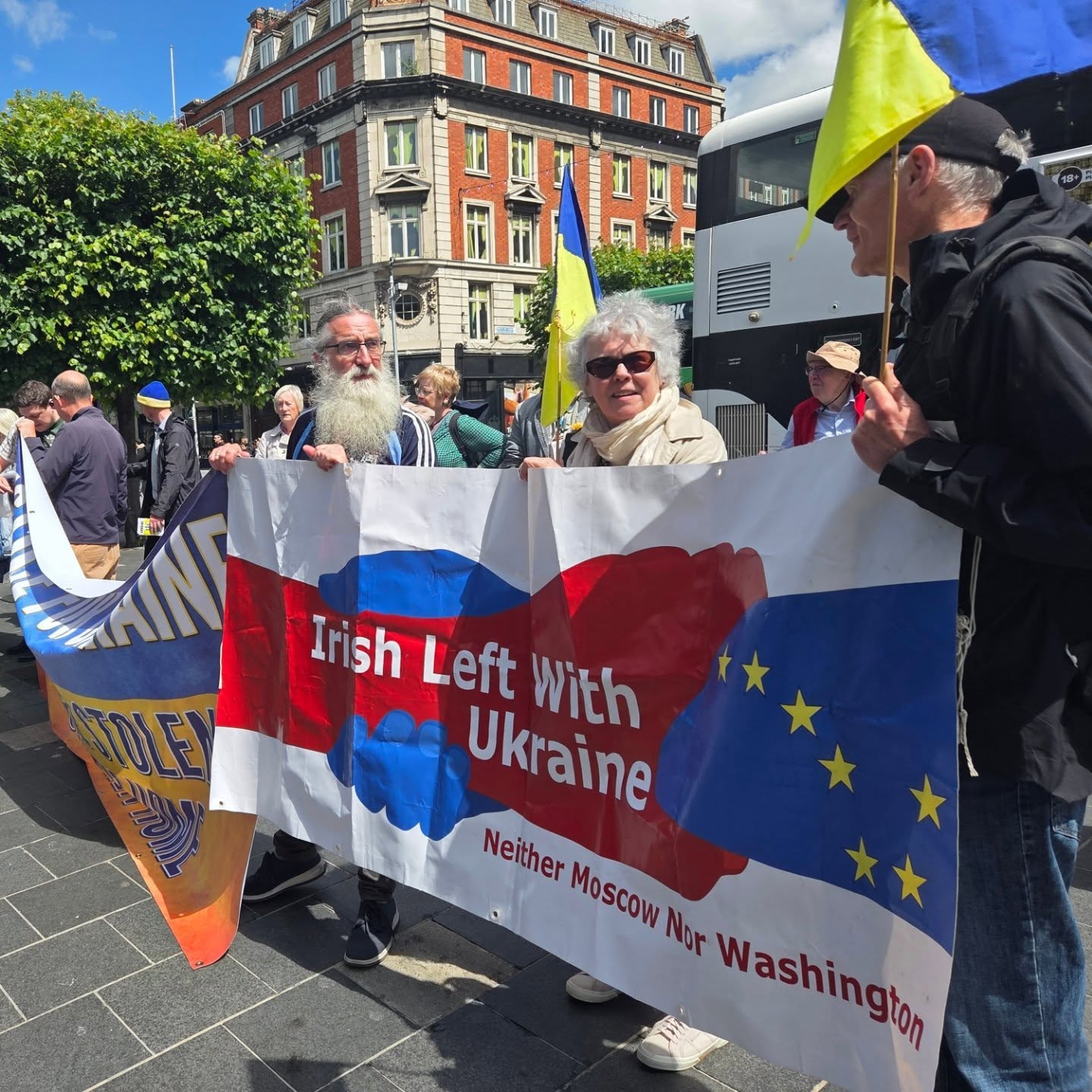
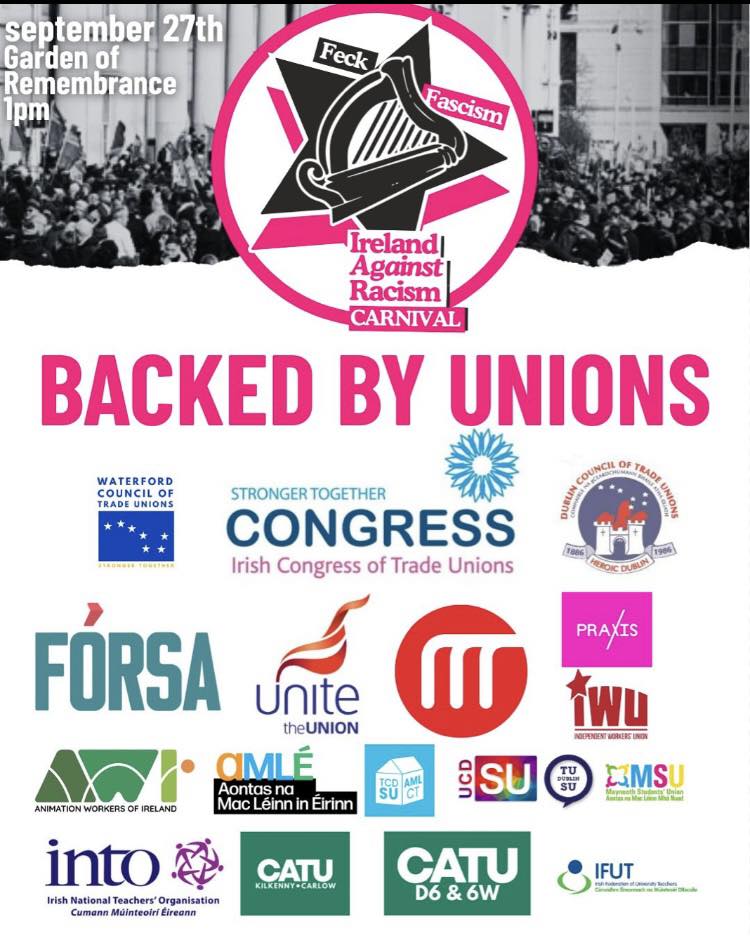


The absence of Steen from the presidential ballot paper is tempting government coalition partners Fianna Fáil and Fine Gael to play the racist card in support of their candidates Jim Gavin and Heather Humphreys.
Read the rest of this entry »British General Election 2024 – Highlights and Lowlights – Loveless Landslide, Sandcastle Majority. Far-Right Hiding in Plain Sight, House of Paisley Falls in Antrim – and a Message of Hope from new MP Shockat Adam, Leicester South
Let’s start with positive news :
Shockat Adam MP, Leicester South – “This is for the people of Gaza”.
When you listen to this June 25 car-crash interview with former Leicester South Labour MP Jonathan Ashworth, you would be forgiven for thinking he was a member of the far-right racist party, Reform.
Shockat Adam was not alone. Five pro-Gaza independent candidates (including former Labour Party leader Jeremy Corbyn in Islington North) are members of the new Westminster parliament :
Read the rest of this entry »The March 8 2024 Referendums in Ireland – A few final thoughts – Vote Yes/Yes
A few final thoughts.
An Irish Times letter-writer offers good advice :
“The arguments made against the proposed constitutional amendments are akin to the owner of a 30-year-old banger, which keeps breaking down, refusing a 10-year-old car as a replacement because they were really hoping for a brand-new model.
When the perfect choice is not on offer, reasonable people take the best option available.
Vote Yes on March 8th to consign a few antiquated bangers to the scrapheap, where they belong. – Yours, etc,
JOHN THOMPSON,
Dublin 7.”
A number of left wing activists calling for a No vote in the Care Referendum are making a classic ultra-left mistake. They are not guided by a concrete analysis of the question on the ballot paper. As a result they advocate keeping reactionary, sexist, and partitionist wording in the Irish Constitution.
Read the rest of this entry »The March 8 2024 Care and Family Referendums in Ireland – Which is better : the existing wording or the suggested replacements?
Let’s keep it very simple. These 2 constitutional provisions are symbolic.
The basic information is provided here : Electoral Commission Explanation of Care and Family Referendums in Ireland. We are concentrating on the Care Referendum, as some people on the Irish left are advocating a No vote, meaning that the existing reactionary sexist wording in DeValera’s 1937 Constitution will remain in place.
In any referendum you are only voting on the question you are asked – not on the question you would like to be asked.
Voters should ask themselves : Is the existing wording worse than the proposed changes?
Yes or No?

Any objective left-wing and feminist reading of the relevant texts can only come to one conclusion : The proposed changes are better.
Read the rest of this entry »According to Ireland’s constitution, a woman’s duties are in the home – but a referendum could be about to change its sexist wording
Eamon DeValera’s 1937 Irish Constitution contains symbolic sexist wording – the “woman in the home” clause. Laura Cahillane explains why almost everyone on the Irish and feminist left is advocating a Yes vote.
Laura Cahillane, University of Limerick
On March 8 – International Women’s Day – Irish citizens will vote in a referendum on whether or not to replace the so-called “woman in the home” clause in the Irish constitution.
This clause, which dates from 1937, specifies that: “The State recognises that by her life within the home, woman gives to the State a support without which the common good cannot be achieved.” It goes on to say that: “The State shall, therefore, endeavour to ensure that mothers shall not be obliged by economic necessity to engage in labour to the neglect of their duties in the home.”
Originally, the purpose of the provision was to acknowledge the importance of care in the home, which was then provided almost exclusively by mothers. The purpose was to ensure that mothers could remain in the home and would not be forced to work due to financial reasons.
However, the state help implied by the wording was never actually put into practice – women were never supported to provide care in the home. Worse, the constitution was often used to bolster arguments that a woman’s place was in the home and that policies which excluded women from work were acceptable.
Now, as part of a double referendum, Irish citizens will have the chance to change the constitution to a more gender-neutral wording. This is alongside another vote on whether to change the constitution’s definition of “family” to expand it beyond marriage.
Read the rest of this entry »


 Tomás Ó Flatharta