Posts Tagged ‘irish-politics’
“Sinn Féin’s disaster was the standout story of the weekend’s count” – Cedar Lounge Revolution Blog starts important discussion
Overall, the June 7 2024 Local and European elections in the 26 County bit of Ireland were good news for the ruling coalition elected in February 2020. The Fianna Fáil-Fine Gael-Greens plus Gombeens (FFFGGG) combination scored an important victory, setting them up for a possible return to the seat of government in Dublin’s Leinster House in less than 12 months, when a new general election must happen.
Even worse, due to ominous rising support for Gombeen currents (primarily the Independent Ireland [II]) party and extreme racists, FFFG might be able to dump the Greens and rule on their own – or coalesce with the II gombeens and other toxic racist-right populists.
Read the rest of this entry »Rory Hearne accuses Ciaran Mullooly of ‘hypocrisy’ in scathing attack on the “Independent Ireland” racist party – a wolf in Blueshirt clothes
This is an Irish Independent Story, June 3 2024.
A few ex Fianna Fáil and Fine Gael Dáil Deputies formed Independent Ireland (IIP) recently, led by a man with a famous name, Michael Collins TD (Cork South-West). The 1922 pro-treaty inheritors of the dead Michael Collins legacy went on to establish the failed fascist Blueshirts in the 1930’s led by Fine Gael’s first president Eoin O’Duffy.
The IIP is running two well known broadcasters (Ciarán Mullooly and Niall Boylan) in the European elections.
Social Democrat Euro-Parliament candidate Rory Hearne presents a convincing left-wing anti-racist case against the IIP wolf in Blueshirt clothes.
Rory Hearne accuses Ciaran Mullooly of ‘hypocrisy’ in scathing attack on Independent Ireland
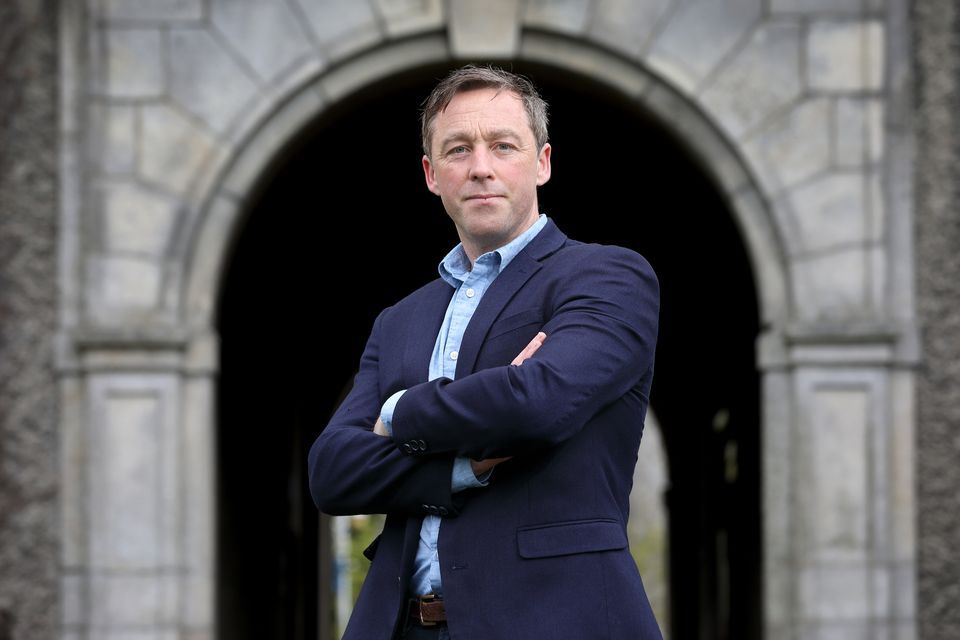
“Why won’t Mullooly and others call for tougher action against the real causes of the housing and homelessness crisis – the vulture funds and corporate landlords locking people out of a home, evicting people and raising the rents?”
Mr Hearn said Independent Ireland offers “no solutions” for the problems that have been caused due to a lack of accommodation.
“The election next week will set the course of Ireland and Europe for many years to come. Are we to turn into a divided society?
“Or are we going to come together and address the real causes of the crises, work on solutions together, and treat migrants and asylum-seekers with the dignity every human being deserves, and see migrants for how they positively contribute to and enrich our country.”
Read the rest of this entry »Scumbags in Dublin who stop immigrants getting shelter – the Dublin government is “punching down” says a group of 30 Non-Governmental Organisations (NGO’s)
Street Photographer Chris Reid reports :
Barriers replace tents on Mount Street and along the Grand Canal. Barriers now extend along the Grand Canal from Mount Street to South Richmond Street. Good luck to the people in the tents getting through this mess.
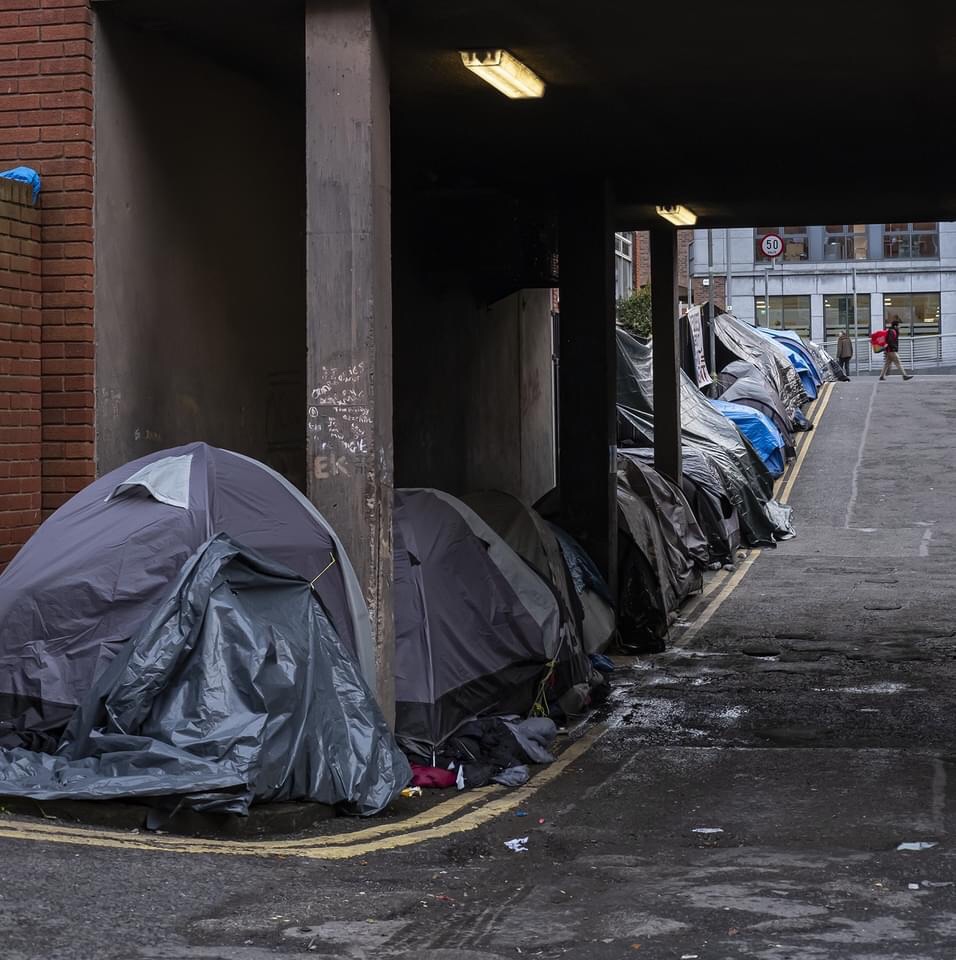
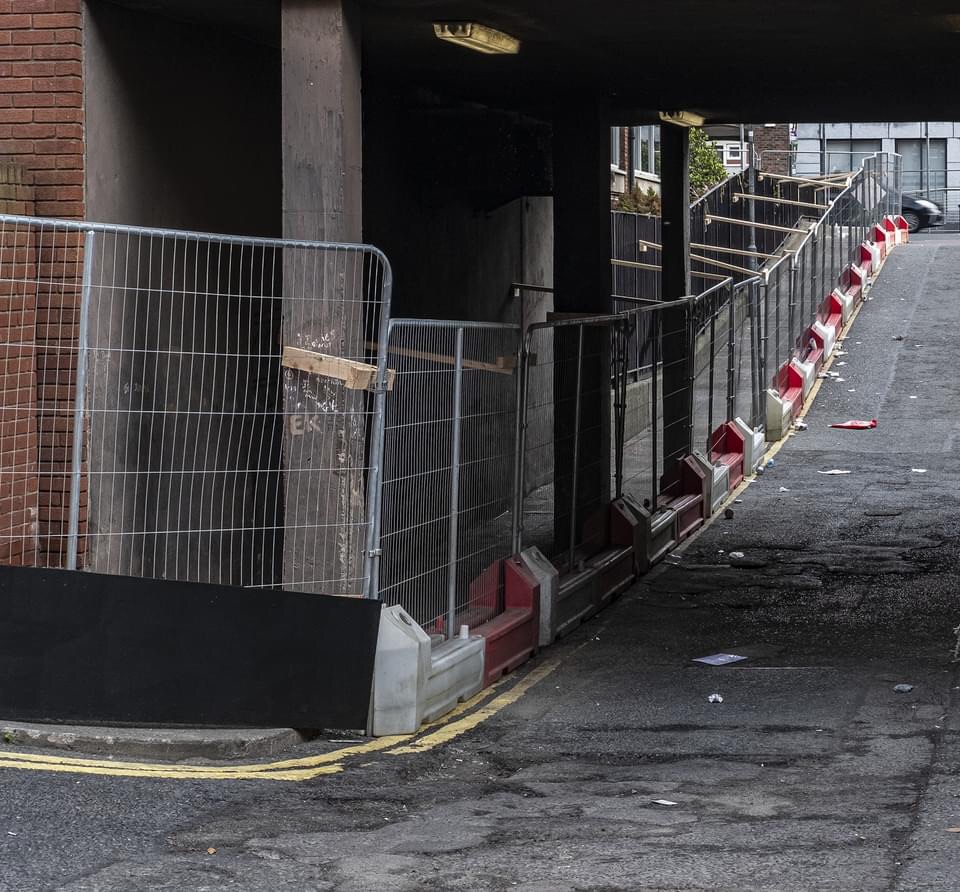
Well done Chris. There is no political and moral difference between the actions of the arsonists and racist protesting scum who try to prevent asylum seekers getting shelter in hostels or hotels – and the actions of government ministers and functionaries – like Harris the Taoiseach and Harris the Garda boss. Double-standard “opposition” politicians who dog-whistle to the racists saying “No Open Borders” – E.g. the Sinn Féin Justice spokesperson Donnacha Ó Laoghaire – also share the blame. Genuine anti-racists can and will do much better.
Read the rest of this entry »Robert Ballagh’s “The Thirtieth of January”: A Bloody Sunday Painting and the Troubles in the Two Bits of Ireland
In this interview the artist Robert Ballagh discusses the painting “The Thirtieth of January”, depicting Bloody Sunday in Derry in 1972. The conversation provides valuable insights into Ballagh’s personal experiences and artistic process, shedding light on the political and social context of the time.
The interview provides a unique insight into the historical and cultural significance of the painting.
Critical issues related to the Irish government’s response to the conflict, the impact of the Bloody Sunday event, and the broader social and political implications are highlighted. Ballagh’s commentary on the role of the Irish government, the impact on nationalist communities, and the establishment of the Special Criminal Court adds depth to the discussion.
Bloody Sunday Painting – the Thirtieth of January – Robert Ballagh
Thursday, January 20 2022. John Meehan interviews the artist Robert Ballagh in Number Five Arbour Hill.
We are talking about Robert’s painting : The Thirtieth of January, a representation of Bloody Sunday in Derry, January 30 1972.
John Meehan :
Why did you zone in on Derry’s Bloody Sunday , and put so much effort into making this painting? What makes it different from so many other big events during “The Troubles” in the north of Ireland, which lasted for 30 years, from 1968 to 1998?
Robert Ballagh
Well, it’s a long time ago now 50 years, but I have to say that it had an enormous effect on me, and I don’t think I’m alone with that historical experience. I suppose one thing I should say, I was only thinking about this, and I haven’t said anything about this experience to others. I’m a Dubliner. I’ve lived all my life in Dublin. But unlike most Dubliners – it wasn’t by design – I had an extraordinary rich knowledge of the North of Ireland, before the conflict began. Because I was a professional musician in a showband. We used to play at least once or twice a week in the north. So I was in every town village or city in the north that had a ballroom or ballrooms. And so I experienced the reality of life in that society, and became very aware of the sectarian differences, shall we say – the nature of the society, which people didn’t appreciate at all. I tell one very short story to illustrate that. We played fairly regularly in one of the very popular ballrooms in Belfast : Romano’s in Queen Street. We developed quite a following! In the show business vernacular the word groupie was used. These girls used follow us, they came down to Dublin once or twice to hear us. And we were playing one night in Romano’s.

After the dance, they came up and we’re talking to us. They asked “When are you playing again in Belfast?”.
I remember saying “Oh, I think we’re here next week.”
“Oh, really?”
“Yeah – we’re playing in a ballroom called the Astor” which I knew was in Smithfield.
And they said, “Oh, we can’t go there.” And I said, “Why?” – because it was a public ballroom. It wasn’t attached to any organization or anything. It was a public ballroom.
They said, “Oh, no, that’s a taig hall”
And it was the first time I realized, and we realized, that our fan base in Belfast was Protestant.
“Frogs’ legs and lobster Thermidor – or the ABC of republican strategy” – Fearghal Mac Bhloscaidh
Fearghal Mac Bhloscaidh is one of the most interesting political writers in Ireland. The article below is a detailed analysis of Ireland’s peace process, which begins with a speech delivered by Bernadette McAliskey the year before the Good Friday Agreement was signed in 1998. I remember it well. (*)
John Meehan
About the author : Fearghal Mac Bhloscaidh is a Belfast-based historian and the author of a number of important books, including Tyrone: the Irish Revolution, 1912-1923 (Four Courts Press, 2014).

As a young man, I listened to a speech by Bernadette McAliskey the year before the signing of the Good Friday Agreement – the pinnacle of what became known as the ‘peace process’. McAliskey did not object to peace, she had notoriously been subtitled by the BBC in a 1992 interview, when she said: ‘No sane human being supports violence. We are often inevitably cornered into it by powerlessness, by lack of democracy, by lack of willingness of people to listen to our problems. We don’t choose political violence, the powerful force it on us.’ (quoted in Curtis, 1998:297) By the time I heard her speak in 1997, the powerful had arrested her pregnant daughter, Róisín, with the intent to extradite her to Germany. By 2000, the powerful admitted that Róisín, who had never been charged, had no case to answer as there was ‘not a realistic prospect of convicting Miss McAliskey for any offence.’ (Guardian, 20 July 2000). What struck me at the time, was that the powerful had a vendetta against a woman and her family because she had stood up for socialist republican principles for thirty years at that stage. Last month, fifty-five years after the Burntollet march and her subsequent election as the then youngest female Westminster MP ever, McAliskey gave the main oration at the solidarity march in Dublin, where she told the crowd that ‘Palestine is the litmus test of our humanity’ and then urged those present not to vote for any politician who would legitimise the Biden administration, which was ‘enabling genocide’, by attending the St Patrick’s Day events in the White House (Irish News, 14 January 2024).
McAliskey’s speech from all those years ago stuck in my mind because in the questions afterwards she was asked about the peace process and used a powerful analogy that I hadn’t heard before at that stage, but I have heard and used myself on numerous occasions since. She welcomed an end to violence but warned that the provisional movement appeared to be going down a well-worn reformist path that would eventually denude it of any revolutionary potential. She compared the republican movement to a frog, which if placed in a pot of boiling water, will immediately sense the danger, and jump out to save itself, but, if immersed in tepid water brought slowly to the boil so that the change in temperature remains gradual, the frog does not realise it’s boiling to death. In line with their – soon to be – new mates in New Labour, Sinn Féin had swallowed TINA – there is no alternative. Plan A – armed struggle has failed, now we try Plan B. In Sinn Fein’s case, this meant the long march through the institutions, acceptance of the principle of consent and parliamentary reformism on the classical constitutional nationalist model. McAliskey had the temerity to ask for a Plan C, which might mean retaining socialist republican principles and challenging the powerful rather than getting into bed with them.
Read the rest of this entry »Irish Support for a Patrick’s Day 2024 Boycott of Joe Biden’s White House Shamrock-Drowning Grows
We wish to thank Joe Brolly for posting this image on his twitter feed :

Joe Brolly is tirelessly promoting the cause of the Palestinian people.
Readers familiar with political parties based in the six county state in the north of Ireland may be rubbing their eyes in disbelief – is it really possible that the SDLP is taking a stand on this issue, agreeing with most people on the Irish left, and against the Sinn Féin party? The answer is Yes.
The article below puts a remarkable story in context :
Read the rest of this entry »Fianna Fáil leader Micheál Martin opens the door to coalition with Sinn Féin
Fianna Fáil leader Micheál Martin has said there would be “huge difficulties” with his party going into government with Sinn Féin, but did not rule out the possibility of such a coalition after the next election.
Irish Times December 26 2023
Fianna Fáil (FF) and Fine Gael (FG), two tweedledum and tweedledee capitalist parties, have controlled every government running the southern 26 county bit of partitioned Ireland since a 1921 Treaty was signed with the former occupying power, Britain. A carnival of reaction followed on both sides of the Irish border.
Faced with a false choice between Fianna Fáil and Fine Gael, the only rational policy for the left was and is : no coalition, on principle, with any right-wing party.
The need for this policy is explained in this interview with Paul Murphy TD (People Before Profit, Dublin South-West) : To all of them we say: rule out coalition with Fianna Fáil and Fine Gael – interview with Paul Murphy TD after the February 2020 Irish General Election
Read the rest of this entry »The comments of Sinn Féin leader Mary Lou McDonald TD on Ukrainian refugees in Ireland are a mistake
I note the statement by Mary Lou Mc Donald TD,leader of Sinn Fein with regards to her view that the position to grant special status to Ukrainians following the Russian invasion in 2022 was a mistake.
At the time her party supported the government position. While party banners were not present, Mary Lou Mc Donald was present for protest outside the Russian Embassy in July to mark 18 months since the invasion.
I think it unfortunate that the Sinn Fein leader has now expressed a sense of regret at the level of support for Ukraine in Ireland. Sinn Féin and others have been loud in the support for Palestine rightly, but like so many have left their attention drift with regards to Ukraine.
Rather than reacting to the menacing activity of far right activity and call for a more robust policing and courts response to the fire attack at a hotel in Galway, the Sinn Fein leader’s comments will embolden the nativist elements.
Read the rest of this entry »


 Tomás Ó Flatharta