Archive for the ‘Biography’ Category
A Tribute to Francesca (1936-2023) by Dave Kellaway
This is a very affectionate tribute to an Italiam woman written by her son-in-law, Dave Kellaway. It comes from Dave’s facebook page.
The badante (live-in-home carer) system in Italy
Dave Kellaway’s description of the Italian state’s support system enabling unhealthy older people to finish their lives at home will interest readers in Ireland – where a similar system could easily be established.
A key reason why they have been able to stay together is the badante (live-in home carer) system that exists in Italy. Nearly entirely made up of legal or so called ‘illegal’ migrants from South Asia, Eastern Europe or the Phillipines the badantes live 24/7 with a day off a week looking after Italy’s infirm older people. Scandalously the present hard right Meloni government is always talking about an invasion of migrants and encourages racism towards them. However without this army of wonderful carers the old age welfare system would collapse. We have been very lucky with the most tender, skilled carers from Kerala, South India. Anton, Mariam and George have been essential for helping Ciro and Francesca to spent their final years together. Thank you for your service and love.
I don’t always write much about personal matters but my mother in law just died this week and I found myself wanting to write about her life – her struggles and success and how she was so welcoming to me. I have produced this memoir which is longer than the usual facebook post:

Part of the reason why I wanted to write this memory of my mother-in-law is that we need to respect and value the lives of those who are not lauded publicly, who are not elected, selected or the winner of prizes. Working class lives, particularly women, are particularly hidden from history. The priest came just now to bless the body and talked about gratitude. He was right, whether you are a believer or not, we need to show true gratitude to the lives of people who loved us, who gave up stuff to help us thrive.
Francesca grew up in some of the world’s more exclusive tourist spots on the Amalfi coast in Ravello and Albori. Her childhood was far from relaxing or contemplative. Childhood was different for people growing up as tenant farmers in poor rural areas. Nicola, her younger brother, went North to live and work with an uncle in Ivrea, near Turin when he was eleven. Her sister remembers when they used to gather wood in the hills of Albori to exchange for bread in Vietri on the coast.
After the end of fascism and the Second World War, she left school at 8 years old to help her parents work the land. Life was tough after the war as economic activity slowly recovered. She was born too early for the Italian state to ensure she stayed in school to become literate. Numbers, on the other hand, she learnt from an early age. Learning comes quickly if you need the money from selling lemons or milk. Everything depends on getting the prices right and counting the change properly. Francesca carried that skill throughout her life. She was the one who was in charge of the household accounts, the savings and much, much later, the prized house purchase.
Francesca’s own mother was not always supportive of her developing skills or interests than did not meet the needs of the household as she saw them. For example when she wanted to meet her future mother in law for the first time, she had secretly made her own dress without her mother’s permission. She even made another dress for her little sister, Maria, who was chaperoning her on this visit. Life was difficult in poor families and mothers were particularly harsh at times with their daughters who were expected to do lots of household chores. People who are familiar with the books (now a TV series) of Elena Ferrante – My Brilliant Friend – can see how tough, even cruel, parents could be at that time.
On 24 January, she passed away. I look at her skeletally thin body, grey pallor and sunken eyes as she lies out before her funeral. Then I remember just how fit, strong and healthy she always was until the shock of a life threatening operation for colon cancer three years ago. I remember once being called down to the front gate of her apartment block to give a hand to bring some packages in. I was amazed to see her coming up the stairs with a huge package on her head! She was well into her 60s at that stage.
How the strength has drained from her. At twenty years old she married Ciro and moved to Marini – a village in the hills above Cava dei Tirreni. There she used to milk the cows every morning and then carry the two ten litre cans three kilometres down the hill to sell in Molina near the coast. I know the area well, it’s really steep! The path in those days was a bit scary in places and you had to navigate a live railway line and bridge. Her eldest daughter, Carmela, remembers falling down one day with her mum. At least the cans were empty on the walk back up.
Did Lenin Сreate Ukraine? On the Right of Nations to Self-Determination and Marxism
Why do Marxists defend the right of nations to self-determination? What does the struggle for national liberation have to do with the workers’ struggle? Social researcher Grusha Gilaeva analyzes the positions of Marx and Lenin on the national question and explains why the left movement must support the anti-colonial struggle of Ukraine
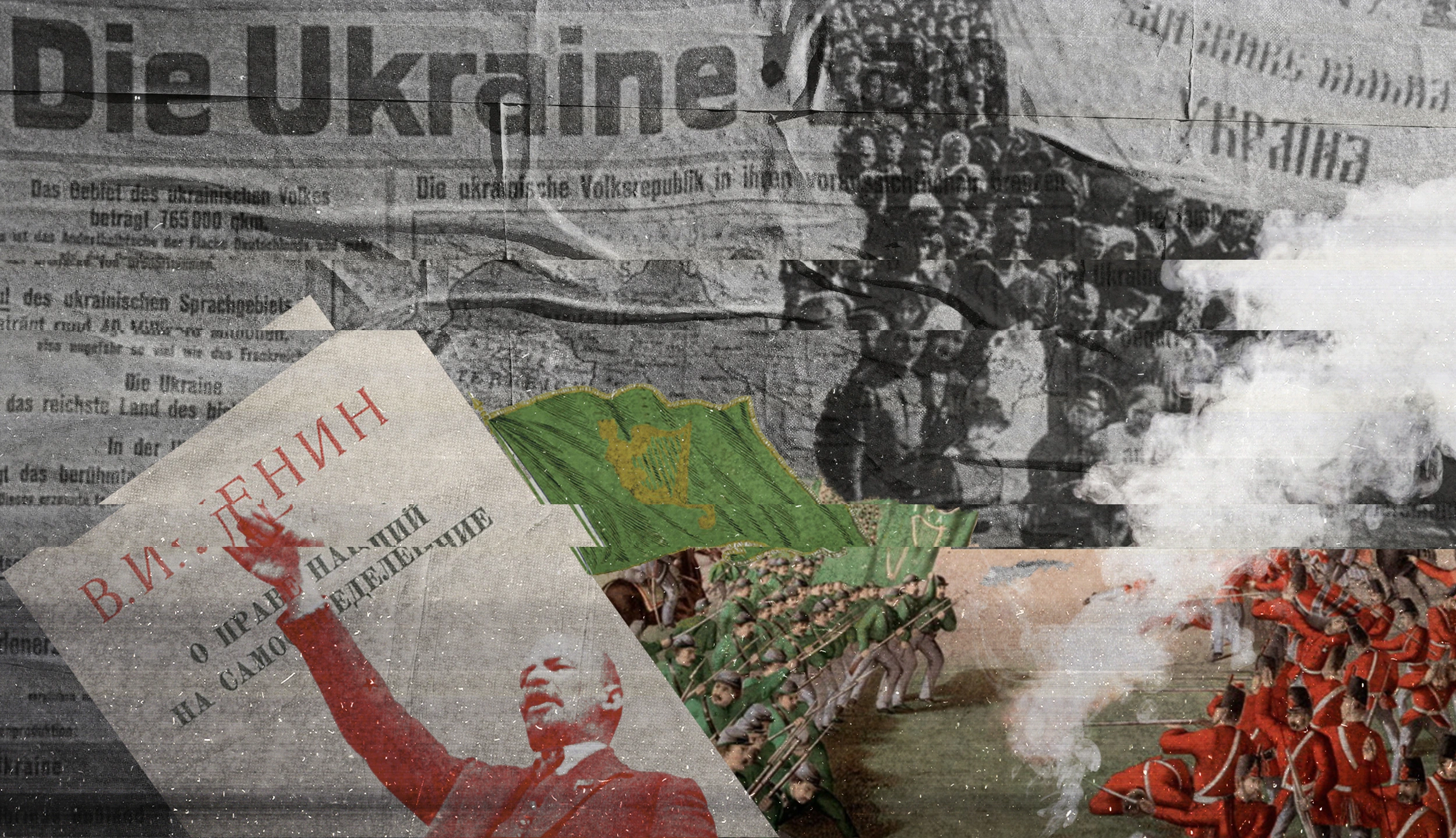

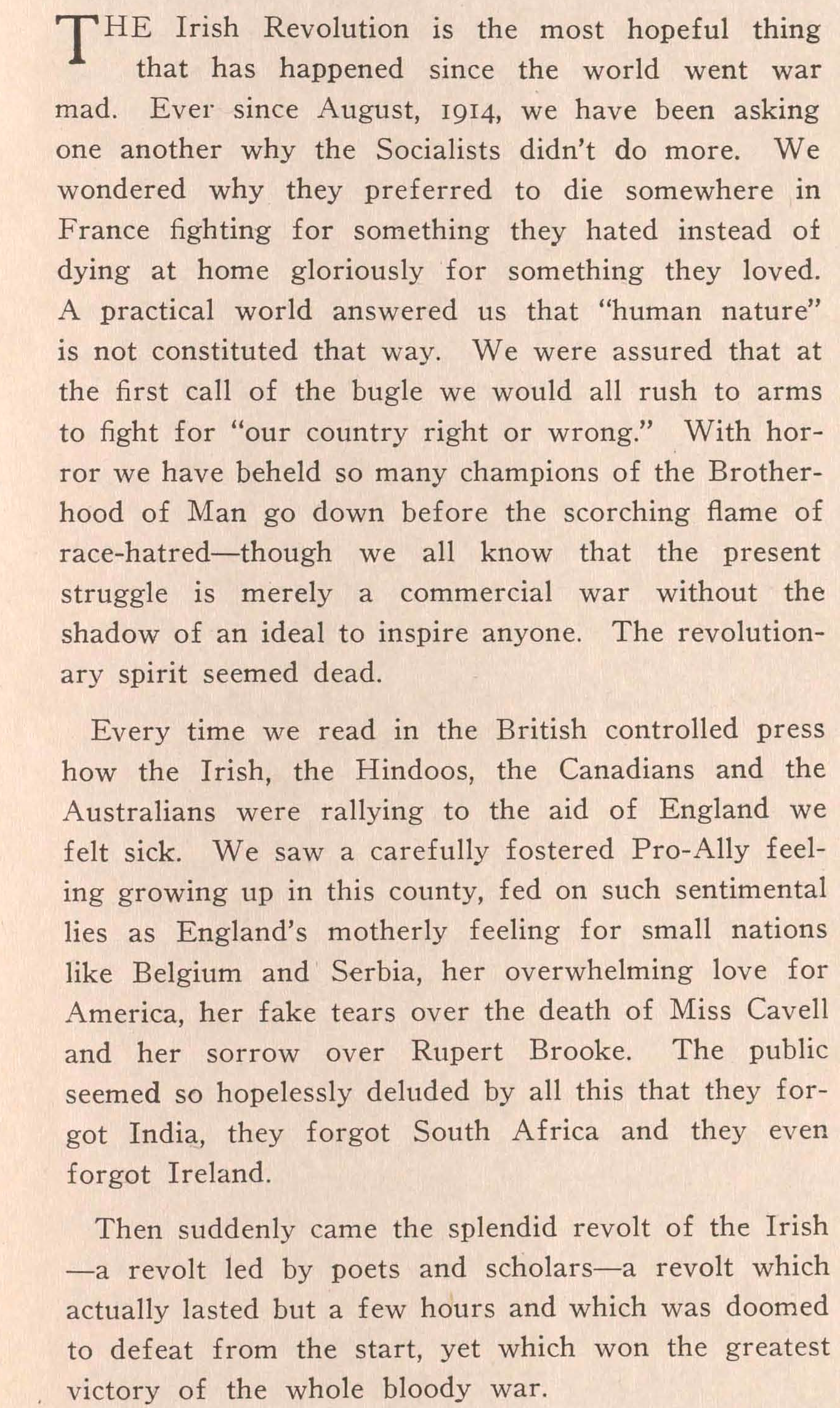
Grusha Gilaveva’s fascinating article comes from the Russian left-wing publication Posle. Gilaveva argues, in a very convincing manner, that Marx and Engels started out in the 1840’s opposing the rights of small nations to self-determination – inspired by a blanket opposition to all nationalism – but changed their policy after 1867. Marx and Engels were heavily influenced by Ireland’s struggle for liberation from the British Empire, and the Phoenix like rise and fall of the Irish Republican Brotherhood (IRB), the Fenians. Policy divisions on the question of self-determination for small nations continued within the Marxist second and third internationals in the twentieth century. Bolshevik leader Vladimir Ilyich Lenin championed a policy favouring the rights of small nations and nationalities – and was opposed by revolutionary comrades such as Karl Radek and Rosa Luxemburg. Once again Ireland featured strongly in the debate among revolutionary Marxists. The Easter 1916 Rising in Dublin, although it was militarily crushed by British artillery, inspired socialists all over the globe who were fighting against the barbaric World War 1. The impact was brilliantly described by the famous North American feminist revolutionary Louise Bryant in “The Masses”, published in July 1916. “The Masses” can be accessed here : https://www.marxists.org/history/usa/pubs/masses/index.htm
An alliance between the descendants of the IRB (the Irish Volunteers led by Pádraig Pearse) and a brand-new working class actor fighting for Irish Freedom, James Connolly’s Irish Citizen Army (ICA), inflicted devastating wounds on the most powerful empire the world had ever seen in those early years of the 20th century.
The 1917 Russian Bolshevik Revolution began to go badly wrong in the 1920’s. An early sign that all was not well was Great Russian chauvinist suppression of smaller nations such as Ukraine. We live with and suffer from terrible consequences today. We cannot change history, but we can learn from it.
John Meehan January 25 2023
Did Lenin Сreate Ukraine? On the Right of Nations to Self-Determination and Marxism
Why do Marxists defend the right of nations to self-determination? What does the struggle for national liberation have to do with the workers’ struggle? Social researcher Grusha Gilaeva analyzes the positions of Marx and Lenin on the national question and explains why the left movement must support the anti-colonial struggle of Ukraine
Read the rest of this entry »Christmas Subversion 2022 – by Sarah Springer
Trotskyist Subversion Again – “By far the favorite of all the miniatures I’ve made: my Merry Marxmas house!”. – Sarah Springer.



Readers might like to see and read more articles written by Sarah Springer. I recommend this short essay “Literature from a Marxist Perspective”.
Your Man Over There Thinks the Anti-Franco Republican Forces Should Not Have Sought Weapons from the Brits, Yanks and French Imperialist Hypocrites during the 1930’s Spanish Civil War – A Proxy War if Ever I saw One!
In this respect the British writer Paul Mason is correct :
Imagine an alt-history of the Spanish Civil War where, after some initial reversals, the anti-fascist side starts winning. They drive back Franco’s armies largely because France, Britain and the USA reject “non-intervention” and send in heavy weapons, offsetting the support coming from Hitler and Mussolini. In this scenario, does anyone seriously think the global left would have pulled its support for the Republican side because of “imperialist aggression”? Would they have denounced the Spanish conflict as a “proxy war”. Would they have convened an international conference calling for the end of all arms supplies to the anti-fascists in the name of “Peace”? Would they have called for negotiations with Franco, advocating a settlement “acceptable to all”?
https://ukrainesolidaritycampaign.org/2022/12/20/ukraine-which-side-are-you-on/?utm_source=dlvr.it&utm_medium=facebook
The same point is made here, drawing on an example from the actions of Irish revolutionaries during World War 1 – the Easter 1916 Rebels launched an uprising against British Imperialism using weapons supplied by the German Kaiser.
Read the rest of this entry »Snow Black – A Modern Fairy Tale – English Monarchy Dissected by Irish Feminist Rosita Sweetman
Meghan Markle as Snow Black; England’s Wicked Queen as England’s Wicked Queen and so on – all are present in this dark fairy tale.

Snow Black – A Modern Fairy Tale
Once upon a time there was a beautiful Queen. One day she pricked her finger. Three drops of blood fell on her black windowsill. Looking out at the winter snow the Queen said, I wish for a son with golden red hair, a black daughter in law, both with hearts as white as snow.
The Queen gave birth to a baby boy with golden red hair.
Then the Queen died. Everyone thought it was an accident but actually the Queen was desperately unhappy. The King was not a good man. He had deceived the Queen into marrying him while all the time he was having sex with another married woman. As soon as the beautiful Queen was out of the way he and the other woman got married.
Read the rest of this entry »Einde O’Callaghan’s Tribute to John Molyneux; Helena Sheehan Describes a Funeral in Dublin
Einde O’Callaghan, who is one of the administrators of the Marxists International Archive has already created a rudimentary archive for John Molyneux’s writings, which will be added to regularly over the coming weeks and months.
Source : https://www.theleftberlin.com/john-molyneux-1948-2022/
I was shocked and dismayed to hear last Sunday morning that my friend and comrade, the socialist activist and Marxist theoretician John Molyneux, had died of a heart attack the previous afternoon. It was all the more poignant because on that Saturday I had had an email exchange with John, something that we had increasingly done over recent years.
John was one of that generation of socialist activists that had been aroused by the events of 1968 in London and Paris, In an interview for a recently published book called “We Fought the Law” John graphically described how he had been both shocked and radicalised by the confrontation with the police in Grosvenor Square outside the American Embassy during the massive demonstration against the Vietnam War in March 1968. Another formative event was a visit to France during May 1968. Shortly afterwards he became a revolutionary socialist and joined the International Socialists, a commitment that he maintained until his death last weekend.
Within the IS and its successor the Socialist Workers Party, John quickly established himself as a significant theoretician. His first major work was Marxism and the Party, a study of the Marxist tradition of revolutionary organisation from Marx and Engels through Lenin, Luxemburg, Trotsky and Gramsci. The book emphasised the necessity of a democratically organised activist interventionist party rooted in the working class to prepare for the overthrow of capitalism and lay the basis for socialism.
John not only produced major theoretical works such as What Is the Real Marxist Tradition? and Is Marxism Deterministic? but also a huge amount of material aimed at providing a basic introduction to Marxist ideas in the form of regular newspaper columns in British and later Irish Socialist Worker. These articles also appeared in a number of papers associated with the International Socialist Tendency. Many of them were reproduced as popular pamphlets such as The Future Socialist Society, Arguments for Revolutionary Socialism and “Is Human Nature a Barrier to Socialism?”.
However, John wasn’t just a populariser of a Marxist orthodoxy, he was also prepared to raise awkward questions that sometimes brought him into conflict with many members of his own organisation. A case in point was his second major theoretical work, “Leon Trotsky’s Theory of Revolution”. John was a great admirer of Trotsky, but in this work he raised serious questions about some of Trotsky’s weaknesses, such as his tendency to make sweeping predictions about future developments – some of these resulted in powerful and valuable analyses such as his treatment of the rise of fascism and the fate of the Spanish Revolution, but after his death his predictions about the outcome of World War II led to serious disorientation of many of his followers in the post-war period.
Other bones of contention were his orientation during a major debate in the SWP about women’s oppression and the nature of democracy in a revolutionary organisation. But despite such differences John remained a committed and loyal member of his organisation.
Read the rest of this entry »Solidarity With Palestine, Solidarity With Ukraine – Sotsialniy Rukh (Ukraine) Compared With People Before Profit (Ireland)
If you are neutral in situations of injustice, you have chosen the side of the oppressor. If an elephant has its foot on the tail of a mouse and you say that you are neutral, the mouse will not appreciate your neutrality.
Archbishop Desmond Tutu, South African Anti-Apartheid Activist

Sotsialniy Rukh Statement on Palestine and Ukraine (in English and Ukrainian)
📣 November 29 since 1978 has been celebrated as the Day of Solidarity with the Palestinian people. For 44 years, the world officially talks about the Palestinian tragedy that has no end.
This day reminds us of Palestine’s ongoing struggle for life and freedom. Despite condemnation of Israel’s policy, which leading human rights organizations say fits the crime of apartheid under the Roman Statute, the de facto Palestinians and Palestinians still have neither protection nor independence. Their homes are being taken, cities bombed, and their lives are totally in vain.
Read the rest of this entry »A 1936 Obituary : The first known Irish Supporter of Trotsky’s Left Opposition – TJ O’Flaherty (Tomás Ó Flatharta) – passed away on Inis Mór ( one of the Aran Islands)

Des Derwin drew our attention to this fascinating obituary.
‘T.J. O’Flaherty Dead’ from New Militant. Vol. 2 No. 22. June 6, 1936.
The New Militant learns with great sorrow of the sudden death in Ireland of comrade T.J. O’Flaherty, an adherent of “Trotskyism” from the first days of the formation of the Left Opposition in the United States and a firm supporter to his dying day of the movement for the Fourth International. On his deathbed all his thoughts and interests were with his comrades in the United States and to the last he had hopes to recover his health and to return to the States to function actively in the movement. He gave full support to the Workers Party of America upon its formation and viewed it as the first step in the process of unification of the genuine revolutionary elements who based themselves on the teachings of Lenin and Trotsky.

His sister, Anna Johnson, in a letter to comrade Martin Abern, writes from the Aran Isles, Ireland:
Letter from His Sister
“You will be surprised to hear that Tom has passed away. He died on May 19 from heart trouble. He came back here on January 15 after 18 months between Dublin and England. He was ill when he got back and got worse every day. You know he always suffered from heart trouble.
Read the rest of this entry »‘A Workers Republic for Ireland’ by Thomas J. O’Flaherty from The Toiler. December 17, 1921.
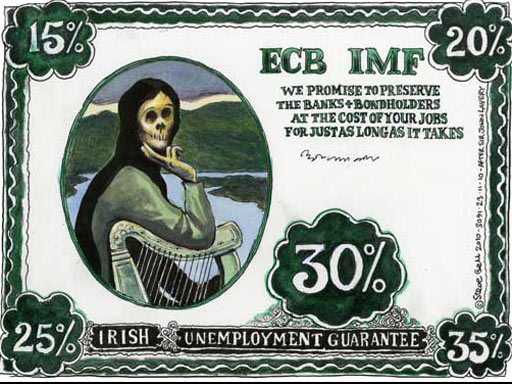
This blog is named after Tomás Ó Flatharta, the first known Irish supporter of the 1920’s Left Opposition which opposed the policies pursued by the Russian Bolshevik government headed by Josef Stalin. Ó Flatharta was a prolific writer, and wrote this fascinating article previewing the partition of Ireland in December 2021. Ó Flatharta looks at “official” Irish-American support for Ireland’s cause, and points out its limitations and hypocrisies. He endorses the policies pursued by the revolutionary marxist James Connolly, a leader of Ireland’s Easter 1916 Rising who was executed by the British imperialists.
Here is a flavour of Ó Flatharta’s analysis, which has a lot of contemporary relevance.
When Connolly led the revolt in Dublin in 1916 some of his comrades in other countries did not understand why he lined up with the Nationalist elements. They claimed that Connolly. lost his original Marxian purity. These elements could not see in the revolutionary opportunism of Connolly the tactic that is today the guiding star of every revolutionary party in the world. Connolly’s idea was to mobilize all the available discontent in Ireland and hurl it at the enemy. Out of the inevitable sacrifice which the Easter Week Revolution entailed would spring a new movement inspired by the example of the martyrs of Easter Week. Connolly knew quite well that national independence alone would never give Ireland independence until the Empire was overthrown, therefore every move made to overthrow the Empire tended to bring about the inevitable revolution. The Citizen Army composed of members of the Trade Unions was pledged not alone to strike for Irish freedom but for the Workers’ Republic. The Nationalist Volunteers had a certain contempt for the men of the citizen army. The former were carried away with their hostility to England into a feeling of sympathy with Germany. The citizen army, however, was just as much opposed to the Kaiser as to King Gorge and hung over its headquarters the banner with the inscription “We serve neither King nor Kaiser.”
When Eoin MacNaill, the leader of the Nationalist Volunteers, issued the countermanding order which kept the full force of the members of that body from participating in the Easter Week revolution, Connolly called out his citizen army. The army of the workers was the backbone of the rising and according to Seamus MacManus in his “Story of the Irish Race,” it was Connolly’s insistence on making a fight that ultimately carried the motion for the insurrection. But since Easter Week Irish labor has been relegated to obscurity and the Irish middle class have been given credit on American platforms and in the Irish journals for the great struggle that has been carried on against British tyranny.


 Tomás Ó Flatharta