Archive for the ‘Moscow’ Category
USA ICE Deportation Flights Passing Through Shannon Airport in Ireland – Dublin Government’s Gardaí Refuse to Intervene
Ukraine, Palestine, Occupation Is A Crime
ICE is an enemy of Palestine, Ukraine and opponents of the barbaric Trump-Friendly régime of Vladimir Putin
The aircraft, a Gulfstream V operated by ICE charter Journey Aviation, left the ICE hub of Mesa, AZ, at 2:28 a.m. local time Wednesday, and landed at Shannon Airport eight and a half hours later. The plane continued on to Cairo International Airport, which ICE has previously used to transfer Russian dissidents and asylum-seekers to Egyptian authorities, who then force them onto planes to Moscow.
Three and a half days after the ICE flight through Shannon Airport. Multiple phone calls and emails to the Gardai, and we’ve heard nothing from them on what action they took to investigate. I’ve been told by one officer that there is nothing on the PULSE record except my initial report.
Here is Gillian Brockell’s excellent report (thanks to Joe Noonan for circulating the information).
Read the rest of this entry »From Ukraine, Galina Rymbu’s Open Letter to Westminster MP Zarah Sultana – a feminist, anarchist and poet delivers a personal and political address to a leader of the British “Your party”
A feminist, anarchist, and poet living in Ukraine delivers a personal and political address to the leader of Your Party, inviting reflection on what contemporary anti-fascism and genuine strategies of solidarity with the oppressed might look like.
Link :
About Galina Rymbu :
Galina Rymbu’s poems employ history as a discursive tool to understand the present—stories of revolution, movement in time and space, life, and livelihood emerge. Rymbu seeks a radical feminist and leftist poetics that does not condescend to the oppressed, but rather embraces the complexity of every emotion and political position, and of language itself. She opens her poetry to the violence of propaganda, biopolitical manipulation, ideological pressures, as well as the violence of personal intimacy. Life in Space is Rymbu’s first full-length collection in English translation and includes poems selected from her three books as well as more recent work.
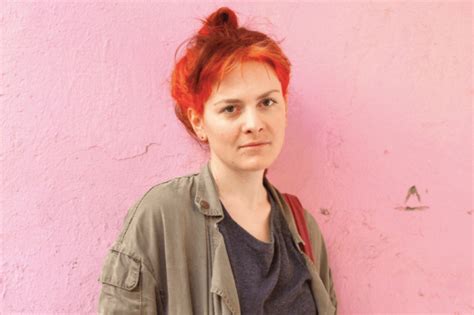

Dear Zarah,
Recently, several journalists and left-wing activists reached out to me asking for a comment on your position regarding the suspension of political and military support for the Ukrainian people. Whilst reflecting on how to respond, I decided to write you a personal letter instead. As a leftist and feminist activist from Russia who has been living in Ukraine for the past eight years, this seemed more appropriate than offering a dry neutral comment.
I am addressing you personally also because I see how people like you — those who appear on the global political stage — become a source of hope for many of the oppressed, whose voices and cries are still being drowned out by the speeches of dictators and the “pragmatic” calculations of capitalists who prefer to continue doing their dirty, bloody business with them.
For many younger generations of leftist activists, your name is associated with a promise of future and progress, as so many are tired of politics being made behind the closed doors of elite “men’s clubs,” to which we will never be invited. I know how important this is for my comrades in the UK, and during my visit to London on the eve of the pandemic, we spoke a lot about it —reading political poetry in squats and arguing in small bars about the future of our planet.
From birth until the age of 27, I lived in Russia. I grew up in Western Siberia, in the workers’ settlement of Chkalovsky in the city of Omsk, in a poor working-class family of mixed Moldovan, Romanian, and Ukrainian descent. We lived below the poverty line; we didn’t even have money to pay for electricity, so our home was often dark and without food. My parents still live in Chkalovsky, in a place that successful Europeans would probably call “the social bottom.” My friends, classmates, and lovers still live there. I am now 35, and I am still poor. I remain connected to my class and to the people who are losing their minds in this “prison of nations.” Since childhood, I have faced multiple forms of discrimination and persecution based on my ethnicity—simply because of my name, surname, and appearance. Later, I lived in Moscow and St. Petersburg, where I studied literature and then turned to research in the “philosophy of war,” seeking to understand the foundations of the idea of transforming an “imperialist war into a civil one” (a development best traced in Lenin’s Clausewitz Notebook). [1]
Read the rest of this entry »What is the problem with Yanis Varoufakis’ appearance in Moscow?
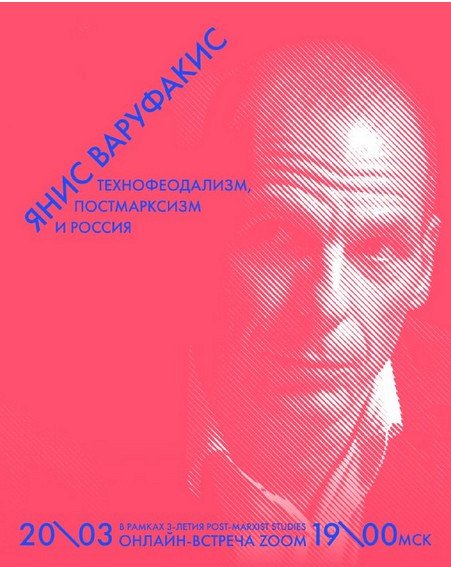
Greek politician Yanis Varoufakis is listed as a speaker at the BRICS Urban Future Forum 2025 to be held in Moscow, Russia, from September 17-18. Jeffrey Sachs was well recieved at last year’s event. Ilya Mateev wonders what Varoufakis hopes to achieve.
1. Education for Russians is good and right. I have no idea of “cancelling those living in Russia” – my approach is precisely the opposite. I do a great deal for education, discussion and bridge-building in Russia, though for obvious reasons I won’t write about this in detail. Overall, I am OBVIOUSLY in favour of any constructive activity involving those in Russia, and I consider this very important.
2. There are no problems with Varoufakis’s book being published in Russian. The book is rubbish and not worth the time spent on it, but that’s another conversation. The very fact of translation can only be welcomed.
3. Varoufakis is a public intellectual and even an activist (well, sort of). He had various options for engaging with Russians. He could have organised a closed Zoom event for Russian readers of his book and spoken with them candidly. After all, his DiEM25 [1] could have taken an interest in Russian opposition and left politics, Russian political prisoners, and so forth. Solidarity at the level of society and grassroots initiatives is both possible and valuable.
4. Varoufakis and his organisation did nothing of the sort. Instead, he went to the Moscow government’s urban planning forum. Such events are dubious in any country – they are thoroughly business establishment affairs, no place for leftists. In Russia there’s an additional factor – war, censorship, the impossibility of even asking a question without risk of criminal prosecution [2]. In such a situation, joining with bankers, developers, Chinese and Saudi surveillance companies is really beyond the pale.
5. Of course, Varoufakis does all this consciously. I think this is how he represents anti-imperialist struggle against the damned West and evil NATO (plus money, attention, first-class flights, etc.). This behaviour (whilst completely ignoring Russian grassroots initiatives) is precisely campism [3] – I’ll hang out with the Kremlin against the White House and Brussels. A dead end in political evolution.
6. The fact that I can’t even call on readers in Russia to ask Varoufakis some pointed question (because I have common sense) precisely demonstrates that he’s wrong to go and is engaging in nonsense. It’s shameful to speak at an event where the audience could get a two-year prison sentence [4] for their questions.
Ilya Mateev is one of the tens of thousands of anti-war Russians living in exile.
P.S.
Source: https://www.facebook.com/ilia.matveev
Translated for ESSF by Adam Novak
Footnotes
[1] DiEM25 (Democracy in Europe Movement 2025) is a pan-European political movement founded by Varoufakis in 2016, advocating for democratic reform of EU institutions and progressive economic policies
[2] Since Russia’s invasion of Ukraine in February 2022, the country has implemented increasingly harsh censorship laws, including criminalising “discrediting” the armed forces or spreading “fake news” about the war, with penalties of up to 15 years in prison
[3] Campism refers to the political tendency to reflexively support one geopolitical “camp” against another, often leading to uncritical backing of authoritarian regimes simply because they oppose Western powers
[4] Under current Russian law, individuals can face up to two years imprisonment for various speech-related offences, including “discrediting” the military or spreading information deemed “extremist”


 Tomás Ó Flatharta