Thanks to Duncan Chapel for the post below, and to Gregor Kerr for drawing our attention to the latest reactionary political message posted by the former Irish MEP’s Mick Wallace and Clare Daly
Thanks also to Europe Solidaire Sans Frontieres for a much better assessment of the late Ayatollah Ali Khamenei :
Respect to the Ayatollah: Mick Wallace and the Logic of Campism
On Sunday evening, while watching Torino v Lazio, a former left MEP posted his solidarity with the Supreme Leader of a state that had just killed seven thousand of its own citizens.
This is what campism looks like when it stops pretending. Mick Wallace, until 2024 an Irish MEP from the United European Left, posted the following to Facebook on the evening of 2 March 2026, apparently from a football stadium in Turin:
“Respect to Iran. Respect to Grand Ayatollah Ali Khamenei. Shame on the Political Class + Media who refuse to call out the lawless Terrorism of Western Imperialism + Zionism.” The hashtag was #TorinoLazio. Let us be precise about what has been said here. Not “oppose the bombing.” Not “solidarity with the Iranian people.”
And here we are. This is one outcome of arguing that one imperialism is less bad than another, that some people are oppressed while others either don’t exist (,Putin’s original playbook) or don’t really matter. Palestinians good, Ukrainians, Kurds? Not so much.
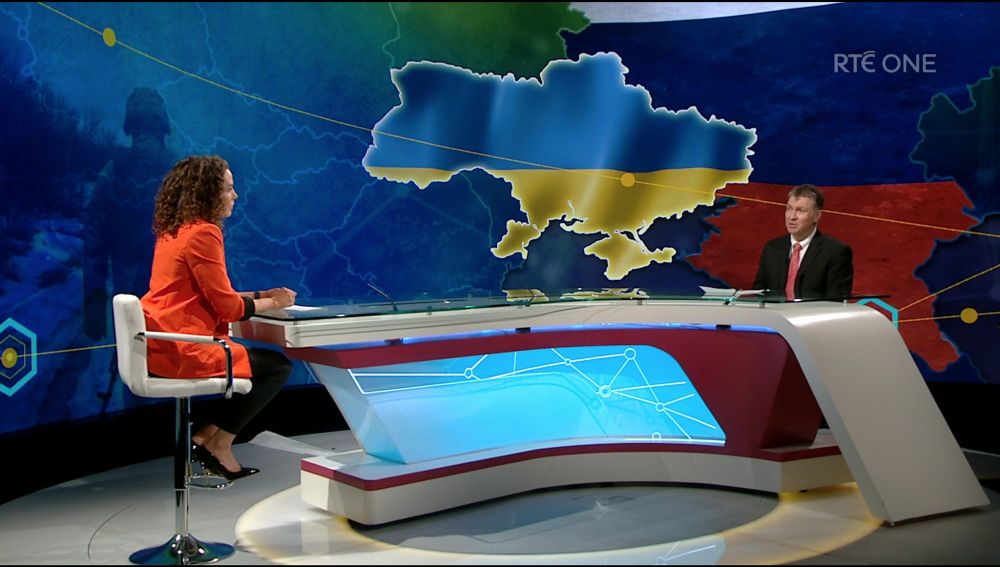
Clare Daly (ex MEP; a twice defeated Irish election candidate in 2024) was on the RTÉ 1 TV “Upfront with Katie Hannon” programme on February 17 2025, supporting the Trump-Putin stab in the back of Ukraine. She is like the peace activists who backed the Hitler-Chamberlain 1938 agreement selling out Czechoslovakia. A year later this “peace in our time” deal, promoted by a British Prime Minister Neville Chamberlain famously waving a piece of paper, paved the way for World War 2 in Europe and Nazi occupation of France, Holland, Belgium, Poland plus many more.
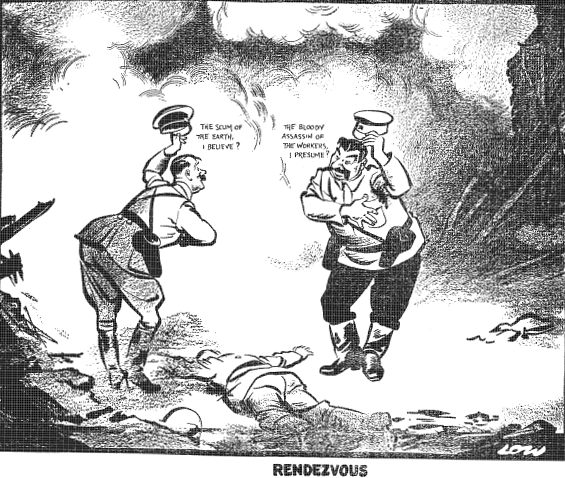
We also saw the Hitler-Stalin pact in 1939, followed in 1941 by – guess what? – a Nazi invasion of Stalin’s Russia.
Let us recall the various Clare Dalys, spiritual daughters of Stalin – one of whom claimed in 2022 that predictions Putin intended to invade Russia were “insane”.
Pro-Ukraine anti-war activists got it right, for example Donnacha Ó Beacháin :
3 years ago today I was in a TV studio expressing scepticism about Putin’s claim he was withdrawing troops from Ukraine’s borders On the same program Russia’s ambassador said anybody who suggested Russia would invade Ukraine was “insane”. Russia launched its full-scale invasion the very next week
Here is an account of the warnings Stalin ignored prior to the Hitler invasion in 1941.
Unlike the Germans, who saw the Non-Aggression Pact as necessary but temporary, Stalin had illusions that it might be lasting. Owen Matthews quotes from a 1966 interview with Marshal Zhukov, conducted by Lev Bezymensky, a Soviet historian and war veteran. In January 1941, Zhukov and others had warned Stalin of ominous German troop movements. Stalin wrote to Hitler, asking politely whether these reports were true. Hitler replied that they were, but he swore ‘on my honour as a head of state that my troops are deployed … for other purposes. The territories of Western and Central Germany are subject to heavy English bombing and are easily observed from the air by the English. Therefore I found it necessary to move large contingents of troops to the east where they can secretly reorganise and rearm.’ Stalin believed him.
Source : Winston Churchill : His Times, His Crimes, Tariq Ali, Verso Books,
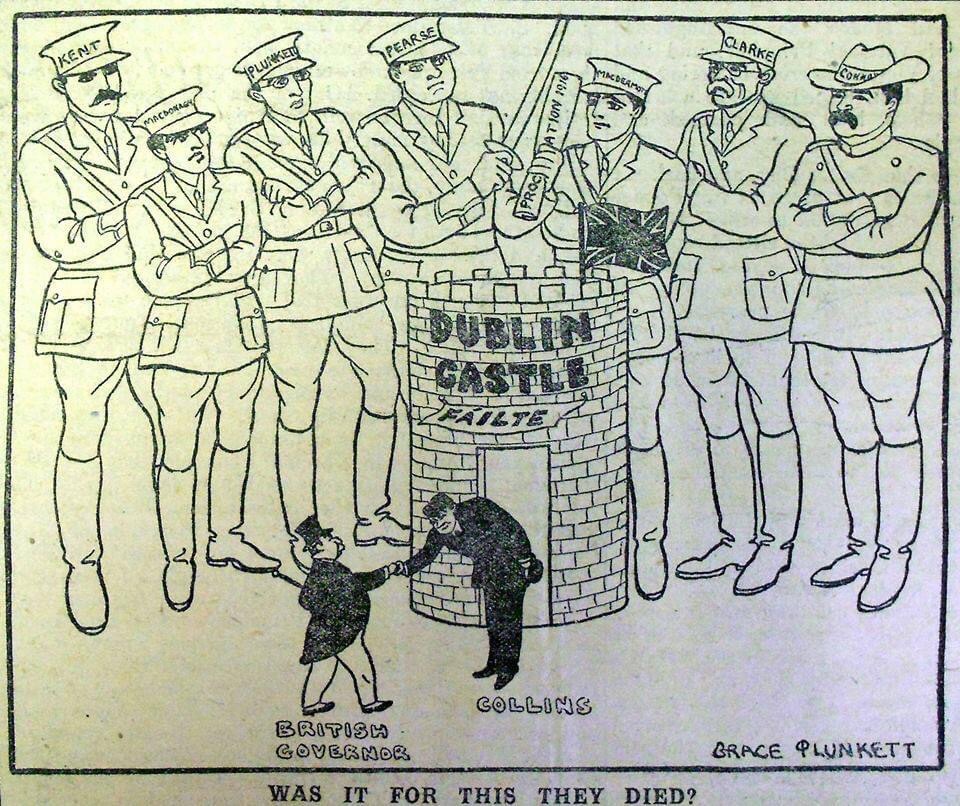
The 2025 Trump-Putin partition policy is a spiritual daughter of the 1922 Treaty which peace politicians used to stab Northern Nationalists in the back by implementing the partition of Ireland. This gave us, in the prophetic words of James Connolly, “A Carnival of Reaction” – 2 sectarian counter-revolutionary states on one small island.
Like James Connolly, Grace Plunkett (widow of 1916 Easter Rising martyr Joseph Plunkett) understood that partition, pretending to be peace, meant a sham freedom for Ireland.
So, today, it should be obvious to all on the left : oppose a peace and partition plan promoted by 2 violent untrustworthy sociopaths.
Ask the people of Canada, of Mexico, of Greenland. Ask the people of Ukraine, of Latvia, Lithuania, Estonia, of Poland , of Finland.
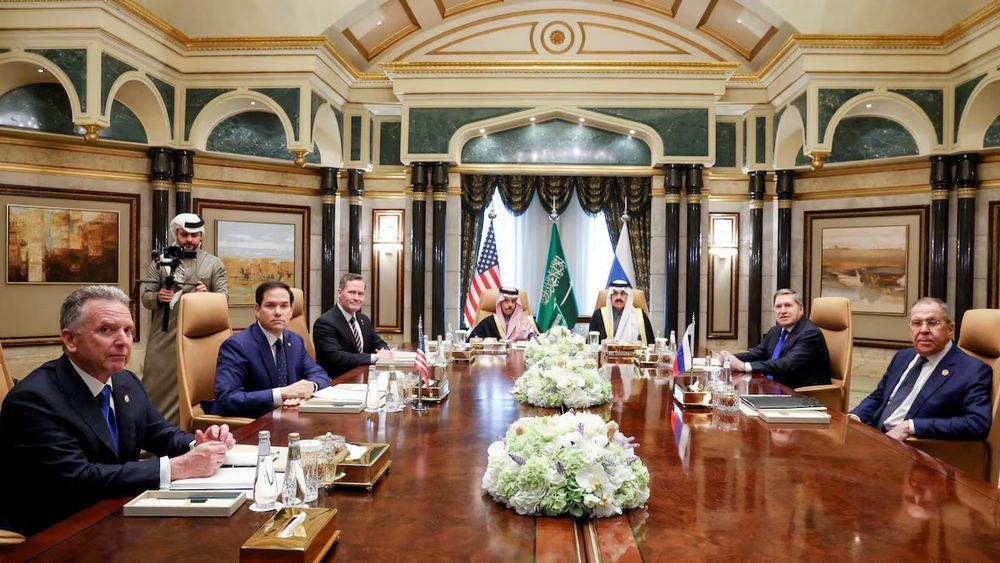
A dictatorship hosting another dictatorship to negotiate with an aspiring dictatorship about the future of a democracy that’s not represented.
Two superpowers opening discussions on the future of a country which one of them is still invading, without that country
Are the international pro-solidarity left organising solidarity with Ukraine? Answer Yes
A physical and online conference in support of the Ukrainian people’s national and social rights
No to partition! Russian troops out!
This important conference will address the grave threat posed by the incoming Trump administration’s intention of imposing on the Ukrainian people a deal agreed with Putin’s Russia.
Violating international law, it would partition Ukraine and entrench the occupation of territory annexed since 2014 and expanded by Putin’s full-scale war since February 2022. It would produce a “peace” imposed through Western acquiescence in the dismembering of Ukraine, with parallels to the 1938 Munich Agreement that handed Nazi Germany 30 per cent of Czechoslovak territory.
The vulnerable position presently confronting Ukraine’s war of just resistance is a direct result of the failure to provide necessary aid by key states, despite their boasting that they “stand by Ukraine”.
The dire prospect of a partitioned Ukraine partly under Putin’s control would be the product of the appeasement policy of those sections of big business anxious to restore and develop their Russian commercial ties. In contrast, the Solidarity With Ukraine conference of progressive forces—of trade unions, socialists, social democrats, green, feminists and other social movements—will take place on the understanding that the partition of Ukraine cannot bring peace.
The only road to a just and lasting peace requires the complete withdrawal of Russian forces. While they remain in any part of Ukraine it will be impossible for Ukrainians to freely determine their own future.
Any peace negotiations should be with Ukraine as a main partner: the war should not and cannot be solved as a horse trade between the great powers at Ukraine’s expense.
Against the decline in aid and a possible Trump-Putin deal, the organisers and sponsors of the Solidarity With Ukraine conference advocate a surge in military support to strengthen Ukraine’s position in any negotiations, and to be able to continue its just resistance if no security guarantees acceptable to Ukraine are achieved.
That military aid must be accompanied with unconditional financial support for Ukraine’s reconstruction and the cancellation of its debt. We reject the corporations’ self-interested argument that solidarity with Ukraine’s armed and unarmed resistance must mean accepting the dismantling of social rights and services, either inside Ukraine or in the countries giving it support.
The struggles of Ukraine’s working people and their trade union organisations, and of the country’s feminist, environmental, LGBTIQ+ and human rights organisations have been indispensable to the country’s resistance, primarily against the Russian invasion but also against anti-social policies adopted by the Zelensky government. They are also the best guarantee that reconstruction will be in the interest of Ukraine’s social majority.
The message of representatives of such Ukrainian movements will be a central feature of the plenary sessions of the Solidarity With Ukraine conference.
They will also participate in workshop sessions that will provide an invaluable opportunity to increase understanding of Ukraine’s complex reality and develop practical solidarity initiatives with Ukrainian partners.
The conference will also adopt a final declaration, with the goal of giving as much publicity as possible to its position in favour of a just peace and just reconstruction for Ukraine and its people.
The final text and the Solidarity With Ukraine conference program will be published soon.
Diana O’Dwyer presents a refreshingly honest and interesting analysis of the November 29 2024 Irish General Election result. No attempt is made to hide an obvious fact : this was a setback for the left.
People Before Profit’s (PBP) slogan during the election campaign was “End 100 years of Fianna Fáil and Fine Gael”. But now we are facing into yet another Fianna Fáil-Fine Gael (FF-FG) government. Why has this happened? Are we stuck in a never-ending Groundhog Day or does hope for radical change remain?
After the last election in 2020, escape from a century of FF-FG rule seemed not just possible but probable. The cycle of alternation between the two frenemies had finally been broken with the identical twins of Irish capitalism forced into a grand coalition, propped up by the Green Party with external support from right-wing Independent TDs. [2] The 2008 economic crash and the decade of social upheaval and struggle that followed had enabled Sinn Féin (SF) to steal the mantle of the largest party in the Dáil for the first time and it looked certain to lead the next government.
But now, almost 5 years later, FF and FG have returned with an extra 13 seats and are only one seat short of a majority – compared to 7 short last time. They are not any more popular than they were in 2020 – their share of the vote actually fell slightly (by 0.4%). But in a situation with little in the way of class struggle and where no clear alternative was posed, they were able to maintain and even improve their position. FF topped the poll at 22%, followed by FG on 21% and SF on 19%.
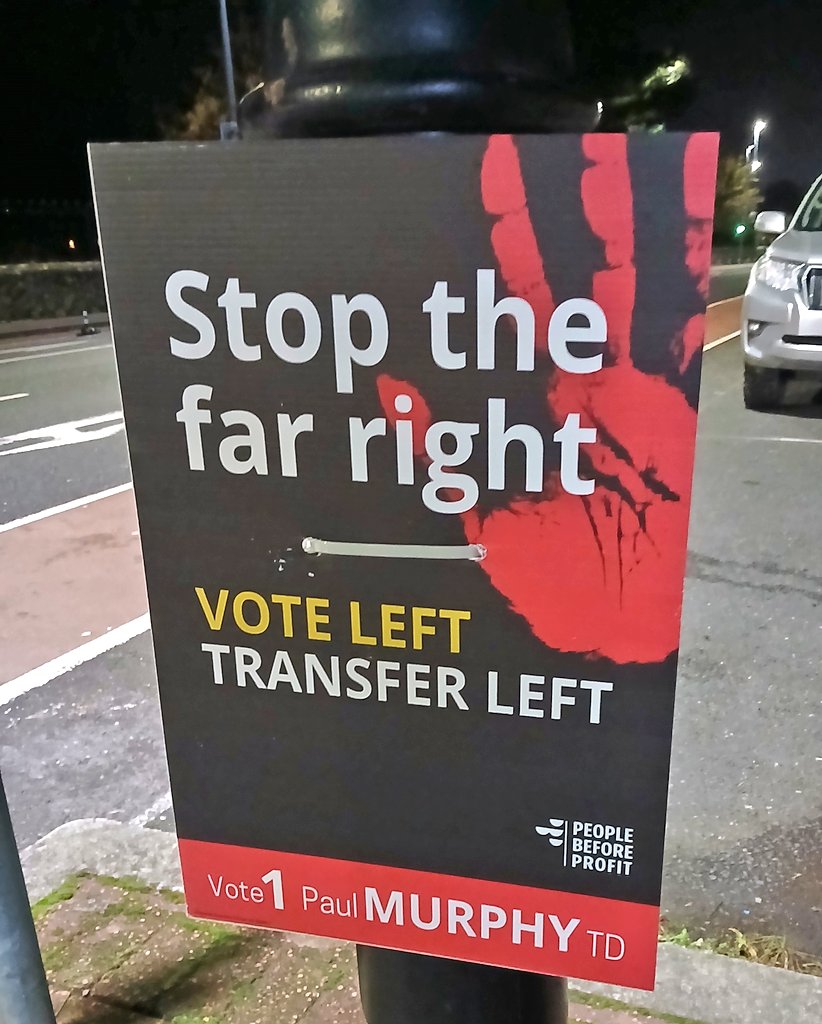
How To Vote on November 29? Oppose Any Coalition with FFFGGG – Stop the Far Right : Vote Left, Transfer Left
FFFGGG Equals ; Fianna Fáil, Fine Gael, Greens, Gombeens.
The 2020-2024 coalition government was composed of three parties : FF, FG, and the Greens – and was regularly supported by Right-to-Racist Gombeens (Independents) in the last Dáil.
In this context it is important to know the identity of left-wing and right-wing independent candidates.
A Cedar Lounge Blog writer has done a great job identifying credible candidates on the left who are often categorised as independent. Link : Possible Left Independents in the next Dáil
Irish General Election to 34th Dáil; Racist Danger
The June 2024 Euro/ Local results in Ireland produced some alarming results – the racist far-right came from the margins and increased its electoral support. This could be a predictor of the coming General Election result.
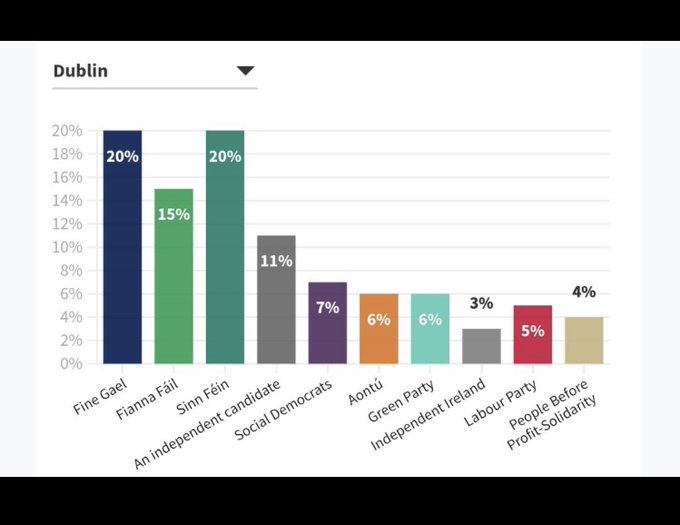
Warning signs to anti-racists exist in various opinion surveys. See, for example, these numbers from a recent RedC General Election Opinion Survey) :
Aontú, a right-wing split from Sinn Féin set up by an anti-choice TD from Meath, Peadar Tóibín, is beginning to hoover up right-wing racist votes which were scattered among various mini-Hitlers in the June 2024 European and Local Elections. We can say the same for the Irish Independence party (II). When we note that a majority of independent candidates are part of the racist far-right, a disturbing picture emerges. The numbers are worse in other parts of the Irish state.
Here is the data from an Irish Times Opinion Poll :
Irish General Election November 29 2024 Irish Times Survey Results 15/11/24
First preference voting intentions
Dublin
Rest of Leinster
Munster
Connacht/Ulster
Fianna Fáil
16.00%
19.00%
27.00%
13.00%
Fine Gael
22.00%
29.00%
22.00%
29.00%
Labour
9.00%
3.00%
2.00%
3.00%
Green Party
6.00%
2.00%
1.00%
2.00%
Sinn Fein
21.00%
16.00%
19.00%
21.00%
People Before Profit/Solidarity
4.00%
1.00%
2.00%
1.00%
Social Democrats
5.00%
5.00%
2.00%
2.00%
Aontú
2.00%
4.00%
3.00%
2.00%
Independent candidate
15.00%
21.00%
21.00%
25.00%
Temptation exists : bending to “understandable” fears. For example an election canvasser from a party with one foot in the left put it to me that some voters are “uncomfortable” because their neighbours come from outside Ireland.
Let’s be clear, harsh, and unambiguous : messages like this pander to the racist view that immigrants are criminals and rapists. There is no evidence backing up claims that people born outside Ireland are any worse than Irish natives. It gives oxygen to the far right shite being whispered around communities.
During the interview Cristina asks Ilya about Pablo Gonzalez (real name Pavel Rubtsov ) who was accused of espionage in Poland. See postscript about an Irish connection at the end of this fascinating interview.
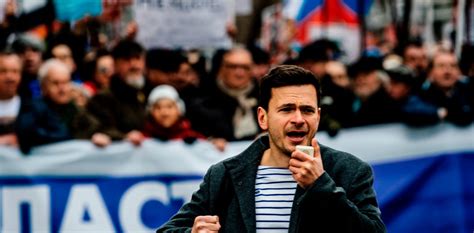
Ilya Yashin—Interview with Cristina Mas, Ara, September 30, 2024
Ilya Yashin is a Russian opposition politician who was released from prison on August 1, in the prisoner exchange between Russia and the United States. Since his exile in Germany, he has been touring several European cities to reach out to the Russian diaspora, which has taken him to Barcelona. Yashin, now 41, was jailed in 2022 for criticizing the invasion of Ukraine on his YouTube show. He was sentenced to eight and a half years in prison for denouncing the Butxa massacre. He is now free thanks to the largest prisoner exchange of the Cold War, in which sixteen Russian political prisoners and U.S. citizens Evan Gershkovitx and Paul Whelan were exchanged for prisoners in the West claimed by Russia, including Spain’s Pablo Gonzalez, accused of espionage, and Vadim Krasikov, who shot a man in the head to death in a Berlin park on Moscow’s orders.
Survey responses often depend on how the question is framed.
Like me, I am sure many readers are sick and tired of tactics used by many mainstream media organisations to bolster a sinister racist agenda. This is a drum regularly beaten by friends who post at two excellent blogs : Irish Election Projections and the Cedar Lounge Revolution
Sources :
Further demonstration of how dependent issue polling is on the way the question is phrased.
Positive questions about migration (as seen here) yield positive answers, while negative questions (as typically commissioned by newspapers) yield negative ones https://t.co/LPHAnW4fTc
— Irish Election Projections (@irishelectproj) August 29, 2024
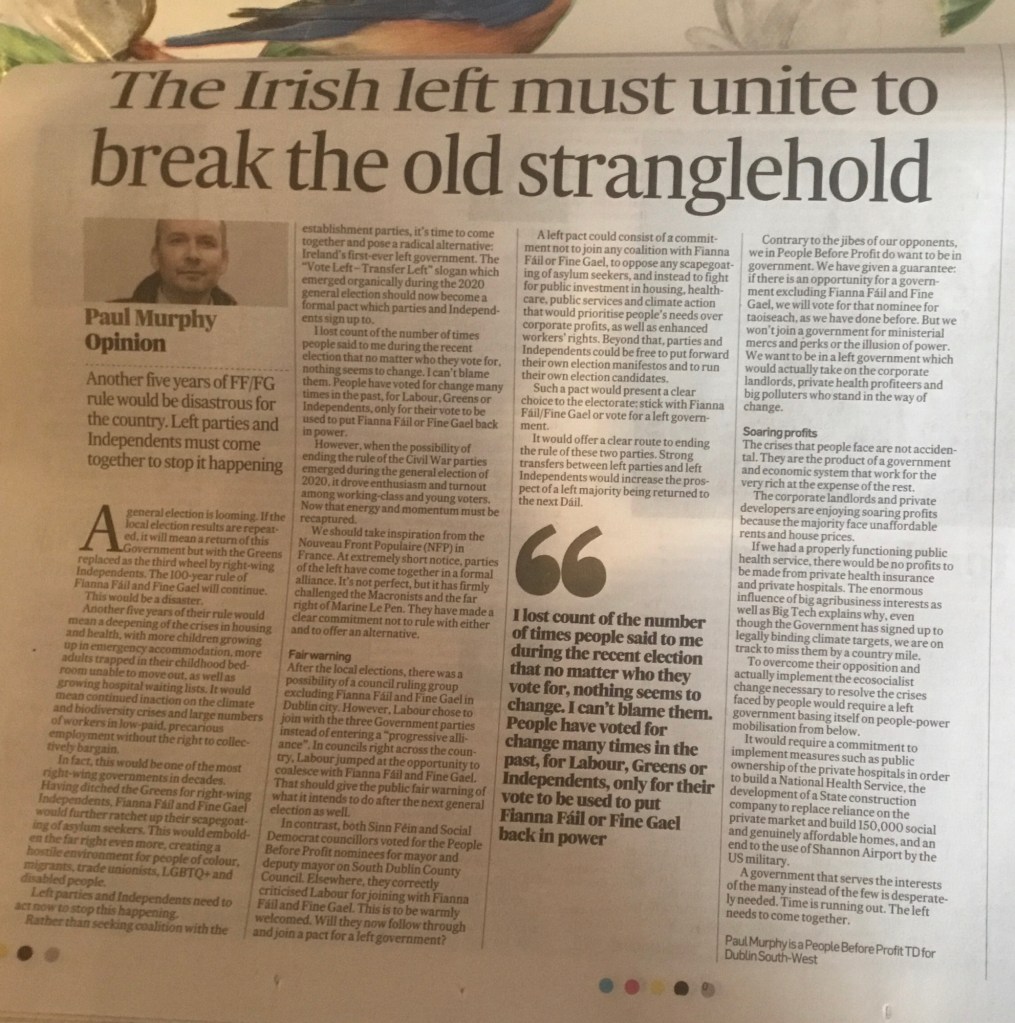
Paul Murphy’s opinion piece in the July 4 2024 edition of the Irish Times makes a strong case :
“Another five years of FF/FG rule would be disastrous for the country. Left parties and Independents must come together to stop it happening”
There is a bottom line :
No coalition with Fianna Fáil or Fine Gael.
The Irish Left must unite to break the old stranglehold, Paul Murphy TD (People Before Profit, Dublin South-West), Irish Times, July 4 2024
Time for a new united left alliance to topple Fianna Fáil and Fine Gael
Another five years of FF/FG rule would be disastrous for the country. Left parties and Independents must come together and stop this happening
A general election is looming. If the local election results are repeated, it will mean a return of this Government but with the Greens replaced as the third wheel by right-wing Independents. The 100-year rule of Fianna Fáil and Fine Gael will continue.
This would be a disaster.
Another five years of their rule would mean a deepening of the crises in housing and health, with more children growing up in emergency accommodation, more adults trapped in their childhood bedroom unable to move out, as well as growing hospital waiting lists. It would mean continued inaction on the climate and biodiversity crises and large numbers of workers in low-paid, precarious employment without the right to collectively bargain.
Sometimes, a campaign alters the balance of forces in a significant manner. We can compare this fresh statistical evidence from Scotland with the real result which will appear in the early hours of Friday July 5 2024. Has British Unionist Sir Keir Starmer snatched defeat from victory in Scotland?
Sir John Curtice delivers his assessment of the latest poll results from Savanta, for The Scotsman
Labour look set to make significant gains north of the border. And the SNP are at risk of falling short of their target of winning at least half of Scotland’s seats at Westminster.
However, the battle between them now looks as though it could be significantly closer than Labour had hoped and the SNP feared when Mr Sunak called the election six weeks ago.
At that point Savanta reckoned that Labour were on 37 per cent, four points ahead of the SNP. Their lead was even slightly bigger, five points, in the middle of June. Yet in today’s poll support for Labour is, at 31 per cent, six points down on the beginning of the campaign, and seven points short of the middle of June.
Provisional results of the 2024 European Elections, as at June 19. Source: results.elections.europa.eu
At first glance it looks as if the parties to the left of the social democracy held their ground against the surge of the far right and mainstream right that marked the June 9 European Union (EU) parliamentary elections (see here for results in detail).
Although the smallest of the European parliament’s seven groups, The Left managed to maintain its EU-wide vote at 5.4% and increase its seat tally from 37 to 39 in the 720-seat assembly.
In addition, left green Members of the European Parliaments (MEPs) and those representing stateless nations (part of the Greens group as the European Free Alliance) at least maintained their numbers in the chamber.
Yet the Greens group as a whole shrank from 71 seats to 53 while that of the liberals (known as Renew) fell from 102 to 79. This drop reflected that the environmental issues that in part drove the big advance of these parties in the 2019 election were less important for many voters this time.
The campaign was dominated by insecurity about the future, the cost of living (particularly housing), the fear of war, the “immigration threat” and intolerance of difference.
In this grim atmosphere the biggest growth went to the mainstream right European People’s Party and the two far-right groups (Identity and Democracy and Conservatives and Reformists): taken together the right and far right won an extra 30 seats, bring it to 324.
Because it would take only 37 ungrouped MEPs to join them to from a reactionary majority, the June 9 result poses with new urgency two old questions about politics in the European parliament. How much, if at all, does the real balance of political forces in the chamber differ from that among its formal groupings? And how much does membership of a group represent disciplined commitment to its positions?
Left divisions over Ukraine
The questions are sharply relevant in the case of the Left group, where differences over what stance to take towards the Russian invasion of Ukraine were already pointing towards a split before June 9.
On May 31, Li Andersson, chairperson of the Finnish Left Alliance told the Helsinki Times that these differences could not be tolerated in the group in the new legislature. Referring to Clare Daly and Mick Wallace, Irish left independent opponents of military aid to Ukraine, Andersson said: “The Nordic Green Left as a whole [covering Finland, Sweden, Denmark, Norway, Iceland, Greenland and the Faroe Islands] is of the opinion that if they manage to win re-election, they can’t join our group.”
For Andersson, the same went for the new Sahra Wagenknecht Alliance: For Reason and Justice (BSW), a split in Germany from leading Left group member Die Linke (The Left). BSW opposes military aid to Ukraine and supports resuming the gas trade with Russia, in common with most of Europe’s far-right parties.



 Tomás Ó Flatharta