Archive for the ‘International Political Analysis’ Category
The struggle has moved far “Beyond Bernie” | International Socialism Project
Mainstream USA politics is dominated by the Republican and Democratic parties, which are a Tweedledee-Tweedledum option.
An antidote for the radical left can be an erupting mass movement – a factor largely absent from the American continent for decades, but suddenly back in play since police officer Derek Chauvin choked gentle giant George Floyd to death in Minnesota.
The Black Lives Matter Movement has swept through the American continent, and detonated anti-racist protests across the globe, including Ireland.
First example : a wonderful mural in Tallaght, a working class district of Dublin, the constituency of RISE radical left TD Paul Murphy.

Annemarie Blake’s Mural Honouring George Floyd, Tallaght, Dublin
Second example : large Black Lives Matters demonstrations at the Ballsbridge American Embassy, a prosperous part of Ireland’s capital city.

Black Lives Matter Demonstration, USA Embassy, Ballsbridge, Dublin
Before the eruption of mass street-level struggle in the States, many sectors of the radical left made a valiant effort to break their isolation by critically supporting a left-wing candidate, Bernie Sanders, using the label of a Tweedledee party, the Democrats. Read the rest of this entry »
Bernadette Devlin retains Mid-Ulster Westminster Seat June 1970 – June 2020 campaigns because Black Lives Matter!
50 years ago, on June 19 1970, Bernadette Devlin, an Independent socialist candidate, retained the Mid-Ulster Westminster seat she first won in a 1969 by-election. She continued to use these impressive electoral victories as platforms for building progressive mass movements. She is still a very committed political activist.
Viva Bernadette!

The RTÉ report below includes one significant mistake. In North Antrim the reactionary far-right rabble-rouser Ian Paisley won the North Antrim Westminster seat for the first time, unseating the sitting Unionist MP.
Protestant Unionist Paisley won the Stormont Bannside constituency in 1969, former seat of ex-Stormont Prime Minister Terence O’Neill, a right-winger not right wing enough for the Unionist Party.
Read the rest of this entry »Prosecution Threats Against Black Lives Matter Protesters – Derry, Belfast June 6 2020
Disgraceful events in Belfast and Derry – resistance is stepped up.
The originators of a statement supporting Black Lives Matter have condemned the Derry Journal for refusing to print a paid advert for the statement in today’s issue.
Dermie McClenaghan, Bernadette McAliskey, Eamonn McCann and Kate Nash, said that they were “deeply disappointed” at the paper’s decision.
They point out that the statement had already been published in full in a paid advert in the Derry News.
The signatories went on: “The statement condemned police action at the BLM protest in Derry on June 6 and was critical of some local interests which had called for the protest to be abandoned. We supported the decision of the BAME community in Derry to go ahead with the protest. We reiterate that support.

“There are two pandemics ravaging the world – Covid-19 and racism. The anti-racist demonstrations in Derry and in Belfast were meticulously arranged to meet public health requirements. In Derry, the PSNI operation – as if for a major riot – made the arrangements difficult to uphold.
Read the rest of this entry »The Workers’ Party in Ireland Splits Again
Gavin Mendel-Gleason, a supporter of the WP wing which has expelled the “northern business committee” makes a statement open to possible alarming interpretations :
While they would have been afraid to move with Sean Garland still alive, they saw their chance with his death.
A sister party in the foreign fields of North Korea is also called the Workers’ Party.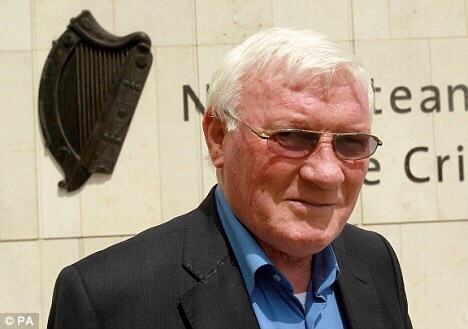
Was the WP northern business committee trying to avoid a fate similar to the late Kim Jong-Nam after he fell out with his brother Kim Jong-Un? Presumably Gavin Mendel-Gleason does not have the same clout as Seán Garland or the leaders of the Kim dynastic family? Read the rest of this entry »
American Biden-Democrat “Hostility” to Trump – Not the same as “Opposition” – A Highly Recommended Article
At times readers of online political commentary despair going through useless drudge that can be found on the internet. But if you keep at it, watch for sources you know are usually solid and reliable, you find excellent material. This article came to the attention of the Tomás Ó Flatharta blog via an FB friend Suzi Weissman.
https://www.kpfk.org/on-air/suzi-weissman/
It is a devastating, withering, attack on the Biden-Democrat “hostility” to the Trump administration – which is not the same as opposition. A stunning catastrophe looms now in the USA as the Trump Government “opens up” this land to the Covid-19 Monster at the Door of New York. Now, more than ever, the USA radical left must look towards the November 2020 General Election, and attempt to offer a credible alternative to the Evil Biden-Trump Tweedledee Monster. Shame on Bernie Sanders. The article concludes :
Bernie’s consistent criticism falls flat these days as he loyally signs on to the party consensus while trying to push additions and improvements. AOC is a lone voice in the wilderness daring to cast the occasional no vote.
What’s left are endangered and desperate people daring to walk off the job and appealing to their peers for support. We the people are on our own and must find our own way forward without waiting for leadership that doesn’t exist. By shedding illusions to the contrary, we open up new possibilities.

An internal government document circulating in the United States projects a surge in coronavirus cases and a sharp rise in daily deaths by June 1, the New York Times reported, even as President Donald Trump urged states to lift restrictions in place to quell the pandemic.
The document, based on modelling by the Centers for Disease Control and Prevention, projects that COVID-19, the respiratory disease caused by the virus, will kill 3,000 Americans a day by the end of May, the Times said on Monday, up from a current daily toll about 2,000. https://www.aljazeera.com/news/2020/05/model-projects-fold-increase-coronavirus-cases-200504185028572.html
Hostility Is Not the Same As Opposition – Resistance is Needed
There is hostility, which is not the same thing.
Opposition implies a critical analysis and an alternative program, that is, an examination of what is being done wrong, why this is so, and what should change. On all three points, the loudest non-Trump voices offer confusion, distraction, and hypocrisy, not leadership around which a movement could cohere.
What is wrong? Read the rest of this entry »
On the Turn to Industry, the American SWP and other questions of IMG history
The IMG was the International Marxist Group, the British Section of the Fourth International (FI) in the 1970’s. This is an interesting Phi Hearse article for anoraks (!) who study the history of radical-left political currents. It analyses the Fourth International “Turn to Industry” Policy of 1979 and following years. This policy, in my opinion, contributed to a political decline of People’s Democracy (PD) in Ireland in the 1980’s – although that was not the only factor. We live and learn.
Others may make a different political judgement, and that’s OK. One of the FI people I worked closely with in the 1980’s was Gerry Foley, an early target of the American Socialist Workers’ Party (SWP), which drove the FI “Turn to Industry” Policy at that time. However, for most of the 1970’s, Foley and me were on different sides in FI debates, and did not agree about the history of that period. Some of Foley’s co-thinkers were known for endlessly going on about “the ultra-left turn” of the 1969 FI World Congress, and guerillaism. That all happened before I joined the FI in 1974, when that debate was on the way towards a reasonably amicable conclusion. Even more bizarre, rival groups went on and on about “Pabloism” – a debate belonging to the 1950’s! These days you still come across comrades endlessly droning on about the 1969 World Congress – some of these people, like me, were not directly involved in those discussions at all! So, I do not endlessly drone on about the 1979 “Turn to Industry”. – John Meehan
An update, two observations from an online discussion :
Liam Mac Uaid :
A couple of observations to supplement what Phil has written.
The turn made very little sense in Ireland at the time. It was a period of mass emigration from a country with a very small industrial base. This was accentuated in the north by the fact that most of the skilled industrial jobs were not open to Catholics.
I remember informing the branch that I’d got the job in the sewers. My mother had said to me something along the line’s of “Tommy’s niece’s husband is looking for men to work in tunnels”. I’d been reading a lot about Vietnam at the time and it seemed a useful revolutionary field of knowledge.
There were a couple of American SWP members at the meeting on the revolutionary tourist circuit and they were very impressed by this application of the line.
The American SWP’s influence was ultimately quite pernicious internationally. The Barnes leadership were imitating the Mormons and sending people all over the place. Along with the Ross group they were encouraging people in Ireland to liquidate into Sinn Fein. A complete political liquidation would have been the only way to enter an organisation controlled by the Army Council. Those who followed their advice and are still politically active became part of the Provie grantocracy. Though the political degeneration was pretty rapid.
My first few months in England were no fun. I got a job in a chemical factory where the least lumpen worker was in the National Front. It was simply what the job centre had given me. This would have been the SWP US dream, but it was grinding and futile. As Phil says, comrades who got jobs in unionised, strategic jobs were able to do useful things.
This Jim Monaghan observation adds another interesting jig saw piece to the picture we paint : “My partner, Jackie, had an argument in New York with SWPers, when they refused to accept that large sectors of industrial employment was barred for nationalists in the 6 counties.”
John Meehan :
I remember an interesting turning point at one meeting. I am unsure about the exact date. I will try to find it. I had been warning for a few years against the “turners” and the dangers of the American SWP policy. I was making little progress inside PD. Then Malik Miah and another SWP turner – I think his name was McBride – were over for a PD Conference. A group of PD comrades met these two Americans privately. This meeting was set up by two firm supporters of the American apparatus. The idea was to draw in extra supporters. The baptism and brainwash manoeuvre backfired. Quickly afterwards one particular comrade made his way to me in a very determined fashion. This was a revelation moment. This comrade, who rejected the road to political and personal doom was Trutz Haase, a German Born guy who had settled in Dublin. Trutz said to me – I did not believe what you were saying about the American SWP and the Turn up till now – but you are right! I think the Americans were advocating that comrades get jobs in “heavy industry” which a) did not exist in Ireland at that time and b) we were going through one of those regular bouts of hideous mass unemployment. Trutz became a very supportive comrade to me, but also a very close and supportive friend – that friendship endured long after he dropped out of PD.

The following was written by Phil Hearse, in April 2020, in response to comments on the Socialist Resistance discussion list. We are grateful to Phil…
On the Turn to Industry, the American SWP and other questions of IMG history
Left Politics after Sanders: Think Internationally, Historically and Dialectically – New Politics
Peter Drucker’s useful article examines radical left electoral initiatives in various parts of the world. It includes descriptions of the Left Bloc in Portugal and the Red-Green Alliance in Denmark. These are examples which should be compared with the experiences of radical left candidates in Ireland.
Drunker concludes with a plan of action leading up to the November 2020 USA General Election. He highlights the campaign of Green Eco-Socialist Candidate Howie Hawkins, rejecting lesser-evilists like Bernie Sanders, who lined up behind Joe Biden of the Democratic Party.


And what about the national election this November? Leftists are understandably preoccupied with stopping Trump. But Biden is a terribly weak reed to lean on in the fight against the racist far right.
Particularly in the forty-odd states where either Trump doesn’t stand a chance (California, New York, Massachusetts) or Biden doesn’t stand a chance, a vote by leftists for Biden – up to his knees in the shit of the Iraq war, the destruction of welfare, the growth of mass incarceration, the power plays of Big Pharma and more – is a wasted vote if ever there was one. Especially when there is a clear alternative – presumptive Green candidate Howie Hawkins – who is himself a long-time stalwart of the socialist left.
Given the groundswell on the left toward a critical vote for Biden, independent-minded socialists may be tempted to soft-pedal this debate. I think that would be a mistake. Of course, we shouldn’t push the debate to the point of alienating our allies in the movements. But neither should we imagine that what people do for a couple of minutes in the privacy of a polling booth is harmless.
In times of polarization like these, people and especially activists usually don’t keep their voting plans secret. Their declarations that of course they’ll vote for Biden to stop Trump help keep broad social milieus in the Democratic Party’s orbit. Even more serious, movement organizations’ success in delivering votes to Biden will be the currency for years of their quid pro quos with the Democrats: some crumbs for my base, some jobs for my staff, in return for lasting political allegiance.
For all their imperfections – notably their shallow roots in social movements – the Greens, who explicitly declared themselves anti-capitalist in 2016, offer the clearest possible rebuke to this kind of lesser-evilism. A vote for them is a small but meaningful step in the direction of the future new socialist party. So let’s take and advocate that step.
— Read on newpol.org/left-politics-after-sanders-think-internationally-historically-and-dialectically/
Vietnam: 45 Years After the War Finally Ended – Country Joe McDonald’s Passionate Woodstock Anti-War Song Inspires Presidential Candidate Howie Hawkins
How refreshing! Howie Hawkins, an eco-Socialist candidate in the November 2020 USA Presidential General Election, recalls a funny, sarcastic and moving Country Joe McDonald song which went worldwide in 1969 after a stunning live performance at the Woodstock Rock Music Festival. The biting realism spoke to hundreds of millions, motivating them to act in thousands of ways against the Washington War Machine.

I can’t remember when, exactly, I first heard McDonald’s brilliantly sung call to action – probably before attending my first USA Embassy Demonstration in Ballsbridge Dublin against the Vietnam War.
I was shocked, and pleasantly impressed, to meet some some fellow school students at this venue – one of those “what are you doing here? moments” – and was even more stunned to see my teacher of Italian, Sydney-Bernard Smyth, reciting his own poems from the platform.
The anti-capitalist spirit of McDonald’s song is captured here :
Come on wall street don’t be slow
Why man this war is a go-go
There’s plenty good money to be made by
Supplying the army with the tools of its trade
Let’s hope and pray that if they drop the bomb,
They drop it on the Viet Cong
A strength of the Hawkins account is that the support he offered to the anti-imperialist cause is and was critical – the national liberation struggle led by the Vietnamese Communist Party and its leader Ho Chi Minh was a just cause, but it was not perfect or flawless. This practical intellectual framework is badly needed today. Many people outside Ireland watch the Donald Trump led horror story in America, and the honourable, but flawed, electoral left-flavoured opposition which was headed by Bernie Sanders. Sanders now takes sides in a useless reactionary contest between TweedleBiden of the Democrats and TweedleTrump of the Republicans, bringing to mind the dismal and barren electoral contest between Richard Nixon and Hubert Humphrey in 1968. Many enduring lessons were taught in the USA and across the globe by the mass movement against the Vietnam War. – John Meehan
“What are we fighting for?” – Country Joe McDonald
When I had to prepare for a 7th grade classroom debate on the Vietnam War in Spring 1965, President Johnson had begun escalating the war with the massive bombing of Operation Rolling Thunder and the deployment of a few thousand Marines to Da Nang, the first of what would become nearly 200,000 US troops by the end of 1965 and over 500,000 in 1968. I learned that the US had signed the 1954 Geneva Accords, which provided for an election in 1956 to unify Vietnam and establish an independent government. But I also learned that the US had prevented the election because it knew the winner would be Ho Chi Minh, the Communist leader of the Viet Minh, the nationalist coalition for independence that had defeated the Japanese and then the French imperialists. The Viet Minh controlled the North, but the French had retaken the South when the Japanese left with US military support from the Truman and Eisenhower administrations until the French were defeated at Dien Bien Phu in 1954 and gave up their colonies in Indochina. I read the 1945 “Vietnamese Proclamation of Independence from Japan and France.” Ho had drafted and modeled the proclamation after the American Declaration of Independence in consultation with operatives from the OSS (predecessor of the CIA), who had been helping the Viet Minh fight the Japanese during World War II. None of this was on the nightly news, which broadcast Johnson’s justifications for the war. I was outraged at the hypocrisy of the pro-war US political leaders who talked of democracy and self-determination but were opposing it in Vietnam. What are we fighting for?
When the Daniel Ellsberg leaked the Pentagon Papers in 1971, all of these violations of America’s professed values were more thoroughly documented by internal Pentagon documents. What also became clear in those leaked documents is that US political leaders knew the whole time that the US could not defeat Vietnamese nationalism and win the war. Yet they continued to send young Americans to die in Vietnam so they didn’t appear soft on Communism in domestic politics. What are we fighting for?
When my draft number came up in 1972, I enlisted in the Marine Corps and in the GI resistance to the war. When I got to Quantico for bootcamp for officer candidates, I was training with a lot of Vietnam combat veterans now in college on the GI bill and coming back in the Marines to become officers—and most of them opposed the Vietnam War. They loved the anti-war anthem of the Navy veteran, Country Joe McDonald. His “Feel Like i’m Fixing to Die Rag” captured the hypocrisies of the US war in Vietnam and the spirit of the anti-war movement inside as well as outside the military. For the military rank-and-file, the song gave voice to their real feelings about how they were treated as expendable pawns by the military brass and the country’s political leaders. What are we fighting for?
It took 19 years after the 1956 election that the US prevented for the Vietnamese, with the assistance of the anti-war movement and the GI resistance, to finally expel the last US forces 45 years ago on April 30, 1975. US leaders said we were fighting Communism. Washington’s aggressive war the cost of lives of nearly 4 million Vietnamese. The Communists won and today preside over a predominantly capitalist economy. What are we fighting for?
Today multinational corporations from the US, China (Vietnam’s millennial-old colonial nemesis), Japan, South Korea, and other nations locate factories in Vietnam to exploit cheap labor and environmental laws so lax and unenforced that the legendary General Vo Nguyen Giap, who had led the Vietnamese People’s Army in defeating the Japanese, French, and finally US occupiers, became Vietnam’s most prominent a environmental, pro-democracy, and anti-corruption dissident, criticizing Vietnamese state and party leaders on these issues until his dying day in 2013 at the age of 102. What were we fighting for?
And what are we fighting for now? It’s not for us regular people. We are not why the US now has over 800 foreign military bases. We are not why the US is officially engaged in 7 endless wars and covert special operations in well over 100 foreign countries. We are not why the US is continuing to impose economic sanctions on countries that need aid and trade right now to fight the coronavirus. The US war machine is not about defending Americans in our homeland. It is about making the world safe for profiteering by US-based global corporations.
What are we fighting for? We should be fighting to dismantle the US Military/Industrial Complex. Instead being the world’s military empire, we must demand that the US become the world’s humanitarian superpower. Let’s make the US use its wealth and knowledge in a multi-lateral Global Green New Deal that reverses climate change and provides for the basic needs of all. Let’s make friends, instead of enemies. Let’s make peace, instead of war.
— Read on howiehawkins.us/vietnam-45-years-after-the-war-finally-ended/
An accidental beginning :
The audience largely ignored his eight-song set. His tour manager said that since nobody was paying attention, why not do the number he was saving for tomorrow night? The singer walked back out, alone, and called to the masses, “Give me an F!”
That got their attention. They knew the routine. The crowd at Woodstock, half a million strong, rose to their feet and joined in Country Joe McDonald’s antiwar war cry, chanting along from the opening expletive all the way to the “Whoopee! We’re all going to die” capper. Captured in Michael Wadleigh’s Oscar-winning 1970 documentary “Woodstock,” the three rousing minutes of Mr. McDonald’s acoustic version of “The ‘Fish’ Cheer/I-Feel-Like-I’m-Fixin’-to-Die Rag” became the premier Vietnam War protest anthem.
“I never had a plan for a career in music, so Woodstock changed my life,” Mr. McDonald, now 75, said in an interview from his home in Berkeley, Calif. “An accidental performance of ‘Fixin’-to-Die,’ a work of dark humor that helps people deal with the realities of the Vietnam War, established me as an international solo performer, then the movie came out and the song went on to become what it still is today.” https://www.nytimes.com/2017/10/10/opinion/country-joe-vietnam-woodstock.html
“It is the Henri Weber who sang the Internationale with Higelin that we mourn, not the one at the service of the political apparatus of the PS” – Life of a French Activist who shifted from Anti-Capitalist Revolution to Pro-Capitalist Submission
Often at Irish funeral wakes some people say “Never speak ill of the Dead”. They do not mean a word of it. Mourners relax, dump the fake insincere bland and pious words, and talk about the real person they knew, the Good, Bad, and Ugly sides.
One period in the life of Henri Weber is celebrated in this obituary, a life of revolutionary activism shaped by the May 1968 uprising in France.


In the 1980’s a second period began in the political service of social liberalism, which is not celebrated. Henri Weber died from the CoronaVirus as the Great Depression of the 2020’s started to cause global havoc. We will continue to lose people who are dying before their time.
Henri Weber was born in Leninabad (now Khujand), Tajikistan, Soviet Union on 23 June 1944. His Polish-Jewish parents had left Poland at the time of the German-Soviet pact but, refusing to become Soviet citizens, were sent to labour camp where he was born. They returned to Poland after the war but four years later left because of prevailing anti-semitism and moved to France. As a student in Paris Weber was recruited by Alain Krivine and became a leading member of the Jeunesse Communiste Révolutionnaire (JCR) and of the Ligue Communiste (subsequently Ligue Communiste Révolutionnaire LCR), French section of the Fourth International. In the early 1980s he ceased political activity and in 1986 joined the Socialist Party. A member of the leadership of the Socialist Party, he held elected positions as a senator (1995-2004) and then as a member of the European Parliament (2004-2014). He died in Avignon on 26 April 2020 from coronavirus. [IVP]
I knew Henri as a JCR activist in the years 1965-67. In the period after May 68, we were fairly close, since I was a student at the university of Vincennes where he was an assistant lecturer in the philosophy department. It was at this time that I had to coordinate the student sector of what was to become the Ligue Communiste. At the end of the Mannheim congress, I became a member of the central committee of the League (1969-70) following a proposal which he initiated. But in the framework of the activities of the defence service of the League, for which I was for a time responsible along with my brother Alain, Michel Récanatti and Romain Goupil, we worked a lot on projects of demonstrations and political events which made the League well known, and it is for this double reason that I saw a lot of Henri.
Henri was one of the leading figures of the JCR, along with Daniel Bensaïd, Janette Habel, Alain Krivine, Pierre Rousset, and in a less public way Gérard de Verbizier. They were the embodiment of this organization which came from the fight against Stalinism, solidarity with the colonial revolution and systematic anti-capitalist and anti-fascist activities, which stood out by its sense of political initiative, its dynamism and its fighting spirit, without sectarianism. Henri and his comrades had anticipated, already in 1967, the role of “sensitive plate” that the student movements could play. They perceived the embers which were heating up under the leaden shell of Gaullism and the inertia of the union leaderships and the PCF. In the demonstrations, they pushed for the radicalization of struggles and supported strikes which escaped the shackles of the union bureaucracies. May 9, 1968, when the JCR opened up its meeting to the movement and where Bensaïd, Weber and Cohn-Bendit rubbed shoulders, illustrated this absence of sectarianism. Unlike the “maos” who two days later invited the students to put themselves at the “service of the people” rather than building barricades, the Lambertists of the OCI, who in their logic of pressure group on the trade union apparatuses counterposed the “general strike” to the battles of “petit-bourgeois students ”and the activists of Voix Ouvrière (ancestor of LO) who learnedly explained that the battles in the Latin Quarter were only a “straw fire” with regard to the struggle of the proletariat, they understood that the straw fire was in fact “the spark that would set the plain on fire”! And when 1968 exploded, Henri and his comrades were ready, they were the ones who could be found on the barricades and in confrontations with the cops (alongside the anarchists). They knew that going to the barricades was in fact the way to the general strike. Henri was one of those who had the political intuition to understand that the events of 1968 opened a historic moment.
— Read on www.internationalviewpoint.org/spip.php
In the service of “those who led to the catastrophe that we know”.
The loss of his convictions led to a withdrawal from militant political activity and a gradual bifurcation towards the paths of social respectability, then to an increasingly close proximity with social liberalism, from Fabius to Hollande. Even though he maintained friendly personal relations with his former comrades, he put his talent and his rhetoric, which had become an empty shell, at the service of the political apparatus of the Socialist Party , which had long since taken on board the standards proper to the Bonapartist state. Once he had changed course, he went far down this route. The saddest thing was to see him sometimes summon the ghosts of revolutionary strategy to justify submission to those who led to the catastrophe that we know.
Today we will leave the eulogy of his renouncement to the chorus of defenders of these modern times. It is the Henri of the fight for emancipation that we mourn, the comrade, Tisserand and Samuel, the one with whom we trod the streets, La Jeune Garde in his shoulder bag, the one who sang the Internationale with Jacques Higelin, the one who was part of the youth that Liebknecht said was the flame of the revolution.
A simple warning for the Green Party: don’t screw us on this
Saoirse McHugh, a Green Party Candidate in the February 8 2020 Irish General Election, recommends this Carl Kinsella article opposing Green Party participation in a Fianna Fáil / Fine Gael Coalition Government.

Saoirse McHugh, Green Party, Mayo
Hey, Green Party. This might sound crazy but… I’m from the future.
And I’m here to warn you that very bad things will happen if you accept Fine Gael and Fianna Fáil’s offer to enter government as their junior coalition partners. I’m talking lose all your seats, never-trusted-again, no-more-wolves-for-Eamon-Ryan bad.
But I accept that there are plenty of people, not just Mícheál, Leo and the lads, who are ramping up the pressure for ye to simply take the climate brief you want so badly and prop up the two boys until 2025.
Their arguments go like this: Ireland is in the midst of a crisis, therefore it needs a government. The Greens have the seats to plug the gap, therefore the junior coalition partner must be the Greens. The Greens are driven by the urgency of climate change above all else, therefore they should jump at this chance.
But you haven’t. Yet.
But if it makes so much damn sense, then why has this proposal remained in early negotiations, gathering criticism for the Green grassroots, rather than seeing a delighted Eamon Ryan skipping off into the sunset as the Tánaiste, or guaranteed a few spins on the rolling Taoiseach waltzer?
It’s simple: because some Greens know that what they want, including the demographics they need to keep onside, is not compatible with five more years of centre-right governance that prioritises profits, banks, big business and economic growth over saving the actual planet.
Long story short, I’m here to warn the Greens that if they go into government with Fianna Fáil and Fine Gael, that’s it for them. Read the rest of this entry »


 Tomás Ó Flatharta