This is a very stimulating interview with Catherine Samary on solidarity with Palestine and Ukraine – and also about the unstable political scene in France, where President Macron was electorally defeated by the New Popular Front (Nouveau Front Populaire) – and then made an unstable parliamentary deal with the far-right leader Marine Le Pen.
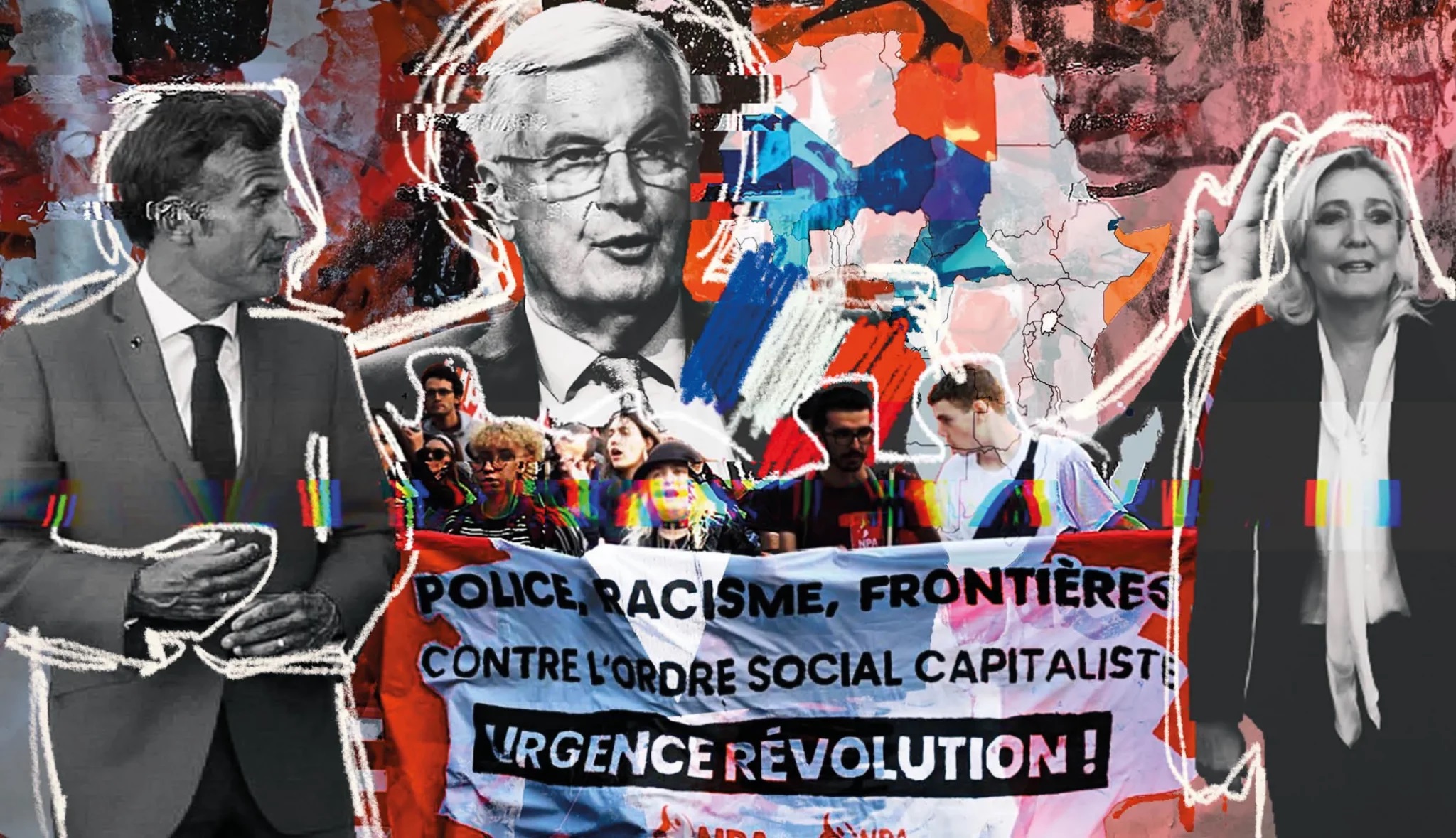
President Macron, Prime Minister Michel Barnier, Far-Right Extremist Marine Le Pen – Versus Left-Wing Resistance
— Before we turn to the discussion of the war in Ukraine and prospects for left internationalism, let’s talk about the recent developments in your home country. How do you analyse the current political situation in France and the role that left-wing politics might play in it?
— Michel Barnier’s new government combines two core elements: racism and attacks on social rights. The latter is evident in the ongoing parliamentary debates over the 2025 budget and social security funding. Marine Le Pen’s National Rally (Rassemblement National) has played a key role in these discussions, not least due to the fact that no single party has managed to achieve a stable majority in the French parliament. Even though the result of the New Popular Front (Nouveau Front Populaire) in the recent legislative election, which followed the dissolution of the Assembly last June, was unexpectedly high — and most welcome — it is still only a minor and relative victory.
This situation is unlikely to change unless the various forces within the New Popular Front come together, consolidate their victory, and start a large-scale mobilization. This could be achieved through the creation of local political alliances across the entire country that would be focused on concrete struggles. We should not forget that mass mobilizations against attacks on the social system are still possible — and so is the collapse of the government itself.
Pierre Rousset reviews a democratic crisis in France.
At a time when the far-right is marching forward all over Europe (including Ireland), France offers an example of left-wing resistance. The The New People’s Front (NFP) won a surprise parliamentary victory, but President Macron retaliated by making a deal with the far-right.
On 9 June, Emmanuel Macron unexpectedly decided to dissolve the National Assembly, just as the Rassemblement Nationale (far-right National Rally party of Marine Le Pen) was gaining momentum. Three weeks later, the results of the first round of voting were unequivocal: the parties of the presidential bloc were crushed, and in the second round the National Rally could hope to win an absolute majority of seats in Parliament, or at least be the largest party. (The French electoral system uses two rounds of voting. If no candidate gets an absolute majority in the first round, the names of the top candidates go to a second round. The one with the most votes in the second round wins).
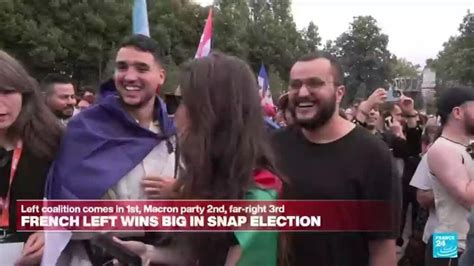
These hopes were dashed. After the second round, the far right ended up in third place, behind the Nouveau Front populaire (the New People’s Front formed by parties of the broad Left) and the presidential party.
The electorate wanted neither Macronism nor the National Rally in the corridors of power. Today, thanks to Macron, it has both. It took him eight weeks to choose a prime minister: Michel Barnier, a member of Les Républicains party, which won only 5% of the vote. He had previously negotiated this appointment with Marine Le Pen, to ensure that she would not immediately table a vote of no confidence against him. Madame agreed… conditionally.
Now, the choice of a prime minister depends on the goodwill of the far right!
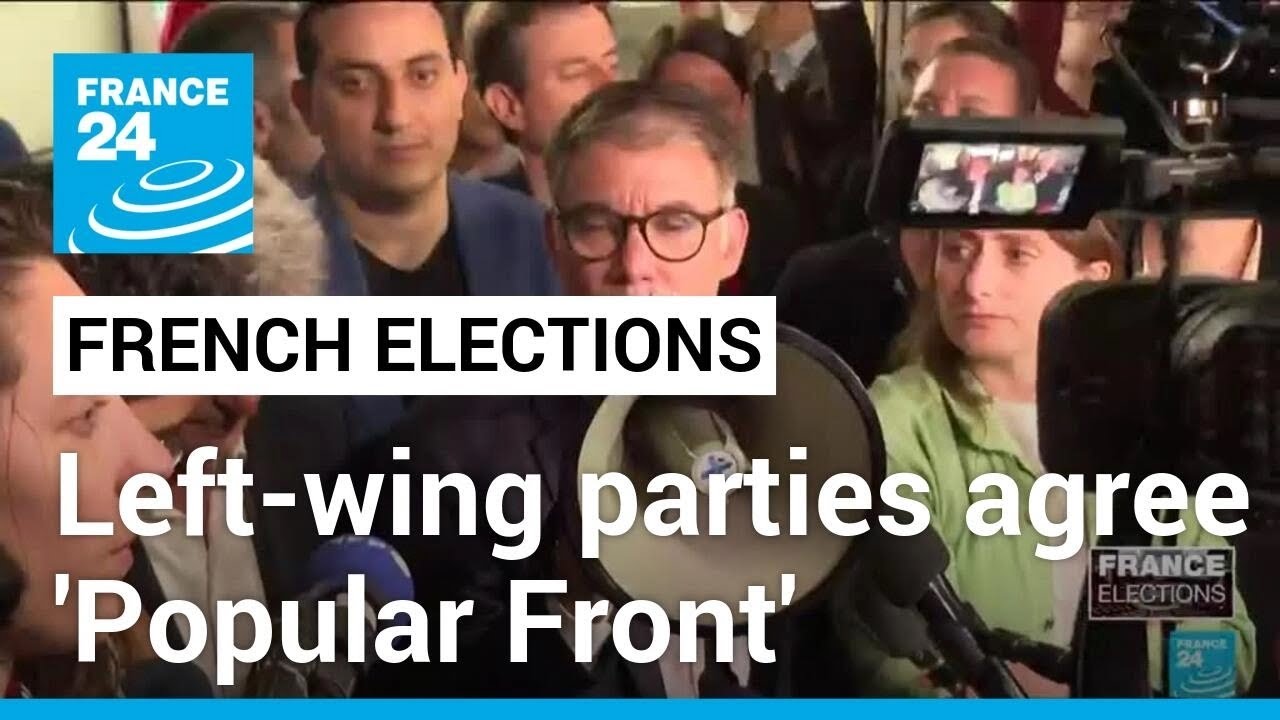
The Nouveau Front populaire (New Popular Front), a coalition built in just a few days by the left-wing parties (whereas they remained splintered at the recent European parliamentary elections), has just won 182 deputy seats in the French National Assembly, beating the Rassemblement national (RN) and its allies, with 143 seats, and the camp of President Macron with 168 seats.
This is a spectacular reversal of the situation meaning we have gone from the threat of a far-right stranglehold on the state apparatus to a relative left-wing majority in the Assembly, elected on a programme of rupture with neoliberal policies. This reversal cannot be understood without looking at the massive mobilisation in recent weeks of the activist forces of the workers’ and democratic movement in the face of the far right, leading first to the formation of this New Popular Front (with la France insoumise (LFI), Europe Ecologie Les Verts (EELV), the Socialist Party (PS), the Communist Party (PCF) and others including the Nouveau parti anticapitaliste (NPA)), then to a major mobilisation at the ballot box and a very broadly supported vote to reject the RN.
Following on from its 31.34% result in the European elections on 9 June, the RN obtained more than 33% of the vote in the first round of legislative elections on 30 June, and everything suggested that it would obtain a very large number of deputies in the second round, with all the polls giving it well over 200 deputies and possibly even an absolute majority of 289 seats.
The main lesson of the first results of this second round is the setback suffered by the Rassemblement national and its allies. The defeat of the hundreds of fascist, racist, Islamophobic, antisemitic and ultra-racist candidates put forward by the RN is a huge relief for racialized people, women, LGBTI+ people and workers. This victory for the united left has halted the momentum of the far right, which nonetheless won around fifty more seats. This defeat of the far right of Bardella and Le Pen is the fruit of the popular mobilization that took place thanks to the unitive impetus provided by the creation of the New Popular Front.
This is already a victory for the New Popular Front, which was made possible by the rallying of the entire left – political parties, trade unions and campaigning groups – , but also and above all by the grassroots mobilization of large sectors of the working classes, in particular racialized people and young people, who committed themselves everywhere to blocking the RN. This made it possible for a very large number of New Popular Front MPs (including a relative majority for LFI) to be elected to the National Assembly on the basis of a programme that breaks not only with Macronism in the service of the ultra-rich, but also with the liberal left of the Hollande mandate, which had followed the policies of the right.
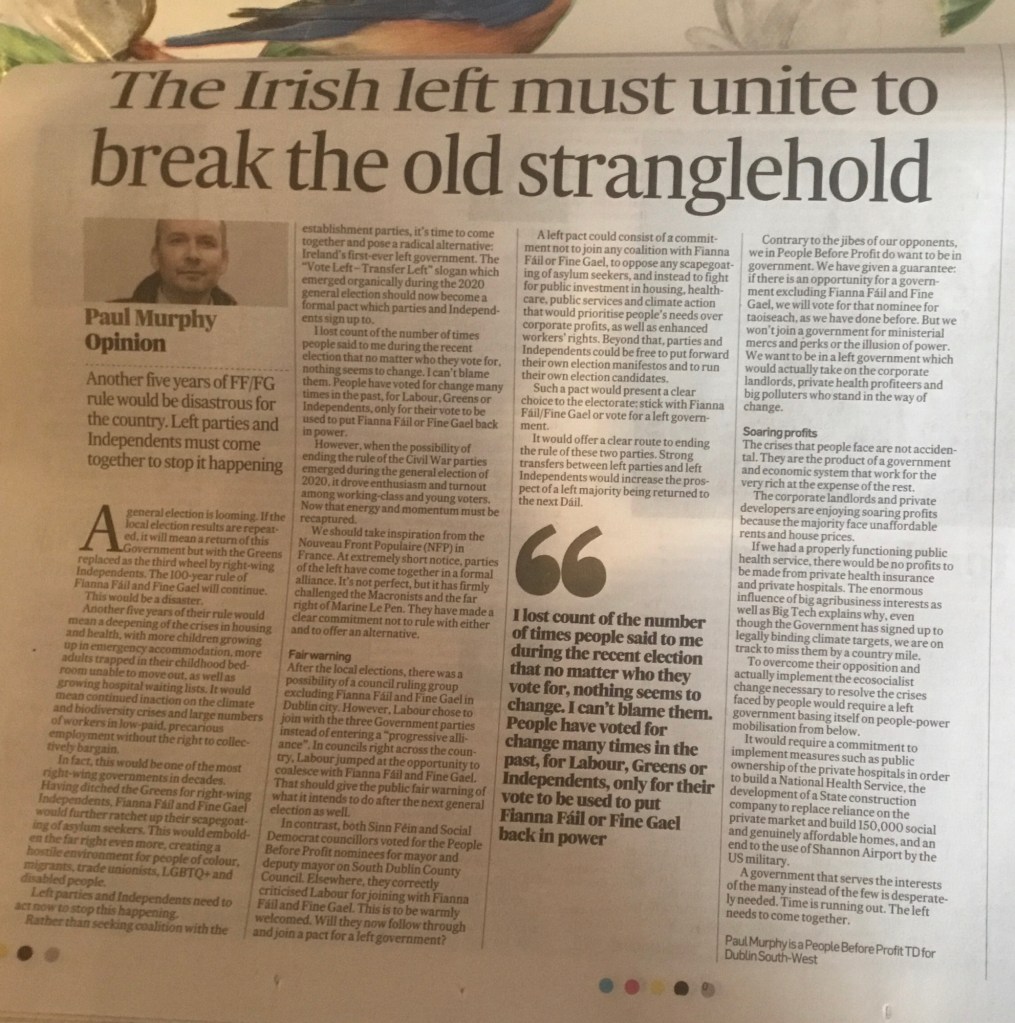
Paul Murphy’s opinion piece in the July 4 2024 edition of the Irish Times makes a strong case :
“Another five years of FF/FG rule would be disastrous for the country. Left parties and Independents must come together to stop it happening”
There is a bottom line :
No coalition with Fianna Fáil or Fine Gael.
The Irish Left must unite to break the old stranglehold, Paul Murphy TD (People Before Profit, Dublin South-West), Irish Times, July 4 2024
Time for a new united left alliance to topple Fianna Fáil and Fine Gael
Another five years of FF/FG rule would be disastrous for the country. Left parties and Independents must come together and stop this happening
A general election is looming. If the local election results are repeated, it will mean a return of this Government but with the Greens replaced as the third wheel by right-wing Independents. The 100-year rule of Fianna Fáil and Fine Gael will continue.
This would be a disaster.
Another five years of their rule would mean a deepening of the crises in housing and health, with more children growing up in emergency accommodation, more adults trapped in their childhood bedroom unable to move out, as well as growing hospital waiting lists. It would mean continued inaction on the climate and biodiversity crises and large numbers of workers in low-paid, precarious employment without the right to collectively bargain.
Abstention lowest since 1997 at 32.5% (cf 53% in 2022)
Macron’s big gamble has failed. By calling a snap election, he thought the French people would rally around his centrist party and the moderate left to put Le Pen’s Rassemblement National (RN, National Rally) back in its box after its victory in the recent Euro elections. He assumed a bigger turnout would not favour Le Pen’s extreme right-wing, post-fascist party. On the contrary, 20% more people turned out than in 2022. The RN consolidated its Euro vote and successfully allied with a split from the mainstream Les Républicains (LR, the Republicans). In terms of actual votes – around 12 million if you add in the votes of the Zemmour current who got less than 1% – this is a massive breakthrough. Previous scores in legislative elections were less than half this.
“Macron’s gamble has backfired spectacularly, with the Rassemblement National consolidating its Euro vote and securing an unprecedented number of MPs in the first round.”
The RN has never had so many MPs elected in the first round. They were already the biggest single party in the National Assembly, and it is probable now that they will maintain that position with even more MPs. However, it is still uncertain whether they will get the 289 MPs needed for an absolute majority, which would guarantee them the premiership with their young leader Bardella.
Everything depends on what happens in the second-round run-off. The top two stand automatically, but the third candidate can run in the second round if they have more than 12.5% of the registered voters. All the discussion immediately following the election focuses on whether the best-placed candidate to defeat the RN is given a free run by any eligible third-place candidates stepping down. Leaders of the Nouveau Front Populaire (the New Popular Front-NPF) from the Socialist Party, the Ecologists, and La France Insoumise (France Unbowed – LFI) led by Jean-Luc Mélenchon, have all called for this ‘barrage’ (bloc) to stop the RN winning.
En cas de triangulaire, si le Rassemblement national est en tête et que nous sommes troisième, nous retirerons nos candidatures.
However, leaders of Macron’s Ensemble (Together) party have been much more equivocal. Some have called for blocking the RN with a single candidate, while others have said they will judge on a case-by-case basis. Bruno Le Maire, current economics minister, and Edouard Philippe, former Macronist prime minister, hold this position, saying they will vote for the social democratic left but not for the LFI. They refuse to support second-placed candidates from the LFI, whom they consider as extreme as the RN. These people do not like the way the LFI have supported the Palestinians and condemned the Israeli state or criticised police actions in ethnic minority neighbourhoods. This vacillating position could help the RN squeeze past both the Left and the Macron parties in a three-way race in some areas.
The decision by President Emmanuel Macron to hold snap legislative elections in four weeks’ time, a move taken on Sunday immediately after the landslide victory of the French far-right in European Parliament elections, has had the effect of a political bombshell. Not least because it now appears possible that the far-right Rassemblement National party, riding high on the results of Sunday’s poll, may gain enough seats in parliament to form a government. For some in France, that prospect has made them fearful over their future. Mediapart has been listening to their concerns.
Since the victory of the far-right Rassemblement National (RN) party in Sunday’s European Parliament elections in France, and the subsequent decision by Emmanuel Macron to call snap general elections, in which the RN is hoping to gain an absolute majority, Oumar fears the worst.
“We’ll no longer have the possibility of getting our papers sorted out,” he said. “We risk being massively expelled.” The “we” he refers to are the ‘undocumented’ immigrants who hope to one day receive legal residency and working status. Oumar arrived in France from Mali in 2017. In his thirties, living in the Paris region, he finds work on a temporary basis, most often in logistics. “We come home late in the evening, we pay contributions, but we have no right to anything if we have an accident,” he said. “But the far-right, through populism, presents us as people who want to profit from [social] aid.”
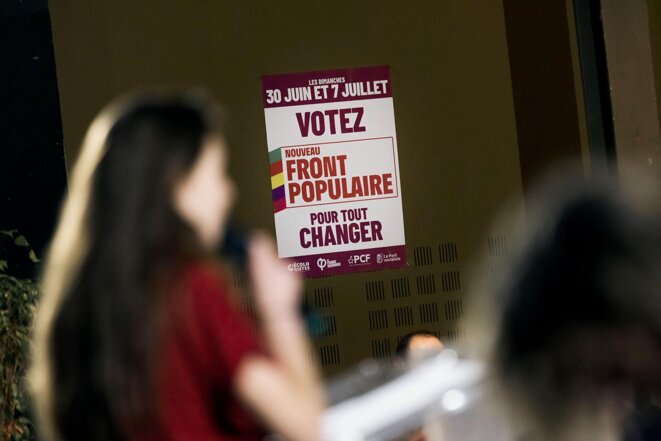
Nouveau Front Populaire – New Popular Front – Left Alliance Campaigning in French parliamentary elections against the right-wing Macron government and the Far-Right RN led by Marine Le Pen
As the father of a child who has French nationality, Oumar officially applied for residence and work permits in February, but has not yet been given a response. Since Sunday evening, his concerns have heightened.
Many potential targets of a far-right government are unsure of their future. Smail, a 36-year-old Algerian, said that on Sunday evening he told himself “it was perhaps the moment to request French nationality, because afterwards the doors will be closed”. He has a renewable ten-year residency permit, has a full-time, open-ended working contract in the fibre-optic cable business, and owns a property.
Provisional results of the 2024 European Elections, as at June 19. Source: results.elections.europa.eu
At first glance it looks as if the parties to the left of the social democracy held their ground against the surge of the far right and mainstream right that marked the June 9 European Union (EU) parliamentary elections (see here for results in detail).
Although the smallest of the European parliament’s seven groups, The Left managed to maintain its EU-wide vote at 5.4% and increase its seat tally from 37 to 39 in the 720-seat assembly.
In addition, left green Members of the European Parliaments (MEPs) and those representing stateless nations (part of the Greens group as the European Free Alliance) at least maintained their numbers in the chamber.
Yet the Greens group as a whole shrank from 71 seats to 53 while that of the liberals (known as Renew) fell from 102 to 79. This drop reflected that the environmental issues that in part drove the big advance of these parties in the 2019 election were less important for many voters this time.
The campaign was dominated by insecurity about the future, the cost of living (particularly housing), the fear of war, the “immigration threat” and intolerance of difference.
In this grim atmosphere the biggest growth went to the mainstream right European People’s Party and the two far-right groups (Identity and Democracy and Conservatives and Reformists): taken together the right and far right won an extra 30 seats, bring it to 324.
Because it would take only 37 ungrouped MEPs to join them to from a reactionary majority, the June 9 result poses with new urgency two old questions about politics in the European parliament. How much, if at all, does the real balance of political forces in the chamber differ from that among its formal groupings? And how much does membership of a group represent disciplined commitment to its positions?
Left divisions over Ukraine
The questions are sharply relevant in the case of the Left group, where differences over what stance to take towards the Russian invasion of Ukraine were already pointing towards a split before June 9.
On May 31, Li Andersson, chairperson of the Finnish Left Alliance told the Helsinki Times that these differences could not be tolerated in the group in the new legislature. Referring to Clare Daly and Mick Wallace, Irish left independent opponents of military aid to Ukraine, Andersson said: “The Nordic Green Left as a whole [covering Finland, Sweden, Denmark, Norway, Iceland, Greenland and the Faroe Islands] is of the opinion that if they manage to win re-election, they can’t join our group.”
For Andersson, the same went for the new Sahra Wagenknecht Alliance: For Reason and Justice (BSW), a split in Germany from leading Left group member Die Linke (The Left). BSW opposes military aid to Ukraine and supports resuming the gas trade with Russia, in common with most of Europe’s far-right parties.
Everyone on the left in Ireland and across the globe should warmly welcome this French initiative.
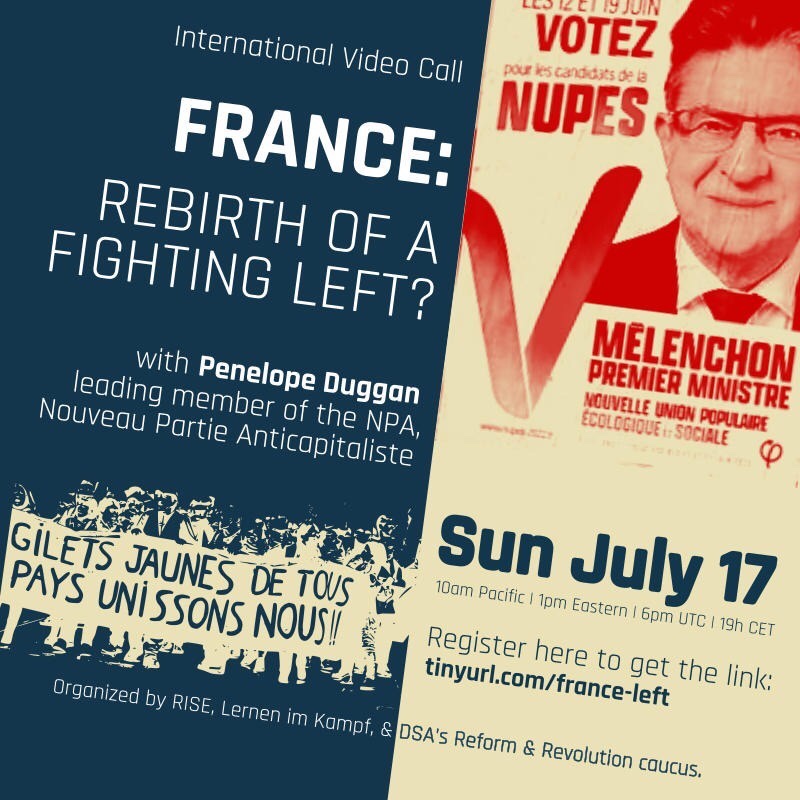
The New Popular Front in France, which unites trade unions, ATTAC, the Socialist Party, the Greens, the Communist Party, France Unbowed (Melenchon) and the NPA [NOUVEAU PARTI ANTICAPITALISTE] (the entire significant left) against the fascist National Rally, includes in it’s platform ‘unconditional support for Ukraine against Putin’s aggression’.
To defeat Vladimir Putin’s war of aggression, and that he answers for his crimes before international justice: unfailingly defend the sovereignty and freedom of the Ukrainian people as well as the integrity of its borders, by the delivery of necessary weapons, the cancellation of its foreign debt, the seizure of the assets of the oligarchs who contribute to the Russian war effort in the framework allowed by international law, the dispatch of peacekeepers to secure nuclear power plants, in an international context of tension and war on the European continent, and work towards the return of peace.
A June 14 poll shows Marine Le Pen’s far-right, Putin-friendly National Rally at 29.5%, the left-wing New Popular Front at 28.5%, and Emmanuel Macron’s centrist Renew at 18%. The winner-take-all district elections for the 577 seats in the French National Assembly will be held on June 30. Run-offs between the top two if no one wins a majority in the first round will be held on July 7.
It is published on the ISJ site, a British website :
“International Socialism is associated with the [British] Socialist Workers Party, but articles express the opinions of individual authors unless otherwise stated. We welcome proposals for articles and reviews for International Socialism..”






 Tomás Ó Flatharta