Archive for the ‘British Empire’ Category
Sinn Féin Election Disaster – The Price Of Putting Popularity Before Principle – Éirigí Analysis
Éirigí, a socialist-republican organisation, “is a political party that was formed in 2006 by a group of Dublin-based community and political activists. We believe that modern Ireland is a deeply undemocratic, unequal and unfair country not by accident, but by design.” Their analysis of Sinn Féin’s unexpectedly weak showing in the June 7 2024 Irish Local and European Elections highlights how the party was bounced into changing its position on immigration and racism :
With a few notable exceptions, this new talking point was propagated without context – with no detailed critique of migration in the modern world – no attempt to explain why the asylum process is in chaos – no robust defence of the core republican principle of equality – no assertion that racism, sectarianism and xenophobia are the enemies of republicanism – no calling out the peddling of hate and division by the far-right.
For potential Sinn Féin voters, the lesson was clear. The party could be bounced into changing its messaging if there were votes at stake, even when those doing the bouncing were far-right bigots. It seems almost certain that the ease with which Sinn Féin was bounced on the issue of immigration did them more electoral damage than their actual position on immigration.
Sinn Féin Election Disaster – The Price Of Putting Popularity Before Principle
Link :
Sinn Féin Election Disaster – The Price Of Putting Popularity Before Principle – Éirigí analysis
Two weeks have now passed since the Local and European elections in the Twenty-Six Counties. Despite Sinn Féin’s frantic spinning to the contrary, the election was nothing short of an unmitigated disaster for the party. The number of votes and seats secured by the party was even lower than the lowest expectations of pollsters, political commentators and Sinn Féin itself.
As recently as July 2022, support for Sinn Féin was at a level not seen in more than a century. The Irish Times/IPSOS opinion poll for that month found that 36% of voters in the Twenty-Six Counties intended to vote for Sinn Féin.

Fourteen months later, in September 2023, the same poll found that 34% still intended to vote for Sinn Féin. Among voters under the age of 34, support was even higher at more than 43%. Despite this, Sinn Féin secured less than 12% of the popular vote in the 2024 Local and European elections.
So, why have two-thirds of Sinn Féin supporters abandoned the party since last September?
Prior to elections the apparent answer to this question seemed obvious to many – immigration. Immigration, it was claimed, had recently become a red-hot issue for many Sinn Féin supporters., and these supporters were now walking away from Sinn Féin in their droves because the party was too ‘soft’ on immigration. It was an open and shut case. Until it wasn’t.
When the ballot boxes were opened on this day two weeks ago, it quickly became clear that the opinion polls had significantly underestimated the scale of Sinn Féin’s woes.
Read the rest of this entry »Robert Ballagh’s “The Thirtieth of January”: A Bloody Sunday Painting and the Troubles in the Two Bits of Ireland
In this interview the artist Robert Ballagh discusses the painting “The Thirtieth of January”, depicting Bloody Sunday in Derry in 1972. The conversation provides valuable insights into Ballagh’s personal experiences and artistic process, shedding light on the political and social context of the time.
The interview provides a unique insight into the historical and cultural significance of the painting.
Critical issues related to the Irish government’s response to the conflict, the impact of the Bloody Sunday event, and the broader social and political implications are highlighted. Ballagh’s commentary on the role of the Irish government, the impact on nationalist communities, and the establishment of the Special Criminal Court adds depth to the discussion.
Bloody Sunday Painting – the Thirtieth of January – Robert Ballagh
Thursday, January 20 2022. John Meehan interviews the artist Robert Ballagh in Number Five Arbour Hill.
We are talking about Robert’s painting : The Thirtieth of January, a representation of Bloody Sunday in Derry, January 30 1972.
John Meehan :
Why did you zone in on Derry’s Bloody Sunday , and put so much effort into making this painting? What makes it different from so many other big events during “The Troubles” in the north of Ireland, which lasted for 30 years, from 1968 to 1998?
Robert Ballagh
Well, it’s a long time ago now 50 years, but I have to say that it had an enormous effect on me, and I don’t think I’m alone with that historical experience. I suppose one thing I should say, I was only thinking about this, and I haven’t said anything about this experience to others. I’m a Dubliner. I’ve lived all my life in Dublin. But unlike most Dubliners – it wasn’t by design – I had an extraordinary rich knowledge of the North of Ireland, before the conflict began. Because I was a professional musician in a showband. We used to play at least once or twice a week in the north. So I was in every town village or city in the north that had a ballroom or ballrooms. And so I experienced the reality of life in that society, and became very aware of the sectarian differences, shall we say – the nature of the society, which people didn’t appreciate at all. I tell one very short story to illustrate that. We played fairly regularly in one of the very popular ballrooms in Belfast : Romano’s in Queen Street. We developed quite a following! In the show business vernacular the word groupie was used. These girls used follow us, they came down to Dublin once or twice to hear us. And we were playing one night in Romano’s.

After the dance, they came up and we’re talking to us. They asked “When are you playing again in Belfast?”.
I remember saying “Oh, I think we’re here next week.”
“Oh, really?”
“Yeah – we’re playing in a ballroom called the Astor” which I knew was in Smithfield.
And they said, “Oh, we can’t go there.” And I said, “Why?” – because it was a public ballroom. It wasn’t attached to any organization or anything. It was a public ballroom.
They said, “Oh, no, that’s a taig hall”
And it was the first time I realized, and we realized, that our fan base in Belfast was Protestant.
General election 2024 (Britain): Sunak throws the dice
General election 2024 (Britain): Sunak throws the dice : “Drowning Street” plus “Things Can Only Get Wetter”
Thursday 23 May 2024, by KELLAWAY Dave
Dave Kellaway reacts to Rishi Sunak’s surprise call for a July 4 general election
Contents
From Europe Solidaire Sans Frontières (ESSF) link :
https://www.europe-solidaire.org/spip.php?article70844
Sometimes the beginning contains the end. ‘Drowning Street’ and ‘Things can only get wetter’ were among the headlines in the newspapers the day after Rishi Sunak’s announcement of the July 4th general election. He hoped for gravitas and drama that could somehow jolt the polls. Instead, he stood there getting completely pissed on. His voice was drowned out by an anti-Brexit protester broadcasting the 1997 Blair anthem, Things will only get better. It is almost as though his team hung him out to dry (or rather to get drenched). Was there really no staffer who knew that the police cannot stop you playing loud music at the bottom of Downing Street? Nobody to even hold an umbrella for the leader? All this expresses his isolation and the dire state of the Tory party as well as a complete lack of political nous.
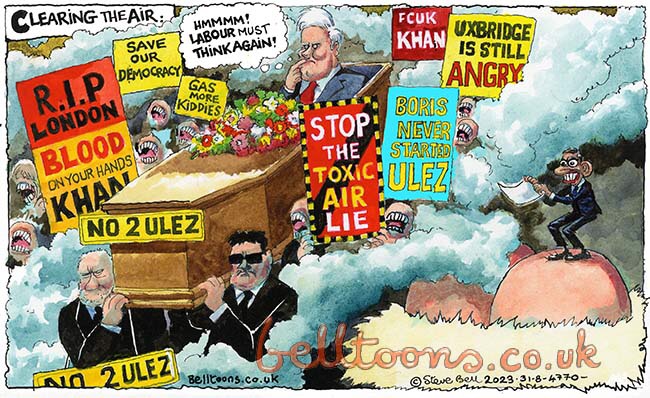
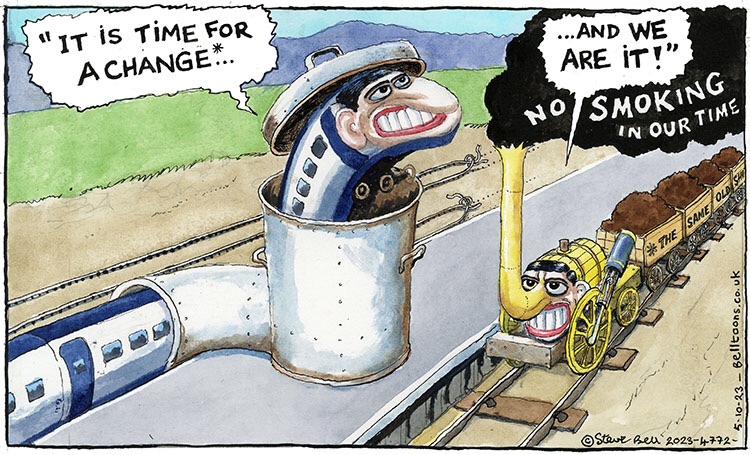
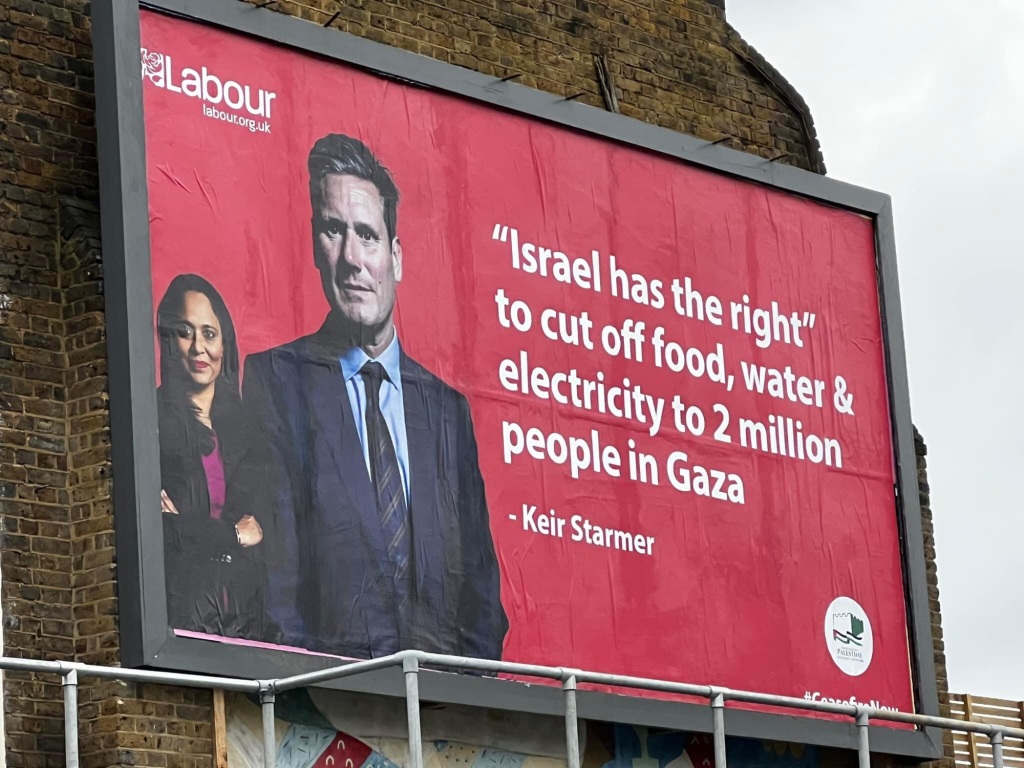
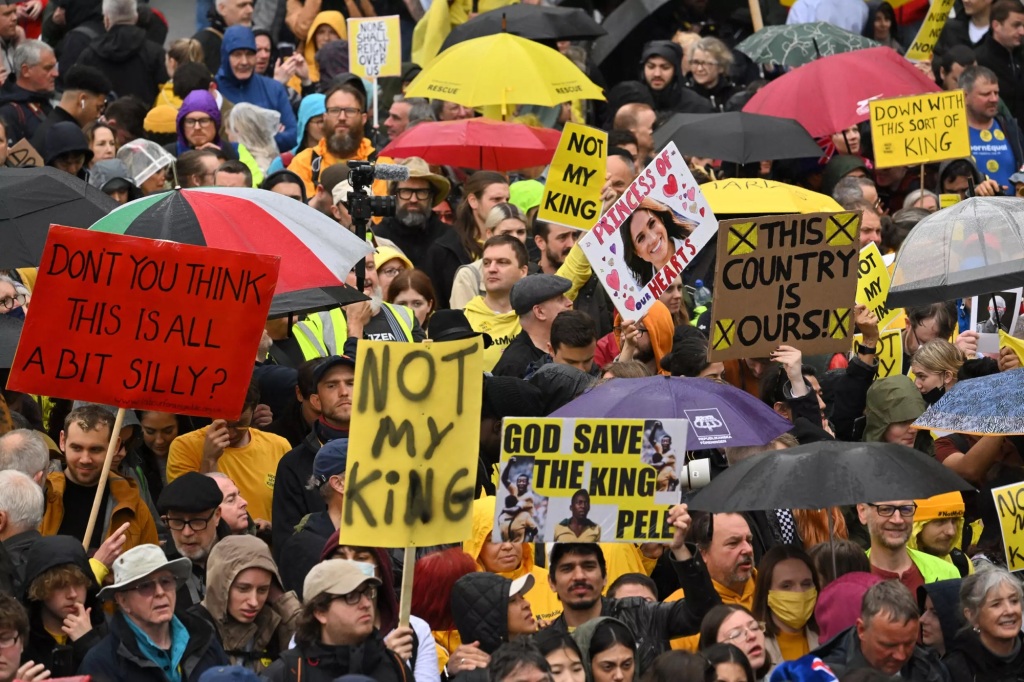
A few minutes later you had Keir Starmer looking composed and prime ministerial in front of not just one, but two Union Jacks. He gave an intelligible, brisk speech summed up in the word on the rostrum – Change. Labour is not really going to change much but it does not look like it will lose the marketing campaign. Sunak’s excruciating performance was a bit like watching West Ham smashed last week – you knew the game was up when Man City’s Foden scored within two minutes. Nobody doubted the inevitable, City was going to win the league. Images count in elections where most voters get their news from the TV and non-print media.
Read the rest of this entry »Struggles for Self-Determination: Ukraine and Palestine Solidarity Discussion
Link :
Ukraine and Palestine: building real solidarity is hard work
A guest post by JOHN LAWRENCE, from the People and Nature Blog hosted by Simon Pirani.
This article is relevant to the European Parliament Election campaign in Ireland and other parts of Europe.
“Genocide is genocide, a mass grave is a mass grave. We are with the people who are in there, and against the people who put them there”, journalist Ed Vulliamy told a discussion meeting in London on Monday.
The Russian invasion of Ukraine, and Israel’s war on Gaza – both of which have settler colonial and genocidal dimensions – had thrown an unusually clear light on the hypocrisy of people who oppose one, but not the other, Vulliamy said.
Marching in London, March 2024. Photos from United Action UK on instagram
In the United Nations, Ukrainian president Volodymyr Zelensky abstains over Gaza, and South Africa abstains over Ukraine, Vulliamy said.
“Large sections of the left wonderfully support Gaza but, having denied and justified [the massacre in 1995 of Bosnians by Serb troops at] Srebrenica, at best indulge, or support, Vladimir Putin and his imperial endeavour,” he continued.
Read the rest of this entry »British SWP Promotes Marxism 2024 in London: Parody Politics – Ukrainian Left and AntiWar Russians Excluded
On February 24 2022 the biggest war in Europe since World War 2 began : Russia invaded Ukraine.
In London The British SWP promotes Marxism 2024 – like the fictional insular Brit Basil Fawlty, Alex Callinicos (and a supporting cast including Jeremy Corbyn,Tariq Ali, and Yanis Varoufakis) offer parody politics.
This event is planned as 100% free of Ukrainian left and social movements and antiwar Russians. No debate here and no solidarity with victims of imperialism unless it is western imperialism.
For a different perspective, on Tuesday May 14 join socialists from Ukraine, Russia and elsewhere who are campaigning for the freedom of a political prisoner Maksym Butkevich.
John Meehan May 11 2024
Ireland’s Open(ish) Border : “selective Garda passport checks on the Border already take place, at times on the basis of quite blatant racial discrimination” – Statement by Human Rights Organisations and Trade Unions
A number of Irish human rights organizations and Trade Unions have issued a very strong statement following a stampede of racist publicity concerning “Open Borders”.
Here is an example from the Sunday Independent (May 5 2025)
Do you believe there should be checkpoints at the border with Northern Ireland to limit the number of asylum-seekers coming from the U.K.?
The newspaper published this summary of its survey :

Once again, Andrew Flood offers a devastating reply
With the trap carefully baited & Sinn Féin blundering into it here’s the spring being sprung. Farage & Dowson cackling with glee as their weird investment pays off. It’s a trap all the way down of course because …
Andrew Flood
It gets dafter – 82% want to go through an expensive deportation process to somewhere we have a common travel area with & where people deported can just walk back across any of the 400+ border crossing points again you can see where accepting this logic rapidly leads
Andrew Flood
British Secretary of State Chris Heaton-Harris “accused of ‘unprecedented political intervention’ in legacy inquest” – News from the 6 County Bit of Ireland
Exclusive: Chris Heaton-Harris accused of ‘unprecedented political intervention’ in legacy inquest – Irish News Newspaper
Northern Ireland Office minister seeks to block information being passed to family of murdered Catholic man Fergal McCusker

Family Members of Fergal McCusker attend the Inquest at Laganside courts on Tuesday April 9 2024
News like this does not get the attention it deserves. Low standards of justice remain very common in the sick state of Northern Ireland.
Here are the details.
Secretary of State Chris Heaton-Harris has been accused of “an unprecedented political intervention” as it emerged he has written to chief constable Jon Boutcher questioning his actions.
Dramatic details came to light during an inquest hearing liked to the LVF murder of Fergal McCusker (28) in Maghera, Co Derry, as he made his way home from a night out on January 18, 1998.
No-one has ever been charged with the Catholic man’s murder, although four men were arrested and later released.
Read the rest of this entry »Palestine, Ukraine and the crisis of empires – Simon Pirani
Simon Pirani’s article is recommended. Unfortunately many Irish left-wing organizations and activists, such as People Before Profit and Clare Daly MEP, have adopted the policy advocated by the British Stop the War Coalition. In the conclusions section of this essay Pirani observes :
In May [2021], you wrote that Stop the War is “supporting the people of Palestine, who have a right to resist occupation”. I agree with that. But why no such statement about Ukraine?
And if Ukrainians, or Palestinians, have a right to resist, what does it mean? Does it only mean standing up to tanks with your bare hands, as Ukrainians have had to do? Does it mean throwing stones, often the only weapons that young Palestinians have? What about proper weapons? Do you think Palestinians have a right to those? And Ukrainians?
About the Author :
Simon Pirani is a British writer, historian and researcher of energy. He is honorary professor in the School of Modern Languages and Cultures at the University of Durham.[1] From 2007 to 2021 he was senior research fellow at the Oxford Institute for Energy Studies (with a period as senior visiting research fellow in 2017-19).[2]
In 2018 Pirani published Burning Up: A Global History of Fossil Fuel Consumption, in which he portrays consumption growth as a result of world capitalist economic expansion.[3] He argues that the relationship between technological systems that account for most fossil fuel use, and the social and economic systems in which they are embedded, is paramount. His articles and presentations on this theme are collected on his website.[4] He also writes about these themes on a blog, People & Nature Link : https://en.wikipedia.org/wiki/Simon_Pirani
Palestine, Ukraine and the crisis of empires
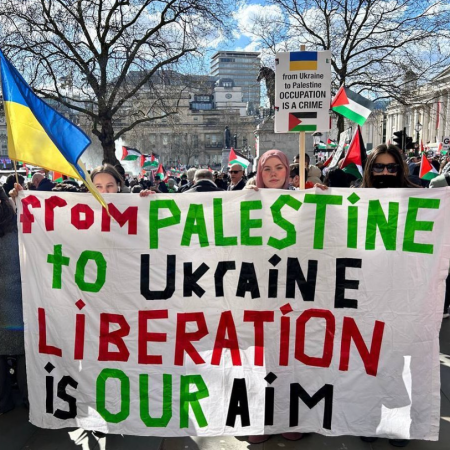
On the Easter weekend, on the latest gigantic march in London against UK complicity in Israel’s war on Gaza, a group of us took a banner that said “From Ukraine to Palestine, occupation is a crime”. We were welcomed by marchers around us, and people took up our slogan.

But beyond a slogan, what can we, in the labour movement and social movements in the UK, do about these conflicts that are transforming the world we live in, and heightening fears of bigger, bloodier wars?
Read the rest of this entry »Saving Sodomy from Ulster – Public professions of Christianity frequently mask horrible crimes
Slugger O’Toole is a politically liberal site based in the 6 county bit of Ireland. One of its writers observes :
One of the great lessons in life is that the more someone publicly professes to be a ‘Christian,’ the more unchristian their private life is.
Years ago, I met one of the leading figures in the Save Ulster From Sodomy Campaign. I have a surprisingly good gaydar for a straight guy, and it was pinging off the chart. This guy had spent much of the 70s and 80s persecuting gays while himself being as gay as Eurovision. I felt sorry for him; he was a product of his upbringing. To live your life as a lie and with such self-loathing must be very tiring on the soul.
https://sluggerotoole.com/2024/03/30/public-morality-private-hypocrisy/
The Save Ulster from Sodomy campaign was a vicious anti-gay operation run by the Democratic Unionist party (DUP) and the Reverend Ian Paisley’s Free Presbyterian church. Paisley, a busy man, was leader of the DUP, and moderator of his church.
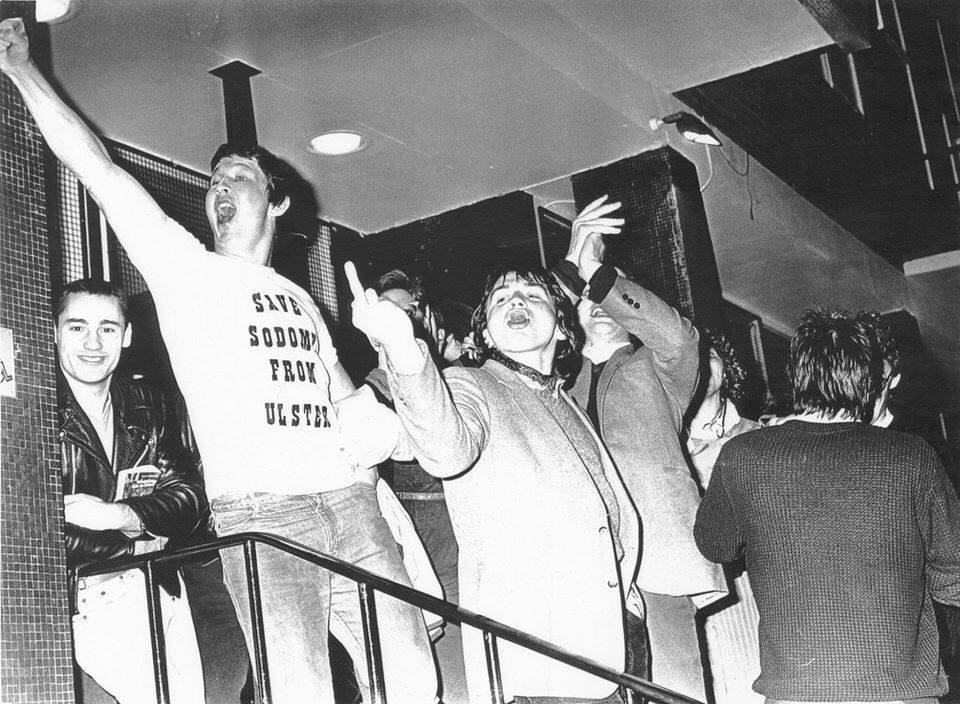
An effective counter-campaign, Save Sodomy from Ulster, was the brainchild of Tarlach Mac Niallais. Link : CoVid-19 Has Taken Tarlach Mac Niallais From Us in New York – A Courageous Fighter from North Belfast who “Saved Sodomy from Ulster”
In Ireland, Christianity took over public life after the partition settlement of 1922. The Catholic Church controlled key parts of the state in the 26 county southern bit. In the North the Orange State was a Protestant State for a Protestant People.
Read the rest of this entry »Piety and Politics of the Democratic Unionist party in the Six County bit of Ireland – with the fall of Sir Jeffrey Donaldson “It feels like the end of days now”
In his final public sighting as DUP leader, Sir Jeffrey Donaldson was at Stormont for a Christian Easter service.
It was Wednesday evening and there was a feel-good sense in Parliament Buildings. The DUP and Sinn Fein had been working together harmoniously for eight weeks, and now politicians were coming together for an uplifting ecumenical concert.
With Donaldson in the audience, prayers were said for political leaders, and at the end the relaxed DUP leader went to have his photo taken with Eurovision winner Dana, who was singing at the event.
Sir Jeffrey Donaldson MP and his wife Eleanor are scheduled to appear in court on April 24 in connection with serious criminal charges (described below). In the next weeks and months we will see how this story unfolds. The context is important – what effect will this have on the the Democratic Unionist party (DUP) which Mr Donaldson led until Good Friday 2024?
In a context where extreme right forces are on the march in most parts of the world, it is useful to add some Irish cross-border detail to Jeffrey Donaldson’s “final public sighting as DUP leader”. Sir Jeffrey was pleased to pose for a photo with Eurovision winner Dana (Rosemary Scallon) who attempted (and failed) to revive the religious far-right in the 26 County bit of Ireland. In the late 1990’s Scallon had some brief electoral success in a Presidential election, and won a European Parliament seat. However by 2011 Scallon’s political green-devil comet crashed and burned. The extremist Catholic far-right had become deeply unpopular. Most people in Ireland had turned against the Catholic Church, deeply implicated in a succession of child abuse scandals and hatred of pro-feminist causes such as the legalisation of abortion , divorce, same-sex marriage, contraception and gay rights. Shrewder right -wing politicians such as Fine Gael Taoiseach (Prime Minister) Enda Kenny saw the writing on the wall ; In the Dáil (parliament) this leader of the Dublin government stated that the Vatican was responsible for the “torture” of Irish children.
Read the rest of this entry »


 Tomás Ó Flatharta