Breaking the Gaza Blockade: Ukrainians on the Sumud Flotilla to Gaza – Arrested on the high seas by Israel’s Genocide Navy – Release all crew members now!
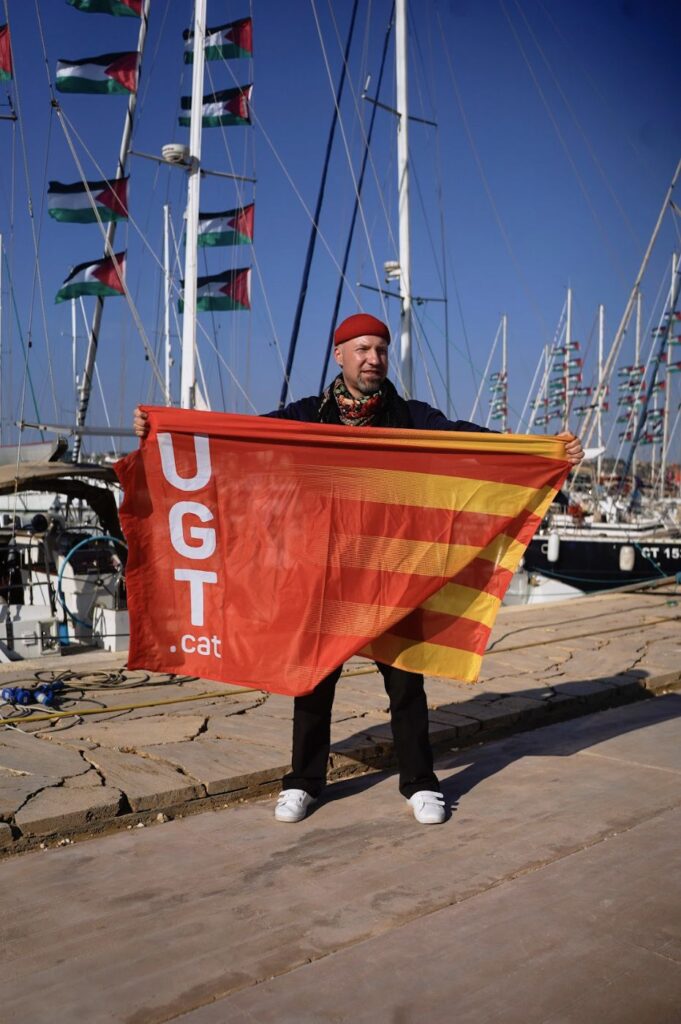
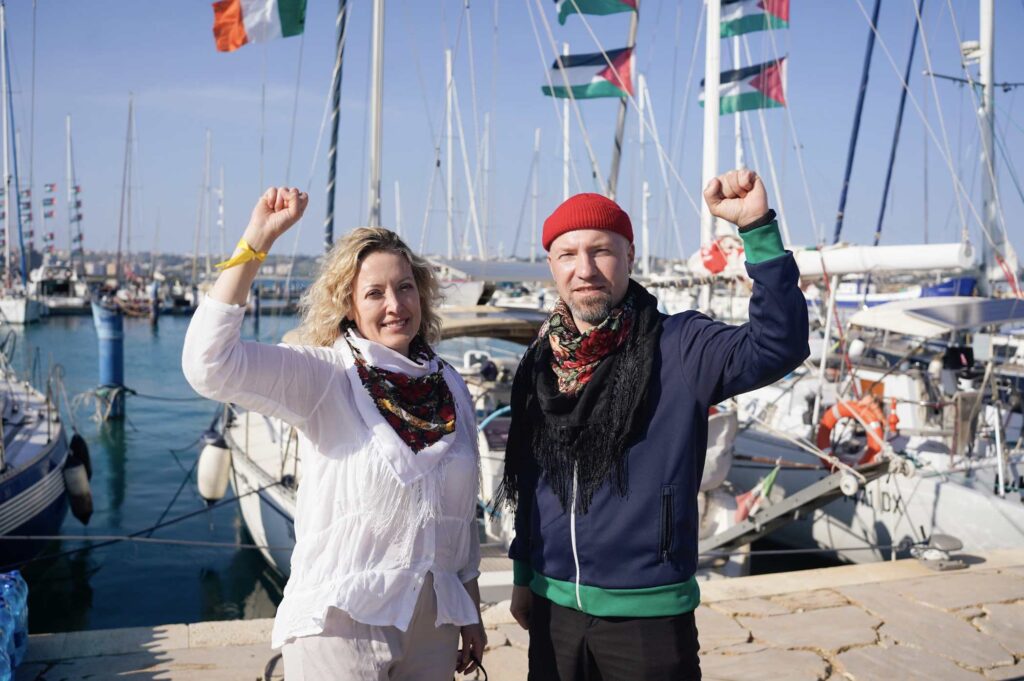
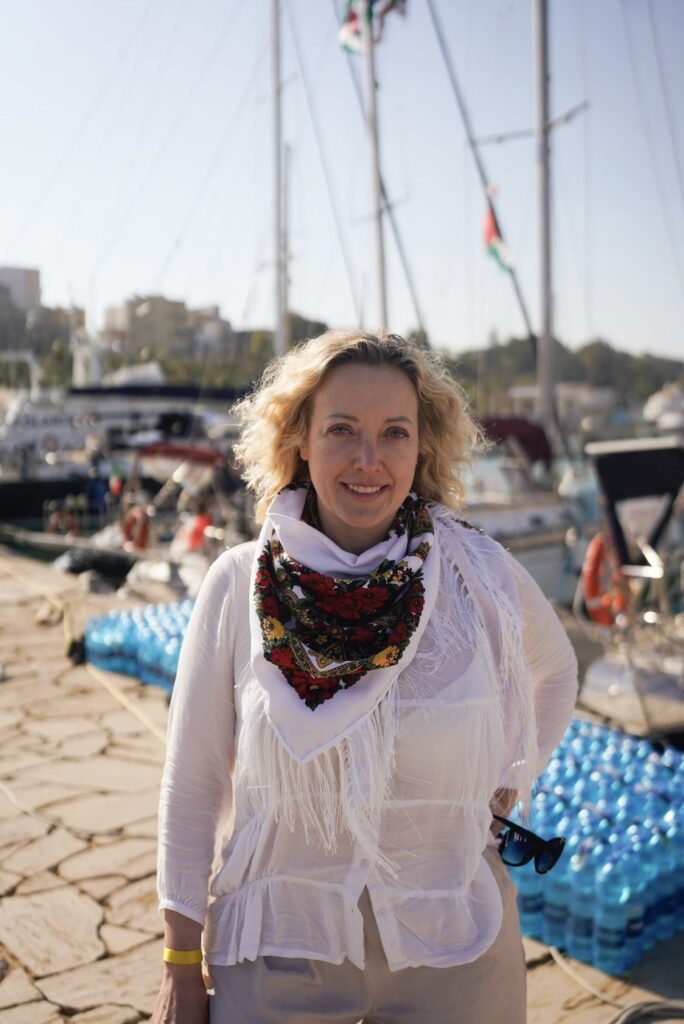
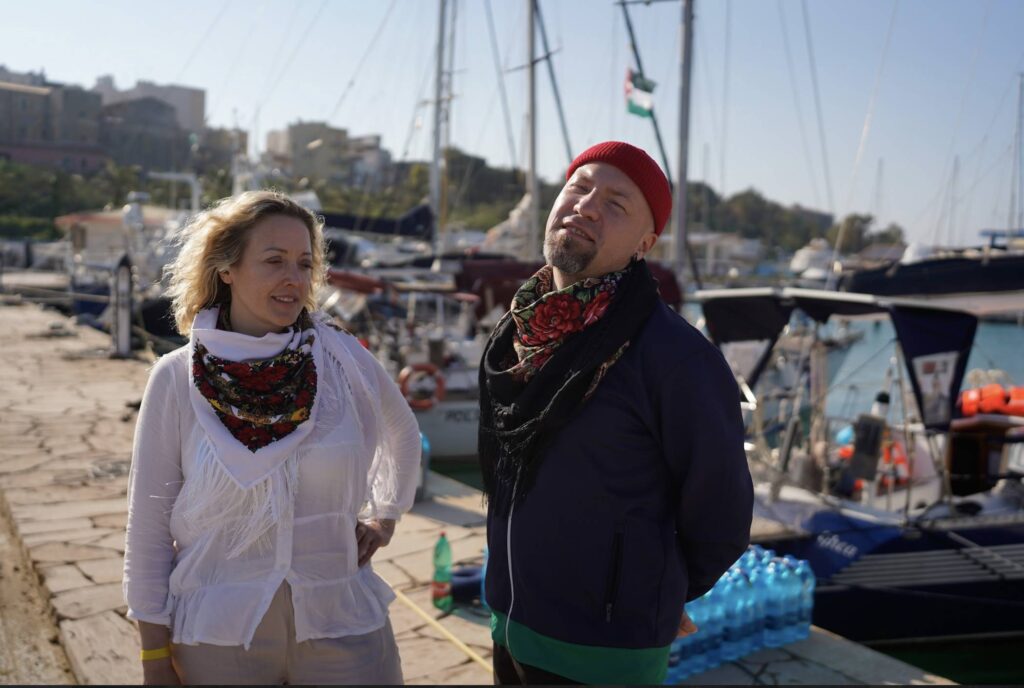
Two Ukrainian activists, Andrii Movchan and Nina Potarska, have been arrested by the armed forces of the genocidal Israeli state.
Israeli Navy’s criminal attack on Gaza flotilla: Ukrainian team among detained crews. Release them all now!
April 30, 2026
The European Network for Solidarity with Ukraine (ENSU) has learned that the vessel carrying the Ukrainian team as part of the Sumud Global Flotilla 2026 was one of those illegally seized by the Israeli Navy early this morning.
According to an Al Jazeera report seven out of the 58 vessels were captured by Israel near Crete, over a thousand kilometres from the coast of Gaza.
ENSU coordinator Szymon Martys described the raid as “a blatant and cynical attack on unarmed vessels navigating peacefully in international waters”. He demanded the immediate release of the detained crews, which include the Ukrainian team of Nina Potarska and Andrii Movchan.
Martys said that ENSU, which is supporting the two Ukrainian peace and human rights activists, had no information as to their situation, but assumed that they, along with other crews, were being held illegally on an Israeli navy vessel.
“They must all be freed immediately”, he added, and called on the Ukrainian government, along with the governments of all the kidnapped crews, to demand their immediate release.
Martys commented that the Israeli’s government’s action–attacking the flotilla when it was far from Gaza and before public attention on its mission would be at a peak–betrayed its fear of the power of international solidarity with the Palestinian people.
“We in the Ukraine solidarity movement understand this truth”, he added. “Powerful governments, like Netanyahu’s and Putin’s, although armed to the teeth, can be brought low by the mass mobilisation of all who stand for the rights of peoples. The Sumud Global Flotilla is symbol of popular indignation at the murderous violence of war and of people’s determination to stand with the oppressed.”
The Ukrainian team had joined the Sumud Global Flotilla to help the humanitarian effort for the blockaded people of Gaza, towards whom they, as members of a nation also victim of brutal invasion, feel a special duty of solidarity.
I invite you to read my new English translation for Спільне / Commons: “Breaking the Gaza Blockade: Ukrainians on the Sumud Flotilla.”
It is a thought-provoking interview with Ukrainian activists Andrii Movchan and Nina Potarska about Gaza, Ukraine, occupation, human rights, and solidarity.
Many thanks to the Commons editorial team for this important conversation and for the careful editorial work. I am grateful for this collaboration opportunity.
Andrii Movchan: “I have been sympathetic to the Palestinian movement since my teenage years. Even then, I understood that there was an occupation there, that people were fighting for their basic rights, which were being brutally violated year after year. I knew that settler colonialism was a real issue. In general, I intuitively understood that the Palestinian cause was a just one. Later, after I had emigrated, I began talking to Palestinians, and they made that conviction even stronger. Because, despite all the complexity of this conflict, the truth is still on the side of the oppressed. And the oppressed side here is, without question, the Palestinian people.”
Nina Potarska: ‘We are convinced that this must be resisted, including through the practice of solidarity and by bringing together the struggles of different peoples. I think my own experience fits into this picture. I have been to Mexico and Colombia, where I spoke with various women’s and left-wing groups. For me, the dividing line is between authoritarian and non-authoritarian leftists. Those who lean toward authoritarianism are more likely to identify with state interests and international coalitions.
For example, in Mexico, the question of Ukraine is not seen in terms of Ukrainians suffering from war, but in terms of resisting US interests. Since they themselves suffer from Washington’s policies, they perceive Russia in a very schematic way — as a distant but “tactical ally” in the struggle against America.
This can be understood, but I place myself on the side of solidarity between people, not states. It seems to me that this is where the main dividing line lies. In the world, Ukraine is still often perceived through its official political positioning, rather than through voices “from below”: activists, humanitarian workers, or human rights defenders.’




Leave a Reply