1000 Days since the Russian Invasion of Ukraine – Protest at Embassy of Russia in Ireland, Tuesday November 19 2024, 3 – 4pm, 186 Orwell Road, Dublin 14
Tuesday November 19 2024 marks the 1000th day since the start of the full scale invasion of Ukraine by Putin and his military forces.
To mark the day an event is being held outside the Russian embassy commencing at 3.30pm..
A poster advertising the event is below.
Feel free to circulate it to friends, acquaintances and contacts.

Housing Crisis, Ireland, November 12 2024 : Left-wing election candidates respond to RTÉ Upfront True Stories
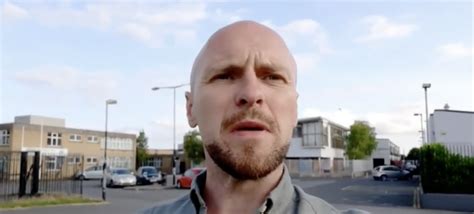
Councillor John Lyons, Candidate, Dublin Bay North
Good to see opposition politicians cutting through the bleedin’ heart nonsense from FF & FG regarding the housing crisis on
: if they really cared, we wouldn’t have 3,388 homeless children in Dublin tonight. #HousingCrisis
https://x.com/CllrJohnLyons/status/1856112498291753276
Councillor Ruth Coppinger, Candidate, Dublin West
A young woman in the audience just punctured the guff on
@RTEUpfront. In a homeless hub with a child with a life limiting condition. What shame for a government that has had a record budget surplus. Cheek of minister saying ‘I have a family too’ on his salary.
Read the rest of this entry »
European Left Alliance for People and the Planet (Howie Hawkins Report) – Dispatches from Europe, No. 8, November 6, 2024
Howie Hawkins, Green Party Presidential Candidate in the 2020 USA General Election, reports from Kyiv, Capital City of Ukraine, on a meeting of the European Left Alliance for People and the Planet.
Dispatches from Europe, No. 8, November 6, 2024 – European Left Alliance for People and the Planet
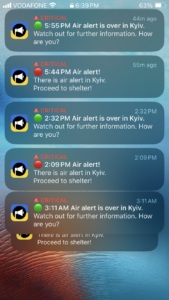
I arrived in Kyiv on the afternoon of November 2 to the sound of air raid sirens. The air raid warnings had been going on all day. They come by phone once you get the Air Alert app, which is one of the first things my hosts had me do. Now my phone screen is covered with air alerts.
By the end of the night of November 2-3, Ukraine had been targeted with 96 drones and 1 air-to-surface missile. Ukrainian air defense units intercepted the missile and 66 of the drones, but between the drones that got through air defenses and debris falling from intercepted drones and missiles, six districts of Kyiv were hit, mostly residential buildings. One explosion woke me up. A large explosion hit a building at one of the campuses of Taras Shevchenko National University.
Read the rest of this entry »Deport an Immigrant? The view of Sinn Féin TD Claire Kerrane (the party’s Integration Spokesperson)
A highly-respected human rights campaigner Wendy Lyon draws our attention to a public statement issued by the Sinn Féin spokesperson on Integration Claire Kerrane TD (Ropscommon-Galway). Kerrane’s home town is Ballaghaderreen, which has recently been the target of sinister anti-immigrant racist mobilisations.
Wendy Lyon posted this comment on the X/Twitter platform :
“A party representative who doesn’t think immigrants accused of crime should be entitled to legal aid is not fit to be integration spokesperson.”
Sinn Féin party leader Mary Lou McDonald TD led a pile-on against critics, featuring a legion of self-declared SF supporters [note of caution : many of them may not be real individuals]
Wendy Lyon has a much better policy :
Anyway, “criminals should be deported instead of imprisoned” is Little Irelander nationalism. If someone is really a danger to others then (until there’s a better alternative) prison is exactly where they should be, not free to be a danger to people in their country of origin.
Claire Kerrane TD, in her own words :
“Sinn Féin’s integration spokesperson has stood over a deleted Facebook post saying deportation should be considered for any immigrant who commits a crime.
But Claire Kerrane said it’s a personal view and she’s “not pushing for it” to become party policy.”
An anti-racist correspondent, EamonVIDF has done an excellent job providing context for this dispute :
This kind of lets the ‘optics’ cat out of the bag


The full information thread is here :
https://x.com/EamonnVIDF/status/1853423563346153484
Who is Wendy Lyon?
Wendy Lyon holds an LLM in International Human Rights Law (Griffith College Dublin), for which she wrote her dissertation on sex workers’ right to health. She has been involved in feminist activism on both sides of the Atlantic for longer than she cares to admit. By day, she works as a solicitor, practising mainly in the areas of immigration and sexual/reproductive/maternity rights. She tweets about human rights law, politics, and her cats at @wendylyon. Wendy contributes to the Feminist Ire blog :
Feminist Ire :
John Meehan November 10 2024
Taoiseach Simon Harris Announces Irish General Election on November 29 – Heading to Phoenix Park HQ of President Michael D Higgins to dissolve current Dáil – Support Credible Radical Left Candidates
https://www.rte.ie/news/2024/1108/1479774-end-33-dail-general-election/
Simon Harris confirmed that he’ll travel to Áras an Uachtaráin shortly to ask President Higgins to dissolve the Dáil.
The election is set for Friday 29 November 2024.
A number of radical left candidates against any coalition deal with FFFFGGG have a realistic chance of winning a Dáil seat. [FFFGGG = Fianna Fáil, Fine Gael, Greens, Gombeens].
One of them is Councillor John Lyons in Dublin Bay North.
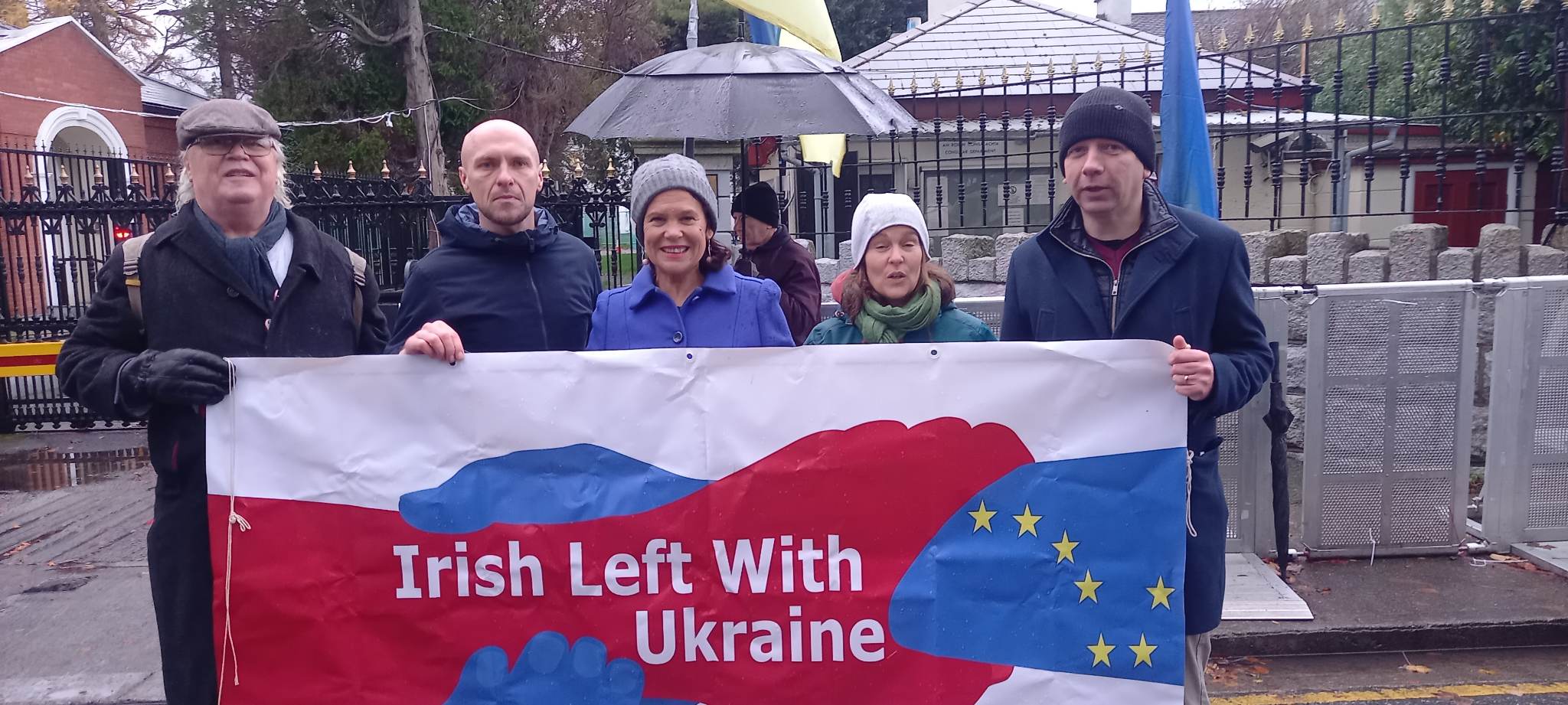
Rejecting any coalition deals with FFFGGG and a policy that All refugees Are Welcome should be top priorities for radical left candidates in this general election.
People Before Profit (PBP) candidates also endorse the above policy.
Link :
No Coalition with FF or FG – PBP Conor Reddy
John Meehan, November 7 2024
Campaigners ask President Higgins to keep Dáil in situ – Israel’s Illegal Settlements and an Occupied Territories Bill
https://www.rte.ie/news/ireland/2024/1108/1479764-higgins-dail-campaigners/
It is hard to know if President Higgins has the power to force the Dáil to continue to meet against the wishes of taoiseach Simon Harris – but this request is certainly justified morally.
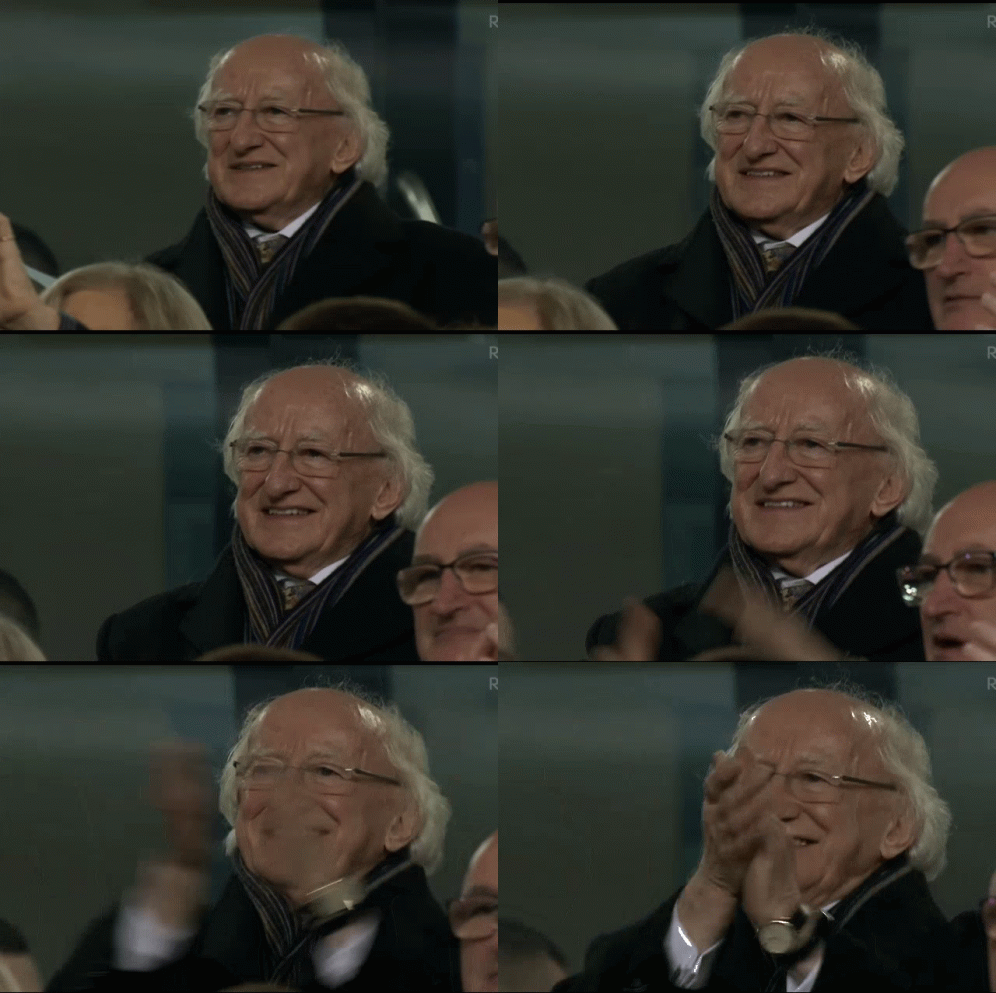
President Michael D Higgins has been asked not to dissolve the Dail later today, by campaigners who want the Occupied Territories Bill to be passed by the Oireachtas.
The bill would ban trade between Ireland and Israel’s illegal settlements in the Occupied Palestinian Territories.
It is expected that Taoiseach Simon Harris will make the request for a dissolution this afternoon.
However, in a letter sent to Áras an Uachtaráin by the Mothers Against Genocide group, President Higgins has been asked to use his presidential powers to keep the Dáil in situ.
Read the rest of this entry »
Santry resident Olga Popova fled Russia before the war against Ukraine – Free Russians Ireland Organise Against Putin’s Régime
Garrett Mullan, an activist in Irish left With Ukraine, interviews Olga Popova (Free Russians Ireland).
This is the latest episode on Garrett’s M1 Podcast.
Santry resident Olga Popova Fled Russia Before the War Against Ukraine
Free Russians Ireland
Open Mind Wind is Olga’s marketing business –Success Stories
Free Russians Ireland- Facebook
Free Russians Ireland Instagram
On the M1 Podcast, Garrett does stories of interest to those who live up and down the M1. Santry resident Olga Popova who fled Russia in 2021. To her 50,000 tiktok followerers, she is an outspoken critic of the war against Ukraine https://m1.radio.ie
Episode 24- Santry resident fled Russia before the war against Ukraine

Olga Popova and her husband moved to Ireland in 2021 before the Russian invasion of Ukraine in February 2022. They settled in Santry on the northside of Dublin. Her husband was involved in activities protesting against the Russian government and they were prompted to flee after he spent a night in police custody. ‘I was at home with our child, because in Russia, if you go protests you need to be able to run fast’.
Read the rest of this entry »Resolution: The War and the Future of Ukraine and the Left Movement – Author : Social Movement (Sotsialnyi Rukh) [Ukraine]
The resolution below was recently adopted by a left-wing organisation in Ukraine : Social Movement (Sotsialnyi Rukh).
Here is one of many important statements very relevant to the left in Ireland and elsewhere :
The growing contradictions between the centers of capital accumulation in the world capitalist system will not stop even after the complete destruction of Russian imperialist power. The left in Europe and around the world turned out to be helpless and disoriented when the Russian aggression in Ukraine occurred. Unless the international socialist movement realizes mistakes it has made and builds a new, truly internationalist cooperation and coordination, we simply have no chance of preventing the growth of inter-imperialist struggle in the future.

Resolution: The War and the Future of Ukraine and the Left Movement
Категорія: ПОЗИЦІЯ
The people of Ukraine have been facing hard challenges, yet they have proven their ability to fight for the right to decide on their own fate, and their determination to defend the country and to end the war as soon as possible. The authorities and representatives of market-fundamentalist ideology, together with big business, keep pushing through an economic model focused on benefiting a minority at the expense of the welfare of the absolute majority
The people of Ukraine have been facing hard challenges, yet they have proven their ability to fight for the right to decide on their own fate, and their determination to defend the country and to end the war as soon as possible. The authorities and representatives of market-fundamentalist ideology, together with big business, keep pushing through an economic model focused on benefiting a minority at the expense of the welfare of the absolute majority. In this model, workers are completely subservient to the will of their employers, while social and regulatory functions of the state are abolished for the sake of “business needs”, “competition” and “free market”.
Read the rest of this entry »How Much Proof Is Needed? The Case of Vladimir Putin’s Spy Pavel Rubtsov / Pablo Gonzalez
Speculating about the identity of spies is a largely useless activity unless the secret operator has been unmasked. For example in Ireland, examining the profiles of a few high-profile unmaksed British spies – Freddie Scappaticci, Seán O’Callaghan and Denis Donaldson – the vast majority of the people who came across these informers never guessed anything was wrong until the unmasking.
Pavel Rubtsov/Pablo Gonzalez is an unmasked Russian spy. We do not yet know how much damage he did, how many lives he betrayed, how many people lost their lives, how many lives were ruined, because of the services he offered to Putin’s far-right racist régime.
An important sub-plot in this story concerns members of the international anti-Ukrainian left – including the former Irish members of the European Parliament Clare Daly and Mick Wallace – who associated themselves with campaigns for the release of Rubtsov/Gonzalez after he was detained by Polish state security forces who believed (correctly, it transpires) that their prisoner was a Putin spy.
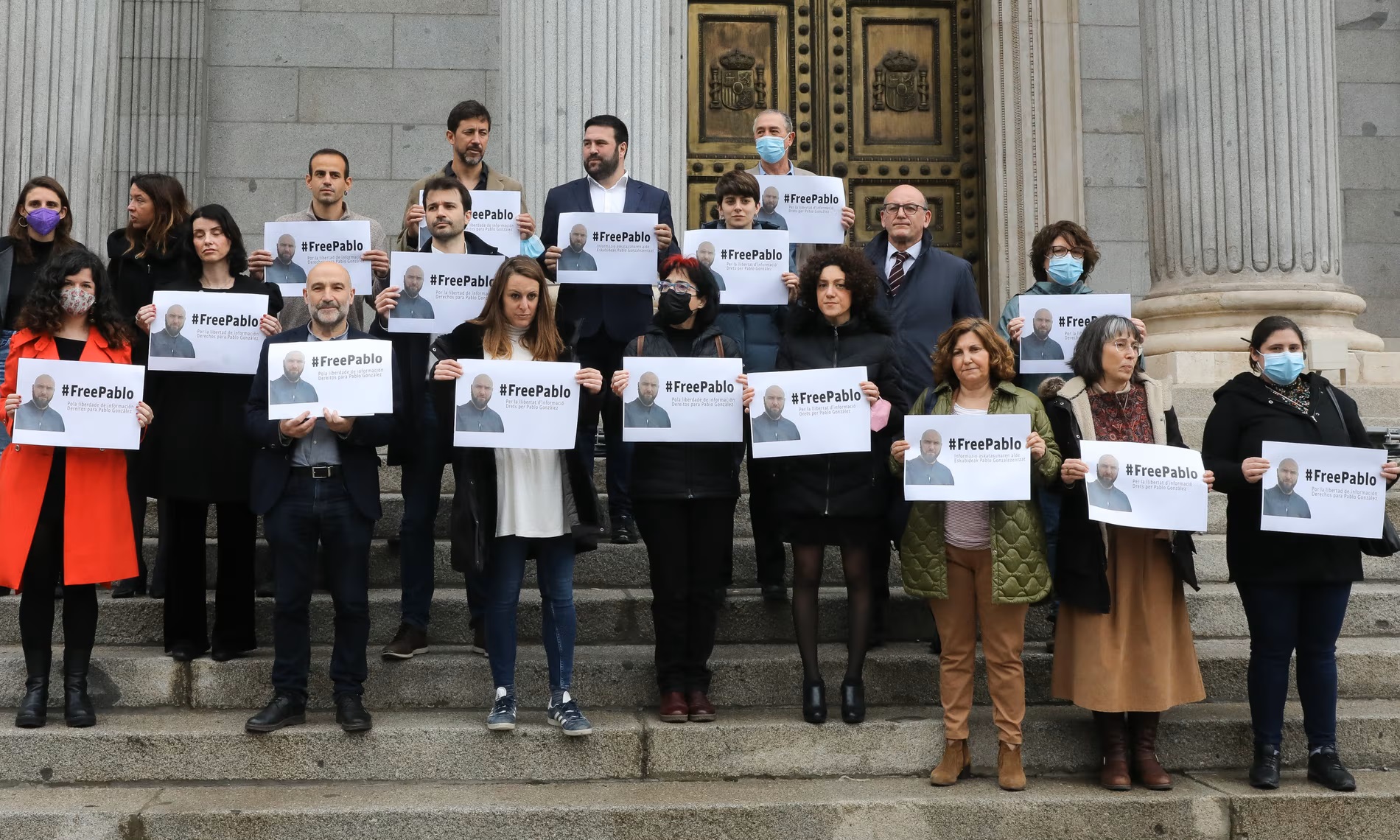


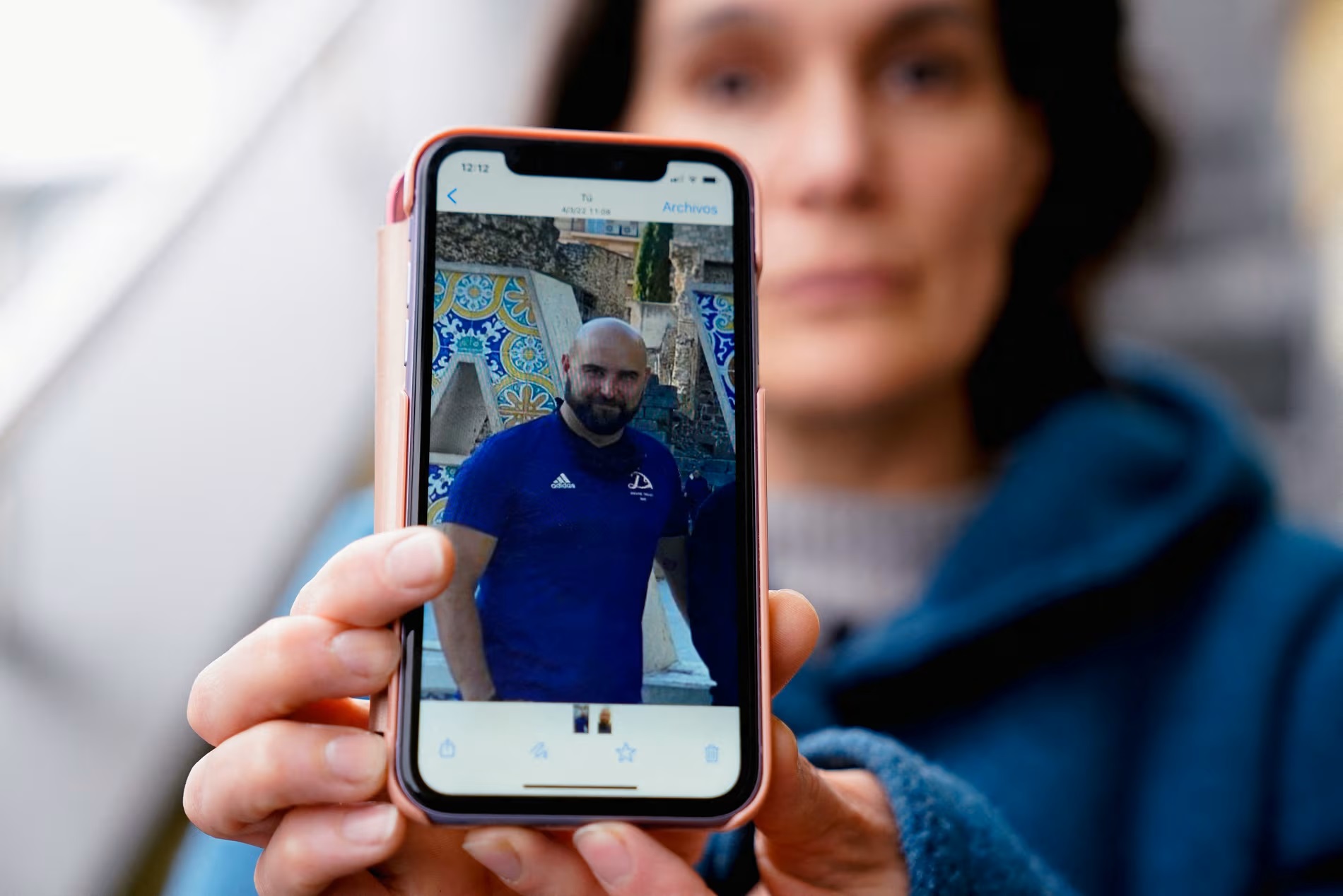

After Rubtsov returned to Russia as part of a prisoner-exchange he was personally greeted by President Vladimir Putin. The case against the Russian spy had become overwhelming, but ex Irish MEP Clare Daly still peddled a false cover-story :
Read the rest of this entry »


 Tomás Ó Flatharta