The March 26-27 Brussels Solidarity with Ukraine conference drew together about 200 activists from a score of countries, in support of the Ukrainian people’s national and social rights.
A main organizer was Dick Nichols, who wrote the comprehensive report below;
Former Finnish education minister Li Andersson (left) and Ukrainian women’s rights activist Ivanna Vynna addressing the March 26-27 Ukraine Solidarity Conference in the Belgian capital Brussels. Photos: Julie Ward
The conference also took place in the context of ongoing conflict between Ukraine’s trade union, feminist, environmental, civil rights and progressive political movements and the neoliberal domestic policies of Volodymyr Zelensky’s government.
And here we are. This is one outcome of arguing that one imperialism is less bad than another, that some people are oppressed while others either don’t exist (,Putin’s original playbook) or don’t really matter. Palestinians good, Ukrainians, Kurds? Not so much.
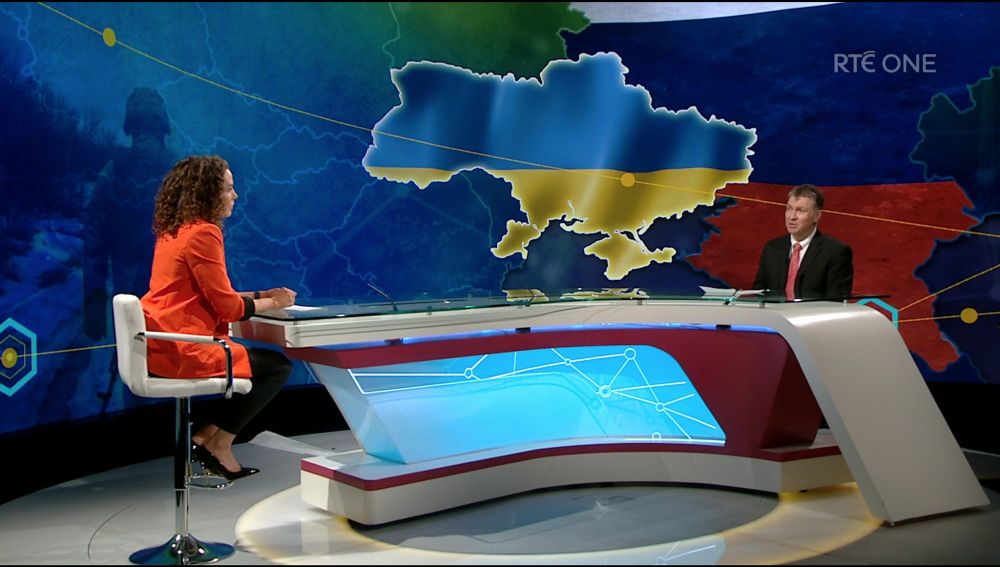
Clare Daly (ex MEP; a twice defeated Irish election candidate in 2024) was on the RTÉ 1 TV “Upfront with Katie Hannon” programme on February 17 2025, supporting the Trump-Putin stab in the back of Ukraine. She is like the peace activists who backed the Hitler-Chamberlain 1938 agreement selling out Czechoslovakia. A year later this “peace in our time” deal, promoted by a British Prime Minister Neville Chamberlain famously waving a piece of paper, paved the way for World War 2 in Europe and Nazi occupation of France, Holland, Belgium, Poland plus many more.
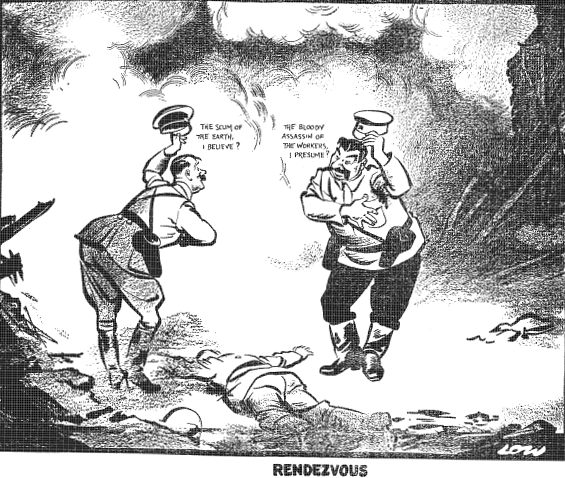
We also saw the Hitler-Stalin pact in 1939, followed in 1941 by – guess what? – a Nazi invasion of Stalin’s Russia.
Let us recall the various Clare Dalys, spiritual daughters of Stalin – one of whom claimed in 2022 that predictions Putin intended to invade Russia were “insane”.
Pro-Ukraine anti-war activists got it right, for example Donnacha Ó Beacháin :
3 years ago today I was in a TV studio expressing scepticism about Putin’s claim he was withdrawing troops from Ukraine’s borders On the same program Russia’s ambassador said anybody who suggested Russia would invade Ukraine was “insane”. Russia launched its full-scale invasion the very next week
Here is an account of the warnings Stalin ignored prior to the Hitler invasion in 1941.
Unlike the Germans, who saw the Non-Aggression Pact as necessary but temporary, Stalin had illusions that it might be lasting. Owen Matthews quotes from a 1966 interview with Marshal Zhukov, conducted by Lev Bezymensky, a Soviet historian and war veteran. In January 1941, Zhukov and others had warned Stalin of ominous German troop movements. Stalin wrote to Hitler, asking politely whether these reports were true. Hitler replied that they were, but he swore ‘on my honour as a head of state that my troops are deployed … for other purposes. The territories of Western and Central Germany are subject to heavy English bombing and are easily observed from the air by the English. Therefore I found it necessary to move large contingents of troops to the east where they can secretly reorganise and rearm.’ Stalin believed him.
Source : Winston Churchill : His Times, His Crimes, Tariq Ali, Verso Books,
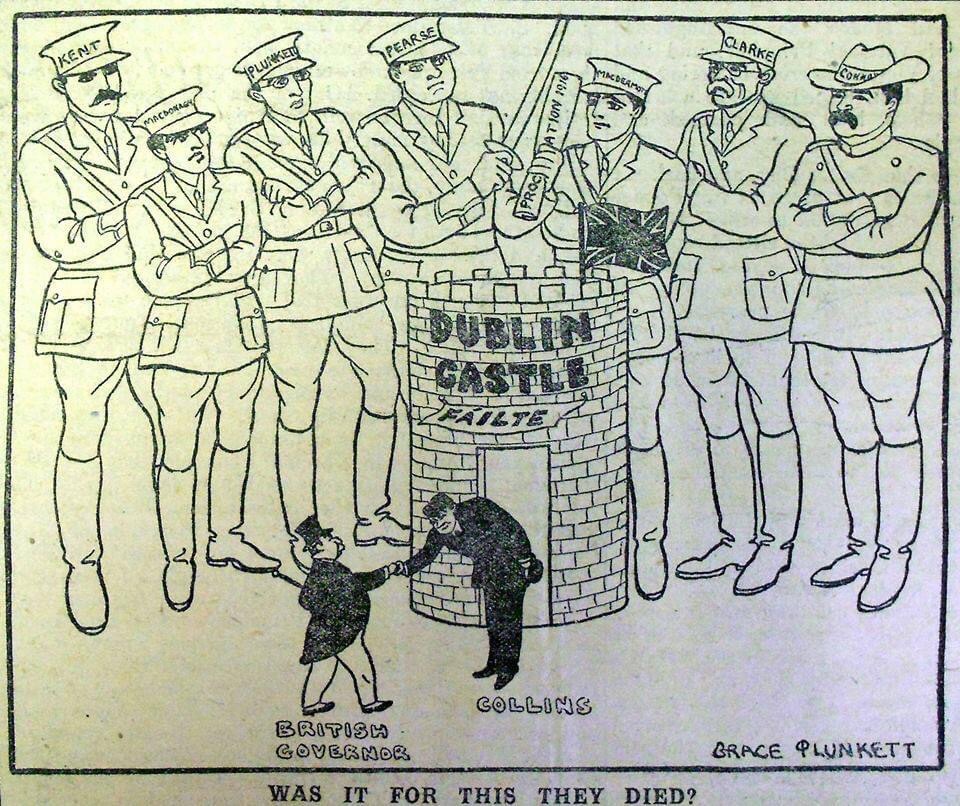
The 2025 Trump-Putin partition policy is a spiritual daughter of the 1922 Treaty which peace politicians used to stab Northern Nationalists in the back by implementing the partition of Ireland. This gave us, in the prophetic words of James Connolly, “A Carnival of Reaction” – 2 sectarian counter-revolutionary states on one small island.
Like James Connolly, Grace Plunkett (widow of 1916 Easter Rising martyr Joseph Plunkett) understood that partition, pretending to be peace, meant a sham freedom for Ireland.
So, today, it should be obvious to all on the left : oppose a peace and partition plan promoted by 2 violent untrustworthy sociopaths.
Ask the people of Canada, of Mexico, of Greenland. Ask the people of Ukraine, of Latvia, Lithuania, Estonia, of Poland , of Finland.
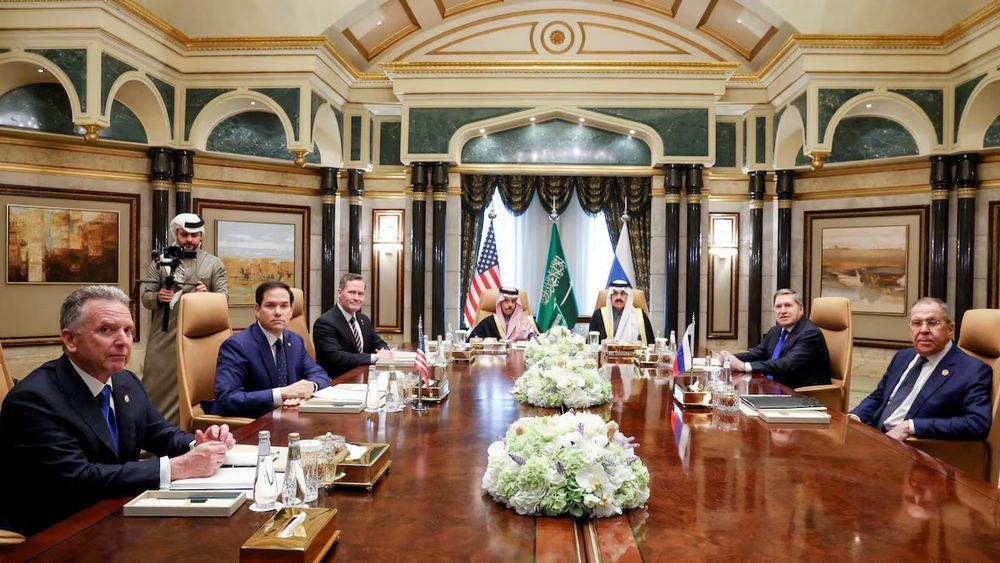
A dictatorship hosting another dictatorship to negotiate with an aspiring dictatorship about the future of a democracy that’s not represented.
Two superpowers opening discussions on the future of a country which one of them is still invading, without that country
Are the international pro-solidarity left organising solidarity with Ukraine? Answer Yes
A physical and online conference in support of the Ukrainian people’s national and social rights
No to partition! Russian troops out!
This important conference will address the grave threat posed by the incoming Trump administration’s intention of imposing on the Ukrainian people a deal agreed with Putin’s Russia.
Violating international law, it would partition Ukraine and entrench the occupation of territory annexed since 2014 and expanded by Putin’s full-scale war since February 2022. It would produce a “peace” imposed through Western acquiescence in the dismembering of Ukraine, with parallels to the 1938 Munich Agreement that handed Nazi Germany 30 per cent of Czechoslovak territory.
The vulnerable position presently confronting Ukraine’s war of just resistance is a direct result of the failure to provide necessary aid by key states, despite their boasting that they “stand by Ukraine”.
The dire prospect of a partitioned Ukraine partly under Putin’s control would be the product of the appeasement policy of those sections of big business anxious to restore and develop their Russian commercial ties. In contrast, the Solidarity With Ukraine conference of progressive forces—of trade unions, socialists, social democrats, green, feminists and other social movements—will take place on the understanding that the partition of Ukraine cannot bring peace.
The only road to a just and lasting peace requires the complete withdrawal of Russian forces. While they remain in any part of Ukraine it will be impossible for Ukrainians to freely determine their own future.
Any peace negotiations should be with Ukraine as a main partner: the war should not and cannot be solved as a horse trade between the great powers at Ukraine’s expense.
Against the decline in aid and a possible Trump-Putin deal, the organisers and sponsors of the Solidarity With Ukraine conference advocate a surge in military support to strengthen Ukraine’s position in any negotiations, and to be able to continue its just resistance if no security guarantees acceptable to Ukraine are achieved.
That military aid must be accompanied with unconditional financial support for Ukraine’s reconstruction and the cancellation of its debt. We reject the corporations’ self-interested argument that solidarity with Ukraine’s armed and unarmed resistance must mean accepting the dismantling of social rights and services, either inside Ukraine or in the countries giving it support.
The struggles of Ukraine’s working people and their trade union organisations, and of the country’s feminist, environmental, LGBTIQ+ and human rights organisations have been indispensable to the country’s resistance, primarily against the Russian invasion but also against anti-social policies adopted by the Zelensky government. They are also the best guarantee that reconstruction will be in the interest of Ukraine’s social majority.
The message of representatives of such Ukrainian movements will be a central feature of the plenary sessions of the Solidarity With Ukraine conference.
They will also participate in workshop sessions that will provide an invaluable opportunity to increase understanding of Ukraine’s complex reality and develop practical solidarity initiatives with Ukrainian partners.
The conference will also adopt a final declaration, with the goal of giving as much publicity as possible to its position in favour of a just peace and just reconstruction for Ukraine and its people.
The final text and the Solidarity With Ukraine conference program will be published soon.
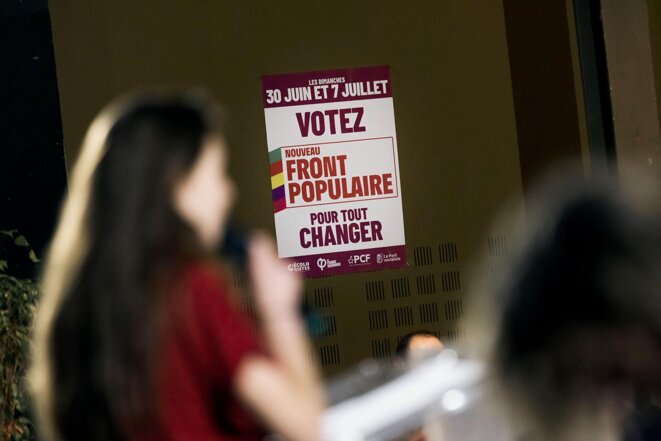
This is a very stimulating interview with Catherine Samary on solidarity with Palestine and Ukraine – and also about the unstable political scene in France, where President Macron was electorally defeated by the New Popular Front (Nouveau Front Populaire) – and then made an unstable parliamentary deal with the far-right leader Marine Le Pen.
President Macron, Prime Minister Michel Barnier, Far-Right Extremist Marine Le Pen – Versus Left-Wing Resistance
— Before we turn to the discussion of the war in Ukraine and prospects for left internationalism, let’s talk about the recent developments in your home country. How do you analyse the current political situation in France and the role that left-wing politics might play in it?
— Michel Barnier’s new government combines two core elements: racism and attacks on social rights. The latter is evident in the ongoing parliamentary debates over the 2025 budget and social security funding. Marine Le Pen’s National Rally (Rassemblement National) has played a key role in these discussions, not least due to the fact that no single party has managed to achieve a stable majority in the French parliament. Even though the result of the New Popular Front (Nouveau Front Populaire) in the recent legislative election, which followed the dissolution of the Assembly last June, was unexpectedly high — and most welcome — it is still only a minor and relative victory.
This situation is unlikely to change unless the various forces within the New Popular Front come together, consolidate their victory, and start a large-scale mobilization. This could be achieved through the creation of local political alliances across the entire country that would be focused on concrete struggles. We should not forget that mass mobilizations against attacks on the social system are still possible — and so is the collapse of the government itself.
Frieda Afary has written an excellent analysis (see below). She shows that the Democratic party candidate Kamala Harris lost 10 million votes compared with Joe Biden’s 2020 victory. Trump’s vote totals in 2020 and 2024 were almost identical.
This article analyzes the vote breakdown, the pundits’ views, argues that Trump is a fascist and offers perspectives for the needed anti-fascist resistance.
Donald Trump’s election as president, and the Republican victories nationwide are a catastrophe for progressive forces in the U.S. and around the world. What the November 5, 2024 election showed was that while this country is still divided, there has been a rightward shift nationwide and across all demographic and geographic groups. (Levitt, 2024)
Vote Breakdown:
Let’s take a closer look at the demographic breakdown of the votes. Approximately 72 million voted for Harris and 75 million voted for Trump. Approximately 700,000 voted for Jill Stein and 700,000 voted for Robert Kennedy. This means that Democrats received 10 million fewer votes than in 2020 when Biden received 81 million. Trump received approximately the same number of votes he received in 2020. (U.S. Election Results, 2024)
Abstention lowest since 1997 at 32.5% (cf 53% in 2022)
Macron’s big gamble has failed. By calling a snap election, he thought the French people would rally around his centrist party and the moderate left to put Le Pen’s Rassemblement National (RN, National Rally) back in its box after its victory in the recent Euro elections. He assumed a bigger turnout would not favour Le Pen’s extreme right-wing, post-fascist party. On the contrary, 20% more people turned out than in 2022. The RN consolidated its Euro vote and successfully allied with a split from the mainstream Les Républicains (LR, the Republicans). In terms of actual votes – around 12 million if you add in the votes of the Zemmour current who got less than 1% – this is a massive breakthrough. Previous scores in legislative elections were less than half this.
“Macron’s gamble has backfired spectacularly, with the Rassemblement National consolidating its Euro vote and securing an unprecedented number of MPs in the first round.”
The RN has never had so many MPs elected in the first round. They were already the biggest single party in the National Assembly, and it is probable now that they will maintain that position with even more MPs. However, it is still uncertain whether they will get the 289 MPs needed for an absolute majority, which would guarantee them the premiership with their young leader Bardella.
Everything depends on what happens in the second-round run-off. The top two stand automatically, but the third candidate can run in the second round if they have more than 12.5% of the registered voters. All the discussion immediately following the election focuses on whether the best-placed candidate to defeat the RN is given a free run by any eligible third-place candidates stepping down. Leaders of the Nouveau Front Populaire (the New Popular Front-NPF) from the Socialist Party, the Ecologists, and La France Insoumise (France Unbowed – LFI) led by Jean-Luc Mélenchon, have all called for this ‘barrage’ (bloc) to stop the RN winning.
En cas de triangulaire, si le Rassemblement national est en tête et que nous sommes troisième, nous retirerons nos candidatures.
However, leaders of Macron’s Ensemble (Together) party have been much more equivocal. Some have called for blocking the RN with a single candidate, while others have said they will judge on a case-by-case basis. Bruno Le Maire, current economics minister, and Edouard Philippe, former Macronist prime minister, hold this position, saying they will vote for the social democratic left but not for the LFI. They refuse to support second-placed candidates from the LFI, whom they consider as extreme as the RN. These people do not like the way the LFI have supported the Palestinians and condemned the Israeli state or criticised police actions in ethnic minority neighbourhoods. This vacillating position could help the RN squeeze past both the Left and the Macron parties in a three-way race in some areas.
The remote Pacific Ocean island of Saipan suddenly hit Irish and global headlines in 2002 when Irish soccer star Roy Keane walked away from the Irish team’s base for the World Cup in Korea and Japan after a blazing row with his manager Mick McCarthy. Today the island is back in the headlines after the political prisoner Julian Assange walked to freedom following a court hearing in the USA-owned North Marinara territory. Like Keane, Assange did not linger in Saipan – he flew home to his native land, Australia.
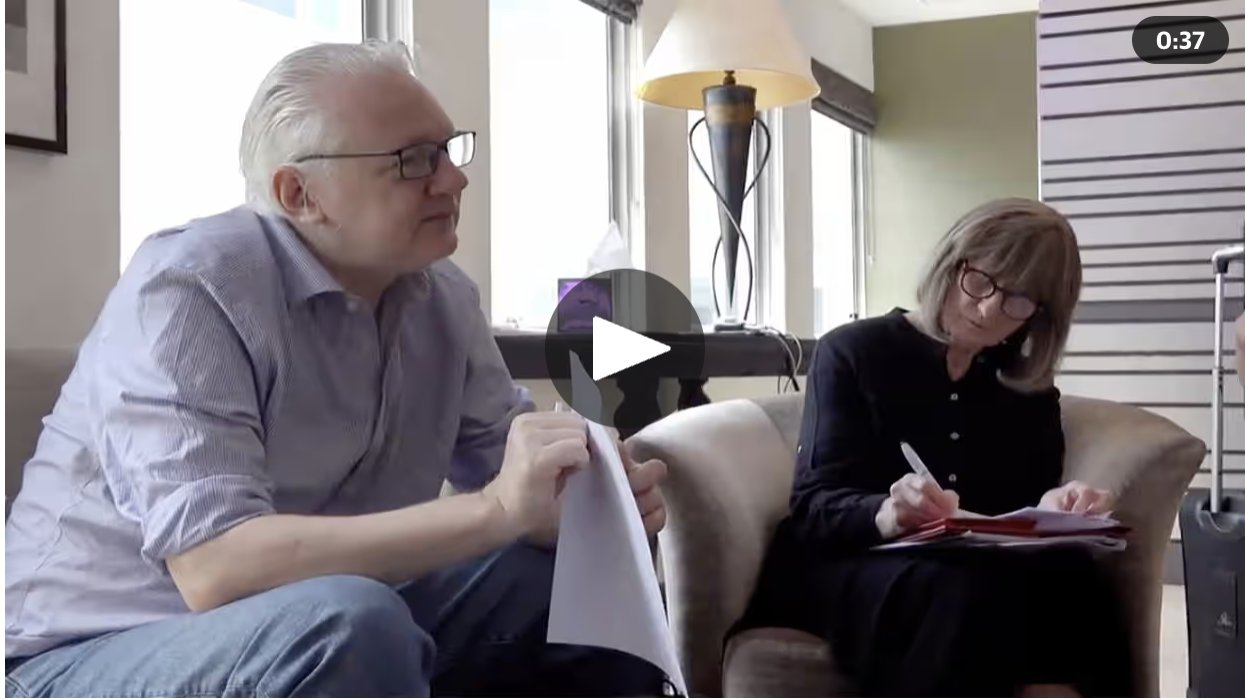
That is not the only Irish connection. Many innocent Irish political prisoners were held, like Assange, in noxious British jails such as Belmarsh. A small number of dedicated human rights lawyers became household names in Ireland. The picture below shows the released Julian Assange beside one of those lawyers, Gareth Pierce.
Political Prisoner Julian Assange and Civil Rights Lawyer Gareth Pierce
The campaigns for the release of the Birmingham Six, the Guildford Four, the Winchester Three and Judith Ward offer an important lesson :
When the left should get together in defence of political prisoners, it is very often a serious mistake to conduct a debate about the political views and activities of the prisoners. In Ireland that was true of the Birmingham 6, the H-Block/Armagh political prisoners, Nicky Kelly and the IRSP members framed for the Sallins Train Robbery, and the Jobstown Not Guilty political activists in Tallaght. Many comrades would be well advised to go back further and examine the Sacco and Vanzetti campaign in the 1920’s, and the Moscow Trial Purges of the 1930’s. The faults (or lack of faults) of the victims are regularly used as an excuse to avoid a united campaign in favour of the victims. The bigger story is that “An Injury to One is An Injury to All”.
Provisional results of the 2024 European Elections, as at June 19. Source: results.elections.europa.eu
At first glance it looks as if the parties to the left of the social democracy held their ground against the surge of the far right and mainstream right that marked the June 9 European Union (EU) parliamentary elections (see here for results in detail).
Although the smallest of the European parliament’s seven groups, The Left managed to maintain its EU-wide vote at 5.4% and increase its seat tally from 37 to 39 in the 720-seat assembly.
In addition, left green Members of the European Parliaments (MEPs) and those representing stateless nations (part of the Greens group as the European Free Alliance) at least maintained their numbers in the chamber.
Yet the Greens group as a whole shrank from 71 seats to 53 while that of the liberals (known as Renew) fell from 102 to 79. This drop reflected that the environmental issues that in part drove the big advance of these parties in the 2019 election were less important for many voters this time.
The campaign was dominated by insecurity about the future, the cost of living (particularly housing), the fear of war, the “immigration threat” and intolerance of difference.
In this grim atmosphere the biggest growth went to the mainstream right European People’s Party and the two far-right groups (Identity and Democracy and Conservatives and Reformists): taken together the right and far right won an extra 30 seats, bring it to 324.
Because it would take only 37 ungrouped MEPs to join them to from a reactionary majority, the June 9 result poses with new urgency two old questions about politics in the European parliament. How much, if at all, does the real balance of political forces in the chamber differ from that among its formal groupings? And how much does membership of a group represent disciplined commitment to its positions?
Left divisions over Ukraine
The questions are sharply relevant in the case of the Left group, where differences over what stance to take towards the Russian invasion of Ukraine were already pointing towards a split before June 9.
On May 31, Li Andersson, chairperson of the Finnish Left Alliance told the Helsinki Times that these differences could not be tolerated in the group in the new legislature. Referring to Clare Daly and Mick Wallace, Irish left independent opponents of military aid to Ukraine, Andersson said: “The Nordic Green Left as a whole [covering Finland, Sweden, Denmark, Norway, Iceland, Greenland and the Faroe Islands] is of the opinion that if they manage to win re-election, they can’t join our group.”
For Andersson, the same went for the new Sahra Wagenknecht Alliance: For Reason and Justice (BSW), a split in Germany from leading Left group member Die Linke (The Left). BSW opposes military aid to Ukraine and supports resuming the gas trade with Russia, in common with most of Europe’s far-right parties.
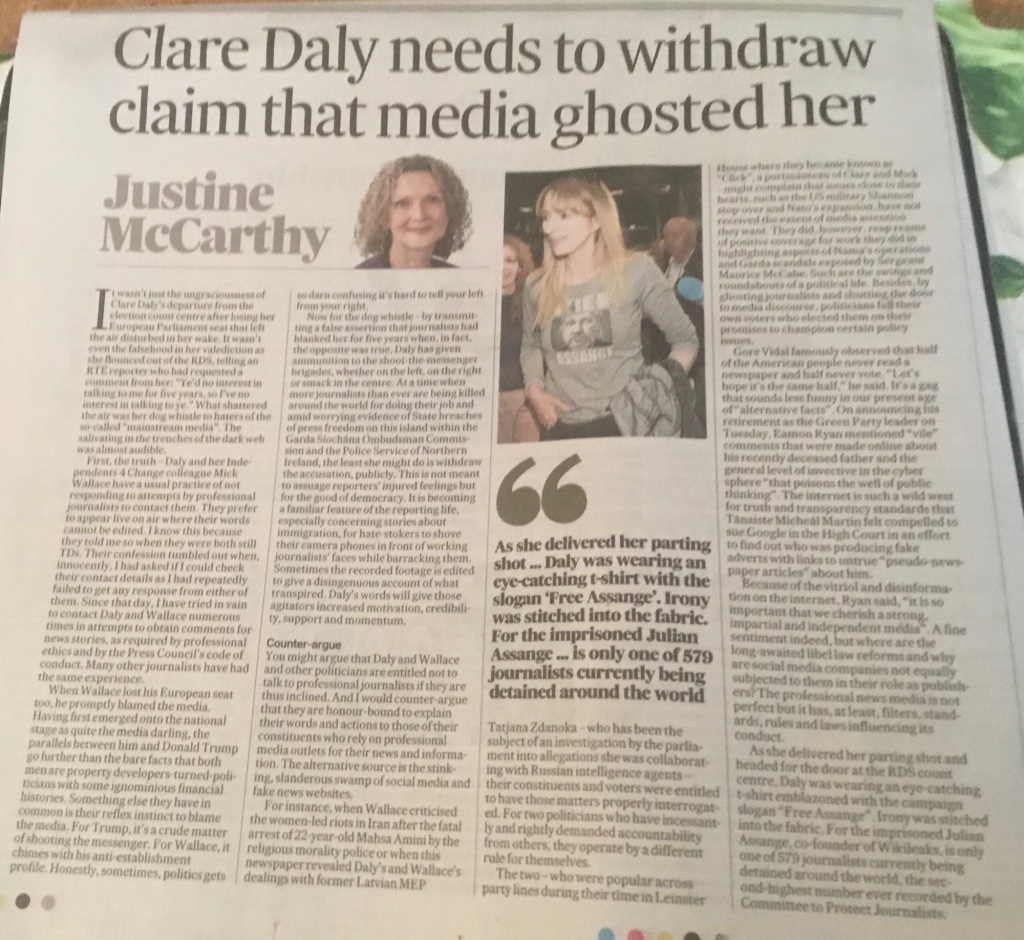
This Justine McCarthy article is a damning critique of the “shoot the messenger” technique regularly used by the former Dublin Member of the European Parliament (MEP) Clare Daly, and the ex Ireland South MEP Mick Wallace.
It wasn’t just the ungraciousness of Clare Daly’s departure from the election count centre after losing her European Parliament seat that left the air disturbed in her wake. It wasn’t even the falsehood in her valediction as she flounced out of the RDS, telling an RTÉ reporter who had requested a comment from her: “Ye’d no interest in talking to me for five years, so I’ve no interest in talking to ye.” What shattered the air was her dog whistle to haters of the so-called “mainstream media”. The salivating in the trenches of the dark web was almost audible.
First, the truth – Daly and her Independents 4 Change colleague Mick Wallace have a usual practice of not responding to attempts by professional journalists to contact them. They prefer to appear live on air where their words cannot be edited. I know this because they told me so when they were both still TDs. Their confession tumbled out when, innocently, I had asked if I could check their contact details as I had repeatedly failed to get any response from either of them. Since that day, I have tried in vain to contact Daly and Wallace numerous times in attempts to obtain comments for news stories, as required by professional ethics and by the Press Council’s code of conduct. Many other journalists have had the same experience.
Sometimes the beginning contains the end. ‘Drowning Street’ and ‘Things can only get wetter’ were among the headlines in the newspapers the day after Rishi Sunak’s announcement of the July 4th general election. He hoped for gravitas and drama that could somehow jolt the polls. Instead, he stood there getting completely pissed on. His voice was drowned out by an anti-Brexit protester broadcasting the 1997 Blair anthem, Things will only get better. It is almost as though his team hung him out to dry (or rather to get drenched). Was there really no staffer who knew that the police cannot stop you playing loud music at the bottom of Downing Street? Nobody to even hold an umbrella for the leader? All this expresses his isolation and the dire state of the Tory party as well as a complete lack of political nous.
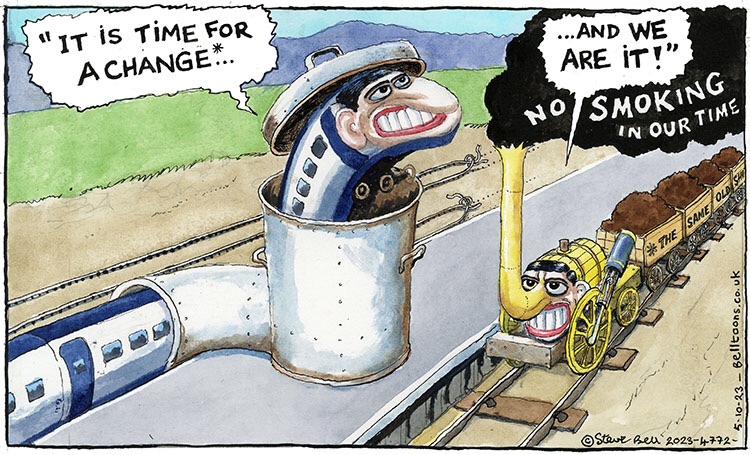
A few minutes later you had Keir Starmer looking composed and prime ministerial in front of not just one, but two Union Jacks. He gave an intelligible, brisk speech summed up in the word on the rostrum – Change. Labour is not really going to change much but it does not look like it will lose the marketing campaign. Sunak’s excruciating performance was a bit like watching West Ham smashed last week – you knew the game was up when Man City’s Foden scored within two minutes. Nobody doubted the inevitable, City was going to win the league. Images count in elections where most voters get their news from the TV and non-print media.
People Before Profit is proposing a “Vote Left” transfer pact to operate in the June 2024 Local and European Elections, 26 Counties
Presenting this positive initiative Paul Murphy TD said
He was fully aware that there would be different perspectives and, but People Before Profit “sees this as just the start of a process to form a left alternative.”
Paul Murphy TD
PBP TD’s Richard Boyd-Barrett, Paul Murphy, and Brid Smith
In the article below, important points from the discussion are highlighted.
This is a serious matter, especially in a context where it is necessary to confront and defeat the extreme racist right.
Colm Breathnach offers a very good template :
Just a personal thing, but here’s my own general set of rules when it comes to voting where a Proportional Representation system is in operation (obviously First Pat The Post system is much more challenging in terms of decisions):
Start with the furthest left and keep voting until you reach the border of what you consider to be the left (for me, that’s social democratic or social liberal parties). Of course that border can shift – the Irish Greens were once inside my border of “left”, now they are definitely outside.
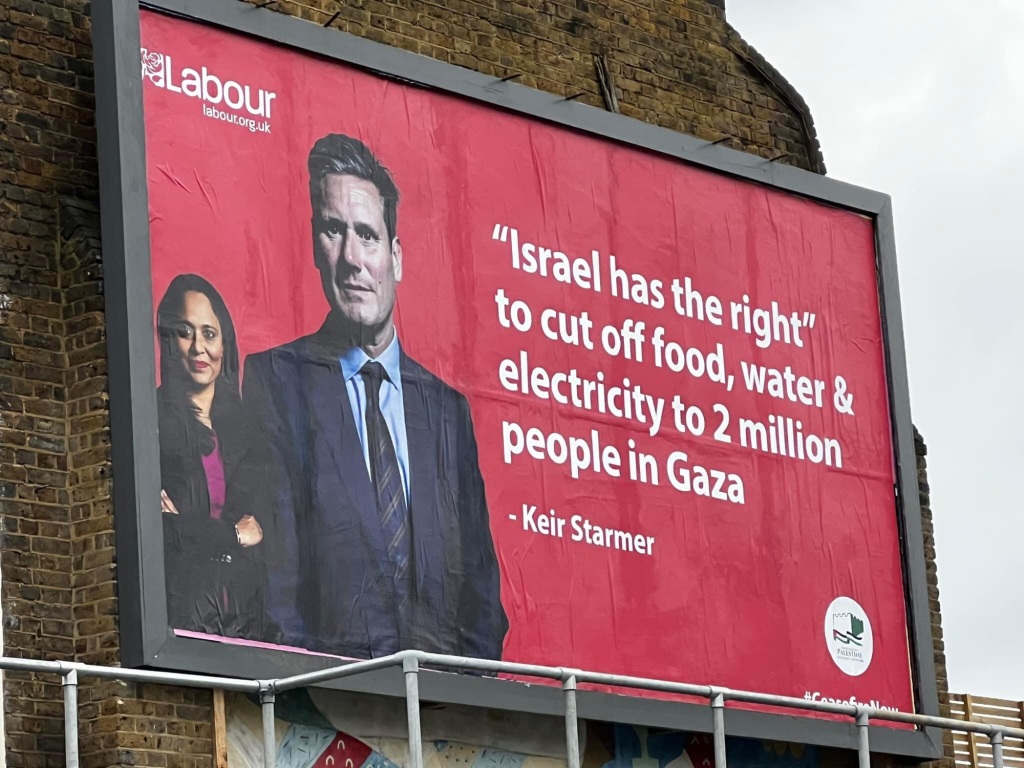
Exclude candidates who consistently hold reactionary positions regardless of their ostensible politics – favour genocide, homophobic etc etc. So the Daly’s of the world don’t feature or let’s say a centre left candidate who justified Israel’s genocide in Gaza.
Adjust to take account of specific concerns which one might deem important for progress to radical transformation of society. So for example you may alter your ranking to the take into account the candidates position on climate change or Irish unity etc.