Archive for the ‘Revolutionary History’ Category
From Managed Democracy to Fascism – Putin’s Imposition of Obedience and Order on Russian Society. – Ilya Budraitskis
Many western left-wing anti-war activists catastrophically underestimate the far-right ethnic-cleansing and imperialist régime of Vladimir Putin – a régime which promotes huge far-right forces in the European continent such as Marine Le Pen (France) AFD (Germany) Salvini (Italy) – just naming a few. In general, such leftists wildly exaggerate the far-right in Ukraine, make absurd claims that the Russian invasion of Ukraine is an inter-imperialist war, and blame NATO for the Russian invasion of Ukraine. Popular resistance to the Russian invasion is deemed OK, provided the Ukrainian masses do not use weapons. Meanwhile Putin’s ethnic-cleansing army, which is NATO’s number one recruiting sergeant, implements a plan to dissolve the Ukrainian nation – just like, for example, Israel committed a genocide of the Palestinian people in the late 1940’s. It is necessary to engage with the left in Eastern Europe, which shines a light on the far-right reality of Vladimir Putin’s Russia. In Ireland we can respond to this with effective focused solidarity actions directed against the Russian invasion – demanding, for example, the expulsion from Ireland of the Russian Ambassador Yuri Filatov.
John Meehan April 25 2020
Ilya Budraitskis is the author of Dissidents Among Dissidents: Ideology, Politics, and the Left in Post-Soviet Russia. He writes regularly on politics, art, film, and philosophy for e-flux journal, openDemocracy, Jacobin and other outlets. He teaches at the Moscow School of Social and Economic Sciences and the Institute of Contemporary Art Moscow. Article Source https://www.tempestmag.org/.
From Managed Democracy to Fascism
Putin’s Imposition of Obedience and Order on Russian Society.
In the aftermath of its invasion of Ukraine, Ilya Budraitskis describes Russia as evolving to a new form of fascism. What had been a “managed democracy” with limited personal freedoms, has become a society and polity which requires unequivocal acceptance of the Ukraine invasion and treats any sign of deviation as treason. The article first appeared in German in Die Wochenzeitung, under the title, “Gruseliges Vorzeichen einer möglichen Zukunft.”

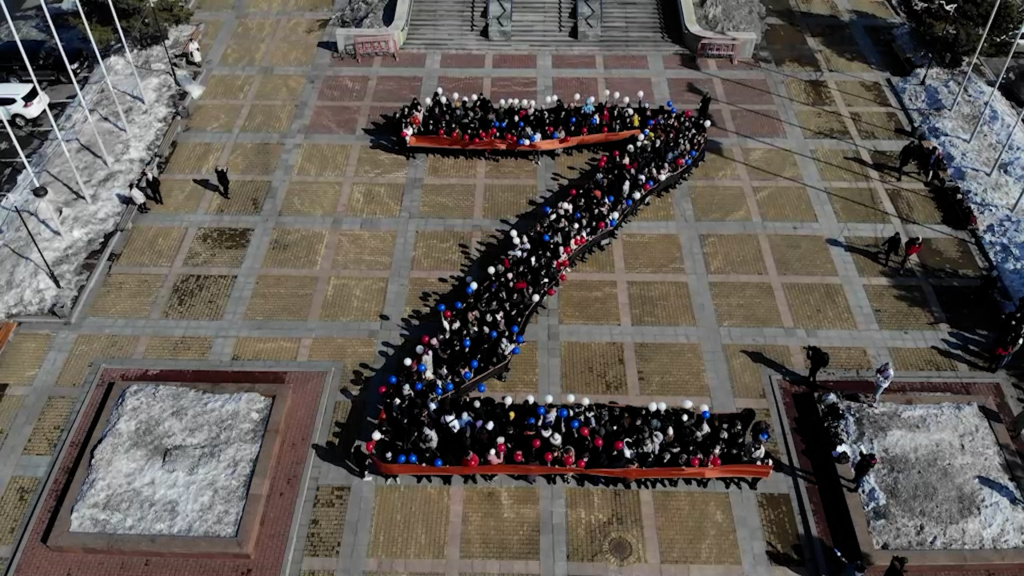
In just a month and a half since the outbreak of war in Ukraine, Putin’s Russia has entered a new period in its history. The authoritarian regime built over the last twenty years, despite ever-increasing repression, has until recently allowed the existence of limited freedom of speech, party struggle within a so-called “managed democracy,” and most importantly, the right for private life. The latter was a key element in the permanent depoliticization of Russian society: you might be unenthusiastic about government decisions or presidential rhetoric, but you always had a safe haven from “politics” in your daily business or your family circle. Today, with the letter Z, which has become almost an official grim symbol of the invasion of Ukraine, adorning the windows of public transport, schools and hospitals, the cosy space of private life has lost its right to exist.
The regime now requires unequivocal public acceptance of the war from every citizen. Any sign of deviation from this civic duty is condemned as treason, and any dissemination of information about the war other than official Defence Ministry briefs is treated as a crime. Since the war began, dozens of Russians – young and old, residents of Moscow and provincial towns – have been charged with new criminal offences of “discrediting the Russian army.” Not only going into a square with an anti-war poster, but even a pacifist badge on a backpack or a careless comment in the workplace can be grounds for arrest or a huge financial fine. The persecution of dissidents is gradually becoming not only a matter for the police, but also for “vigilantes” who are prepared to write a denunciation about a neighbour or a colleague. All this does not mean, however, that mass nationalist fanaticism has taken the place of depoliticization – on the contrary, propaganda and repression remain the exclusive monopoly of the state.[A]fter thirty years of post-Soviet authoritarianism and neoliberal market reforms, [Russian society] has consistently been reduced to a state of silent victimhood, a malleable material from which a full-fledged fascist regime can be built.
Support for the war is strictly controlled from above and does not allow for any form of self-organisation. For example, the authorities have banned right-wing radicals from organising independent marches in solidarity with the Russian army – such actions can only be carried out by local authorities according to a uniform script approved by the presidential administration from Moscow. Backing for the war can only come in the form of backing for Putin; it must reflect the complete identity of the national leader and his people, and nothing else. Anyone who is not prepared to do so is defined as an abettor of the “Nazis.” This maniacal fixation of official propaganda on the terms “denazification” and “Nazism” seems as if it specifically suggests the right definitions for the changed nature of Putin’s regime.
I think it can already be stated that today’s political regime in Russia is rapidly evolving towards a new form of fascism – the fascism of the twenty-first century. But what are its characteristics? What are its similarities and differences from the European fascism of the first half of the previous century?
A huge body of historical and philosophical literature on fascism of the past has provided a variety of answers about the nature of this phenomenon. I would focus on two largely opposing approaches, one of which can be described as a theory of “movement” and the other as a theory of “move.” The first approach (by historians such as Ernst Nolte, for example) saw fascism primarily as a mass movement aimed at suppressing a revolutionary threat from outside the state, which was too weak to protect the rule of the ruling elite. According to this approach, the fascist movement broke the state’s monopoly on violence against political opponents and then, once in power, transformed that state from within. The fascist regimes in Italy and Germany were, therefore, primarily movements that radically transformed the state and gave it a form of its own.
The second approach, by contrast, viewed fascism primarily as a top-down coup by the ruling classes themselves. This position was most clearly expressed by the sociologist Karl Polanyi, who saw in fascism an aspiration for the final victory of capitalist logic over any form of self-organisation and solidarity in society. The aim of fascism, according to Polanyi, was the complete social atomization and the dissolution of the individual into the machine of production. Fascism was thus something more profound than a reaction to the danger of revolutionary anti-capitalist movements from below – it was inextricably linked to the final establishment of the domination of the economy over society. Its goal was not only to destroy workers’ parties, but any element of democratic control from below in general.Flash mob at the Platinum Arena in Khabarovsk on 11 March 2022, organized by the Central District Management Committee and the United Russia party as part of the “We don’t abandon our own” (Своих Не Бросаем) campaign. Attendees including Young Guard of United Russia members and local residents arrange themselves in “Z” symbol formation. Photo by the City of Khabarovsk.
Modern fascism (or, as the historian Enzo Traverso defined it, post-fascism) no longer needs mass movements or a more or less coherent ideology. It seeks to affirm social inequality and the subordination of the lower classes to the higher classes as unconditional as the only possible reality and the only credible law of society.
Russian society, after thirty years of post-Soviet authoritarianism and neoliberal market reforms, has consistently been reduced to a state of silent victimhood, a malleable material from which a full-fledged fascist regime can be built. External aggression, based on the complete dehumanisation of the enemy (“Nazis” and “non-humans,” as Putin’s official propaganda puts it), was the decisive moment in the “move” made from above. Of course, the Russian regime has its own unique features and was produced by a complex combination of specific historical circumstances. However, it is very important to understand that Putin’s fascism is not an anomaly, a deviation from “normal” development – including in Western societies.
Putinism is a frightening sign of a possible future to which extreme right-wing parties striving for power in various European countries could lead. In order to fight for a different future, we all need to reconsider the very foundations of the capitalist logic, which is quietly but persistently preparing the ground for a “move” from the top, which could happen in a heartbeat. The old and somewhat forgotten dilemma of Rosa Luxemburg, “socialism or barbarism,” has become an urgent reality for Russia and for the world since the fateful morning of the 24th of February.
Read the rest of this entry »Fighting for Self-Determination – Yuliya Yurchenko explains “For Ukrainians it’s an existential fight. Our country’s identity, territorial boundaries, and our very existence is under attack right now”
Introduction
Ukraine is fighting a war of liberation against a Russian Ethnic Cleanser state led by a violent far-right imperialist Vladimir Putin. All related issues are discussed in the interview below.
Spectre‘s Ashley Smith talked to Yuliya Yurchenko, author of Ukraine and the Empire of Capital: From Marketization to Armed Conflict (Pluto, 2018). She is a Lecturer in International Business and Researcher at the Public Services International Research Unit, the Centre for Business Network Analysis, and the Political Research Centre at the University of Greenwich.
Material like this is urgently required reading for anti-war activists in Ireland and elsewhere who are in love with the word BUT. “Ukrainians have the right to wage armed struggle” BUT “Oppose Sending NATO Arms to the Ukrainian Resistance – and its right-wing government”. History Lessons are easily unlearned – leading up to the Irish Easter 1916 Rising James Connolly’s left-wing Irish Citizens’ Army proudly promoted a banner : “We Serve Neither King nor Kaiser but Ireland”. Many of the guns used in the 1916 Rising were supplied by German Imperialism.
The Butistas talk as much as possible about right-wing characteristics of the Zelensky Government, throwing in wild exaggerations – and say next to nothing about the far more powerful far-right government of Vladimir Putin : promoter of sinister politicians like French Presidential contender Marine Le Pen.
In Dáil Éireann recently Sinn Féin and Labour Leaders Mary-Lou McDonald and Ivana Bacik called for the expulsion from Ireland of Russian Ambassador Yuri Filatov. The right-wing NATO friendly Dublin government vigorously opposed this call. Radical socialist TD’s made no public comment on this proposal, which is gaining some left wing trade union support. John Meehan April 22 2022


What are conditions like for people in Ukraine now amidst this war? What is the state of the military and civilian resistance to Russia’s invasion?
Read the rest of this entry »Ukraine : On-the-Spot Reports by Good Correspondents are Invaluable : Tony Connelly (RTÉ) and Daniel McLaughlin (Irish Times)
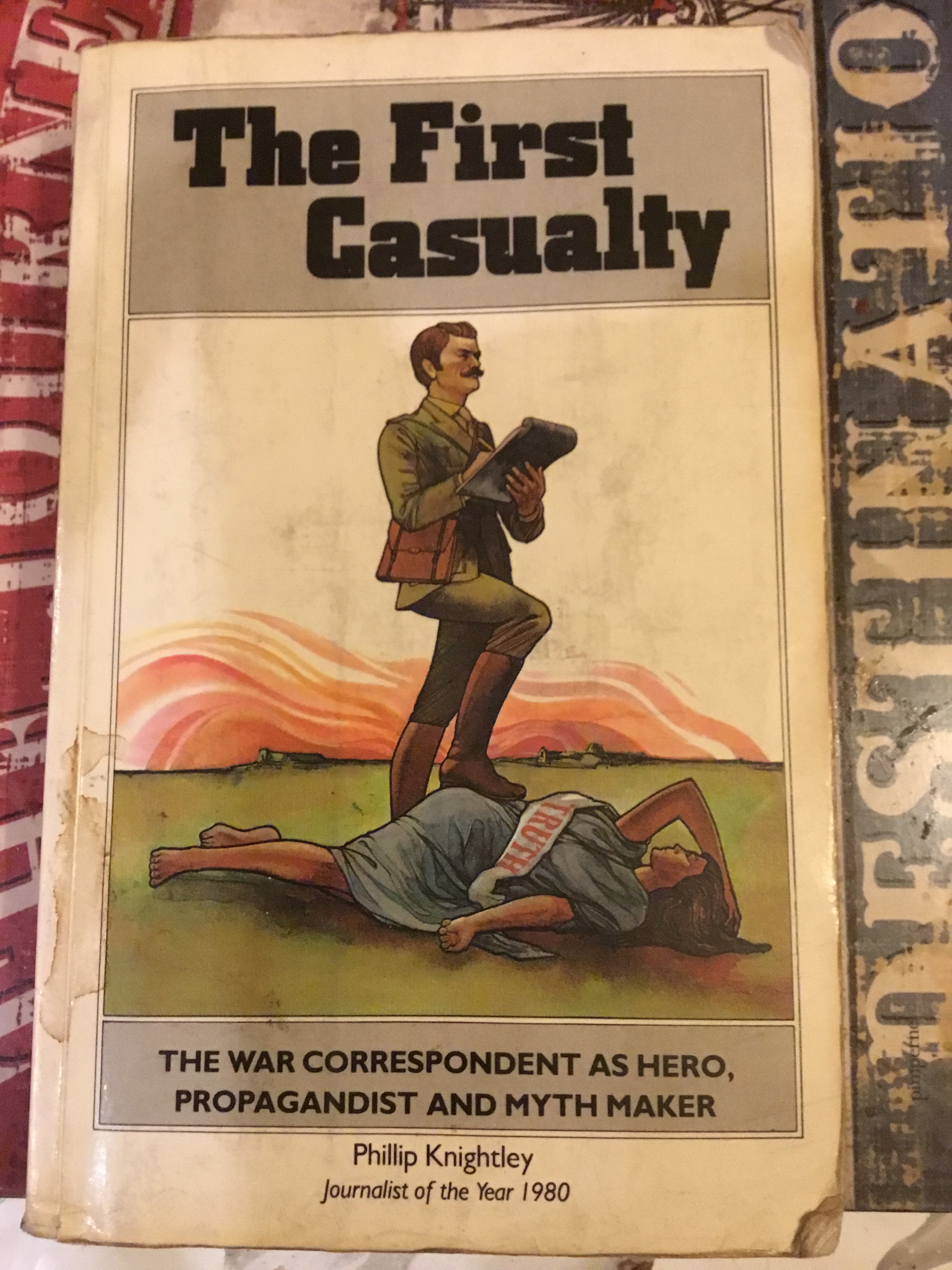
Every major war tests news sources. Blizzards of disinformation should not deter us from seeking the truth. We can identify good and bad journalists. Two excellent war reporters are quoted here. Tony Connelly of the Irish State Broadcaster RTÉ, and Daniel McLaughlin of the Irish Times. We need them. We are attempting to rescue the reputation of the international revolutionary anti-war Left. In this respect the quotations below from two outstanding chroniclers of World War 1 and the 1917 Russian Revolution – John Reed and Leon Trotsky, are extremely good guides for activists combatting the Russian Ethnic Cleanser invasion of Ukraine in dark days of 2022.

Tony Connelly in Ukraine – as of noon Irish time, Sunday February 27 2022 – Day Four of the Invasion and Some Predictable Conclusions Already
It’s day four of the invasion and some predictable conclusions already. A civilian death toll – over 200 killed. But I suppose a more surprising element to this is a strong sense that this is going to be a lot harder than Vladimir Putin had expected.
Russian Socialists Speak : “Against Russian Imperialism”
During important political disputes it is often necessary to “bend the stick”. This article persuasively calls on the left across the globe to recognise that Vladimir Putin, not NATO, has invaded Ukraine 🇺🇦. In Ireland and other European countries we have a duty to implement solidarity with Ukraine.
Authors : Thursday 7 April 2022, by Russian Socialist Movement (RSD), Sotsialnyi Rukh (Social Movement) Ukraine
Source : http://www.europe-solidaire.org/spip.php?article62003
Although the majority of the left has condemned the Russian invasion of Ukraine, the left camp’s unity is still lacking. We would like to address those on the left who still stick to “a plague on both houses” position that views the war as an inter-imperialist war.
It is high time the left woke up and carried out a “concrete analysis of the concrete situation” instead of reproducing worn-out frameworks from the Cold War. Overlooking Russian imperialism is a terrible mistake for the left. It is Putin, not NATO, who is waging war on Ukraine. That is why it is essential to shift our focus from Western imperialism to Putin’s aggressive imperialism, which has an ideological and political basis in addition to an economic one.


Ukraine: Democratic socialists challenge Zelensky’s attack on workers, political parties
The source of this article is the consistently reliable site Europe Solidaire Sans Frontières ((ESSF). http://www.europe-solidaire.org/spip.php?article61872
The ESSF site consistently argues for a Ukrainian victory against the reactionary Russian invasion. This is a war of national liberation. Does this mean that supporters of Ukraine in this war must support all actions of the Zelensky government? The answer to that question is No. The ESSF is reviving the internationalist solidarity tradition of Critical Support. In that context, note the balanced conclusion of this article on the real significance of the Zelensky government ban on 11 political parties


“As leftists, of course, we are particularly concerned about restrictions on the left and that the decree will create the perception that everything connected with the left and with socialism is part of some Russian strategy against Ukraine.
“At the same time, while many foreign comrades are currently asking us whether left-wing thought is now banned in Ukraine and if this is the start of a broader repression of the left, I don’t think it’s that categorical. Rather than an attack on the left per se, the government seems to have been guided by fairly vague ideas of what is ‘pro-Russian’ and ‘pro-Ukrainian’.
Alain Krivine has left us – “leading figure of May 1968 in France, has just died aged 80. All the French media have commented on his passing”
Dave Kellaway writes an excellent tribute. source : https://anticapitalistresistance.org/krivine-who/?fbclid=IwAR0w7ZABo272oR3iPRsZIVjcdt2NqoqSrSQBU4QO3k-z4NYa-Qar28_g9X8
Five things we can learn from the life of Alain Krivine.
Alain Krivine, a leading figure of May 1968 in France, has just died aged 80. All the French media have commented on his passing. Current presidential candidates like Melenchon, who leads the left in the polls with 11%, Roussel, standing for the French CP and Nathalie Arthaud for Lutte Ouvriere have all issued statements yesterday. Former members of Krivine’s organisations who are now MPs in Melenchon’s party or leaders of the Socialist Party also made public their respect for his contribution to the left.
For people of my generation whom he inspired or who worked with him it was a sad day yesterday. Leading members of the British left such as Alex Callinicos for the Socialist Workers Party, John Rees for Counterfire or his former comrade in arms, Tariq Ali, have all publicly mourned his passing.
But for many activists reading this who are not over fifty the name might not mean a great deal. If we are to build a deeper and broader political culture of a fighting left then it is important we remember those who went before us. Their lives are sometimes rich with lessons for us today. We learn not just from some of their smarter moves but also from where they may have got it wrong.
What can we learn from Alain?
Read the rest of this entry »Learn to Think About Aiding the Ukrainian Resistance in 2022 – Russian Troops Out Now
Revolutionary Socialists in Ukraine (Sotsialnyi Rukh (Social Movement) Ukraine) are thinking for themselves – making proposals which comrades in Ireland and elsewhere should examine very sympathetically.

Confiscate the property of Russian AND Ukrainian oligarchs, for the benefit of the people of Ukraine!
Since the beginning of Russia’s war in Ukraine, many European parties and organizations, including many people on the left, have demanded the confiscation of Russian oligarchs’ property abroad. Indeed, the yachts and real estate of Russian rich people have already been confiscated in Great Britain and France.
Nevertheless, this and all the other sanctions are half-measures against the economy of the Russian Federation, its dictatorship and the parasites that constantly enrich themselves at the expense of ordinary Russians.
In the context of this all-out war against the aggressor, we, Social Movement (Ukraine) insist that Ukraine needs the funds obtained rom the confiscation and sale of Russian capitalists’ property abroad. Only this would be genuine aid, since, at the moment, the proceeds from confiscation of assets of Putin’s henchmen does not benefit the common people of Ukraine.
In this context, it should be noted that our comrades from the Razem party (Poland) made a correct proposal: “Confiscate the property of Russian oligarchs: yachts, apartments in London, cottages in the Alps and villas on the Cote d’Azur. Profit from this will be given to Ukraine so that it can defend itself from the aggressor”
As Social Movement (Ukraine), we also believes that the realisation of Ukraine’s strategic interests and increasing economic stability is impossible without the nationalization of the Ukrainian oligarchs and the prohibition of any offshore operations by Ukrainian businesspeople. The implementation of such measures becomes more likely after the Verkhovna Rada (Ukrainian Parliament passed Bill 7122, which created a legal basis for the forcible seizure of Russian property in Ukraine on grounds of public necessity.
Turn the capital of Russian oligarchs against their state! Let’s restore justice!
Source : http://www.europe-solidaire.org/spip.php?article61445
Let’s learn a little history, and learn to think a bit more :
April 1916 Easter Rising in Ireland
Arms are supplied to the rebels by German Imperialism. James Connolly’s Irish Citizens’ Army Slogan “We Serve Neither King nor Kaiser but Ireland”
February 1917 Russian Revolution begins in St. Petersburg
Women march demanding Bread and Peace – Cossacks mutiny. Russians start to desert the Czar’s World War 1 army. Exiled Bolsheviks in Zürich including VI Lenin strike a deal with German Imperialists, who provide a “sealed train” that travels through German occupied Eastern Europe to St. Petersburg’s Finland Station. October 1917 – Soviets, Workers’ Councils, establish a new revolutionary state in Russia.


Reviewing these events later – with the benefit of a historians’s 20-20 vision – British imperialist Winston Churchill observed that the Bolsheviks’s sealed train injected a “bacillus plague” into the heart ❤️ of the global capitalist system. A leader of the Russian Revolution, Leon Trotsky, addressed similar problems in 1938 :
“Let us assume that rebellion breaks out tomorrow in the French colony of Algeria under the banner of national independence and that the Italian government, motivated by its own imperialist interests, prepares to send weapons to the rebels. What should the attitude of the Italian workers be in this case? I have purposely taken an example of rebellion against a democraticimperialism with intervention on the side of the rebels from a fascistimperialism. Should the Italian workers prevent the shipping of arms to the Algerians? Let any ultra-leftists dare answer this question in the affirmative. Every revolutionist, together with the Italian workers and the rebellious Algerians, would spurn such an answer with indignation. Even if a general maritime strike broke out in fascist Italy at the same time, even in this case the strikers should make an exception in favor of those ships carrying aid to the colonial slaves in revolt; otherwise they would be no more than wretched trade unionists – not proletarian revolutionists.”
https://www.marxists.org/archive/trotsky/1938/05/think.htm
Leon Trotsky, ‘Learn To Think’ (1938).
War against Ukraine: Intervention on the political orientation of the Party DIE LINKE (Germany) – Bernd Riexinger
Introduction :
The content of this article is tremendously important. It strikes to the heart of significant dilemmas many activists have never before imagined, but which they cannot walk away from.
Can we be in favour of arming the popular resistance fighters in Ukraine without playing into the hands of NATO? Do we favour a Ukrainian victory over the Russian invaders? A strongly recommended article. Source : http://www.europe-solidaire.org/spip.php?article61396
The invasion of Ukraine by the Russian military is an act of aggression that causes untold suffering for the Ukrainian population and cannot be justified by anything. The bloodshed also affects Russian soldiers and the population in Russia will have to pay bitterly for the war costs. Both the resistance among the Ukrainian population and the first signs of Russian protests against the war therefore deserve our full solidarity.
Read the rest of this entry »It is good that the party and parliamentary group strongly condemned the war of aggression by Russia and demanded an immediate ceasefire and the withdrawal of Russian troops. Also, the humble admission that our party did not believe the war by Russia was possible was correct and looks credible. Only a few days before the first bombs fell, individual party members had called for a rally under the slogan “Security for Russia means security for Germany,” relegating warnings of an invasion to the realm of storytellers. What a devastating misjudgement. The dispute over relations with Russia has preoccupied the party since its founding. The role of the Red Army in the liberation from fascism, the 27 million deaths caused by the fascist war and terror, hardship and deprivation imposed on the people of the then Soviet Union were not forgotten worldwide in the left. Especially in times of the Cold War, this was not a popular stance. Parts of the party also moved in the line of tradition of Soviet-influenced “real socialism,” which still shapes its attitude toward Russia today. Regardless of the justified criticism of many leftists of the character of this system, a neoliberal-influenced transformation to capitalism has taken place in Russia. The Putin regime embodies an authoritarian oligarch capitalism that goes hand in hand with a strengthened nationalism. This system has nothing to do with leftist ideas; on the contrary, it falls far short of the standards of even bourgeois liberal democracies. Under Putin, Russia has once again taken a more active role in world politics. This involves hard-nosed interests that are also being enforced militarily. Tommaso Di Francesco of il manifesto, who already assessed Putin’s decision to recognize the independence of Lugansk and Donetsk as an “act of violence” and an adventurous harbinger of a new war, describes Russia as “driven by its ideological and military expansion”.


 Tomás Ó Flatharta