“Don’t you dare call Epstein a paedophile” – Feared Irish lawyer from Belfast, Paul Tweed, threatened media on behalf of the late convicted criminal Jeffrey Epstein
Individuals operating within the network created by the late Jeffrey Epstein hired numerous people who threatened media organisations which were investigating a vast child abuse and financial corruption racket. One such individual was the Belfast Lawyer Paul Tweed (see below, a devastating story written by the Belfast Telegraph’s Sam McBride).
Jeffrey Epstein became a convicted criminal in 2008.
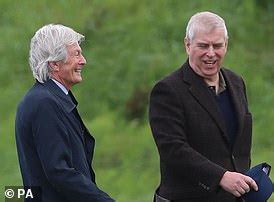
Don’t you dare call Epstein a paedophile:
Inside story of leading NI lawyer’s work to clean up vile billionaire’s image… threatening the media on his behalf
SAM MCBRIDE, NORTHERN IRELAND EDITOR, Belfast Telegraph, February 7th, 2026
YEARS AFTER FINANCIER WAS FIRST JAILED FOR SEX CRIMES, PAUL TWEED TOOK MOGUL’S MONEY FOR THREATENING THE MEDIA, TOLD BILLIONAIRE HE’D ‘TAKE GLOVES OFF’ WITH SARAH FERGUSON, AND SOMEONE, SEEMINGLY ANDREW, BEGGED EPSTEIN THAT TWEED SHOULD BE ‘BROUGHT INTO LINE OR TO HEEL’
It was early 2011 and Jeffrey Epstein desperately needed help cleaning up his dirty image.
PR adviser Mike Sitrick, LA’s “wizard of spin”, was working flat-out to find some way to help his wealthy client climb out of the pit into which he had sunk after emerging from jail as a registered sex offender.
With friends deserting the mysterious US financier, Sitrick, who had represented everyone from Harvey Weinstein to the Church of Scientology, decided to enlist a Belfast lawyer to fight back on Epstein’s behalf: Paul Tweed.
Over the coming months, the trio would work together to try to undermine some of the reporting which was troubling not just Epstein, but the then Prince Andrew and his ex-wife, Sarah Ferguson.
None of the three men could have expected so much of this would tumble into public view. Even if police seize computers or parliament compels the release of documents, legal professional privilege is exceptionally strong and often means vast tracts fall beneath the censor’s pen.
Perhaps out of fear of being accused of a cover-up, the US Government’s latest release of millions of files linked to Epstein has seen few redactions to hundreds of documents involving this trio.
A rare window into how wealthy exercise power
They provide a rare window into how the wealthy can pay for experts to pressurise journalists into backing off their client, or toning down coverage.
Last night Mr Tweed stood over what he had done, saying he acted within his professional and regulatory obligations. The solicitor said he stopped working for Epstein partly because he stopped taking his advice.
The documents set out the following.
In the days before the $895-an-hour Sitrick contacted Tweed, he and colleagues at his PR firm had been fielding calls from The Times, The Daily Telegraph, the Mail on Sunday and other Fleet Street papers.
The latest crisis had been prompted by Ferguson, the then Duchess of York, giving an interview to the Evening Standard in which she admitted accepting £15,000 from Epstein.
Washing her hands of him, she told the paper’s editor: “I…deeply regret that Jeffrey Epstein became involved in any way with me.
“I abhor paedophilia and any sexual abuse of children and know that this was a gigantic error of judgment on my behalf.
“I am just so contrite I cannot say. Whenever I can, I will repay the money and will have nothing ever to do with Jeffrey Epstein ever again.”
In the days before Tweed was contacted, Sitrick’s firm had been desperately trying to help reverse the damage this had done to Epstein.
A bill later presented to Epstein showed the work included examining police records for Epstein’s most prominent victim — Virginia Giuffre.
Days later, Sitrick brought in Tweed.
From Britney Spears to Dr Paisley
In an email to Epstein on March 12, 2011, Sitrick told him he had discussed the situation with Tweed — who had represented everyone from Britney Spears to Gerry Adams and Ian Paisley — describing him as “the defamation lawyer I have used in the UK”.
Outlining the emerging strategy, Sitrick said Tweed advocated beginning with a letter to the broadsheets, the Telegraph which “has probably been among the worst offenders”.
He continued: “Since they are a ‘legitimate’ paper they would be more likely to positively respond and less likely to make something of the fact that we were writing to them. However, as he said, it is hard to see how it could get worse. (I am aware of course it always can, but I think he is right here and it is worth a shot.)”
Less than three years earlier, Epstein had admitted to “solicitation of prostitution with a minor under the age of 18”.
Sitrick said that he and Tweed had “discussed the definition of pedophilia [sic] and I asked upon what basis they could possibly justify using that word. In fact, the age of consent in the UK is 16 and if this act occurred in the UK there would be no ‘crime’ to convict you of.
“You were convicted of ‘soliciting prostitution’ from a woman 17-3/4 years old. Their rationale, I believe, would be the published stories of accusations that you got a massage from a 13 or 14 year old while they were in their underwear.
“But these are unproven allegations and in the UK, as you know, the burden of proof is on them.”
He said Tweed guessed the papers “would say you are on the sex offenders list, but wants to think about it. I said that didn’t cut it in my view. The one does not equate to the other”.
Sitrick continued: “I said there is a huge difference between being convicted for having a 17 year old give a massage in her underwear and being called a pedophile [sic] in headlines throughout an entire country and indeed the world. What if you could show hundreds of millions of dollars of business/reputational damage? He agreed that was a good point and wanted to think about it”.
‘Toothless’ Complaints Commission
He said Tweed had suggested a complaint to the Press Complaints Commission, which he said was “toothless”, but would “put some pressure on the media”.
The following day, Tweed emailed Epstein himself to say a Daily Telegraph story had referred to him allegedly using a private fleet of aircraft to “transfer under-aged girls around the world for illegal sex”. Tweed told Epstein he assumed “this is a reference to allegations emanating from the civil law suits” but asked him for “additional background” to decide if he should refer to that when complaining to the newspaper.
Epstein responded that “there are no truths to any of this” and copied in another lawyer. A reply from an unnamed figure said the allegations were “an over-statement” but cautioned: “I would refrain from saying anything for reasons we can discuss.” It’s unclear if that final message went to Tweed.
Amid discussion about the issue, criminal attorney Martin Weinberg told the trio it was “potentially adverse to [Epstein’s] legal situation even if positive for the media defense to be citing to facts [sic] of cases, ages of girls…”
Epstein told Tweed and Sitrick: “I do not want to start a fight over the girl, its a presciption [sic] for rebuttal and an encouragement for them to claim others so and so”.
The following day, Tweed sent a robust solicitor’s letter to the Daily Telegraph, denouncing “grossly inaccurate and persistent references to him being a ‘paedophile’”.
He stated: “Our client is not, as your headline article alleges, a convicted paedophile. Although he has been convicted of soliciting prostitutes, and procuring a person under 18 for prostitution, he has served his time for that offence. As a matter of record, but without seeking to justify the offence, the girls in question were not pre-pubescent.”
Describing these as “defamatory allegations” and “malicious falsehoods”, Tweed added: “The false and distorted terminology used by you to describe our client in your vitriolic attack on his character is simply not true on any interpretation of the word ‘paedophile’.
“He has not been convicted nor been accused of being a paedophile (a pejorative that has a very specific medical definition), apart from by certain elements of the tabloid press in their recent reports on his friendship with Prince Andrew.
“Our client however should be entitled to expect more accurate and credible reporting from a respected broadsheet such as the Daily Telegraph, which is supposed to have significantly higher standards than the sensationalised and exaggerated reporting of the tabloids.
“Our client is entitled, at the very least, to the publication of a categoric clarification and apology, in terms to be first agreed with us, as a matter of some urgency.”
Claiming that Epstein had never been accused of being a paedophile was, even then, a strange claim. The investigation which saw Epstein first plead guilty in 2008 after a deeply controversial plea bargain began with a complaint from the stepmother of a 14-year-old girl who alleged she had been asked to strip to her underwear and give Epstein a massage in exchange for a large sum of money.
At that time, Haley Robson told Palm Beach police that she had brought multiple girls between the ages of 14 and 16 to Epstein. Police discovered very young girls in Epstein’s house when they raided.
The same day as that message from Tweed, Epstein was sent a Mail on Sunday article with the headline ‘How Prince Andrew shared a room at Epstein’s Caribbean hideaway with a busty blonde who claimed she was a brain surgeon’.
Sitrick told his client that he should get Tweed to write to the paper to complain, taking issue with something which wasn’t related to the headline — whether a man quoted in the article had been in the FBI.
Sitrick said: “If we don’t want to elevate it to a lawyer level, I could make a call to an editor there, but a letter will have more impact.”
In his response, which was copied to Tweed, Epstein didn’t dispute the article’s central allegations but claimed it was based on a book stolen from his property by a member of staff. As Epstein’s team pressed Ferguson to retract key elements of her Evening Standard interview, Tweed suggested to Epstein that he phone her lawyer, Rod Christie-Miller at Schillings.
He proposed telling Ferguson’s lawyer that in relation to the word “paedophile”, the “use of this totally unfounded and provocative description” stemmed from Ferguson’s interview.
He suggested saying Ferguson had been “at best, somewhat disingenuous in her comments, given that she… has been more than happy to enjoy our client’s hospitality up until very recently” and warned there may be “follow-up action” taken by Epstein which would cause Ferguson and Andrew “embarrassment”.
On April 6, Tweed told Epstein he’d spoken to Ferguson’s lawyer and told him “we are continuing to put pressure on the Daily Telegraph to retract their outrageous description of you”.
‘An absolute rag’
In an undated message to Epstein, Tweed drew his attention to the March 18 front cover of Private Eye, describing it as “very provocative” and adding: “Although PRIVATE EYE is an absolute rag of a publication, nonetheless it is currently sitting in a prominent position on newsagents’ stands here in the UK.”
Tweed said he “firmly believed” he should approach Ferguson’s lawyer to tell him “we may have no alternative but to discredit his clients by pointing out that she and her daughters were among the first to welcome Jeffrey upon your release from prison, and that all three have been frequent house guests in the intervening period”, telling Epstein: “I think I now should take the gloves off.”
The legal pressure caused consternation for Ferguson and Andrew. Eight days later, Epstein got an email from an intermediary whose name has been censored. The intermediary copied and pasted from a message they’d been sent — seemingly by Andrew.
They said Tweed’s message was “our reason for concern” and continued: “The tenor of this email is somewhat alarming and could be construed as attempted blackmail.
“Unfortunately S cannot ‘reconsider her current stance’ as she never spoke to the Telegraph newspaper and so cannot be held responsible for their views and nor could she make them change their view. This has to be a matter for JE’s lawyers to sort out with them directly.”
They added: “We are both devastated that JE is being treated in this manner and we would very much like to help him but are somewhat constrained by me and my position and the fact that the media, in the UK, are taking a totally unreasonable attitude towards JE.”
Referring to Tweed, they added: “We both hope that the lawyer can be brought into line or to heel.”
The intermediary who forwarded the message to Epstein said: “I think this is causing as much heartache to them as it is to you”.
Less than a fortnight later, Ferguson sent a “totally private and confidential” email to Epstein to insist she’d never called him a paedophile, although she couldn’t bring herself to write the word beyond ‘P’. She said: “And I did NOT. I would NOT.”
However, she said she had to “protect my own brand” as a children’s author.
Tweed suggested a statement by Ferguson in which she would denounce “the totally distorted press headlines”.
Epstein told his advisers sceptically: “I think she is full of it”.
Tweed warned that “we need to strike a balance” between what Ferguson “can be persuaded to say” and what would “maintain her credibility” to make the statement. If she “goes too far, the press will be over her like a rash,” he said, and this would be “counter productive”.
He said an alternative was for her to write a letter to Epstein which they could forward to newspapers as part of claims for “distorting the facts and breaching Jeffrey’s privacy/confidentiality”.
Sitrick said: “I like the idea of the letter….question is, could we leak or release it?”
Tweed replied: “The idea would be to not only disclose the letter to the Telegraph, but also to release the letter with an appropriate press release at the appropriate stage.” He said it would be ideal to have Ferguson’s permission to release the letter.
Humble apology by Duchess to Epstein
A day later, Ferguson sent Epstein a gushing email, telling him “I must humbly apologise” and he had always been a “supreme friend to me and my family”.
She apologised for having shunned him in the preceding period, saying: “I was advised in no uncertain terms to having nothing to do with you, and not to speak or email you, and if I did, I would cause more problems to both You and The Duke and myself… The Palace system is frightening…”
Sitrick questioned Ferguson’s claims to have been misquoted, saying that if she was, then she shouldn’t object to clarifying the matter.
On May 2, Tweed approved a draft letter for Ferguson, saying that it would “put some timely pressure on the Telegraph in particular”.
But the strategy didn’t seem to be working. Epstein’s partner Ghislaine Maxwell forwarded details of a six-page Tatler article on her.
Epstein told Tweed: “Put them on notice”, adding: “We have not gotten any traction, it seems”.
The next day, Tweed sent a letter of claim — a serious legal threat — to Tatler.
The ferocious letter referred to “your grossly inaccurate and defamatory references to him being a ‘paedophile’, going on to largely repeat what he’d said to the Telegraph and demanding an urgent apology.
That same day, Tweed spoke to Ferguson’s PR man — James Henderson of Bell Pottinger — about an interview Ferguson was doing with Oprah Winfrey.
Tweed told Epstein he “left him in no doubt as to what is required”, adding: “No resistance from him.”
Tweed now suggested pre-emptive pressure on journalists who were writing about Epstein. He proposed a letter to Vanity Fair writer Edward Klein, saying “we are taking the precautionary step of putting you on notice that our client will take legal action in the event that the aforesaid defamatory reference is repeated in your article”.
However, Epstein appears to have blocked this, telling Tweed: “Lets not [sic]”.
Tweed then tried another tactic, telling Epstein that he had an idea to “crack this open by the back door so to speak”.
He said he had “a generally good relationship” with the legal managers of The Guardian, The Times and The Sunday Times, which also had called Epstein a paedophile.
He said that “indeed The Sunday Times often retain me, if only to stop me suing them” and “it may be that I could persuade one or both of them to publish a clarification” which they could use “as leverage in relation to the other publications”.
At this point, Tweed said Epstein probably had “very little information about me” and sent him a series of press stories about himself. Several weeks later, Tweed sent Epstein a proposed statement by Ferguson which would say: “There was never a claim of paedophilia by the authorities, me, or anyone else for that matter.”
The by now protracted negotiation still hadn’t got Epstein what he wanted. In late May, he emailed Tweed: “paul just get me the letter. don’t worry about publication restrcitins? [sic]”. Tweed replied: “Ok”.
By early June, the situation still hadn’t been resolved.
Tweed emailed Epstein to say that he’d been told not to incur any further fees without Epstein’s approval, but asked: “Can I take it that you are happy to pay for the work I have been and am currently undertaking on your behalf?”
Two days later, Tweed assured Ferguson’s representative that if she sent them a letter it would only be released with her permission.
On July 3, the Belfast lawyer emailed Epstein to update him. He said there had still been no response from the Telegraph “which is, to say the least, unusual”.
He suggested they complain to the Press Complaints Commission, explaining: “The attraction about such a complaint is that we can adopt a two pronged approach in complaining not only about the inappropriate use of the word ‘paedophile’, but also the newspaper’s failure to acknowledge, never mind address, our complaint.
“If we were successful in having the complaint upheld, then this could be used as a basis to pressurise the Mail and other publishers to at least remove the offending online references.”
At this point, the phone hacking scandal exploded and the News of The World suddenly shut.
Tweed now contacted the Met Police on behalf of Epstein, but was told by them that they hadn’t evidence that the numbers they’d been given had been hacked.
In August, a message sent on Ferguson’s behalf then said she was “keen to secure the rights back to the Mothers Army Domain names which Mr Epstein brought for her and it seems we need to conclude the first matter before we can discuss the second”.
Tweed said she seemed to be “horse trading”.
How much money Tweed got out of Epstein remains unclear. On April 30, he sent a bill for “a further interim payment of £10,000 (in addition to the earlier payment in the same amount), against our billing currently standing at £13,250”.
Epstein thanked him but added: “moving forward please spend no time without my express approval”.
Tweed explained that “to ensure that we don’t end up putting ‘fuel on the fire’, we have had to be more cautious in our research and advices than would normally be the case….thus the higher costs.”
By September 23, Tweed was struggling to get Epstein to pay up.
In the last of the messages released, he said: “Obviously I value you as very much a blue chip client and I want to ensure that you are happy not only with my advice, but also that you are being charged for it. I would be prepared to write off 50% of the bill total, in return for payment for the balance at this stage. Would this be acceptable to you?”
Tweed wasn’t the only person struggling to get Epstein to part with his cash. Sitrick — the man who’d brought Tweed on board — was also not being paid.
By June 2011, Epstein owed $103,517 to “the man you call when you have money and step in some shit”, as the Columbia Journalism Review described Sitrick.
Sitrick sued Epstein, obtaining in 2014 a default judgment in his favour.
There is no suggestion that Tweed ever visited Epstein’s properties or was involved in any inappropriate sexual behaviour.
It is also true that not all that is now known about Epstein was known in 2011. Yet a lot was known. That’s why so many of his former friends were deserting the convicted sex offender judged at high risk of re-offending.
‘Some limited advice’
Last weekend, Tweed said in a brief statement: “I provided some limited advice to Epstein in 2011. I never met him but had an exchange of emails and phone calls with him.
“My engagement was terminated after several months due to a variety of factors, including that my advices were not acceptable to Epstein.”
In response to a series of questions from the Belfast Telegraph, Tweed’s firm, WP Tweed & Co (in 2011, Tweed worked for another firm, Johnsons), said in a statement: “You will appreciate that Mr Tweed is necessarily restricted in the extent to which he can discuss details of his engagement in this matter.
“He is, however, aware that a considerable amount of information is already publicly available regarding the work he undertook on behalf of Epstein.
“For the avoidance of any doubt, he categorically rejects the suggestion that he acted in any way inappropriately. At all times, Mr Tweed acted on his client’s instructions regarding the strictly accurate nature of media reporting about him.
“He acted fully in accordance with his professional and regulatory obligations, providing legal advice strictly within those parameters and based on the information available to him. Any suggestion to the contrary is entirely unfounded.
“We would also remind you that a lawyer should never be conflated with their client or their client’s causes. Mr Tweed’s role was confined to providing legal advice in the discharge of his professional duties.
“He did not accede to every request made by Epstein or his advisers. Indeed, his refusal to do so ultimately resulted in the termination of his engagement.”
Tweed has long rejected any suggestion he stifles important public interest journalism.
A year ago this week, he gave evidence to the House of Commons’ Northern Ireland Affairs Committee. SDLP leader Claire Hanna asked if he had ever initiated proceeding which could be described as “for the purpose of stifling the voices of…troublesome critics”.
Tweed replied: “No, I don’t believe I have…that should never happen” and went on to say it was “absolute nonsense” to say he was “a lawyer to be feared”, saying he was “in a lucky position” where “I can pick and choose my cases”.
Tweed would go on to work for both Andrew and Ferguson.
We asked why he had done so, given that these emails show he was aware of how closely they were linked to Epstein. He did not specifically address that question.
Less than a year and a half ago, Tweed said of the then Prince Andrew: “I don’t believe he did anything wrong.”
In that interview with The Sunday Independent, he described Epstein as “an absolute predator”. When asked why he didn’t disclose at that point that he had acted for this predator, trying to curb coverage of his nefarious behaviour, Tweed again did not specifically address that question.
In 2021, Tweed gave evidence to the Assembly’s Finance Committee, which was examining possible reform of the libel laws.
He told MLAs: “I have absolute sympathy for a situation in which a journalist feels that they have been in some way threatened in the wrong by a billionaire who decides, “I’m going to use my money to knock you out”. That needs to be dealt with.”
To view more than 20 of the documents on which this report is based, please visit belfasttelegraph.co.uk
Palm Beach in Florida is a long way from Belfast, but …
FROM MITCHELL TO MANDELSON, EPSTEIN’S LINKS STRETCHED FAR AND WIDE
Sam McBride, Belfast Telegraph, February 7th, 2026
Given he lived the high life as an international moneyman of mystery for decades, with a black book filled with the names of the world’s rich, influential and powerful, not to mention a private jet, it isn’t surprising that a “local angle” to the Epstein story can be found just about anywhere.
Through examining the latest batch of Epstein files, along with information gleaned from previous reporting and unsealed court documents, a picture of Epstein’s ties to Northern Ireland going back decades can be sketched.
This latest picture features two figures connected to Northern Ireland, albeit one with much stronger and more distinguished ties than the other.
Good Friday Agreement peace negotiator George Mitchell’s acquaintance with Epstein goes back decades, as does former Northern Ireland Secretary Peter Mandelson’s.
Flight logs from Epstein’s private jet, branded the ‘Lolita Express’, show that Mitchell was a passenger on several occasions on US trips in 1995, the same year the senator was appointed Bill Clinton’s US Special Envoy for Northern Ireland.
Both Mandelson and Mitchell deny any wrongdoing regarding Epstein.
Mandelson — once described as a “Bond villain with a filofax”, who became a close confidant of Epstein — was appointed as Secretary of State in 1999.
Belfast Stop
In 2000, Epstein’s private jet touched down at Belfast International Airport after flying from London on July 12.
The jet was carrying Epstein and Ghislaine Maxwell and departed for Bangor, Maine, the same day. It is unclear why they stopped in Belfast.
Two years later, Mitchell’s name comes up again as the signatory to a letter in Epstein’s “birthday book”, in which the former US senator described his friendship with Epstein as a “blessing”.
How and when Mitchell became acquainted with Epstein is unclear.
According to his birthday book note it appears to have been in the early 90s following a chance encounter at an airport in Washington.
It is also unclear when precisely Mandelson came into contact with Epstein.
However, in 2002 he wrote a memo encouraging then Prime Minister Tony Blair to meet the financier, according to The Times.
Mandelson’s relationship with Maxwell goes back to the late 80s, and in turn her association with Epstein began in the 90s.
This leaves open a potential overlap between Mandelson’s tenure as Northern Ireland Secretary, which ended in January 2001, and led to calls for investigations as to whether Epstein visited Hillsborough Castle.
‘Best Pal’
A 2003 message from Mandelson is also included in Epstein’s “birthday book”, in which he describes the financier as his “best pal”.
Any nefarious interpretation of all these connections can be explained away — and, indeed it was — by those involved as they happened before the summer of 2008, when Epstein pleaded guilty to soliciting sex from a 14-year-old girl in a controversial plea deal with US prosecutors.
Even while serving his ‘sentence’, Epstein was allowed to spend 12 hours a day, six days a week outside the jail for ‘work release’ — and was still orbiting his social circles.
Mandelson wrote emails to Epstein showing his support for his friend and stayed at his plush Manhattan apartment.
Mitchell’s name is also mentioned in emails from this period. A message from one of Epstein’s assistants to Nili Priell — wife of former Israeli Prime Minister Ehud Barak — read: “Jeffrey wanted to wish you and Mr Barak a Happy Passover… he also wanted me to let you know that Senator Mitchell is one of Jeffrey’s oldest and closest friends… and if you needed Jeffrey’s help, to just let him know!”
After Epstein’s release in July 2009, emails spanning 2010 to 2015, released in recent days, appear to show contact between Mitchell and Epstein’s office.
There is also an email dated August 13, 2013, from Epstein to his executive assistant Lesley Groff, in which he asks her to “contact George Mitchell tell him I will be in thurs and fri, and Mandelson will be at the house if he has time”.
Another email sent to Epstein from an assistant hours later on the same day states: “Please call Senator Mitchell… he just called and I tried to connect you but you had left the office…”
Epstein wrote in 2011: “George Mitchell is my very close friend.”
‘You have senator Mitchell at 4.30 today’
Another to Epstein from December 2012 reads: “You have senator Mitchell at 4.30 today.”
On November 6, 2013, an email to Epstein mentions an appointment “with Senator George Mitchell”.
The former senator previously said he had no contact with Epstein following his 2008 conviction and this week a spokesperson for Mitchell said he did not observe, suspect or have any knowledge of Epstein engaging in “illegal or inappropriate conduct with underage women”.
They said members of Epstein’s staff extended a small number of invitations to the senator, all of which he declined or deflected.
Belfast is also mentioned in passing in an exchange released in May 2023, in which a fashion model friend of Epstein asks the sex trafficker for help in obtaining a tourist visa at short notice so he could surreptitiously work in New York for a campaign for label Abercrombie and Fitch.
Epstein advises the model to try “Ireland, Belgium”, and the model states “we r trying Belfast”.
Separately, an email from 2010 notes then NIO Minister Hugo Swire had asked a “very direct question” to one of Andrew’s “trusted” associates about the then Duke’s relationship with Epstein, according to an email Andrew sent to the paedophile businessman in May 2010. Hours later, Epstein was in contact with Peter Mandelson, a former Northern Ireland Secretary, probing for information about Mr Swire.
Like a reverse Midas, everything Epstein touches turns to dust. This week has seen both Mitchell’s Northern Ireland legacy and Mandelson’s political career largely destroyed.
With more Epstein files still not released, it seems the convicted paedophile’s ghost will continue to haunt many who once called him a friend.
Sacked British Ambassador to the USA Peter Mandelson is in serious trouble. He is using legal threats to deter curious media newshounds – these bullyboy tactics worked for years. Not any more, it seems :
“confidential” notice issued by representatives of Peter Mandelson
A Scottish Newspaper, “The National”, publishes “confidential” notice issued by representatives of Peter Mandelson who are trying to muzzle the media. Details emerge
CONFIDENTIAL – STRICTLY NOT FOR PUBLICATION: Ipso has asked us to circulate the following advisory:
The Independent Press Standards Organisation (IPSO) has today been contacted by a representative acting on behalf of Peter Mandelson.
Mr Mandelson’s representatives state that he does not wish to speak to the media at this time. He requests that the press do not take photos or film, approach, or contact him via phone, email, or in-person. His representatives ask that any requests for his comment are directed to [REDACTED]
We are happy to make editors aware of his request. We note the terms of Clause 2 (Privacy) and 3 (Harassment) of the Editors’ Code, and in particular that Clause 3 states that journalists must not persist in questioning, telephoning, pursuing or photographing individuals once asked to desist, unless justified in the public interest.


 Tomás Ó Flatharta
[…] “Don’t you dare call Epstein a paedophile” – Feared Irish lawyer from Belfas… […]
Man Formerly Called Prince Andrew Arrested by British Cops on February 19 2026 – Why Did It Take So Long? – Criminal Behaviour Hiding in Plain Sight | Tomás Ó Flatharta
Feb 19, 2026 at 12:28 pm