How to finance European defence (and how not to) – and how the Irish left can assist Ukraine by all means necessary
Hanna Perekhoda’s article highlights uncomfortable truths about European Defence. The new Trump-Putin reactionary alliance against Ukraine has brought matters to a head.
Perekhoda states “The real question now, particularly for the left, is whether it has a concrete program to address this crisis.”
Link : How to finance European defence (and how not to)
Ireland will not escape the consequences.
Do the best parts of the left in Ireland pass this Perekhoda test?
We must start by examining a misnamed policy : supporting Irish “Neutrality”. Language matters, as we shall see. This is a key part of the problem.
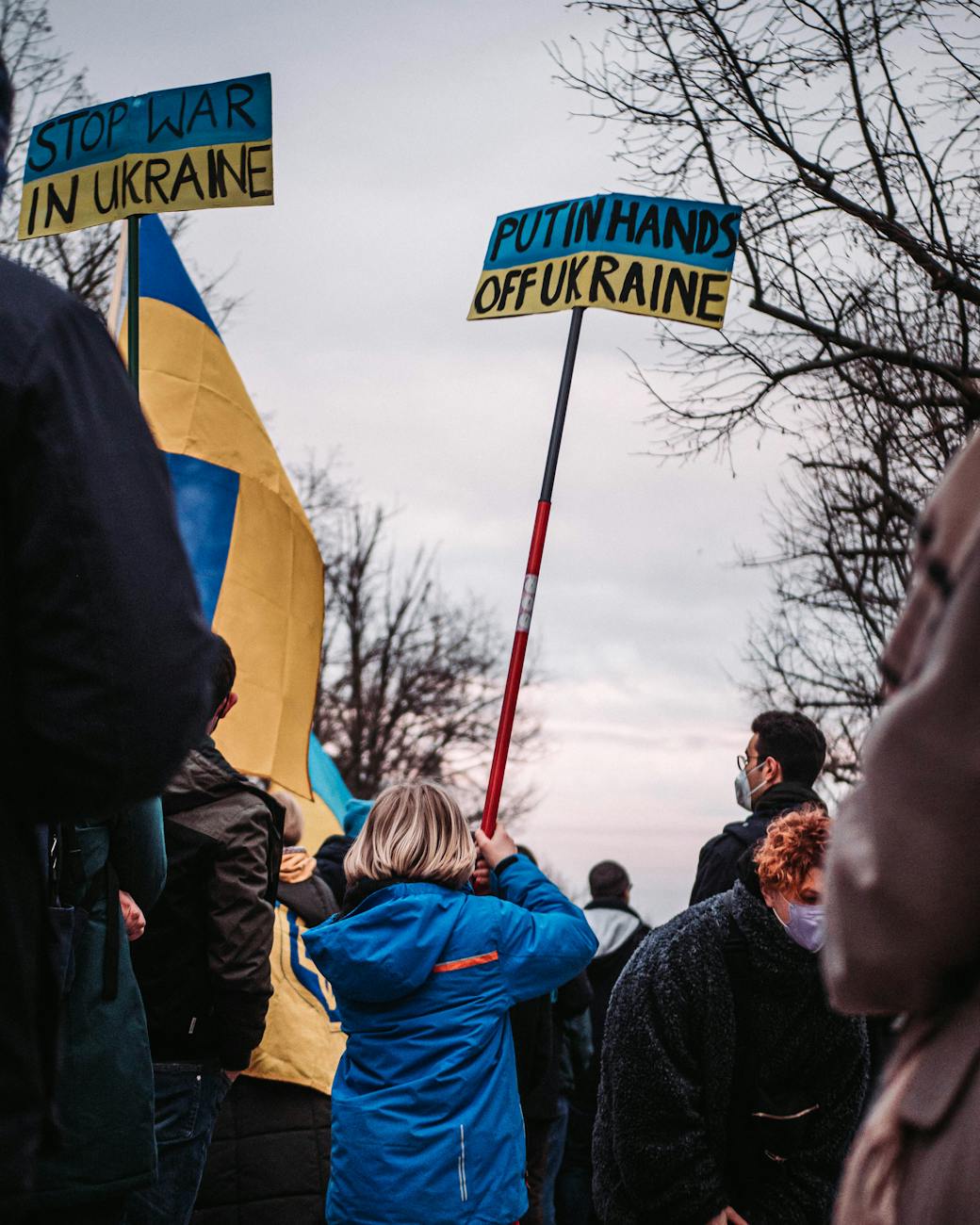
The best of the Irish left declares itself in favour of “Neutrality” – but in the conflict between Israel and Palestine it supports Palestine.
The best of the left should not support a policy of “Neutrality” in the conflict between Russia and Ukraine. It should support Ukraine.
The best of the left correctly opposes Irish state membership of military alliances such as NATO, but that is not a policy of “neutrality”. The policy is more accurately described as “non-alignment”. That, for the sake of clarity, was the policy of Tito’s Yugoslavia after his country’s progressive breakaway from the Warsaw Pact.
Does this matter in practice? The answer is Yes.
When the Irish government militarily assists the state of Ukraine by providing mine-clearing equipment, it is helping to defend the hospitals, schools and housing of people living in Ukraine. It is preventing Ukraine from becoming a new defenceless Gaza.
People Before Profit (PBP) invokes “neutrality” to justify opposition to this practical measure. It mixes up two separate phenomena :
1. Military and financial assistance to Ukraine, enabling it to resist the genocidal imperialist Russian invasion.
2. Increased military spending for aggressive purposes plus savage austerity.
Hanna Perekhoda deals with this in some detail in the article below –
The most dangerous and regressive approach would be to slash social spending to fund military expansion. This is the route neoliberals are already proposing: reducing budgets for healthcare, education, pensions, and welfare to divert funds toward defense. However, it is evident that weakening social safety would deepen inequality, fuel social unrest, and ultimately destabilize democracies. At a time when far-right populism is on the rise, imposing austerity would rapidly strengthen anti-democratic forces. Given Russia’s and the U.S.’s overt support for these forces, such a move is exactly what Trump and Putin are hoping for.
The PBP opposes specific practical military measures supporting Ukraine, often on the hypocritical grounds that the the money should be spent on welfare projects such as hospitals, schools, and housing.
Why do I say hypocritical? In this case, it is because effective mine-clearing measures will protect welfare projects such as hospitals, schools, and housing in Ukraine.
Here are the facts.
An Irish Times News Report (August 18 2023) stated : Irish troops to provide weapons training to Ukraine despite Government’s ‘non-lethal’ assistance pledge. Department of Defence insists training does not impact neutrality and that there was no attempt to mislead public
A copy of Conor Gallagher’s report is here :
Paul Murphy TD (Dublin South-West, People Before Profit) issued a deeply mistaken public response, consistent with his party’s previously stated opposition to any military anti-imperialist solidarity action in support of the Ukrainian masses’ fight against a genocidal Russian invasion.
Sources :
https://www.rte.ie/news/ukraine/2022/1027/1331823-ireland-russia-ukraine/
In this respect the Paul Murphy statement posted below is 100 per cent wrong.

In summary, to move things forward :
Expand the mine clearing and related non lethal military support.
That has to be the policy of the Irish revolutionary left – no ifs and buts.
A frank comment : this means we are for “training one side in a military conflict” and this is “a breach of military neutrality”.
First minister ‘incredulous’ over Ukraine missiles deal
A similar issue occurs in Belfast.
Let’s put cards on the table here.
The Thales factory in Belfast (It used to be Short’s) has a contract to supply air defence weapons to Ukraine. The Irish left should support this action.
Being very concrete, if it was a contract to arm Israel, we should oppose.
Bear in mind that the Sinn Féin 1st Minister Michelle O’Neill is singing a tune that is music to the ears of Putin and Trump (joint enemies of Ukraine).
First Minister Michelle O’Neill has described as “incredulous” a UK government deal for a Belfast factory to supply air defence missiles to Ukraine.
The Sinn Féin vice-president said that “rather than buying weapons of war, I would rather see the money invested in public services”.
The Thales missile factory is to supply 5,000 air defence missiles to Ukraine in a deal worth up to £1.6bn, the UK government announced.
Prime Minister Sir Keir Starmer announced the order as he laid out a four-point plan to “reach peace and defend Ukraine”.
Link :
Belfast Factory Thales (formerly Short’s) to supply Ukraine with Air Defence Weapons
Plenty of food for thought there.
John Meehan March 7 2025
How to finance European defence (and how not to)
Link :
How to finance European defence (and how not to)

With the United States abandoning Ukraine, a country that now stands as the last line of defense for European security, the EU has no choice but to act decisively. Ensuring its own protection is no longer a matter of debate—it is an undeniable necessity. The real question now, particularly for the left, is whether it has a concrete program to address this crisis. If it merely continues to lament militarization without offering solutions to the very real security threats we all face, it will be deserting politics altogether—abandoning society in favor of its own ideological purity and self-indulgence.
The most dangerous and regressive approach would be to slash social spending to fund military expansion. This is the route neoliberals are already proposing: reducing budgets for healthcare, education, pensions, and welfare to divert funds toward defense. However, it is evident that weakening social safety would deepen inequality, fuel social unrest, and ultimately destabilize democracies. At a time when far-right populism is on the rise, imposing austerity would rapidly strengthen anti-democratic forces. Given Russia’s and the U.S.’s overt support for these forces, such a move is exactly what Trump and Putin are hoping for.
Another solution would be to increase taxes on the ultra-wealthy and multinational corporations. Those who have profited the most from democracy should contribute the most to its defense. Implementing progressive wealth taxes, taxes on energy, and stronger corporate tax regulations could generate revenue without harming ordinary citizens. However, such a strategy requires coordination to prevent capital flight, as billionaires and corporations would undoubtedly attempt to relocate to low-tax jurisdictions. Trump’s recent announcement of golden visas for the ultra-rich signals that he is already preparing for such a scenario, offering the U.S. as a safe haven for tax avoiders. Switzerland, meanwhile, is not in the EU for this very reason: it seeks to remain a tax haven. This is not new. During the last century, when countries raised taxes to finance their war efforts, Switzerland welcomed billionaires with open arms and, as a result, became indecently wealthy. It may use the same opportunistic strategy once again.
Another option is to confiscate the €300 billion in frozen Russian central bank assets and use them to fund Ukraine’s defense and strengthen European security. It would hold Russia financially accountable for its war crimes while avoiding additional burdens on European citizens. However, European authorities fear that such a move would set a precedent that might make their financial systems appear less reliable to those who invade sovereign states and commit war crimes. Indeed, justice is a dangerous precedent in a system built on protecting the interests of the rich and powerful. If we were to acknowledge moral standards in its economic and political policies, it would risk putting into trouble the very foundations of capitalism itself. It is indeed an unthinkable scenario for those who benefit from its injustices.
If left-wing parties want to remain relevant, they must develop a clear stance on defense strategy. Ignoring military security would only allow right-wing forces to dominate the conversation, portraying the left as naïve or weak—and, in that case, they would not be wrong.
The left must reject the false choice between social justice and national security. Security should not be paid for by cutting pensions or healthcare, but by ensuring that billionaires and multinational corporations contribute their fair share. The left must push for tax justice, closing loopholes that allow corporations to avoid paying taxes, and cracking down on offshore tax havens, including Switzerland.
No single European country can defend itself alone. Instead of each nation massively increasing its own military budget, the EU should strengthen its collective security mechanisms. Energy security must be considered part of military strategy: by reducing reliance on Russian fossil fuels, we can prevent future economic blackmail from it. Above all, the left must urgently push for the confiscation of Russian state assets. Delaying this decision out of concern for financial elites only emboldens aggressors.
Hanna Perekhoda
Hanna Perekhoda is a historian and researcher at the University of Lausanne – Institute of Political Studies and Centre for International History and Political Studies of Globalisation, specialising in nationalism in the context of the Russian Empire and Soviet Union. Her doctoral research examines the political strategies of the Bolsheviks in Ukraine between 1917 and the 1920s. Perekhoda also studies the historical development of the Russian political imaginary, with a particular focus on the role of Ukraine in Russian state ideology.
Link : About Hanna Perekhoda


 Tomás Ó Flatharta
An excellent piece John, really nails it .
paulstewart1000gmailcom
Mar 7, 2025 at 5:18 pm
[…] Chris Zeller’s note, published on facebook, is addressed to Hanna Perekhoda, whose article is included in this blog post : How to Finance European Defence and how not to – and how the Irish Left can assist Ukraine by … […]
How to Handle Dilemmas – Chris Zeller responds to Hanna Perekhoda – European States must guarantee Ukraine can defend itself – but the call for general re-armament is wrong | Tomás Ó Flatharta
Mar 21, 2025 at 1:12 pm