Archive for the ‘European Network Solidarity with Ukraine and against war Basic consensus’ Category
Genocide in Gaza, Palestine; Genocide in Ukraine – Good Bad and Ugly Statements from the Left in Ireland
Hypocrisy is shared by many political actors on the left and the right. We witness genocide against the Palestine people and genocide against the Ukrainian people. It is the job of the left to practice critical solidarity in each case. Ukraine’s political leader (Zelenskyy) is not left-wing. Palestine’s political leadership in Gaza is anti-left (Hamas). Resistance has to be enabled. Many on the left have a blind spot on this issue. In the case of Ukraine we must prevent the creation of a Palestine/Gaza in Europe by backing armed resistance against Putin’s genocidal invasion.
We present a meme and a counter-meme.
Spot the Inconsistency No.1 :

Spot the Inconsistency Number 2 :

Holly Cairns TD (Social Democrats Leader, Cork South-West) spoke in the Dáil (the Irish parliament) on this issue on October 12 2023. She got it right.
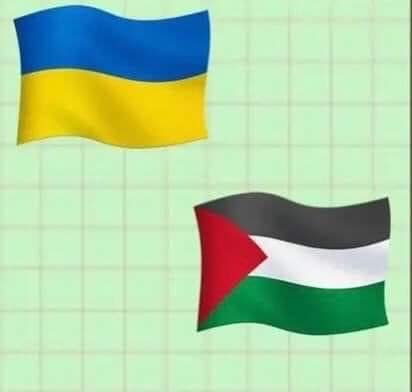
John Meehan October 13 2023
A Palestinian View On Ukraine: Parallels Of Occupation And Solidarity – Versus People Before Profit Double Standards
Several public representatives and supporters of the Irish left-wing party People Before Profit (PBP) attack the Dublin Government’s Double Standards over two major 2023 genocidal wars : Israel’s Genocidal Assault on the Palestinian People and Russia’s Genocidal Invasion of Ukraine.
For example Paul Murphy TD (Dublin South-West) declares on his Facebook page :
“Since Putin’s brutal invasion of Ukraine, the right of an occupied nation to defend itself has been widely recognised.
Now as Israel begins to unleash hell on Gaza and governments prepare to excuse Israeli war crimes, it’s clear that right doesn’t apply to Palestinians. Why not?”
Big problem here : Paul and and others on the left are throwing a dangerous political boomerang : instead of using exactly the same principled framework for supporting Ukraine and Palestine, they operate double standards. When they add denunciation of mass media inconsistency, the government, the European Union, in supporting Ukraine while opposing Palestine, we witness inconsistency in reverse from the left, supporting Palestine while opposing Ukraine.
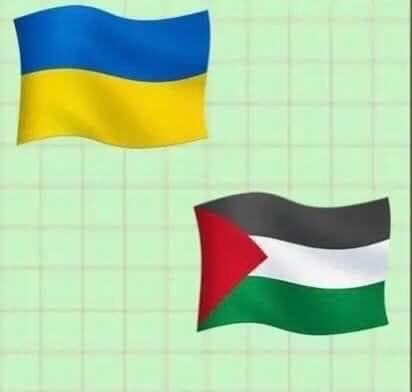
John Meehan October 10 2023
Aden Shaheen, a Palestinian living in Britain, offers a far better policy.
Article Source : https://www.europe-solidaire.org/spip.php?article68151
In this interview, Adeeb Shaheen shares his perspectives on the ongoing war in Ukraine. As someone who has experienced life under military occupation, he draws parallels between Israel’s actions in Palestine and Russia’s invasion of Ukraine, speaking to the suffering of civilians under aggression from a more powerful military force. Interview by Fred Leplat.
Fred Leplat – Adeeb, you describe yourself as a Ukrainian Palestinian and you are now in Britain. Can you tell us a bit about yourself and why you are now in Britain today?
I was born in Palestine and lived there until the Israeli occupation administration expelled my father to Jordan in 1968 for his activities against the occupation. My mother took us, her children, and left for Jordan to join him. I finished school in 1976 and set off for the Soviet Union to study electrical engineering. After finishing my studies, I went back to Jordan, worked there for a couple of years, and then moved to live in Palestine with my wife and son. In Palestine, I took part in the first Intifada and the resistance movement. In 1990, I was arrested by the Israeli occupants and sent to prison for four years. After jail, I resumed my life in Palestine, where the Palestinian Authority began to operate the civilian life of the Palestinians on the occupied Palestinian land. After two years of the second Intifada, I left my home town of Nablus with my family and moved to live in Jordan. It was difficult there as well. In September 2003, I received a job offer from an international trading company to work in its branch in Ukraine. I moved there with my family to Ukraine, to Kharkiv, where I finished my studies when Ukraine was a part of the Soviet Union. I worked there and had a normal life there until February 24, 2022. Putin’s war against Ukraine forced us to leave for Poland, then for the UK.
Read the rest of this entry »Making sense of Russia’s invasion of Ukraine – Paul Le Blanc “I favour the defeat of Vladimir Putin’s invasion and victory for Ukrainian self-determination”
We wish to thank Dick Nichols, European Editor of the Australian Magazine Green Left Weekly, who drew our attention to an important article on Russia’s Invasion of Ukraine, written by the well-known Marxist scholar and historian Paul Le Blanc.
The author takes the side of Ukraine Against Russia :
- I favour the defeat of Vladimir Putin’s invasion and victory for Ukrainian self-determination.
- I oppose imperialism in all its forms – including Putin’s invasion and NATO.
- I oppose capitalism and favour its replacement with the genuine political and economic democracy of socialism everywhere: the United States, Ukraine, Russia etc.
More about the author here : “Paul Le Blanc (born 1947) is an American historian at La Roche University in Pittsburgh as well as labor and socialist activist who has written or edited more than 30 books on topics such as Leon Trotsky and Rosa Luxemburg.[1][2] https://en.wikipedia.org/wiki/Paul_Le_Blanc_(historian)
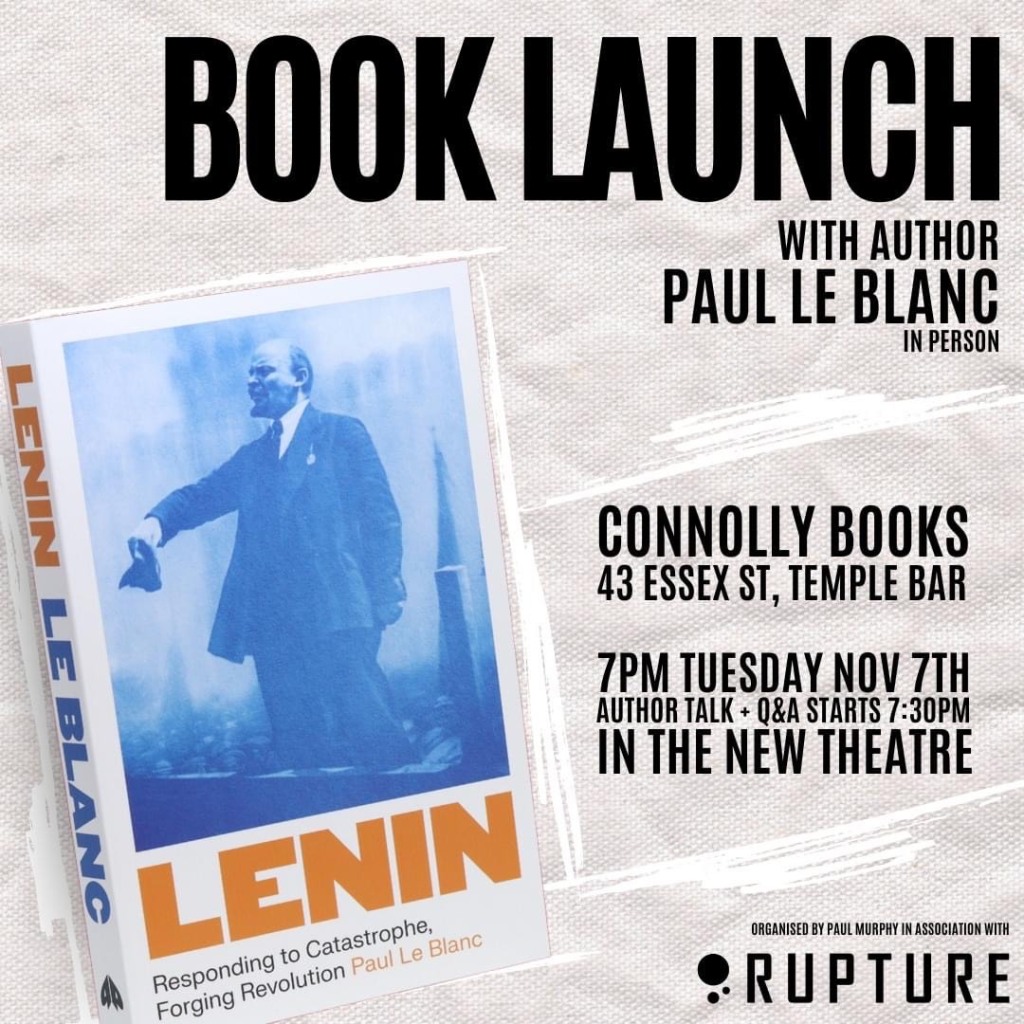
Paul Le Blanc launches his new book, in person, on November 7 2023 in Dublin
Making sense of Russia’s invasion of Ukraine
6 October, 2023

A momentous development has drawn my attention away from the unfolding climate catastrophe on which I have been riveted. Russia’s invasion of Ukraine is a major factor fragmenting the left-wing forces I hoped would become a major force in the revolutionary struggle for climate justice and human survival. Recently, I have met Russians and Ukrainians — and others from Brazil, Argentina and the United States — who have all made it clear to me that I cannot avoid dealing with this issue.1
In this article, I will attempt to do three things:
- Review what some on the left assert either in favour of Russia’s invasion of Ukraine or against the Ukrainian response;
- Review Russian and Ukrainian realities and views on the war; and
- Touch on essential aspects of Ukrainian resistance to Russia’s invasion (including where the weapons come from).
In the footnotes I offer sources that have influenced my analysis and that I believe may be useful for those seeking to make sense of these realities. But I owe it to readers to indicate my own position from the outset. This is my bottom-line:
Read the rest of this entry »Notes from Kyiv: Which side are we on? – An article the USA Democratic Socialists of America (DSA) Leadership removed from the organisation’s website
Vladyslav Starodubtsev reports :
Two days ago Democratic Left, Democratic Socialists of America’s online publication, ran Eric Lee’s article about his recent visit to Ukraine. It was entitled “Notes from Kyiv: Which side are we on?”
DSA has now answered that question — by removing the article from its website.
Thanks to Des Derwin and Adam Novak for drawing our attention to this Undemocratic Anti-Socialist Censorship hatchet job.
We are advised this is the result of a decision taken by the organisation’s National Political Committee.
The full article is below; a link is here :
We are advised that the long-standing editor of Democratic Left, Maxine Phillips, has resigned in protest.
Notes from Kyiv: Which side are we on?
September 26, 2023 by Eric Lee

As I walked around Kyiv on a beautiful, sunny morning in early September, I noticed the scaffolding in the city’s squares. Statues had been covered up to protect them from bomb damage. Later, I saw a statue with no protection around it– a graffiti-covered memorial to a Red Army general whose name nobody remembered. I was told that this statue had been covered by protective scaffolding before the war. The protection was removed when the war broke out. There was some hope that Russian bombs might solve the problem of what to do with this relic of Soviet rule.
You cannot understand the war in Ukraine without knowing its history. This was made very clear to me in a conversation I had with Olesia Briazgunova, who works for one of Ukraine’s two national trade union centers, the KVPU (Confederation of Free Trade Unions of Ukraine). I suggested that I saw some similarities between the situation in Ukraine today and the Spanish Civil War.
Olesia stopped me right there and asked if there had been genocide in Spain. I said there hadn’t been. She said, “Well there’s genocide here — and the Russians have been trying to wipe out the Ukrainian nation for a very long time.” I thought of Stalin’s terror-famine of the early 1930s, which Ukrainians call the Holodomor, and which they rightly consider an act of deliberate genocide. She had a point.
Read the rest of this entry »Irish troops to provide weapons training to Ukraine despite Government’s ‘non-lethal’ assistance pledge – Irish Times News Report, August 18 2023
“Department of Defence insists training does not impact neutrality and that there was no attempt to mislead public” – Irish Times
A copy of Conor Gallagher’s report is here :
Paul Murphy TD (Dublin South-West, People Before Profit) has issued a deeply mistaken public response, consistent with his party’s previously stated opposition to any military anti-imperialist solidarity action in support of the Ukrainian masses’ fight against a genocidal Russian invasion. Source :
This is a grim PBP Left-Evasionist chapter, part of the shocking story: failure to show anti-imperialist solidarity with the masses of Ukraine who are resisting a genocidal Russian invasion.
On July 29 2023 the PBP helped to organise a well-supported anti-racist rally in Dún Laoghaire, a town which proudly hosts a magnificent statue honouring the Irish anti-imperialist gun-runner and human rights activist Roger Casement.
PBP speakers drew attention to the many reasons we honour Casement today : but they overlooked a vital fact : this Easter 1916 rebel imported weapons from Kaiser Wilhelm’s German Empire in order to strike a blow against the then mighty British Empire.



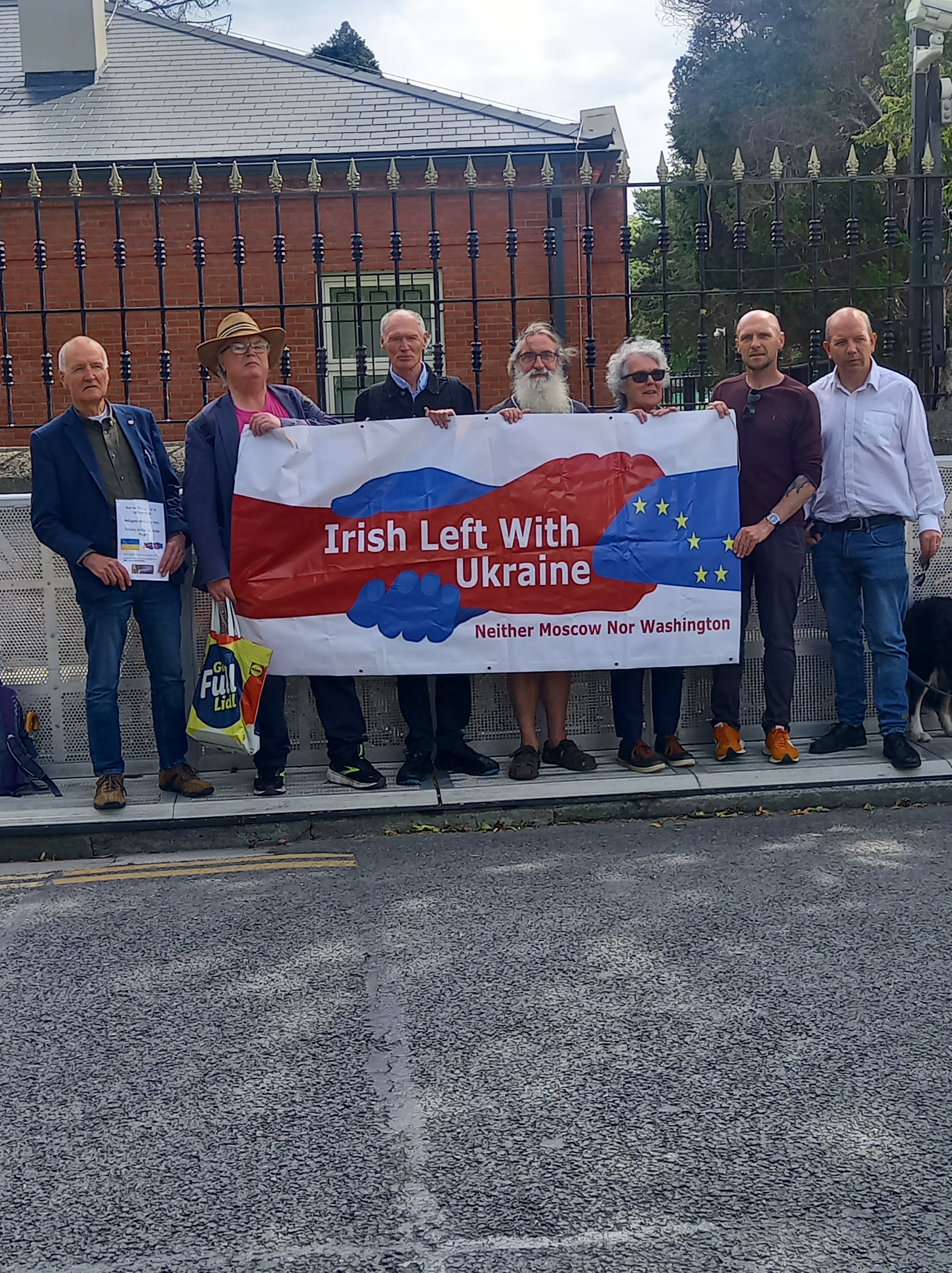
John Meehan August 18 2023
Correcting Mandel: Why arming Ukraine is the road to peace
This is a very good polemical article, written by the Canadian author David Gutnick, examining Professor David Mandel’s calls for Ukrainians to accept a ceasefire and negotiate with Russia immediately.
The source is :
Europe Solidaire Sans Frontières
David Gutnick’s article was originally published in :
Canadian Dimension
Monday 14 August 2023, by GUTNICK David
Correcting Mandel: Why arming Ukraine is the road to peace
“Pacifism has its place, but not here and not now,” writes David Gutnick

David Mandel and I share much more in common than our given name. We’re both French-speaking Anglophones who live in Montréal. Like professor Mandel, I worked for decades at a publicly funded institution: he taught at universities, while I produced documentaries for CBC Radio. We both consider ourselves humanists who want to help build a kinder, more democratic and socialist world.
But while reading Mandel’s August 2 piece in this publication, it became clear that we profoundly disagree on how to get there.
In a nutshell, Mandel calls for Ukrainians to accept a ceasefire and negotiate with Russia immediately, while I—following the lead of Ukrainians—believe the country needs more arms: the deadlier the better, unfortunately.
Mandel—like Vladimir Putin—says his position is the humanist one, as it will save lives.
I think that is wrongheaded. A wealth of evidence proves Volodymyr Zelensky’s position is right: Russia’s present leadership is bloodthirsty, intent on building an untrustworthy imperialist power. Putin slaughtered Chechens and Georgians when they would not submit to Russian domination, and now he is slaughtering Ukrainians. He will not hesitate to slaughter whoever is next to get in his way.
Humanists think of peace-building in the long term, and that means standing up to aggression now, not turning the other cheek.
Pacifism has its place, but not here and not now.
Unless Putin pulls back his army, Ukrainians have no choice but to fight.
Mandel writes that over the decades he has been “opposed to the policies of the regimes of these states, which were and remain deeply hostile to workers’ interests.”
We share that view.
But since the first Russian tanks illegally crossed Ukraine’s border into Crimea on February 20, 2014, then again into Kyiv on February 24, 2022, it is not just “workers’ interests” which have suffered: tens of thousands of Ukrainian trade unionists, kindergarten monitors, university students, mothers and fathers and innocent children have been killed by Russian invaders.
Read the rest of this entry »Russia’s war on Ukraine and the European lefts – Murray Smith casts a harsh light on the radical left in Europe
Murray Smith is a member of the leadership of déi Lénk (“The Left”) in Luxembourg and is one of its representatives on the Executive Board of the Party of the European Left. Article Source : http://www.europe-solidaire.org/spip.php?article67205
The war in Ukraine has cast a harsh light on the radical left in Europe, revealing the best and the worst. On the one hand, an internationalist response of solidarity with Ukraine. On the other, a “peace camp” where you find pacifists, but especially sectarians, for whom the main enemy is always US imperialism. Rather than a movement for peace, it is above all a movement of non-solidarity with Ukraine. We will come back to that.
Let’s start with some thoughts on war. We can be against war in general. We can consider that we must overcome this barbaric way of settling conflicts. We can think that it is possible to do it in the existing capitalist society, or that to put an end to war it is necessary to finish with capitalism. But historically, and again today, the left is never confronted with war in general, but with real existing wars, specific wars, which succeed each other and do not always have the same nature. So, each war must be analyzed in its specificity. There are no slogans outside of time and space, which are valid for all wars. It is not because Lenin or Luxemburg or Liebknecht spoke of revolutionary defeatism or said that the enemy was in one’s own country, that we can trot out these slogans for any war, independently of the context.
World War I was an inter-imperialist conflict over the distribution of territories, resources and markets. Those who refused to support their own imperialism were right. And history proved them right. The activity of the small minority of internationalist circles of 1914 led to strikes, mutinies, mass parties and revolutions. Yet since 1914 no war has been a simple repetition of World War I, and a simple repetition of the slogans of 1914 has not been enough. In all the wars of national liberation against the colonial empires, it was clear that it was necessary to support the insurgents who fought for the independence of their countries. The same applies to attacks on independent countries by imperialist powers. So, in the 1930s, the left supported China against Japan and Ethiopia against Italy. And, closer to the present day, Iraq against the United States. This despite the fact that these countries were ruled by regimes that the left could not support.
Read the rest of this entry »Cluster munitions delivered to Ukraine – Debate among the pro-solidarity left
The Ukrainian state’s decision to import cluster bombs has generated considerable debate in all parts of the globe, including Ireland.
Des Derwin and Fred Leplat offer critical commentary here :
Catherine Samary provides a different perspective; source : https://www.europe-solidaire.org/spip.php?article67186
1-Even if there are specific differences between various types of weapons that legitimise global campaigns to ban them, the same weapons can be used to attack and dominate peoples or to defend themselves. This is true on the whole, even if it has always been the great dominant powers that have organised the production and use of weapons: the vital need to defend oneself has extended their use to various protagonists. War crimes and crimes against humanity are committed with all kinds of weapons – conventional or not.
Read the rest of this entry »Finbar Cafferkey: The life and death of an Irish fighter in Ukraine – Irish Times, July 15 2023
Dan McLaughlin and Conor Gallagher have written a fine tribute to Finbar Cafferkey. When Russia’s genocidal imperialist invasion of Ukraine is over – and hopefully is defeated – Finbar Cafferkey will deserve to be honoured as an Irish fighter who fought imperialist war at home and abroad.
How an Achill Islander came to fight and die as an international soldier in a foreign war
Colm Cafferkey was getting a bag of chips in Keel on Achill Island when he got the call saying his older brother Finbar was missing in action on the front lines in Ukraine.
Finbar and two other international volunteers were fighting with Ukrainian units in April to keep open a vital supply route to the city of Bakhmut, which was on verge of being overrun by the Russian invaders.
A sustained mortar strike hit the group, causing many casualties. Amid the chaos no one could be sure what happened to the 45-year-old Mayo man.
For the next week the Cafferkey family was worried but hopeful. Finbar had a reputation for disappearing for days or weeks at a time, only to pop up in another city or country.
Colm recalls them attending 1996 All-Ireland football final between Mayo and Meath and Finbar failing to show up at an arranged meeting spot.
“He rings us a few days later and he is in London. And then he rings a week later and he’s in Holland,” Colm recalls with a smile. “He could go three months without texting you.”


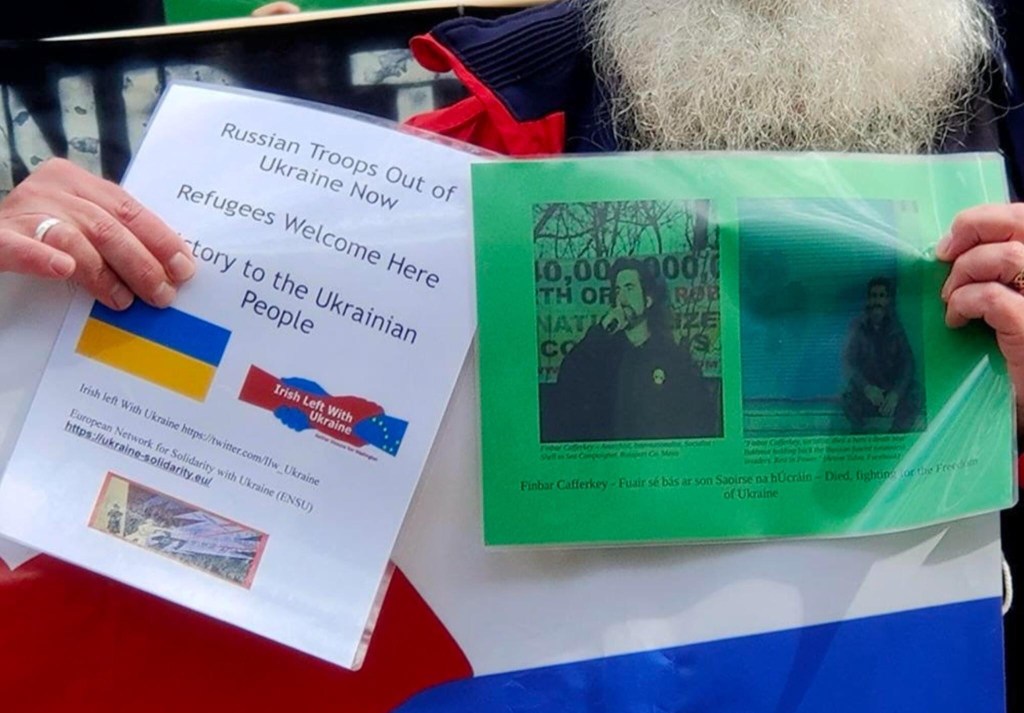
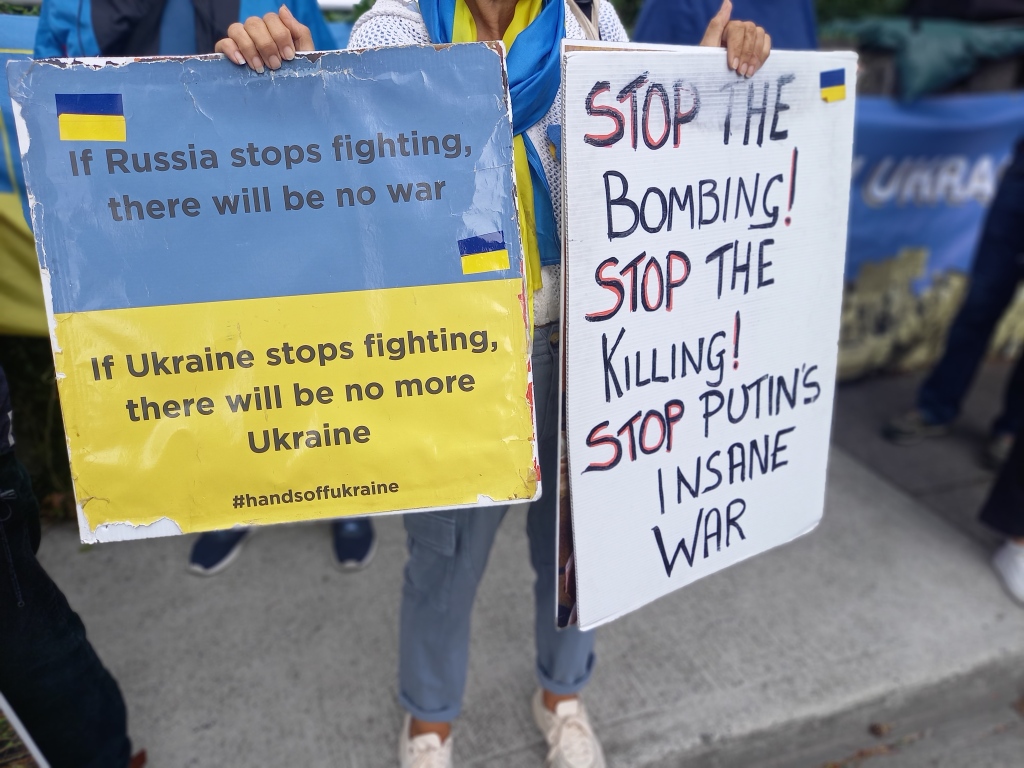
A week after he first heard his brother was missing, Colm got confirmation: Finbar was killed in the strike near Bakhmut, the devastated city in Donbas, eastern Ukraine, during Europe’s bloodiest battle since the second World War. He is the third Irish man known to have been killed in the fighting since the war started in February 2022. Continued fighting and the trading of territory between the sides meant recovering his remains was impossible.
Interviews with those who knew and fought alongside Cafferkey paint him as a brave, occasionally withdrawn man who was unable to stand still for long and who was willing to make sacrifices for his beliefs, even when it meant working alongside ideological opponents.
Read the rest of this entry »


 Tomás Ó Flatharta