Pierre Rousset reviews a democratic crisis in France.
At a time when the far-right is marching forward all over Europe (including Ireland), France offers an example of left-wing resistance. The The New People’s Front (NFP) won a surprise parliamentary victory, but President Macron retaliated by making a deal with the far-right.
On 9 June, Emmanuel Macron unexpectedly decided to dissolve the National Assembly, just as the Rassemblement Nationale (far-right National Rally party of Marine Le Pen) was gaining momentum. Three weeks later, the results of the first round of voting were unequivocal: the parties of the presidential bloc were crushed, and in the second round the National Rally could hope to win an absolute majority of seats in Parliament, or at least be the largest party. (The French electoral system uses two rounds of voting. If no candidate gets an absolute majority in the first round, the names of the top candidates go to a second round. The one with the most votes in the second round wins).
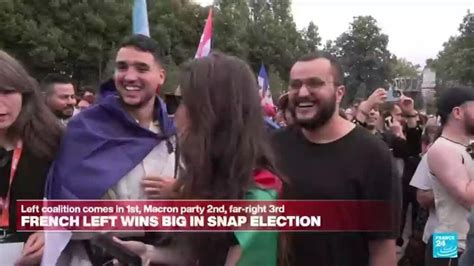
These hopes were dashed. After the second round, the far right ended up in third place, behind the Nouveau Front populaire (the New People’s Front formed by parties of the broad Left) and the presidential party.
The electorate wanted neither Macronism nor the National Rally in the corridors of power. Today, thanks to Macron, it has both. It took him eight weeks to choose a prime minister: Michel Barnier, a member of Les Républicains party, which won only 5% of the vote. He had previously negotiated this appointment with Marine Le Pen, to ensure that she would not immediately table a vote of no confidence against him. Madame agreed… conditionally.
Now, the choice of a prime minister depends on the goodwill of the far right!
The Nouveau Front populaire (New Popular Front), a coalition built in just a few days by the left-wing parties (whereas they remained splintered at the recent European parliamentary elections), has just won 182 deputy seats in the French National Assembly, beating the Rassemblement national (RN) and its allies, with 143 seats, and the camp of President Macron with 168 seats.
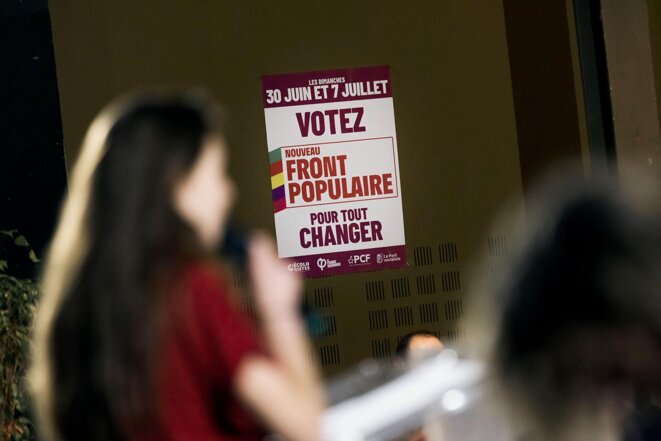
This is a spectacular reversal of the situation meaning we have gone from the threat of a far-right stranglehold on the state apparatus to a relative left-wing majority in the Assembly, elected on a programme of rupture with neoliberal policies. This reversal cannot be understood without looking at the massive mobilisation in recent weeks of the activist forces of the workers’ and democratic movement in the face of the far right, leading first to the formation of this New Popular Front (with la France insoumise (LFI), Europe Ecologie Les Verts (EELV), the Socialist Party (PS), the Communist Party (PCF) and others including the Nouveau parti anticapitaliste (NPA)), then to a major mobilisation at the ballot box and a very broadly supported vote to reject the RN.
Following on from its 31.34% result in the European elections on 9 June, the RN obtained more than 33% of the vote in the first round of legislative elections on 30 June, and everything suggested that it would obtain a very large number of deputies in the second round, with all the polls giving it well over 200 deputies and possibly even an absolute majority of 289 seats.
The main lesson of the first results of this second round is the setback suffered by the Rassemblement national and its allies. The defeat of the hundreds of fascist, racist, Islamophobic, antisemitic and ultra-racist candidates put forward by the RN is a huge relief for racialized people, women, LGBTI+ people and workers. This victory for the united left has halted the momentum of the far right, which nonetheless won around fifty more seats. This defeat of the far right of Bardella and Le Pen is the fruit of the popular mobilization that took place thanks to the unitive impetus provided by the creation of the New Popular Front.
This is already a victory for the New Popular Front, which was made possible by the rallying of the entire left – political parties, trade unions and campaigning groups – , but also and above all by the grassroots mobilization of large sectors of the working classes, in particular racialized people and young people, who committed themselves everywhere to blocking the RN. This made it possible for a very large number of New Popular Front MPs (including a relative majority for LFI) to be elected to the National Assembly on the basis of a programme that breaks not only with Macronism in the service of the ultra-rich, but also with the liberal left of the Hollande mandate, which had followed the policies of the right.
Abstention lowest since 1997 at 32.5% (cf 53% in 2022)
Macron’s big gamble has failed. By calling a snap election, he thought the French people would rally around his centrist party and the moderate left to put Le Pen’s Rassemblement National (RN, National Rally) back in its box after its victory in the recent Euro elections. He assumed a bigger turnout would not favour Le Pen’s extreme right-wing, post-fascist party. On the contrary, 20% more people turned out than in 2022. The RN consolidated its Euro vote and successfully allied with a split from the mainstream Les Républicains (LR, the Republicans). In terms of actual votes – around 12 million if you add in the votes of the Zemmour current who got less than 1% – this is a massive breakthrough. Previous scores in legislative elections were less than half this.
“Macron’s gamble has backfired spectacularly, with the Rassemblement National consolidating its Euro vote and securing an unprecedented number of MPs in the first round.”
The RN has never had so many MPs elected in the first round. They were already the biggest single party in the National Assembly, and it is probable now that they will maintain that position with even more MPs. However, it is still uncertain whether they will get the 289 MPs needed for an absolute majority, which would guarantee them the premiership with their young leader Bardella.
Everything depends on what happens in the second-round run-off. The top two stand automatically, but the third candidate can run in the second round if they have more than 12.5% of the registered voters. All the discussion immediately following the election focuses on whether the best-placed candidate to defeat the RN is given a free run by any eligible third-place candidates stepping down. Leaders of the Nouveau Front Populaire (the New Popular Front-NPF) from the Socialist Party, the Ecologists, and La France Insoumise (France Unbowed – LFI) led by Jean-Luc Mélenchon, have all called for this ‘barrage’ (bloc) to stop the RN winning.
En cas de triangulaire, si le Rassemblement national est en tête et que nous sommes troisième, nous retirerons nos candidatures.
However, leaders of Macron’s Ensemble (Together) party have been much more equivocal. Some have called for blocking the RN with a single candidate, while others have said they will judge on a case-by-case basis. Bruno Le Maire, current economics minister, and Edouard Philippe, former Macronist prime minister, hold this position, saying they will vote for the social democratic left but not for the LFI. They refuse to support second-placed candidates from the LFI, whom they consider as extreme as the RN. These people do not like the way the LFI have supported the Palestinians and condemned the Israeli state or criticised police actions in ethnic minority neighbourhoods. This vacillating position could help the RN squeeze past both the Left and the Macron parties in a three-way race in some areas.
Yesterday Suella Braverman’s new, draconian anti-protest laws were used to their full extent to surpress anti-monarchy protestors. The rest of the world was watching, this is how the English service on France 24 reported it – “While many criticise the price tag of the Coronation as ordinary Britons struggle to put food on the table.. The police arrests of peaceful protesters are scenes you’d expect to see in Russia, not in the UK.”
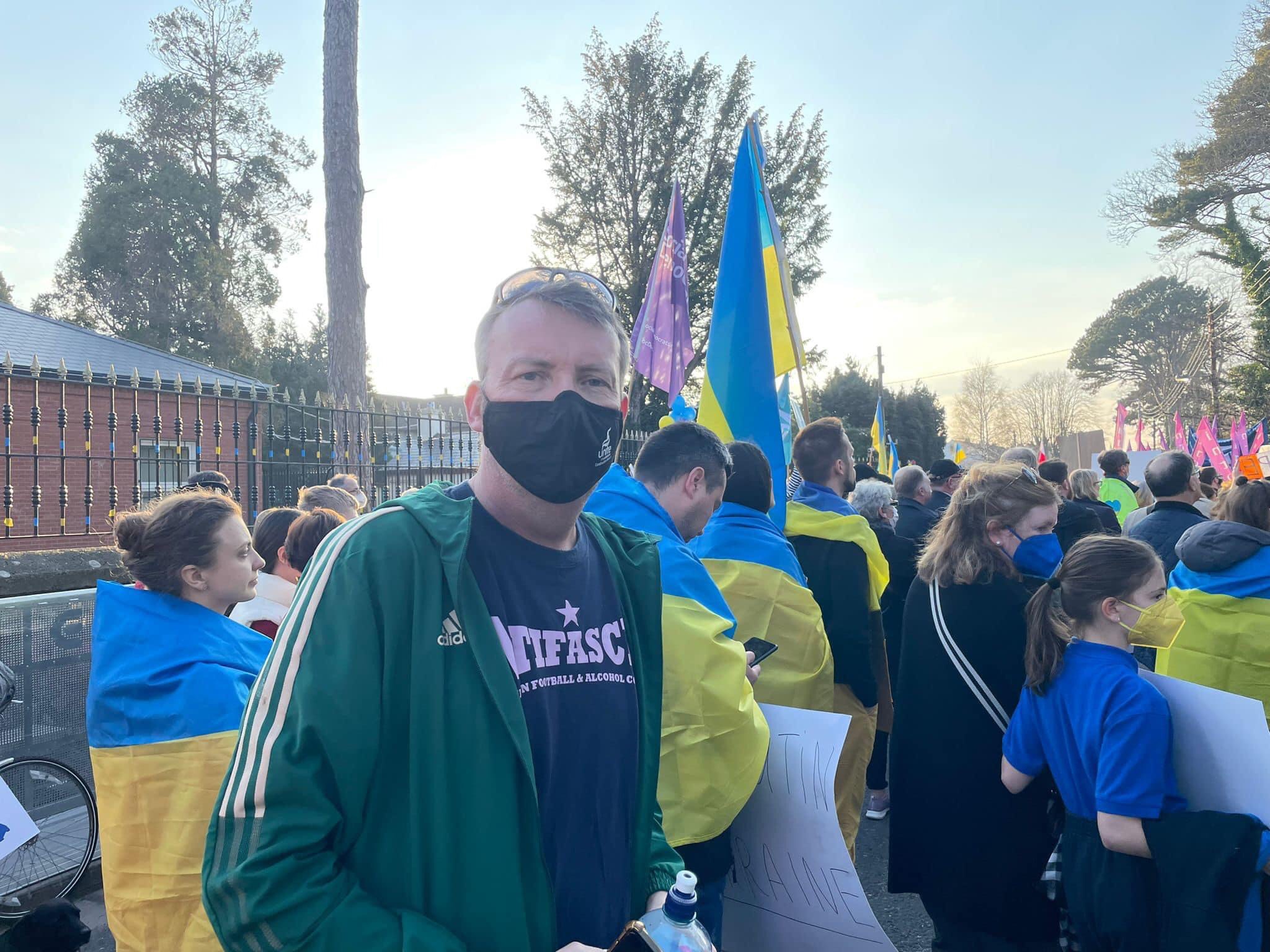
Brendan Ogle, an activist who works for the UNITE trade union in Ireland, offers a challenge.
A CHALLENGE….
Here’s a challenge to all those on the left seeking to justify, obfuscate, excuse, confuse or (my favourite) ‘EXPLAIN’ Putin’s war crimes. It comes in 2 steps. Give it a go:
‘Step 1: Look at the picture. Now imagine when you opened your curtains or blinds this morning that this is what you seen. Your neighbourhood was devastated and your neighbours are incinerated.
Step 2: Now imagine that 3,799km away there are people who consider themselves leftists saying that you and your neighbours are NAZI’s and that this happened because Michael Martin was sucking up too closely to Joe Biden/US/EU/NATO.
What would you think of such people?’
Challenge over.
Well, how did you get on?
Brendan Ogle March 25 2020
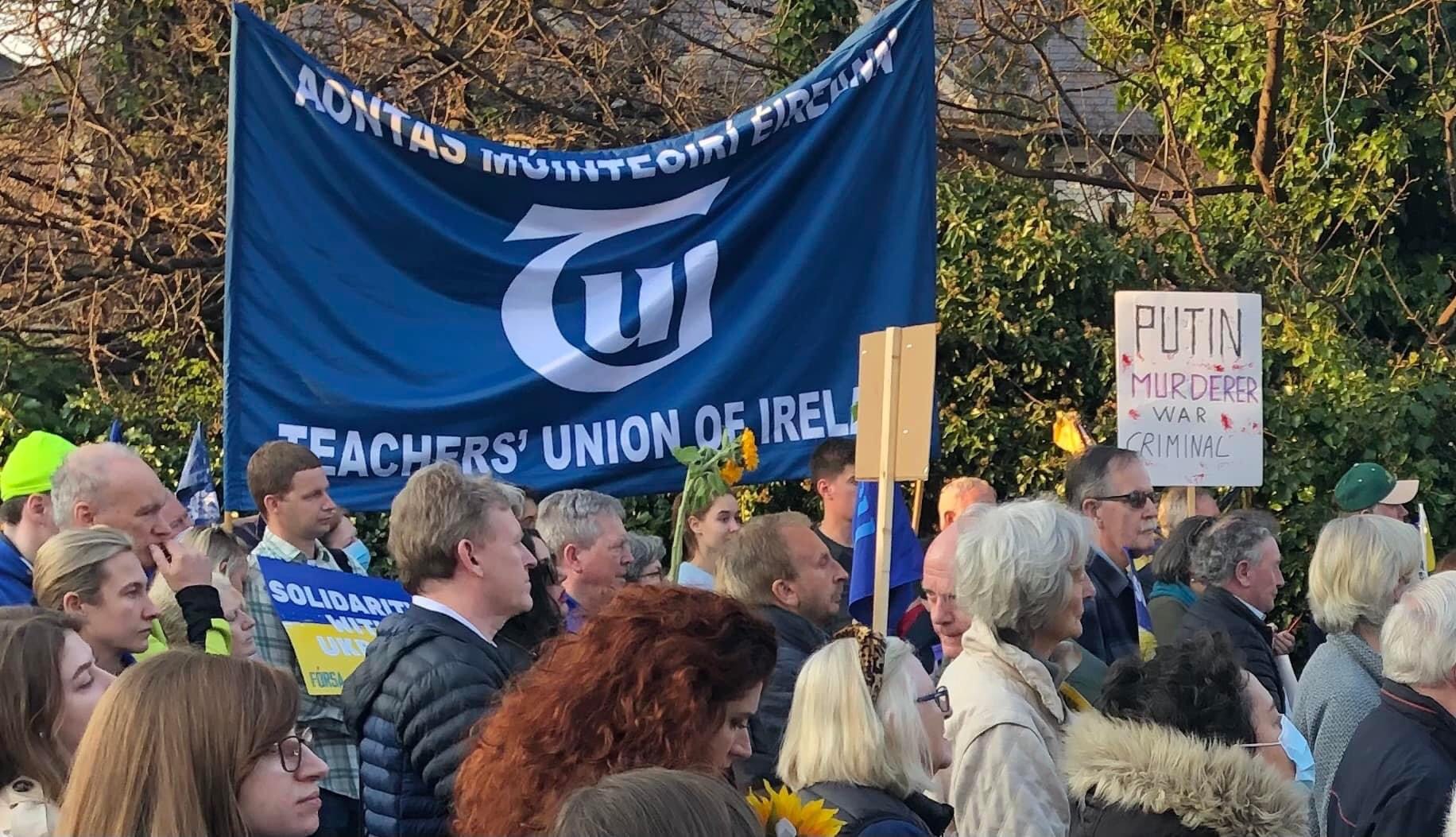
Embassy of Russia, Orwell Road, Dublin 6 : Dublin Council of Trade Unions and many trade unions protest against Russia’s invasion of Ukraine, March 24 2022, 5.00pm. Top Left, Brendan Ogle wearing an anti-fascist T-ShirtRead the rest of this entry »
“Marine Le Pen’s party is binning its 8-page electoral tract, which features a picture of her shaking hands with Vladimir Putin. Apparently that’s not a vote-winner any more! 1.2 million copies had been printed.”
Hint to Left-Wingers in Anti-War War Movements everywhere :
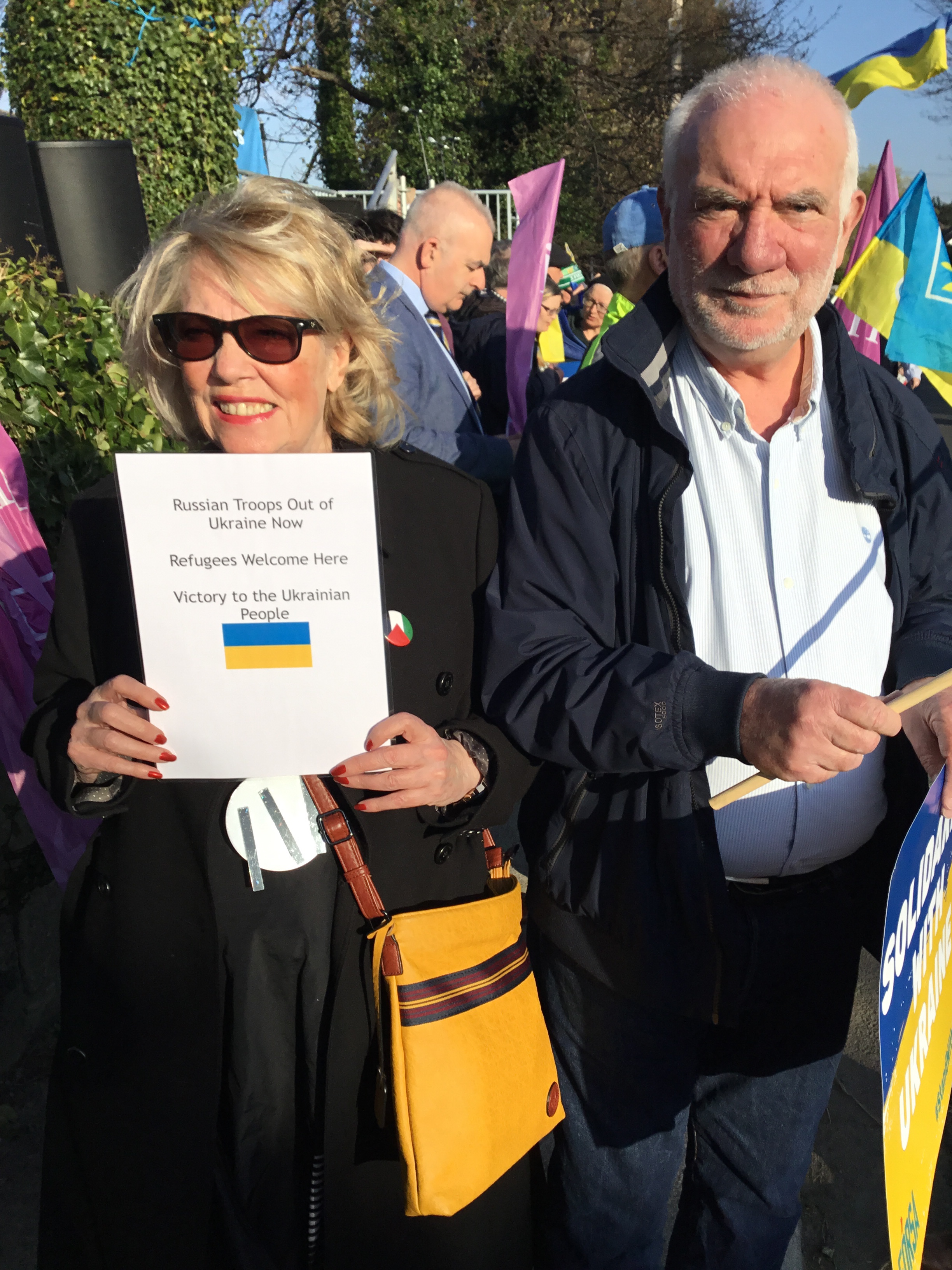
Russian Troops Out of Ukraine Now! Solidarity with the Ukrainian Resistance!
“The Russian invasion of Ukraine is a major war crime, ranking alongside the U.S. invasion of Iraq and the Hitler-Stalin invasion of Poland in September 1939, to take only two salient examples. … Meanwhile, we should do anything we can to provide meaningful support for those valiantly defending their homeland against cruel aggressors, for those escaping the horrors, and for the thousands of courageous Russians publicly opposing the crime of their state at great personal risk, a lesson to all of us.”
The Maastricht Treaty was a treaty that presented two completely arbitrary figures: 3 per cent budget deficit with regard to the GNP and 60 per cent for the debt. Why not 4 per cent or 2 per cent? Why not 55 or 65 per cent? Nobody knows. They came out of the sky, those numbers, doubtless from the Bundesbank. But they have become sort of religious symbols, the holy numbers of Maastricht. That was the first effort to get government policy under control, but countries did not respect that, including Germany
When the time of Lisbon came, we’d rather stopped talking about that. Lisbon was about different issues. When people read that treaty (which they did in France, it was the biggest debate we’ve had since May ‘68) — and realised what was actually in the European treaties, they were horrified.
There were innumerable issues in that treaty which people were opposed to: that we were going to be forever under the command of NATO with the US president as commander-in-chief; all the economic detail and other issues in France which made people frightened of laïcité — secularism. But above all, people understood often for the first time that the entire economic program of the EU was, and always had been, completely neoliberal and put “free and undistorted competition” and the free market way above social protection.
In France, we had a huge campaign based on about 1000 collectives that sprung up all over the country, but nobody in the establishment expected us to win. We started off with 70 per cent for the yes, 30 per cent for the no. That is probably why they let us have a referendum. And we voted 55 per cent no. The establishment was furious. All of the major media, most of the politicians, they were stunned and they were furious. And they said in private, never again.
So what happened after that? After the French and the Dutch had voted against this treaty in no uncertain terms (the Dutch vote was 60 per cent against), they got into a very secret group. They had a small committee writing a new treaty, making it even more complicated. They drafted the Lisbon Treaty with the help of the top judicial experts of the commission. It was completely opaque as a process. There were no elected representatives in the group that wrote it. And they simply took the constitution that we had defeated threw out the anthem and the flag and a couple of other little trimmings. But as Valéry Giscard d’Estaing said — and he was the chief architect of the constitution — they have made cosmetic changes to make it easier to swallow. And every other official, including Germany’s Angela Merkel, said this is exactly the same thing as the constitutional treaty. Nothing has changed. And many, many other officials said that including Baroso, the president of the commission.
So here we have the Lisbon Treaty, we’re not allowed to vote on it because obviously we’re going to vote the wrong way. It was made clear that no one will have a referendum — except for Ireland. Gallant little Ireland, has in its constitution that it must have a referendum every time there is a change in the European constitution. And we should all have that provision. The European Constitution and the European legislation provides 80-85 per cent of our national legislation, it just gets transferred into national law. Therefore, when you are under the control of a non-democratic Europe, this is very serious because that is going to be transposed into your own national law.
Fortunately, I had the good luck to be asked by the Irish to help them in fighting against the Lisbon Treaty. Again, we won. It was fantastic! Starting from a very low level, and then for one reason or another, people understood what it was about. They said no, even though it was extraordinarily complicated to read.
And so, they didn’t vote correctly either. They had to be disciplined; they had to be told to vote again. By that time the crisis had broken, and the Irish were more or less told that if you don’t vote right this time and say yes, then you are going to be in very deep trouble, you are not going to get any loans and you are not going to get any help coming out of the crisis. So they dutifully went back to the polls and voted yes.
Why do we have to have, in addition to all of this, what is called the “six pack“, and now a new treaty that we should just call the “austerity treaty” (it has a much longer name but forget that, it’s the austerity treaty). Why do we need this? We need it because Germany, principally, and a few other countries, want this engraved in stone. They want those Maastricht numbers, that people were not paying attention to, engraved in marble: 3 per cent budget deficit allowable maximum, 60 per cent debt allowable maximum. This means that member states are going to lose one of their principal powers in national sovereignty — the power over their own finances. They are not going to be able to control that because it is all going to be controlled by Brussels.
We have a serious problem with this because Brussels wants austerity. What does that mean? Austerity simply means that there is going to be an attack on every measure that has been passed before and since World War II to give ordinary people, workers, ill people, children, old people the benefits that they fought for and won over the last 50 to 100 years. It is that serious!
We do have higher debts, and we do have budget deficits, but the European Commission and the governments are pretending that these deficits exist because we have been “living beyond our means”. That is not the case. It is not because old people have been getting their cheques for retirement or the unemployed have been receiving compensation. It has nothing to do with social spending.
We have deficits because when the crisis came, our governments had to spend huge amounts to bail out the banks. They had to confront a drop in GNP of about 5 per cent — which is a lot of money. They had to try to compensate for that which also costs a lot of money. And since there was more unemployment, they were not receiving the tax income that they were used to receiving. That was a drop in the income with an increase in the expenditures. And since they won’t tax the rich either, there was no money in the till.
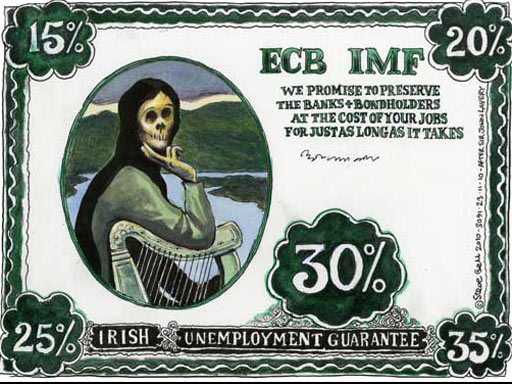
What do they do? They say, ah, it is up to the people to pay. So what has happened is that the banks have contributed zero, they are not being asked to make sacrifices at all. We are punishing the innocent, the people who are supposed to pay through austerity, and we are rewarding the guilty because the banks are continuing to receive huge privileges and subsidies from our governments.
That is why we must defeat this fiscal compact, this austerity treaty, and all the measures that come with it unless we want Europe to be retrograded to, shall we say, the 19th century. That’s what it is about.
[Susan George is a TNI fellow, president of the board of TNI and honorary president of ATTAC-France (Association for Taxation of Financial Transaction to Aid Citizens).]
Public Action was needed to force the government to hold a referendum.
We have extra time after the Lisbon Treaty 1-1 draw – let’s score in extra time and win this European battle on Irish Soil – start the fight back against the parasite banks in Ireland, spread the spirit of rebellion beyond our shores to the rest of Europe.
============
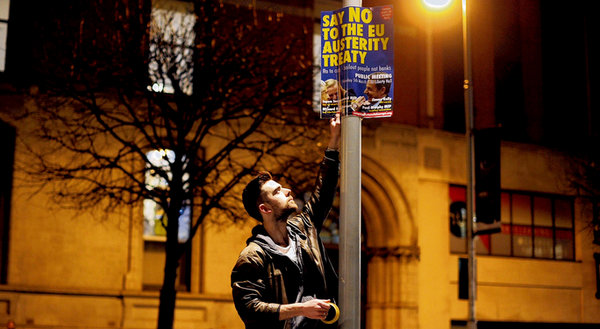
United Left Alliance calls for a NO vote in ‘Austerity Referendum’
The five United Left Alliance TDs (Richard Boyd Barrett, Joan Collins, Clare Daly, Joe Higgins and Seamus Healy) today called for a NO vote in the referendum on the Fiscal Treaty – the austerity treaty. Read the rest of this entry »










 Tomás Ó Flatharta