The European Network for Solidarity with Ukraine reports :
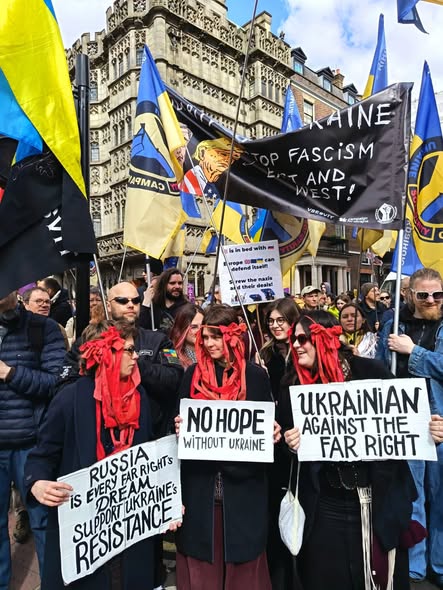
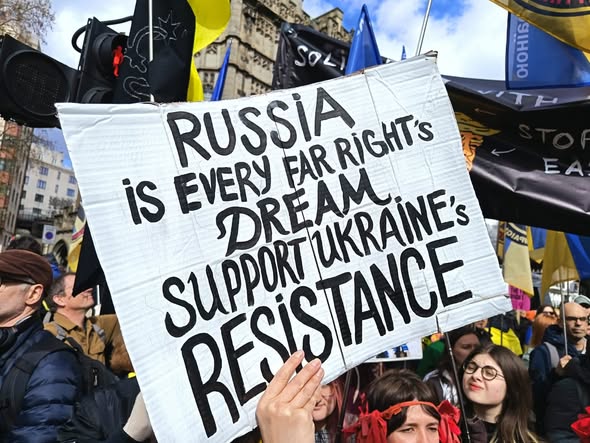
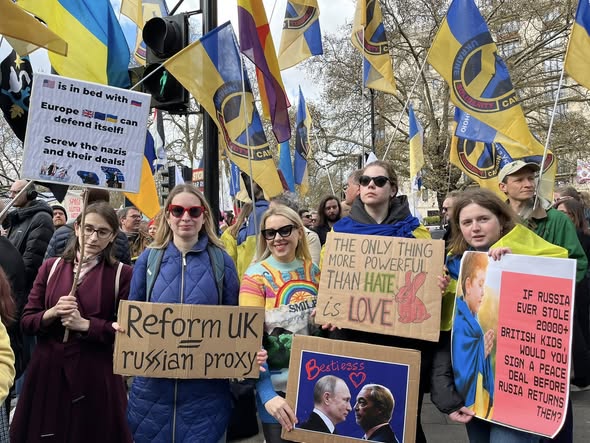
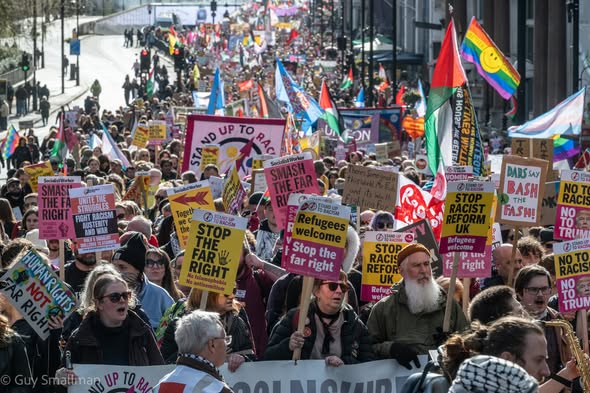
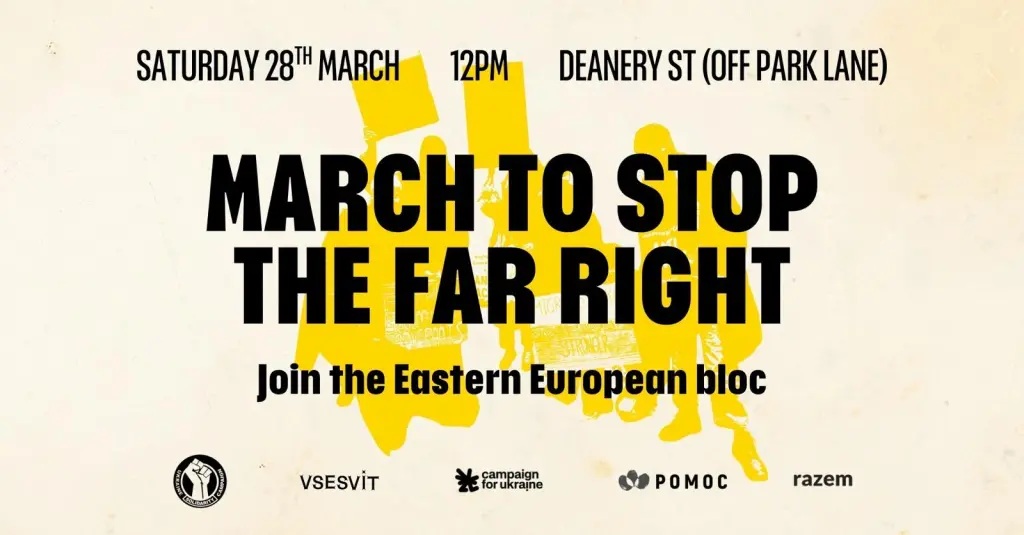
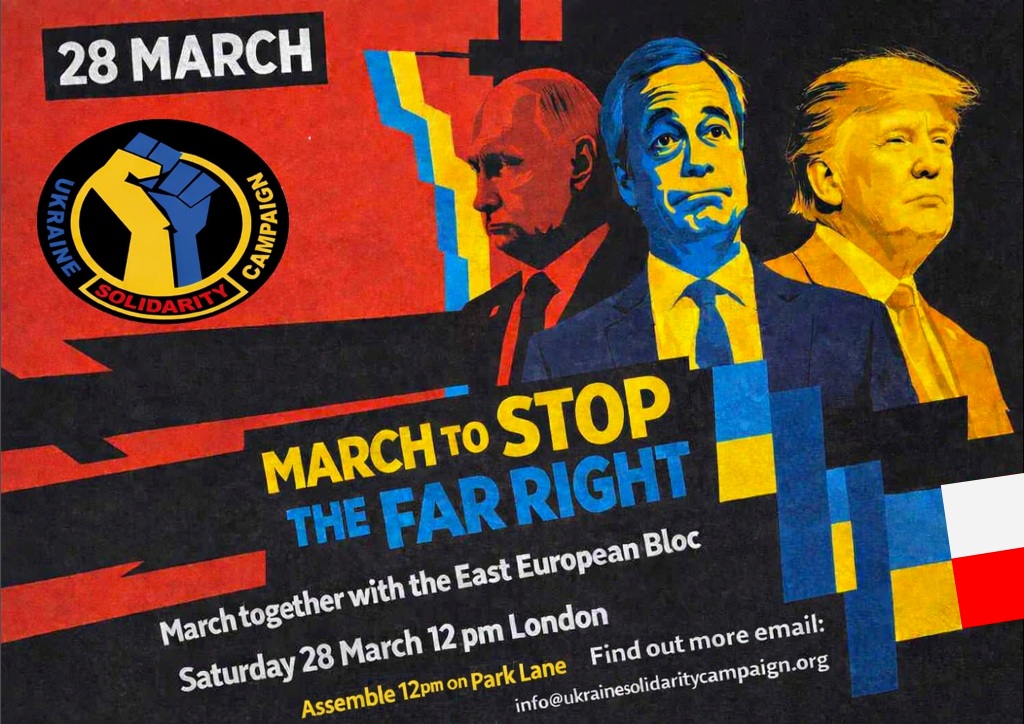
On Saturday 28 March, half a million people in London protested against racism and extreme right, in the UK mainly represented by Reform UK, a party that is also close to Putin and Trump, and against support for Ukraine.
A nice block of Ukrainian, Eastern European and British solidarity protesters also participated at the manifestation, with our friends from the Ukraine Solidarity Campaign Vsesvit, Hromada Collective,Campaign for Ukraine, POMOC and the Polish left-wing party Razem.
The Irish News columnist Patrick Murphy tells many home-truths about the Good Friday Agreement and the Stormont Assembly in Belfast.
This occurs in tandem with declining support for partition within the six-county bit of Ireland. A detonator of this trend was Brexit – the British state’s 2016 right-wing exit from the European Union.
Anti-Partition supporters of the Good Friday Agreement hope its referendum provisions will be enacted – forcing an electoral end on Ireland’s partition. These people need to address an ugly truth : an Irish unity referendum within the 6 county state can only happen with the permission of the British Secretary of State for “Northern Ireland” – an office currently held by Labour MP Hillary Benn.
Benn has categorically stated he will not authorise such a referendum. Credible opinion polls suggest that by the time of the next British general election (which must occur by 2029) the Westminster government could be controlled by the far-right ultra-Unionist Reform party led by Nigel Farage.
The best progressive way to end the partition of Ireland today can start with smashing Stormont.End institutionalised sectarianism and class collaboration – No coalition with right-wing parties such as the Democratic Unionist Party.
The way forward is :
1.Call for the formation of citizens’ assemblies which will draw up a political programme for the creation of a new 32 county Irish state
2. If the Irish state refuses to call a Citizens’ Assembly – something like the body which preceded the 2018 referendum in the 26 county bity of Ireland which repealed the anti-abortion 8th Amendment – the workers’ movement, women’s movement, trade unions, left-wing parties, and so on should take the initiative.
British police arrested Andrew Mountbatten-Windsor (brother of English King Charles) because of his business and commercial ties to the convicted child-abuser Jeffrey Epstein, going back at least 25 years. News reports state that the police are questioning the British royal about his corrupt financial link with Epstein, but have not mentioned detailed allegations that these two men were participants in an international sex-trafficking ring.
The former British Prime Minister Gordon Brown (2007- 2010), writing in the New Statesman, has published hard evidence concerning possible Epstein-Mountbatten-Windsor international sex-trafficking crimes, and referred them to the British police.
For many years the crimes of Jeffrey Epstein, Ghislaine Maxwell and the man who was formerly know as Prince Andrew have hidden in plain sight.
It is unlikely that the British state authorities, and police forces in other countries, can continue to turn a blind eye to these crimes.
What connects this month’s revelations to the sex trafficking crimes of Jeffrey Epstein is our decades-long collective failure to root out the worldwide networks of powerful men with wealth and influence who have raped, exploited and violated girls and women; treated them as less than human – and done so with almost complete impunity.
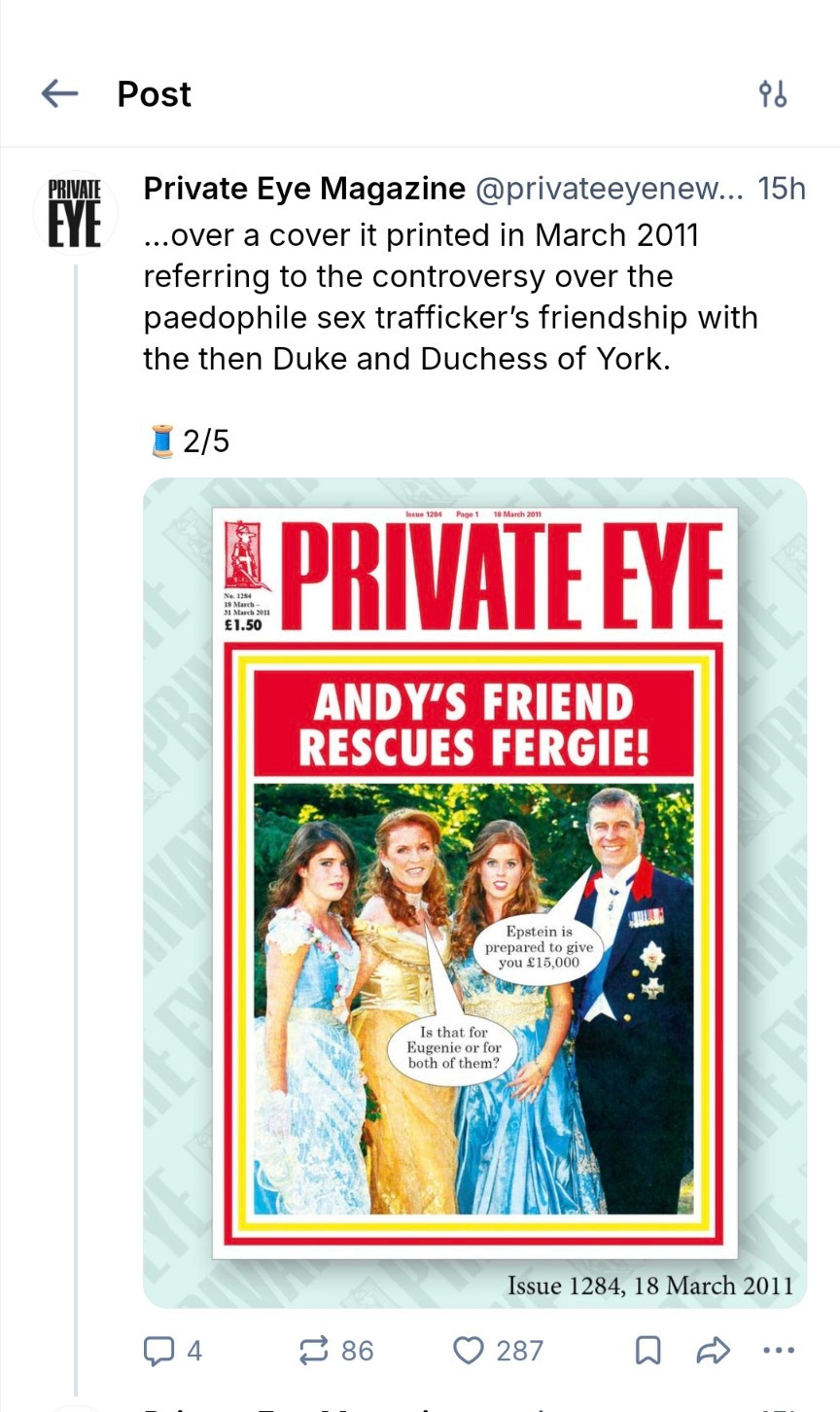
Ian Hislop, Private Eye’s editor, said: “It’s nice to see that Private Eye was getting close enough to the truth fifteen years ago to make some really appalling people – and their fine upstanding legal representatives – nervous.”
Ian Hislop, Private Eye’s editor, said: “It’s nice to see that Private Eye was getting close enough to the truth fifteen years ago to make some really appalling people – and their fine upstanding legal representatives – nervous.🧵3/5
“In our experience, it usually does take quite a while for prosecutors, justice departments and governments to sit up and take notice of what Private Eye has been saying all along.”
“In our experience, it usually does take quite a while for prosecutors, justice departments and governments to sit up and take notice of what Private Eye has been saying all along.”🧵4/5
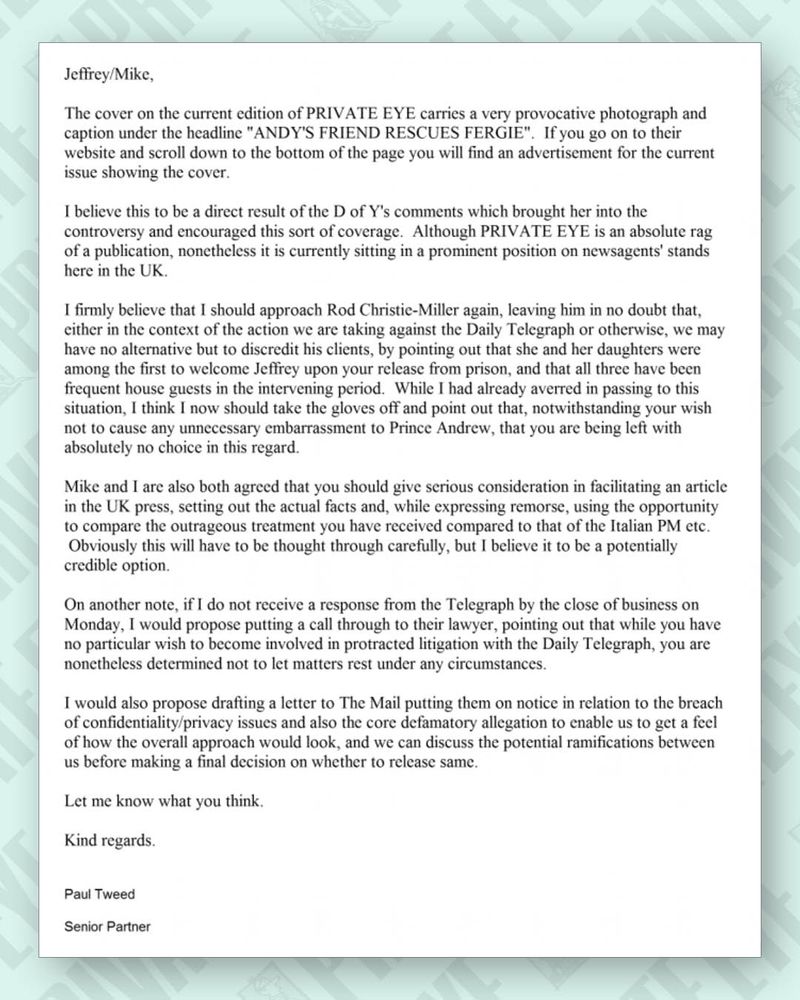
Individuals operating within the network created by the late Jeffrey Epstein hired numerous people who threatened media organisations which were investigating a vast child abuse and financial corruption racket. One such individual was the Belfast Lawyer Paul Tweed, who wrote to Jeffrey Epstein in 2011 calling the magazine Private Eye “an absolute rag” :
This is the relevant magazine cover :
Belfast Telegraph Political Correspondent Sam McBride has done a fine job investigating the murky professional relationships between Paul Tweed, Andrew Mountbatten-Windsor and Jeffrey Epstein.
The big lesson here is that the British and USA states ignored credible evidence for many years uncovered by investigators. This “tug the forelock” behaviour must cease. A first step in Ireland is to cease all official visits by members of the corrupt British royal family.
The least we can say is this :
Read here here the carefully chosen recent words of Belfast journalist Suzanne Breen, Belfast Telegraph political correspondent and a frequent contributor to BBC NI politics programmes :
“Chris Moore says William McGrath worked for MI5, and it’s even possible that he was planted in the children’s home as part of an intelligence-gathering operation. The journalist makes a compelling case that MI5 — at the very least — knew about what was happening and kept quiet.
Shamefully, there has been no adequate inquiry into Kincora. Some files have been destroyed, while others have been locked away by the British government to 2065 and 2085.
The most marginalised and vulnerable children were raped by powerful men, allegedly including King Charles’ grand uncle.
The building at the centre of the scandal was demolished three years ago, but the cover up of the crimes committed behind its walls continues. It is long past the time that the full truth was told about what happened in the house of horrors.”
No accident waiting to happen can ever have delivered on its promise so spectacularly as Lord Mandelson, with the continuous revelations of his ties to convicted sex offender Jeffrey Epstein. The decision by the UK prime minister, Keir Starmer, to appoint Mandelson as ambassador in Washington DC always appeared a high-risk, high-reward strategy. But no reward could ever have repaid such risk.
There is a grim fascination in seeing a prominent public figure’s reputation incinerated in real time. Mandelson’s entreating emails to a convicted abuser and trafficker of minors were still quite recently sufficient of an embarrassment before he was then photographed urinating in public.
The new normal is to appear on front pages in his underpants. Next will come questions about the meaning of emails that appear to show him betraying the most cardinal principles of public office, for monetary gain, from a criminal.
Mandelson had clearly started 2026 with the intention of rehabilitating himself and re-entering public life: a Sunday morning BBC interview, columns in the Spectator, an interview in the Times. Journalists’ requests for comment were replied to. No longer.
What was striking across these appearances – given Mandelson’s talents – was his maladroitness. Not to have apologised to the victims of trafficking when pressed in that initial high-profile interview, only to realise his error and concede the following day did not bear the hallmark of a master of public relations.
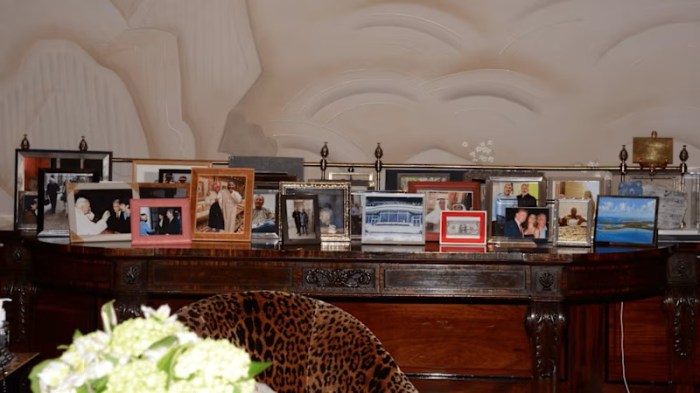
Sometimes a table can tell a whole story. Against a wall in Jeffrey Epstein’s Manhattan townhouse, an antique console table boasted more than a dozen framed photographs, including some of the world’s most recognisable people. There is a Democratic president and a Republican president, a leftwing intellectual and a rightwing activist firebrand. There are figures from Wall Street, from Silicon Valley and from the British royal family. The pictures even include Mick Jagger, Fidel Castro and Pope John Paul II.
Jeffrey Epstein’s Gallery
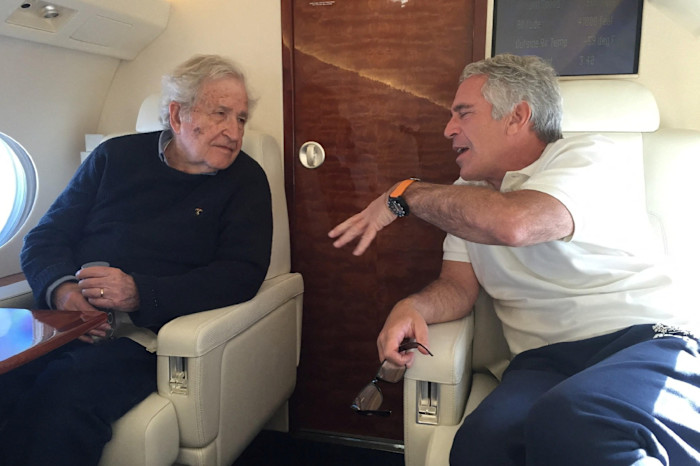
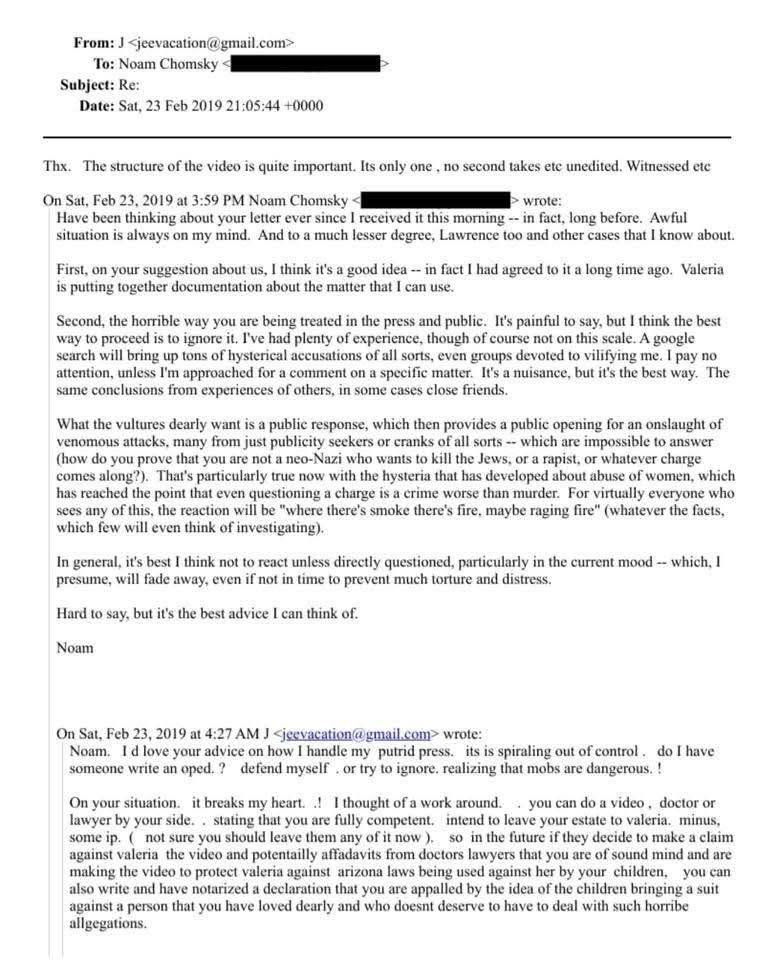
Noam Chomsky, Left-Wing Campiist Intellectual, and Jeffrey Epstein
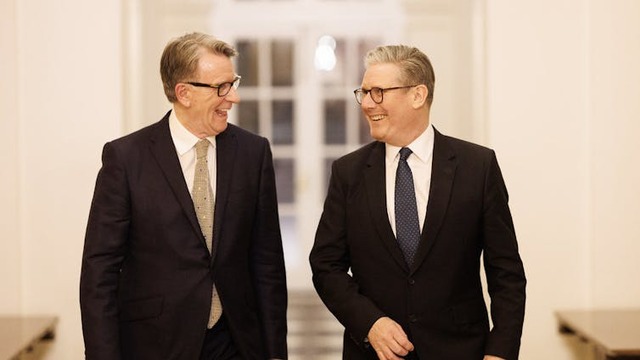
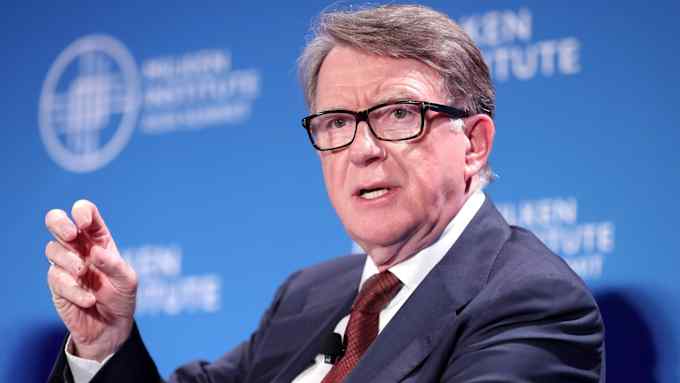
Peter Mandelson, Sacked British Ambassador to the USA, investigated by Brit Cops
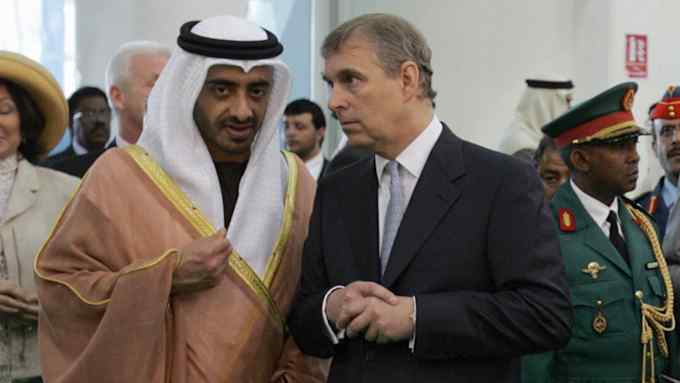
Andrew Mountbatter Windsor, Ex-Brit Prince, with a wealthy Saudi Arabia strongman
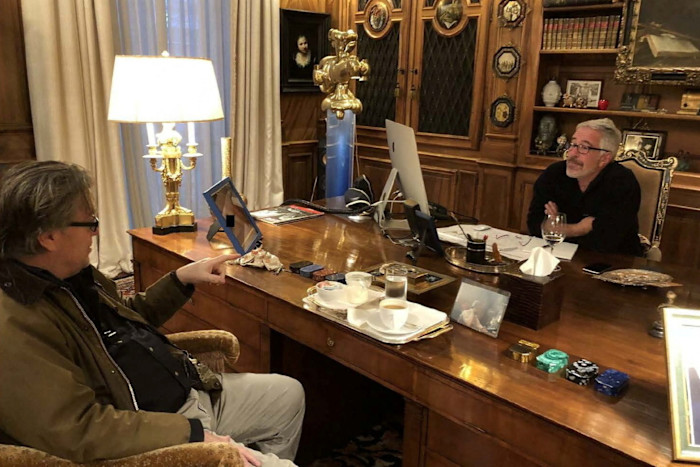
US far-right activist Steve Bannon with Jeffrey Epstein
While the core of the Epstein saga will always be his web of sexual abusers and the women and girls they preyed on, every new set of messages released by the US justice department reveals the staggering range of his social network and the relationships he was able to sustain. Epstein’s emails read like a self-help group for the 0.01 per cent. How did a college dropout from a working-class family in Brooklyn manage to do it?
Individuals operating within the network created by the late Jeffrey Epstein hired numerous people who threatened media organisations which were investigating a vast child abuse and financial corruption racket. One such individual was the Belfast Lawyer Paul Tweed (see below, a devastating story written by the Belfast Telegraph’s Sam McBride).
Jeffrey Epstein became a convicted criminal in 2008.
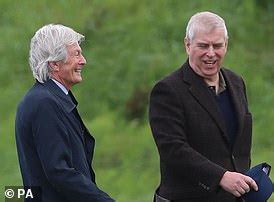
Belfast lawyer Paul Tweed and ex-Prince Andrew Mountbatten Windsor
Don’t you dare call Epstein a paedophile:
Inside story of leading NI lawyer’s work to clean up vile billionaire’s image… threatening the media on his behalf
I take this opportunity to recommend this excellent article from Kavita Krishnan which she published in early December. (see below).
Noam Chomsky could afford terrible statements about the systematic mass murders and genocidal wars in Cambodia, Bosnia, Rwanda and Syria. Even during the Russian mass terror against the Ukrainian people, he raised more understanding of the aggressor than the attacked population.
His support for Epstein reveals the same pattern. The Indian feminist Marxist Kavita Krishnan puts his behaviour into the broader context.
This email from Chomsky to Epstein proves that he wasn’t just giving his friend the benefit of doubt, not knowing the full nature and extent of his crimes. He was actively colluding with Epstein, strategising about how to deal with the revelations about those crimes in the press.
It’s not that Chomsky was incapable of empathy – he was, but he had empathy only for the unfortunate predator, victimised by a journalist who was nuisance enough to put faces and voices to a gaggle of female accusers generating a ‘hysteria’ of solidarity.
What Chomsky calls ‘horrible’ treatment of Epstein by the press, was the November 2018 piece in the Miami Herald, ‘Perversion of Justice’ – Julie Brown’s stellar investigative journalism exposing the secret deal struck a decade ago that betrayed scores of children trafficked and abused by him, who had found the courage to help police build a cast iron case.
This email must go on his tombstone, it must feature in every obituary when he passes, it is not just a stain on his political legacy, it IS integral to his legacy. His collusion with Epstein is a result of the same abstract geopolitical doctrine that passed for his politics, one that allowed him to deny the humanity of victims of horrific mass crimes against humanity – in Cambodia, Bosnia, Rwanda, Syria, Ukraine, China.
(Edited the post for accuracy, people pointed out he was calling his accusers hysterical, not the girls. He does use hysteria again, to refer to the public response to accusations of abuse of women.)
Organisations linked to former USA Senator George Mitchell are removing the man’s name from their projects :
US-IRELAND ALLIANCE TO REMOVE NAME OF SENATOR GEORGE J. MITCHELL FROM ITS PRESTIGIOUS SCHOLARSHIP PROGRAM
February 1, 2026. The board of directors of the US-Ireland Alliance has unanimously agreed that its George J. Michell Scholarship program should no longer bear the former Senator’s name. The decision was made due to new information that has come to light as part of the release of documents related to Jeffrey Epstein by the Department of Justice on Friday, according to Trina Vargo, founder and president of the US-Ireland Alliance.
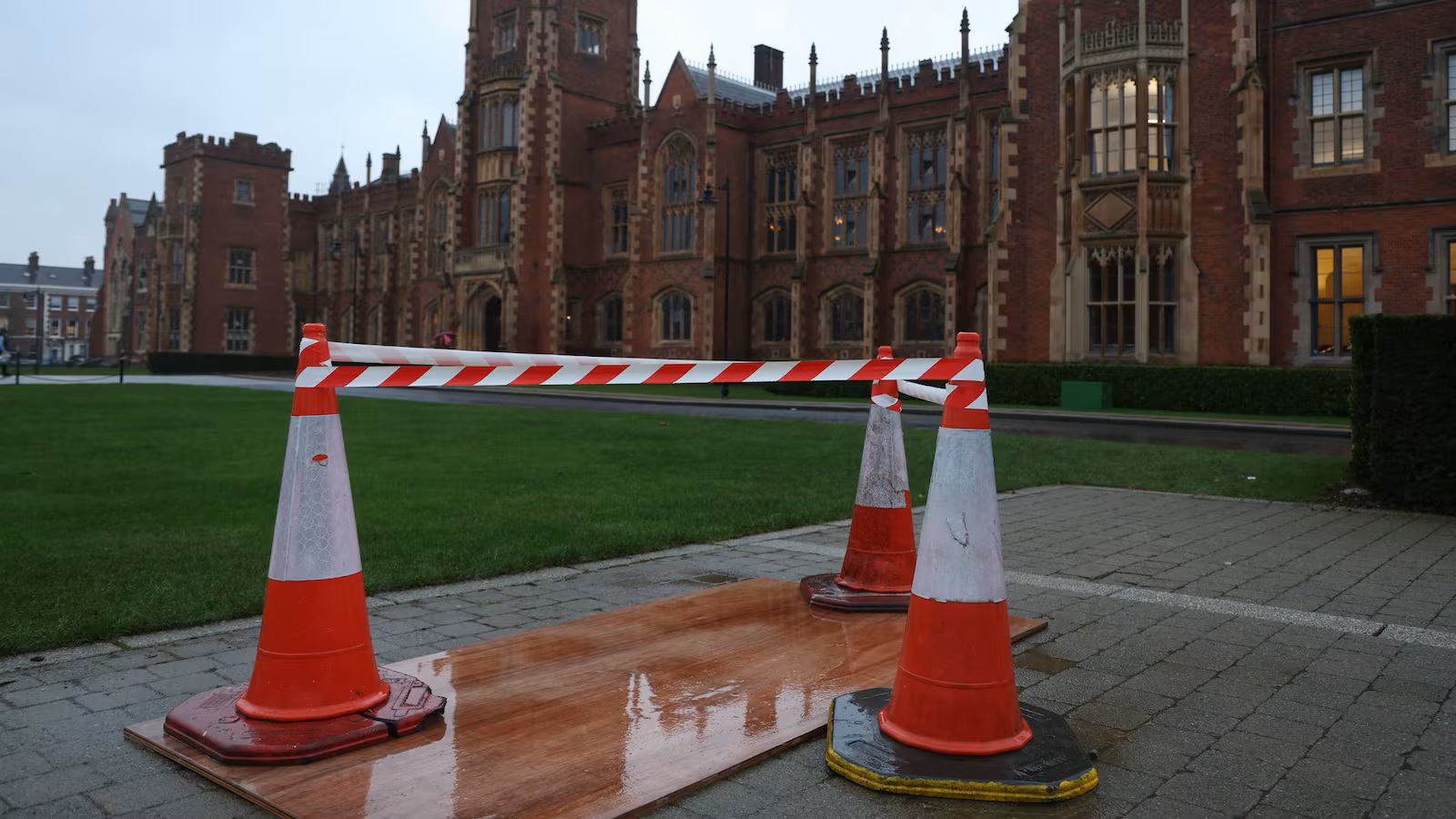
A bust of Mitchell on the grounds of Queen’s University Belfast is gone – from February 2 2026.
The bust of George J Mitchell on the grounds of Queen’s University Belfast has been removed. PICTURE: MAL MCCANN
Credible accusations detailing Mitchell’s alleged Epstein links have been on the public record for more than four years – but the former Senator’s Irish establishment supporters took no action.
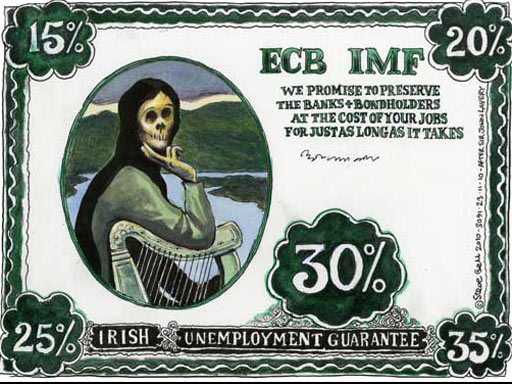
Here is an extract from a story published on this blog in January 2022.



 Tomás Ó Flatharta