Former French Prime Minister Lionel Jospin of the Socialist Party has passed away aged 88 – Former Trotskyist at the centre of “a story of hope and missed opportunities”
The long life of former French Prime Minister Lionel Jospin, who has passed away at the age of 88, gives us many useful explanations of the state of the left today, not just in France.
A useful list is here :
L’Echec de la gauche – the failure of the leftA
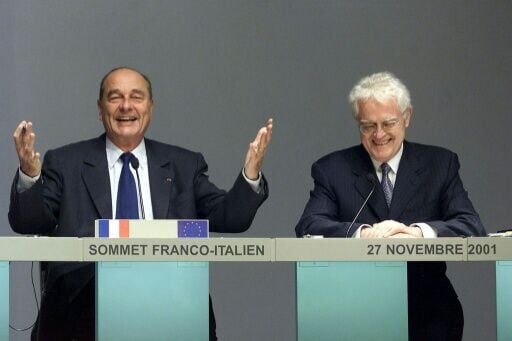
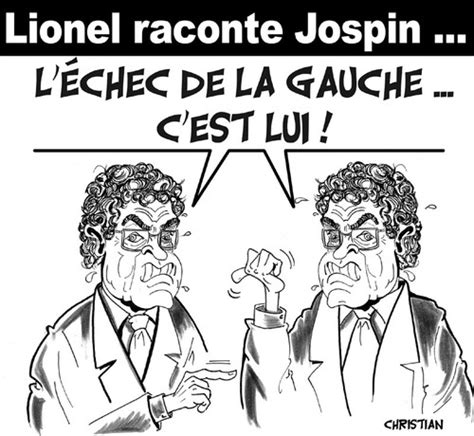
Jospin moved from the left to the right, and unsuccessfully tried to cover some of his tracks.
We reproduce two articles here from
Europe Solidaire Sans Frontières
- Lionel Jospin the former Trotskyist
- Former French prime minister Lionel Jospin: a story of hope and missed opportunities
Jospin lays the ghost of long past Trotskyism – The French Prime Minister, Mr Lionel Jospin, admitted in 2001 that he began his political career as a Trotskyist
Lara Marlowe, Irish Times Wednesday June 6 2001
The French Prime Minister, Mr Lionel Jospin, admitted yesterday that he began his political career as a Trotskyist. Mr Jospin responded to questions in the National Assembly following press reports that he was a Trotskyist revolutionary who infiltrated the Socialist party on the instructions of his semi-clandestine organisation.
“It is true that in the 1960s I took an interest in Trotskyist ideas, and I established relations with one of the groups of this political movement,” Mr Jospin said. “It was a personal, intellectual and political journey of which I am not the least ashamed.” He was motivated by anti-colonialism and anti-Stalinism, he added.
As a student at the elite Ecole Nationale d ‘ Administration (ENA) in 1964, Mr Jospin was considered a rare catch by Trotskyist leaders. He was given the code name “Comrade Michel” and excelled at teaching “revolutionary studies groups”.
Mr Pierre Lambert, now 81 and still the leader of the French Workers ‘ Party, decided that Mr Jospin ‘ s membership in the Internationalist Communist Organisation (OCI), founded in 1965, should remain secret.
The OCI was banned by the Interior Ministry for two years while Mr Jospin was an active participant. The group is often compared to a sect, its members known as “Lambertistes”.
In 1971 the Lambertistes decided to infiltrate French institutions. Mr Jospin joined the Socialist party, and 10 years later became its first secretary, as a Trotskyist mole.
When Francois Mitterrand was elected in 1981, the revolutionaries believed the “great day” had arrived, that the Fifth Republic would collapse and their pre-positioning of men like Mr Jospin would pay off. But Mr Jospin broke all ties with the Trotskyists in 1987, 10 years before he became Prime Minister.
Rumours about Mr Jospin ‘ s Trotskyist past had circulated for years, but until yesterday he always denied them, claiming he was being confused with his brother, Olivier, who was also a Trotskyist.
But Mr Boris Fraenkel (80) revealed he was the young intellectual ‘ s mentor and guide within the movement in the 1960s. Most of those interviewed – now teachers, researchers, professors and journalists – did not wish to be identified. “They behave as if they carried a cumbersome family secret,” Le Monde said. “It ‘ s silly to lie,” Mr Fraenkel told the newspaper. “Trotskyism isn ‘ t syphilis. [Mr Jospin] repressed the whole thing. For him, it didn ‘ t happen.”
Mr Jospin ‘ s earlier denials are more likely to harm his chances in next year ‘ s presidential election than his radical past, which he has in common with politicians like Dr Bernard Kouchner and Mr Joschka Fischer. “I have never been a Trotskyist,” he said in 1995. When the question was repeated two years later, Mr Jospin quoted Andre Malraux: “A man is not what he hides, but what he does.”
https://www.europe-solidaire.org/spip.php?article78419
Former French prime minister Lionel Jospin: a story of hope and missed opportunities
Tuesday 24 March 2026, by BREDOUX Lénaïq, ESCALONA Fabien, GODIN Romaric, SALVI Ellen
The former French prime minister Lionel Jospin has died at the age of 88. For five years the socialist politician headed a broad-left government under rightwing president Jacques Chirac, a political arrangement known as ’cohabitation’. While with hindsight his 1997 to 2002 ’plural left’ government now seems like a golden era, ‘Jospinism’ will always remain as an unfinished corrective to the socialism of the François Mitterrand years and a missed chance to break with a social democracy that had embraced the neoliberal global order. Mediapart reports on Lionel Jospin’s political legacy.
The death of veteran socialist politician Lionel Jospin at the age of 88 was announced on Monday. The tributes to him will focus on his integrity, uprightness and loftiness of mind. President Emmanuel Macron thus hailed a figure who “embodied a high-minded idea of the Republic”: he was first secretary of the Socialist Party (PS), education minister under socialist president François Mitterrand, then France’s prime minister for five years under rightwing head of state Jacques Chirac.
The former socialist leader, who in his youth was involved with the Trotskyist Organisation Communiste Internationaliste (OCI), was indeed a respected voice who commanded respect, despite his long withdrawal from active political life. The level of debate offered by today’s political classes, and especially the invective between the different strands of the Left, only throws into sharper relief the restraint with which he spoke about the excesses of both Macronism and the radical-left movement led by Jean-Luc Mélenchon, and about the conditions needed for unity on the Left.
Depending on one’s generation, a degree of nostalgia also explains some of the regard in which the former prime minister is held, including among those who demonstrated against the shortcomings of his policies at the time. Bookended by the twilight of the Mitterrand era (1981-1995) and a five-year term by socialist president Francois Hollande (2012-2017) that proved catastrophic for the Left, the so-called ’plural Left’ or broad leftwing coalition government under Jospin’s premiership (1997–2002) now appears, in retrospect, almost like a golden era. At the very least it was praiseworthy for its attempt to steer the welfare state through the chill waters of neoliberal globalisation.
Beyond the personal memory of Jospin himself – to which each of us will respond in our own way – it is the significance of ’Jospinism’ within the nation’s political life that demands our attention. This phase of French socialism, which came at a time when the Socialist Party (PS) was still the dominant force on the Left, was at once brief, paradoxical and unfinished.
Brief, because it lasted less than a decade. It began with Jospin’s candidacy in the 1995 presidential election and his taking over the leadership of the PS in its wake, and ended with his traumatic defeat in the first round of the 2002 presidential election.
Paradoxical, because the Jospin era presented itself as an original path, founded on the right to a “stocktaking” of the legacy of François Mitterrand’s two seven-year terms, and set against the more aggressive social liberalism of Britain’s Tony Blair and Germany’s Gerhard Schröder. While parts of Jospin’s record seemed to lend credibility to this attempt, the subsequent “crash” of 2002 – his third place in the presidential election – exposed its insurmountable limits.
This is where the unfinished nature of Jospinism comes in, because it was a failed corrective to the structural flaws of French socialism and European social democracy. In short, it was a missed opportunity. While it provided welcome gains in terms of additional freedoms, social rights and local government reform, it ended in electoral failure and left the field open to the tactical manoeuvring of François Hollande, gravedigger of the modern Socialist Party and architect of the vacuum that led to Macronism.
The ’plural left’ was no golden age
The victory of 1997 came a year and a half after the historic strikes of December 1995, which weakened a Right already in power for five years, remobilised the Left after a string of electoral defeats, and brought criticism of economic liberalism to the top of the agenda. The snap parliamentary elections, following an ill-judged dissolution of the National Assembly by President Chirac, hastened a rapprochement between leftwing parties that was already in the air.
The electoral alliance was fairly loose. Unlike the recent broad-left alliances of the 2022 and 2024 elections, it did not produce single candidates in every constituency, as the far-right was getting far fewer votes than today. Bilateral agreements were struck between the parties involved (socialists, communists, supporters of former minister Jean-Pierre Chevènement, the radical left and greens), with the PS emerging as the focal point of ‘stability’, the only force capable of providing an alternative government. This, too, now feels like a vanished world.
Lionel Jospin, who needed the Greens in particular to pass his legislation, was keen that the ‘plural majority’ of the Left represented in parliament – soon dubbed the ‘plural left’ – should be reflected in the composition of the government. If collective memory has glossed over this period, there are reasons for it: the longevity of this leftwing bloc was exceptional compared with other experiences, macroeconomic indicators were favourable at least until the turn of 2000, and the prime minister’s popularity levels have rarely been matched since.
Yet we should be careful not to romanticise this period. Possessing only a minimal shared programme, disagreements and strategic manoeuvring within the coalition were rife. “In practice,” wrote historian Jean-Jacques Becker in Histoire des gauches en France (published by La Découverte in 2005), “each year saw the same disputes recur, to which others, more driven by events, were added.” They revolved around how to share out the fruits of growth, differing approaches to security and immigration, and the constraints of European integration.
The clearest sign of these divisions was the proliferation of rival candidacies in the 2002 presidential election, fuelled by each party’s desire to distance itself from a government record that was increasingly questioned and to assert their own distinct identity ahead of the subsequent parliamentary elections. Meanwhile the PS never doubted for a moment its ability to perpetuate its dominance over its own camp. This was a grave miscalculation, for which Jospin would forever blame his partners, whom he had, nonetheless, never dissuaded from standing as rival candidates.
“It was no longer a ’plural’ Left that took on [the presidential election],” notes Jean-Jacques Becker, “but a ’fragmented’ Left, not only when it came to candidates [but] when it came to the voters and their expectations.” On the evening of the first round on April 21st 2002, the total vote for the Left was lower than in any election held since 1997. It was slightly higher than in the 1995 presidential election, but this increase was entirely absorbed by the Trotskyist candidacies of Arlette Laguiller and Olivier Besancenot (both hailing from competing factions of the OCI). Lionel Jospin failed to qualify for the second round.
Quest for an alternative path within the neoliberal framework
The positive aspects of the plural Left’s economic and social record belong to the period 1997–2002, one of the last great phases of growth in France. Between 1998 and 2000, growth exceeded 3% per year, even reaching 4.1% in 2000. This level has not been seen since, at least if one excludes the one-off rebound following the Covid pandemic.
This growth was driven first and foremost by the dotcom bubble, itself fuelled by two factors: a shift toward a finance-led economy and the central role of household consumption. Within this framework, government policy played only a marginal role, partly supporting these two dynamics.
Lionel Jospin’s chosen approach was to rally the working classes to the neoliberal order through a series of concessions. This was the purpose of the reduction of the working week to 35 hours, conceived as a compromise designed to speed up the shift towards a service-based economy and encourage productivity gains, while offering social progress in the form of more free time. One should also note the introduction of universal health coverage – known as CMU – which guaranteed access to care for those not covered by an existing health scheme and with insufficient resources.
In this respect, Jospin’s approach diverged from that of Schröder, who in Germany sought to subordinate the workforce directly to the goal of competitiveness, with no trade-off other than future job creation. The objective, however, remained similar. In 2010, in the book-length interview Lionel raconte Jospin (published by Seuil), the former prime minister was explicit: “We acted […] not for ideological reasons, but for economic reasons.”
From the end of 2000 the economic tide turned and the government’s strategy began to falter.
At the same time, the plural Left’s policies put pressure on real wages, which rose by only 0.6% over the period, less than the growth in productivity (+0.8%). The 35-hour week led to wage restraint, which the former prime minister brushed aside, saying: “Obtaining a four-hour reduction in working time with the same pay is already a gain.” This approach was hard for leftwing voters to accept, especially as managerial pay rose nearly three times faster than that of blue-collar workers.
The other major plank of the government’s action was the “restructuring” of France’s productive base, with an unprecedented wave of partial privatisation of state-owned firms. Lionel Jospin justified this policy by the need to create “national champions” capable of facing international competition. But there was a heavy price to pay.
Not only did this process involve the privatisation of public services such as the postal service La Poste, France Télécom and others, which were now driven by the bottom line, this strategy also sacrificed a large part of the industrial base. The myth of “industry without factories” and the “knowledge economy” flourished during these years of socialist government.
The social advances that were achieved, and the resistance mounted against the employers in order to impose them, constituted a final flourish of a uniquely French social democracy, what Jospin championed as “modern socialism”. This path was in truth only viable in the economic upswing of the late 1990s. From the end of 2000 onwards, the economic tide turned and the government’s strategy faltered.
It then appeared difficult to pursue all objectives at once: wealth redistribution, new rights, stable public finances, private sector profits and so on. Socialist leaders increasingly sought to offer guarantees of their “seriousness” to business circles and the established middle classes, without much reward. Today, after twenty years of crisis in capitalism, this strategy of “leftwing realism” looks even harder to replicate.
Parity and civil partnerships: new rights and the socially-progressive Left
Enacted through two laws in 1999 and 2000, gender parity marked a “major break in the structure of relations between gender and politics”, in the words of researcher Laure Bereni, a specialist on the subject. It has since become the norm, even if some parties, particularly on the Right, still pay fines for failing fully to comply with the law.
Yet the concept itself emerged almost out of the blue in the early 1990s. It was never a core demand of the feminist movement, but was instead championed by a handful of activists who had encountered systematic exclusion from winnable electoral positions. This shift effectively transformed France’s Fifth Republic into a “space for the women’s cause”, in the words of Laure Bereni.
The parliamentary debates were certainly acrimonious. And comments made within party leaderships themselves were marked by rank sexism: it was claimed that incompetent women would be elected (inevitably), deserving men excluded (inevitably), and that the very office of elected representative would be discredited.
A quarter of a century later, the Republic has hardly faltered and parity is no longer contested. It nevertheless remains incomplete: while candidate lists are balanced, the safest seats and top slots often remain the preserve of men. In the most recent parliamentary elections, the share of women even fell in the National Assembly. In the recent municipal elections, three quarters of lead candidates were men.
When the PACS bill on civil partnerships was tabled in 1998, MP Christine Boutin brandished a Bible in the National Assembly.
The leftwing coalition at the time also fought another major parliamentary battle: that of the civil partnership pact (‘PACS’), which for the first time allowed unions between same-sex couples. This was adopted in 1999. It was not a marriage but a formalised civil union that granted rights in terms of material support, housing, assets, taxation and social rights.
Several earlier legislative attempts had failed, including an initial bill tabled in 1990 by one Jean-Luc Mélenchon. When the new bill was introduced in 1998, MP Christine Boutin brandished a Bible in the Assembly and, alongside rightwinger Philippe de Villiers, became the face of opposition led by the Right and the churches.
Homophobia reached rare levels of violence. References were made by Boutin to the “objectification of children subjected to the whims of adults” and by rightwing MP Dominique Dord to a “hot potato passed from town halls to magistrates’ courts and why not tomorrow to the veterinary services”. Similar remarks would resurface when prime minister Jean-Marc Ayrault’s socialist government under François Hollande brought forward a proposal for ’marriage for all’, which was adopted in 2013.
The PACS and gender parity, along with the extension of the legal time limit for abortion, backed by Martine Aubry who was labour minister in that government and a future leader of the PS, remain undeniable hallmarks of Lionel Jospin’s legacy. Since then, these new rights have been expanded, deepened, and now appear firmly rooted in the fabric of French society.
Despite their limits, these new rights have also fuelled a sometimes toxic – and still ongoing – debate between what might be termed the ’cultural’ Left and the ’class-based’ Left. The former was accused of abandoning the working classes to champion women’s and LGBTQ rights; the latter of dismissing those very rights in an outdated vision of class struggle.
’Little savages’
Another debate that still resonates today occupied the plural Left’s time in office. This concerned immigration and, more broadly, racism and France’s postcolonial legacy.
To be sure, Lionel Jospin’s government passed a major law on historical memory. Coming nearly ten years after the loi Gayssot – which sought to repress racist, antisemitic or xenophobic acts – the loi Taubira of 2001 formally recognised the slave trade and slavery as crimes against humanity for the first time. “It’s by looking at the past with lucidity, with frankness, with recognition – including the historical wrongs that were committed – that we can calm and ease the present,’ the prime minister observed at the time.
But Jospin was also the man who chose Jean-Pierre Chevènement as his interior minister. And it was Chevènement who spoke of “sauvageons” or “little savages” to describe young offenders and, by extension, working-class youths. “A sauvageon is an ungrafted tree. I want parents and teachers to be convinced that the young shoots for whom they are responsible must not grow up without being educated,” the minister explained in 1999.
Jospin also backed away from the regularisation of undocumented immigrants, despite the powerful Saint-Bernard solidarity movement in 1996 which campaigned for a group of African migrants to be given legal residency. And once again, the issue of voting rights for foreigners was buried. The new rights championed by this government would not be for everyone.
The dead hand of presidentialism
Right to the end of his life, Lionel Jospin stood by a reform that revived a supremacy of the presidency unmatched in Europe. This was the move to change from a seven-year presidential term of office to a five-year term. It was a decision at odds with his own denunciation of Le Mal Napoléonien (’Napoleonic Evil’), his essay published by Seuil in 2014.
Approved by referendum in 2000, the reform aligned the length of the presidential mandate with that of MPs, in other words five years. Jospin and his government then deliberately altered the electoral calendar so that the presidential election would precede the legislative elections, ensuring the latter were largely dictated by the outcome of the former.
The change of power in 1981, when socialist François Mitterrand was elected president, had already altered nothing in the balance of institutions that had been forged under the early Gaullist years of the Fifth Republic. The periods of political ’cohabitation’ in 1986 and 1993 – in which the government and its ministers were of a different political persuasion from the president – had nonetheless highlighted the decisive nature of parliamentary elections in determining power. Furthermore, the promise of introducing proportional representation, which had indeed led to the arrival of far-right MPs in the National Assembly, was honoured for the 1986 parliamentary elections, only to be subsequently scrapped by the Right.
Lionel Jospin, himself a central figure of cohabitation following Jacques Chirac’s botched dissolution in 1997, nevertheless supported both the five-year presidential term and the inversion of the electoral calendar. These two measures were intended to reduce the likelihood of cohabitation recurring and to consolidate the concentration of power in the hands of the president of the Republic, backed by a government and National Assembly answerable to him. Nor did Jospin seek to reintroduce proportional representation.
According to his own words in Le Temps de Répondre (’Time to Respond’ published by Stock in 2002), Jospin wanted to “restore to [the presidential] office its meaning and scope, even its prestige”. The primary outcome, however, has been growing abstention at parliamentary elections and a succession of presidential terms during which the legitimacy of those in power continued to erode. The isolation of the Élysée went hand in hand with the hollowing out of all other forms of political representation and expression. Some of the roots of France’s creeping regime crisis, which has accelerated since Emmanuel Macron’s dissolution of the Assembly in 2024, can be found here.
From New Caledonia to Corsica – a man of dialogue
It was one of the last subjects on which he still agreed to speak in recent years. In New Caledonia, Lionel Jospin’s name will forever be linked with the Nouméa Accord, the cornerstone of the decolonisation process in the Pacific archipelago, a French overseas territory. Enshrined in this agreement, signed on May 5th 1998 and extending the approach initiated by prime minister Michel Rocard ten years earlier, are the striking words: “The time has come to recognise the shadows of the colonial period, even if it was not devoid of light.”
“With this text,” Jospin recalled in Lionel raconte Jospin, “we resolved the delicate issue of the nickel industry, brought the communities of New Caledonia to write a shared history of their territory giving its place to the [Kanak] people, and took a new step on the institutional question.” Before adding, with striking prescience: “I hope all this will be preserved, although current developments worry me.” Indeed, more than a decade later, Emmanuel Macron would take hold of the issue and tear up the delicate fabric patiently woven over forty years.
At the time of the events of May 13th 2024 in the territory, Lionel Jospin even broke his silence to issue a warning to France’s president. “The head of state must also refrain from the temptation of giving an ultimatum,” he wrote in an op-ed article. He added: “When the New Caledonian conflict emerged, we – militants who became statesmen – understood the thinking of those involved in the conflict. And we did not intend to allow France to fall once again into the trap of a colonial conflict.”
Lionel Jospin also had to grapple with another thorny issue as prime minister, what he himself called the “Corsican question”. After the assassination of prefect Claude Érignac in 1998, interior minister Jean-Pierre Chevènement appointed another prefect, Bernard Bonnet, to replace him and restore the “rule of law” on the island. But his highly personal methods, culminating in the so-called ‘beach huts affair’, simply made the situation worse. In 2003 Bernard Bonnet was convicted for ordering the arson of two beach restaurants back in 1999.
Meanwhile, Lionel Jospin, this time extending the approach initiated by former interior minster Pierre Joxe, launched the Matignon Process with Corsican elected representatives. “There’s too much left unsaid between Corsicans and the state. We need to talk more, and frankly,” Jospin said at the time, asking nationalists to renounce violence before any negotiations. Jean-Pierre Chevènement resigned in disagreement. And the talks resulted in a status for the island that was far short of the expectations of those who supported greater autonomy and independence.
Lénaïg Bredoux, Fabien Escalona, Romaric Godin and Ellen Salvi
Link :


 Tomás Ó Flatharta
Leave a comment