“The brave few documenting ordinary life in Putin’s Russia” – Catriona Crowe
This excellent article appeared in the Friday March 20 2026 issue of the Irish Times :
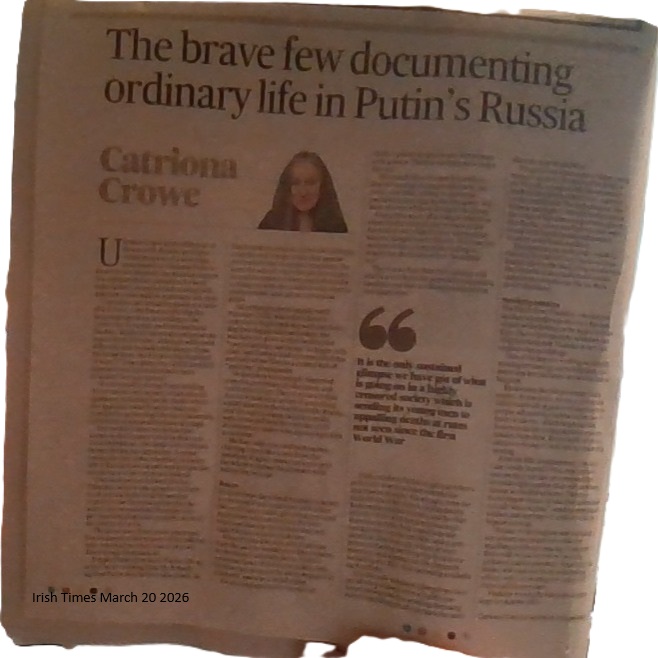
Concerning the differences between the Ukrainian and Russian States, Catriona Crowe hits the nail on the head :
Casualties are breaking down at a ratio of 2-2.5 to 1, with Russia suffering the largest proportion, according to the Centre for Strategic and International Studies. While the international press can report from Ukraine, although with some difficulty and considerable danger from the front lines, the Kremlin has detained at least 27 journalists since 2022, and 355 international journalists have been branded “foreign agents”.
Irish Times March 20 2026
Catriona Crowe: The brave few risking everything to unmask Putin’s Russia
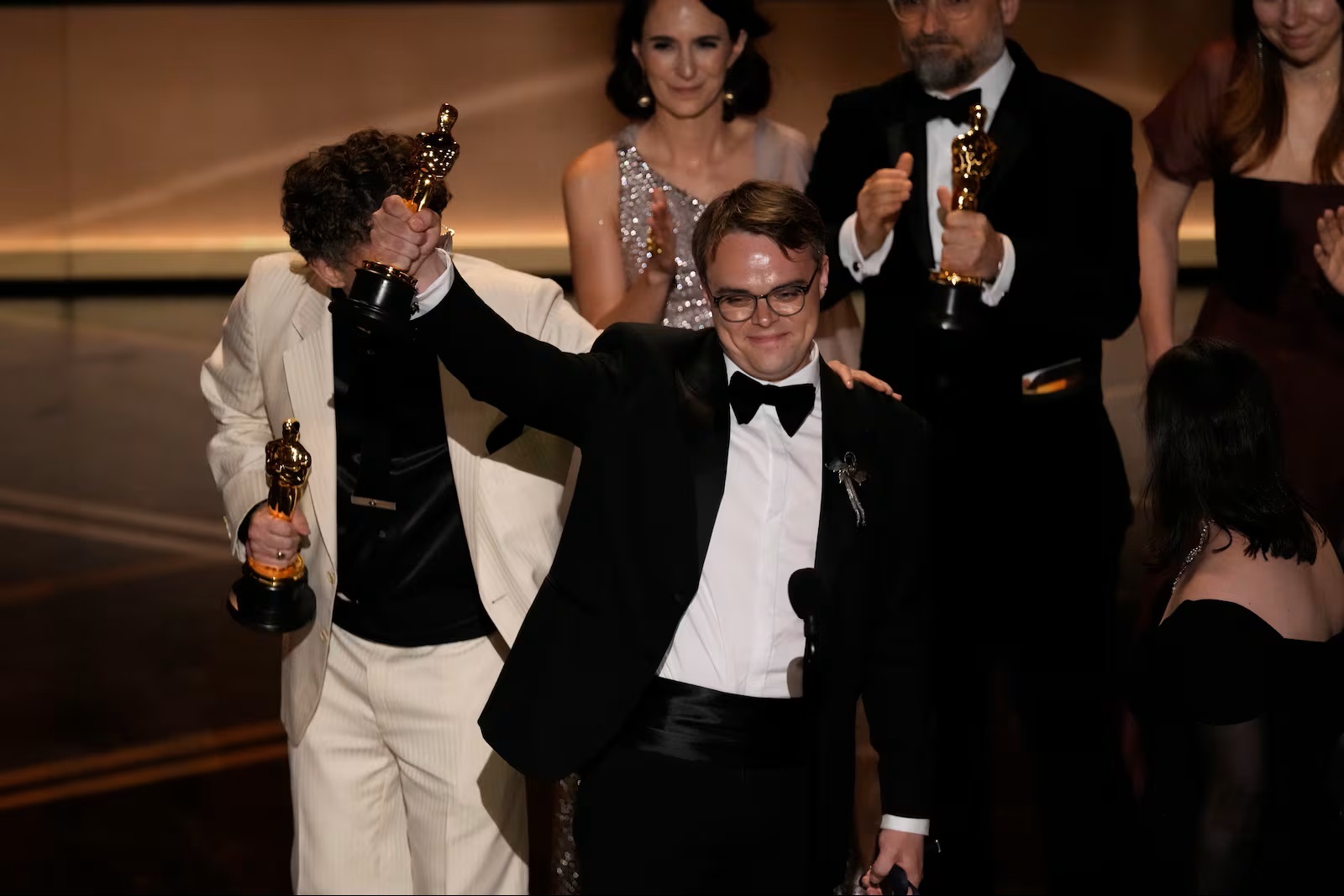
The Oscar-winning documentary Mr Nobody against Putin is a record of something totally unseen in the world outside Russia
Ukraine is now in the fifth year of its war with Russia, an unprovoked invasion of a sovereign state based on Vladimir Putin’s desire to reconstitute the Russian Empire. It is estimated that casualties for both sides (killed, wounded and missing) will amount to two million sometime this year.
Casualties are breaking down at a ratio of 2-2.5 to 1, with Russia suffering the largest proportion, according to the Centre for Strategic and International Studies. While the international press can report from Ukraine, although with some difficulty and considerable danger from the front lines, the Kremlin has detained at least 27 journalists since 2022, and 355 international journalists have been branded “foreign agents”.
We are used to seeing Putin striding down various red carpets to tumultuous applause, including one in Alaska where the applause came from the man supposed to be protecting Ukraine’s interests, a moment of unparalleled moral cringe. But we don’t often see behind the scenes in the country ruled by this voracious individual, who deals with criticism by murdering his opponents. Anyone taking the risk of documenting ordinary life in Russia from an anti-war perspective would have to be very brave indeed.
One such person is Pavel (Pasha) Talankin, school videographer in Karabash, a town in the Ural Mountains reputed to be the most polluted in the world, due to emissions from the copper-smelting plant which provides most of the jobs in the area. The plant was closed some years ago, but reopened at the request of the inhabitants, who had no other source of work. The average lifespan is 45.
Despite these grim facts, Pasha tells us, in his Oscar-winning film, Mr Nobody against Putin, that he loves Karabash, its blackened mountains, its Soviet buildings, even the evil orange stains that appear everywhere due to copper emissions. He loves the school where his job is to organise and document events, and informally, to hang out with the students who want to explore music and culture of various kinds. All of that proceeds happily until February 2022, when the school is ordered to begin each day with patriotic, flag-bearing parades and songs, the teachers are given scripts lauding the “special military operation” to begin each class, and Pasha is told to record all of this and upload the films to a central hub of “patriotic” propaganda.
He becomes increasingly dispirited with this perversion of education, and resolves to resign. Then it occurs to him that he is making a record of something totally unseen in the world outside Russia, and through cautious inquiries on the web, contacts David Borenstein, a US documentary maker who encourages him to continue. He does, with renewed enthusiasm, charting events like a visit from the notorious Wagner mercenary group to the school to imbue the students with militaristic fervour.
He interviews the school’s history teacher, a convinced Putin supporter with a face like an El Greco saint, glittering eyes, and no problem with embracing the new improved history curriculum which consigns Ukraine to non-existence. When Pasha asks him which person from the past he would most like to meet, he mentions Lavrentiy Beria, Stalin’s notorious head of the secret police, who liked torture so much he often engaged in it himself, and was a serial rapist. He also engaged in the murder of Stalin’s political opponents, sometimes with poison. There is nothing new under the sun.
We watch these formerly carefree, liberal-leaning young people turn cautious, watchful, willing to perform patriotism and sign up for the army. We hear of some of them dying at the front. One of the most affecting moments is when Pasha records the sounds of the funeral of one of his former students (it was too dangerous to film it). We hear the mother of this young man wailing in misery for the death of her “beautiful boy”. There is no hint that this carnage will lead to a revolt by the population against a needless war which is killing young men in vast quantities.
Pasha realises he has to get out when a police car starts to loiter outside his apartment at night. His escape, with the hard drives of his videos, is planned by Borenstein and his friends, and he slips into the West with his precious cargo. Borenstein helps him transform the footage into a coherent film, and it gets shown at film festivals, where it wins prizes including an Oscar for best documentary, and appears on TV channels, including the BBC. It is currently available on YouTube. It is the only sustained glimpse we have got of what is going on in a highly censored society which is sending its young men to appalling deaths at rates not seen since the first World War.
We get to see what some of these young men get up to in Ukraine in The Body in the Woods, a remarkable documentary made by the intrepid Bel Trew, reporter on the conflict for The Independent. She follows attempts to identify bodies left in the wake of Russian occupation in places like Bucha, where multiple corpses were found with hands bound and gunshot wounds to the head and body. The eponymous body in the woods is that of a 16-year-old boy, hands and feet bound, shot in the back, lying face down in the remains of an abandoned Russian camp in the woods near Bucha. He is never identified.
The film follows Vladislav, who lost his mother when she was shot by a Russian sniper while fleeing on the highway from Kyiv. Due to bureaucratic mistakes, her body has been lost. Vladislav is now an orphan with no siblings. One of the lawyers working to identify missing persons agrees to help him, and takes him into his house to care for him in his grief. Kindnesses like this permeate these stories. At one point we see a graveyard full of hundreds of graves of unidentified people, all carefully numbered in case of future evidence, all bearing beautiful flowered shields resting against wooden crosses. Somehow, this trouble taken for unknown strangers in death is unbearably moving.
A recent BBC documentary, The Zero Line: Inside Russia’s War, exposes how men on the front line are executed and forced to fight against their will, and how dissent is crushed at home. There is horrifying evidence of what the commanders call “meat storms”: sending untrained soldiers into barrages of artillery with no hope of survival.
Ukraine is carrying out international war crimes investigations while the appalling conflict is ongoing. Evidence which could be lost forever is carefully gathered and documented. Hopefully the future will vindicate these painstaking efforts with successful prosecutions of Putin and his associates.
Vladislav eventually found his mother in grave number 500.
Catriona Crowe is an archivist and podcaster
Catriona speaks at this meeting on Tuesday March 24 2026 at the Teachers’ Club, 36 Parnell Square West, Dublin 1
Links :


 Tomás Ó Flatharta
[…] Mar 20, 2026 “The brave few documenting ordinary life in Putin’s Russia” – Catriona … […]
The brave few documenting ordinary lifwe in Putin’s Russia – Catriona Crowe – Irish Left With Ukraine – Neither Moscow nor Washington
Mar 20, 2026 at 6:18 pm