“Staggering Range of Jeffrey Epstein’s Social Network – A self-help group for the 0.01 per cent”
The Financial Times has published a very thorough and well-researched summary of Jeffrey Epstein’s activities.
Concerning the campist leftist Noam Chomsky See also :
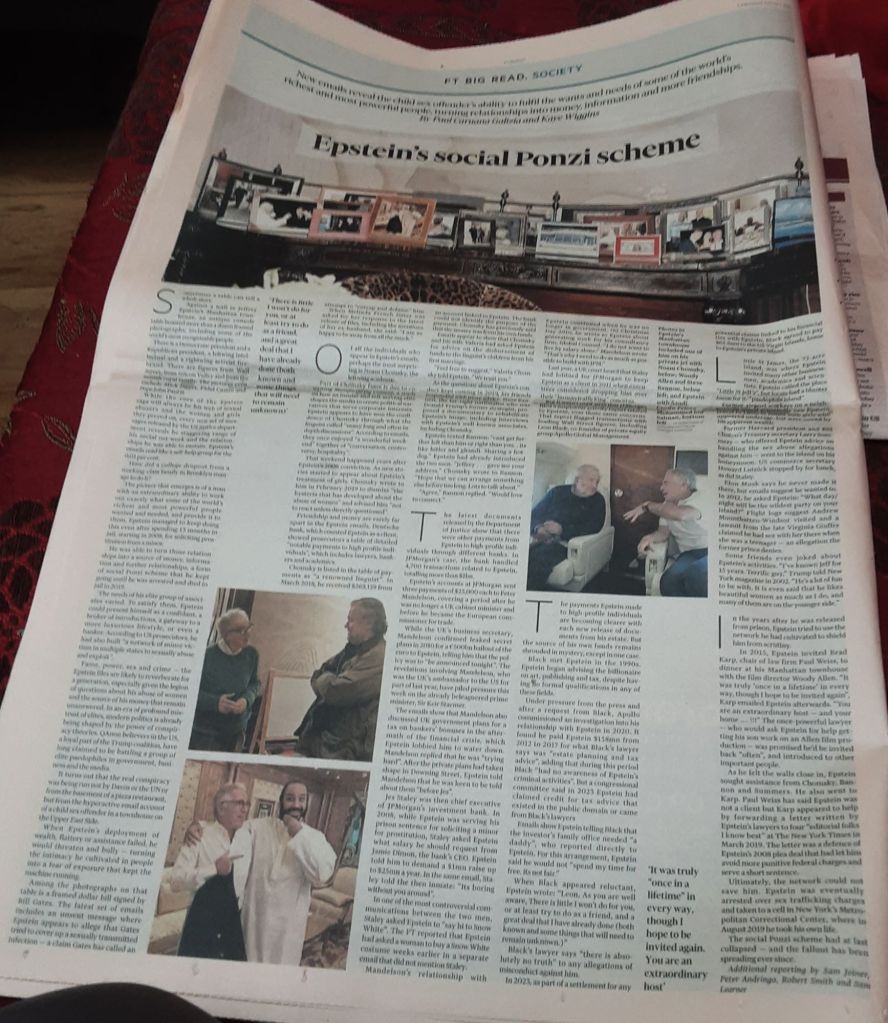
Sometimes a table can tell a whole story. Against a wall in Jeffrey Epstein’s Manhattan townhouse, an antique console table boasted more than a dozen framed photographs, including some of the world’s most recognisable people. There is a Democratic president and a Republican president, a leftwing intellectual and a rightwing activist firebrand. There are figures from Wall Street, from Silicon Valley and from the British royal family. The pictures even include Mick Jagger, Fidel Castro and Pope John Paul II.
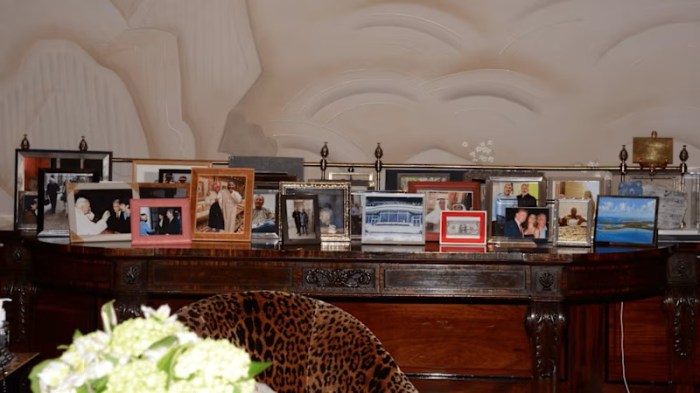
Jeffrey Epstein’s Gallery 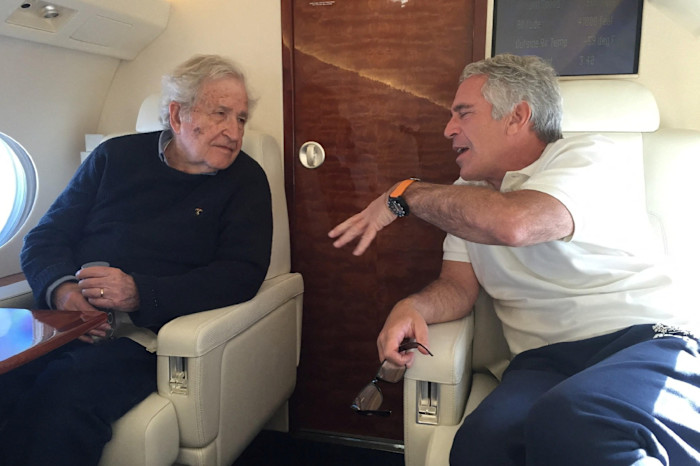
Noam Chomsky, Left-Wing Campiist Intellectual, and Jeffrey Epstein 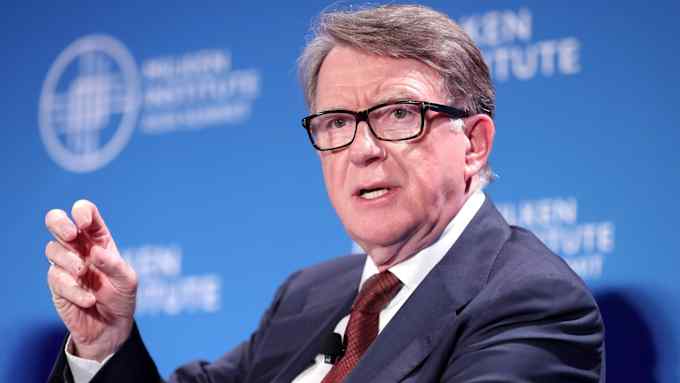
Peter Mandelson, Sacked British Ambassador to the USA, investigated by Brit Cops 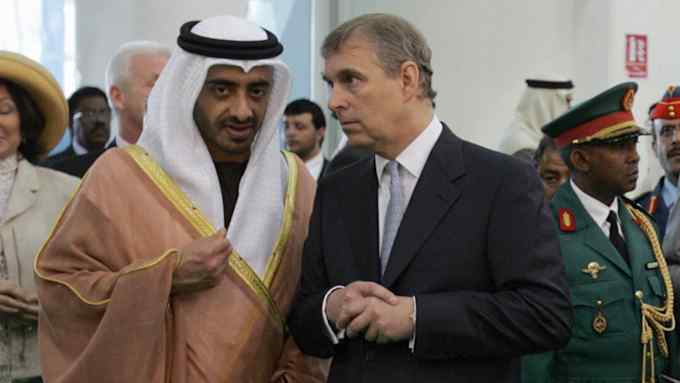
Andrew Mountbatter Windsor, Ex-Brit Prince, with a wealthy Saudi Arabia strongman 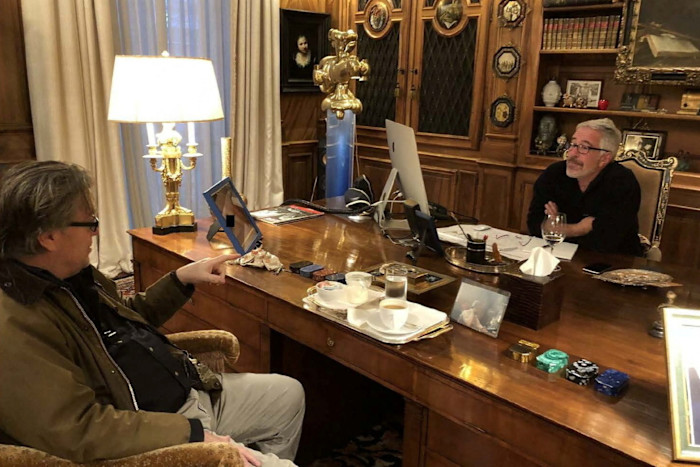
US far-right activist Steve Bannon with Jeffrey Epstein
While the core of the Epstein saga will always be his web of sexual abusers and the women and girls they preyed on, every new set of messages released by the US justice department reveals the staggering range of his social network and the relationships he was able to sustain. Epstein’s emails read like a self-help group for the 0.01 per cent. How did a college dropout from a working-class family in Brooklyn manage to do it?
The picture that emerges is of a man with an extraordinary ability to work out exactly what some of the world’s richest and most powerful people wanted and needed, and provide it to them. Epstein managed to keep doing this even after spending 13 months in jail starting in 2008 for soliciting prostitution from a minor. He was able to turn those relationships into a source of money, information and further relationships, a form of social Ponzi scheme that he kept going until he was arrested and died in jail in 2019.
The needs of his elite group of associates varied. To satisfy them, Epstein could present himself as a confidant, a broker of introductions, a gateway to a more luxurious lifestyle, or even a banker. According to US prosecutors, he had also built “a network of minor victims in multiple states to sexually abuse and exploit”. Fame, power, sex and crime — the Epstein files are likely to reverberate for a generation, especially given the legion of questions about his abuse of women and his money that remain unanswered.
In an era of profound mistrust of elites, modern politics is already being shaped by the power of conspiracy theories. QAnon believers in the US, a loyal part of the Trump coalition, have long claimed to be battling a group of elite paedophiles in government, business and the media. It turns out that the real conspiracy was being run not by Davos or the UN or from the basement of a pizza restaurant, but from the hyperactive email account of a child sex offender in a townhouse on the Upper East Side. When Epstein’s deployment of wealth, flattery or assistance failed, he would threaten and bully — turning the intimacy he cultivated in people into a fear of exposure that kept the machine running. Among the photographs on that table is a framed dollar bill signed by Bill Gates. The latest set of emails includes an unsent message where Epstein appears to allege that Gates tried to cover up a sexually transmitted infection — a claim Gates has called an attempt to “entrap and defame” him. When Melinda French Gates was asked for her response to the latest release of files, including the mentions of her ex-husband, she said: “I am so happy to be away from all the muck.”
Of all the individuals who appear in Epstein’s emails, perhaps the most surprising is Noam Chomsky, the leftwing academic. Chomsky is partly famous for co-writing Manufacturing Consent, a study on how an insular and self-serving elite shapes the media to create political narratives that serve corporate interests. Epstein appears to have won the confidence of Chomsky through what the linguist called “many long and often in-depth discussions”. According to emails, they once enjoyed “a wonderful weekend” together of “conversation, controversy, hospitality”. That weekend happened years after Epstein’s 2008 conviction. As new stories started to appear about Epstein’s treatment of young girls, Chomsky wrote to him in February 2019 to dismiss “the hysteria that has developed about the abuse of women” and advised him “not to react unless directly questioned”.
Friendship and money are rarely far apart in the Epstein emails. Deutsche Bank, which counted Epstein as a client, showed prosecutors a table of detailed “notable payments to high profile individuals”, which includes lawyers, bankers and academics. Chomsky is listed in the table of payments as “a renowned linguist”. In March 2018, he received $269,159 from an account linked to Epstein. The bank could not identify the purpose of the payment. Chomsky has previously said that the money was from his own funds. Emails appear to show that Chomsky and his wife Valeria had asked Epstein for advice on the disbursement of funds to the linguist’s children from his first marriage.
“Feel free to suggest,” Valeria Chomsky told Epstein. “We trust you.” As the questions about Epstein’s conduct kept coming in 2019, his friends responded with more advice. Steve Bannon, the far-right nationalist who was Donald Trump’s former strategist, proposed a documentary to rehabilitate Epstein’s image, including interviews with Epstein’s well-known associates, including Chomsky. Epstein texted Bannon: “cant get further left than him or right than you. . its like hitler and ghandi. Sharing a hotdog.” Epstein had already introduced the two men. “Jeffrey . . . gave me your address,” Chomsky wrote to Bannon. “Hope that we can arrange something else before too long. Lots to talk about.” “Agree,” Bannon replied. “Would love to connect.” The latest documents released by the Department of Justice show there were other payments from Epstein to high-profile individuals through different banks. In JPMorgan’s case, the bank handled 4,700 transactions related to Epstein, totalling more than $1bn.
Epstein’s accounts at JPMorgan sent three payments of $25,000 each to Peter Mandelson, covering a period after he was no longer a UK cabinet minister and before he became a European commissioner for trade. While the UK’s business secretary, Mandelson confirmed leaked secret plans in 2010 for a €500bn bailout of the euro to Epstein, telling him that the policy was to “be announced tonight”. The revelations involving Mandelson, who was the UK’s ambassador to the US for part of last year, have piled pressure this week on the already beleaguered Prime Minister Sir Keir Starmer. The emails show that Mandelson also discussed UK government plans for a tax on bankers’ bonuses in the aftermath of the financial crisis, which Epstein lobbied him to water down. Mandelson replied that he was “trying hard”. After the private plans had taken shape in Downing Street, Epstein told Mandelson that he was keen to be told about them “before Jes”. Jes Staley was then chief executive of JP Morgan’s investment bank. In 2008, while Epstein was serving his prison sentence for soliciting a minor for prostitution, Staley asked Epstein what salary he should request from Jamie Dimon, the bank’s CEO. Epstein told him to demand a $1mn raise up to $25mn. In the same email, Staley told the then inmate: “Its boring without you around”. In one of the most controversial communications between the two men, Staley asked Epstein to “say hi to Snow White”. The FT reported this week that Epstein had asked a woman to buy a Snow White costume weeks earlier in a separate email that did not mention Staley.
Mandelson’s relationship with Epstein continued when he was no longer in government. On Christmas Day 2010, he wrote to Epstein about generating work for his consultancy firm, Global Counsel. “I do not want to live by salary alone,” Mandelson wrote. “That’s why I need to do as much as possible to build with JPM.” Last year, a UK court heard that Staley had lobbied for JPMorgan to keep Epstein as a client in 2011 when executives considered dropping him over their “human trafficking” concerns. But it wasn’t until 2019 that JPMorgan filed a suspicious activity report related to Epstein, over those same concerns.
That report flagged transactions with leading Wall Street figures, including Leon Black, co-founder of private equity group Apollo Global Management. The payments Epstein made to high-profile individuals are becoming clearer with each new release of documents from his estate. But the source of his own funds remains shrouded in mystery, except in one case. Black met Epstein in the 1990s. Epstein began advising the billionaire on art, publishing and tax, despite having no formal qualifications in any of these fields. Under pressure from the press and after a request from Black, Apollo commissioned an investigation into his relationship with Epstein in 2020. It found that he paid Epstein $158mn for what Black’s lawyer says was “estate planning and tax advice”, between 2012 and 2017, adding that during this period Black “had no awareness of Epstein’s criminal activities”. But a congressional committee said in 2023 Epstein had claimed credit for tax advice that existed in the public domain or came from Black’s lawyers. “The payments were inexplicably large; well in excess of what Black paid any other financial advisors and far higher than the median compensation of Fortune 500 CEOs at the time,” the Senate finance committee said in 2023, adding that it had more questions for Black on the reasons for these payments. Emails show Epstein telling Black that the investor’s family office needed “a daddy”, who reported directly to Epstein. For this arrangement, Epstein said he would not “spend my time for free. its not fair.” When Black appeared reluctant, Epstein wrote: “Leon, As you are well aware, There is little I won’t do for you, or at least try to do as a friend, and a great deal that I have already done (both known and some things that will need to remain unknown.)”
Black’s lawyer says “there is absolutely no truth” to any allegations of misconduct against him. In 2023, as part of a settlement for any potential claims linked to his financial ties with Epstein, Black agreed to pay $62.5mn to the US Virgin Islands, home to Epstein’s private island. Little St James, the 72-acre island, was where Epstein invited many other businessmen, as well as academics and scientists. Epstein called the place “Little St Jeff’s”, but locals had a blunter name for it: “paedophile island”.
Former airport workers on a neighbouring island reportedly saw Epstein travel to Little St James with girls who appeared underage, but were cowed by his apparent wealth. Former Harvard president and Bill Clinton’s Treasury secretary Larry Summers — who offered Epstein advice on handling the sex abuse allegations against him — went to the island on his honeymoon. US commerce secretary Howard Lutnick stopped by for lunch, as did Staley. Elon Musk says he never made it there, but emails suggest he wanted to. In 2012, he asked Epstein: “What day/night will be the wildest party on your island?” Flight logs suggest Andrew Mountbatten-Windsor visited and a lawsuit from the late Virginia Giuffre claimed he had sex with her there when she was a teenager — an allegation the former prince denies.
In the emails, Epstein invited Chomsky in 2016 to meet up in either New York or the Caribbean. “Valeria’s always keen on New York. I’m really fantasizing about the Caribbean island,” Chomsky replied. Some friends even joked about his activities. “I’ve known Jeff for 15 years. Terrific guy,” Trump told New York magazine in 2002. “He’s a lot of fun to be with. It is even said that he likes beautiful women as much as I do, and many of them are on the younger side.” In the presentation that Deutsche Bank prepared for New York prosecutors, there is a table longer than the one that lists payments to “high-profile individuals”. This table details payments to “ostensible foreign models”: there are 28 of them, names all redacted, totalling some $875,000.
Other payments shown in the document reveal that Epstein paid $79,440 to MC2 Model Management, then owned by Jean Luc Brunel, who was accused of bringing young European models to the US for sex. They were allegedly housed in New York apartments maintained by Epstein. In 2022, Brunel died by suicide in a French prison cell while on remand on charges of the rape of dozens of girls. In the years after he was released from prison, Epstein tried to use the network he had cultivated to shield him from scrutiny. In 2015, Epstein invited Brad Karp, chair of law firm Paul Weiss, to dinner at his Manhattan townhouse with the film director Woody Allen. “It was truly ‘once in a lifetime’ in every way, though I hope to be invited again”, Karp emailed Epstein afterwards. “You are an extraordinary host — and your home …. !!!” The once-powerful lawyer — who would ask Epstein for help getting his son work on an Allen film production — was promised he’d be invited back “often”, and introduced to other important people.
As he felt the walls close in, Epstein sought assistance from Chomsky, Bannon and Summers. He also went to Karp. Paul Weiss has said Epstein was not a client but Karp appeared to help by forwarding a letter written by Epstein’s lawyers to four “editorial folks I know best” at The New York Times in March 2019. The letter was a defence of Epstein’s 2008 plea deal that had let him avoid more punitive federal charges and serve a short sentence. Ultimately, the network could not save him. Epstein was eventually arrested over sex trafficking charges and taken to a cell in New York’s Metropolitan Correctional Center, where in August 2019 he took his own life. The social Ponzi scheme had at last collapsed — and the fallout has been spreading ever since.
Additional reporting by Sam Joiner, Peter Andringa and Robert Smith in London and Sam Learner in New York


 Tomás Ó Flatharta
Leave a comment