Campism and Its Contradictions – Prime Example is British “Stop the War” Coalition – they have Irish imitators
2026 begins with very bad news from Venezuela.
Simon Pearson notes :
Stop the War’s Venezuela statement reveals what their Ukraine position should have been.
Stop the War Coalition responded within hours. Their statement, written by convenor Lindsey German, left no room for doubt:
“Trump’s bombing attack on Venezuela must be condemned in the strongest possible terms. The apparent forced removal and kidnapping of its president Maduro is a war crime.”
The statement continued:
“Only the peoples of Latin America can decide their own fate and choose their own government and should be able to do so without interference. There can be no support for US imperialism in Latin America or for the crimes of Trump.”
I agree with every word.
Some Similar Reactions :
“all those who vociferously condemn the US actions, and who protest against it, should be equally vociferous in their condemnation of Putin’s invasion of Ukraine. Unfortunately far too many on the left don’t apply that logical consistency” Gregor Kerr
“Marco Rubio (US Secretary of State) is reportedly saying Maduro will stand trial in US courts.
Which means it’s now the US administration’s position that US courts can hold foreign presidents, but not the US president, accountable for crimes.” Link :
“Remember this today tankies and campists, as you scramble to virtue signal opposition to what’s happening in Venezeula:
If you’ve offered justifications for Vladimir Putin invading Ukraine, you’ve created justifications for Donald Trump to invade Venezuela.” James Doyle
The Irish left (significant portions : People Before Profit, RISE, various Stalinist outfits) :
Invasion of Venezuela by US: instant response and opposition by Irish left. Correct.
Invasion of Ukraine by Russia: fuck all in four years or even justification for Russia.
Neutrality and anti-imperialism my arse!
It is beyond embarrassing!!!! – Des Derwin
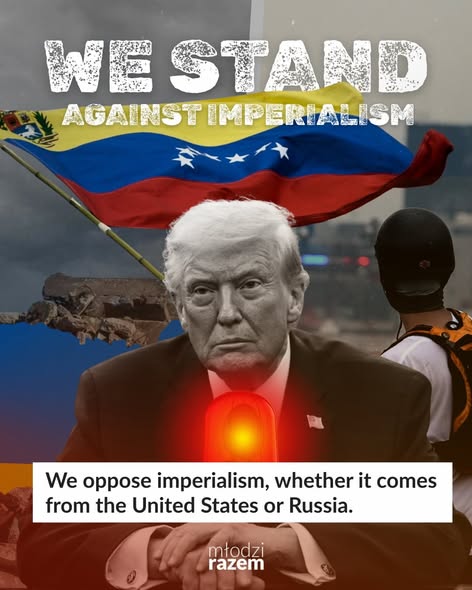
We are against imperialism, regardless of whether it comes from the US or Russia!
The unlawful attack by the United States on Venezuela is terrible news for the world, Poland, and Ukraine, which is fighting for its freedom. Like the invasion of Iraq, it could have disastrous consequences.
Maduro’s undemocratic regime does not justify aggression, and imperialism remains imperialism regardless of who practises it.
At this time, we stand with the entire Venezuelan nation, and above all with the victims of the attack. – Razem Poland
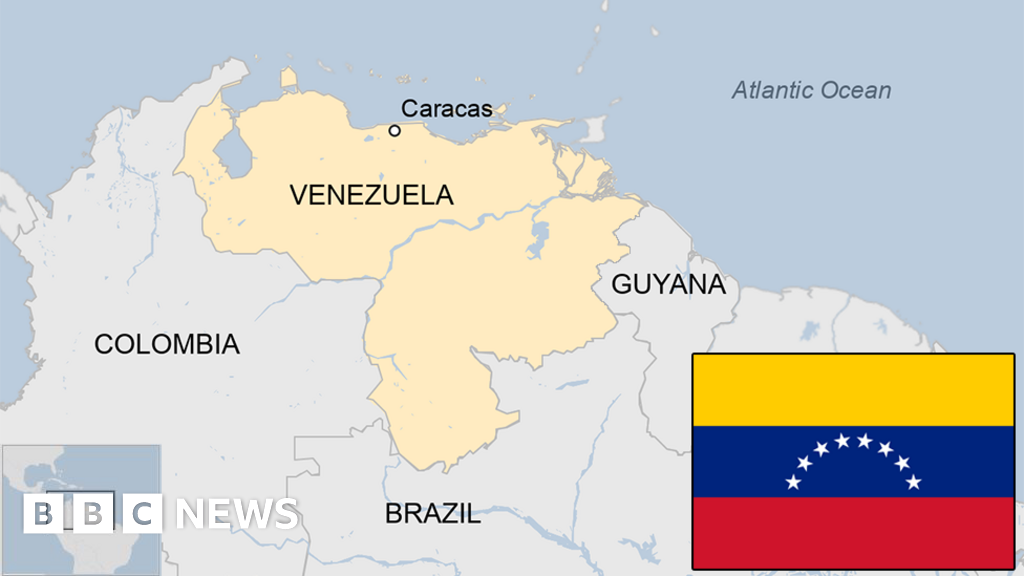
Maduro is the business of the Venezeulan people, not US Imperialism. Zelensky is the business of the Ukrainian people not Russian Imperialism. Haughey was our business not British Imperialism, etc. etc. – Jim Monaghan
Maduro’s not a good guy, agreed. But neither is Putin, and Trump rolled out the red fucking carpet for him. It’s not about dope, it’s about oil (which kinda IS dope).
Just when you think Trump has hit the gutter, he bounces lower
Link :
US attacks Venezuela: Europe Solidaire Sans Frontieres (ESSF) correspondents’ reactions
https://www.europe-solidaire.org/spip.php?article77567
US attacks Venezuela: European reactions
https://www.europe-solidaire.org/spip.php?article77566
Campism and Its Contradictions
Britain’s Stop the War Coalition Venezuela statement reveals what their Ukraine position should have been
In the early hours of 3 January 2026, the United States launched airstrikes on Caracas, bombing military installations and, according to Trump’s own announcement, capturing President Nicolás Maduro and his wife before flying them out of the country. Venezuela’s government declared a state of emergency. Venezuela called an urgent UN Security Council meeting. The Monroe Doctrine had returned with cruise missiles.
Stop the War Coalition responded within hours. Their statement, written by convenor Lindsey German, left no room for doubt:
“Trump’s bombing attack on Venezuela must be condemned in the strongest possible terms. The apparent forced removal and kidnapping of its president Maduro is a war crime.”
The statement continued:
“Only the peoples of Latin America can decide their own fate and choose their own government and should be able to do so without interference. There can be no support for US imperialism in Latin America or for the crimes of Trump.”
I agree with every word.
What interests me is why Stop the War could not bring themselves to apply this same clarity to Ukraine.
When Russia invaded Ukraine in February 2022, launching its own regime change operation to topple the Zelensky government and install a puppet regime, Stop the War pulled its punches. Their pre-invasion statement, signed by eleven Labour MPs including Richard Burgon and Diane Abbott, blamed British government policy for “pouring oil on the fire.” It attacked NATO expansion and declared there was “no sovereign right” to join the alliance.
The invasion itself, when it came, produced a statement calling for the crisis to be:
“settled on a basis which recognises the right of the Ukrainian people to self-determination and addresses Russia’s security concerns.”
Notice the balancing act. The statement treats Ukrainian self-determination and Russian security concerns as equal weights on the scale. It never demands that Britain condemn the invasion “for the aggression that it is,” as German now demands for Venezuela. It never calls Russia’s actions war crimes. It never states that only Ukrainians can decide their own fate.
The asymmetry is not subtle. It is glaring.
On Venezuela, Stop the War demands the British government:
“condemn the forced removal and attack” and “call for an immediate cessation of military action by the US, and the return of Maduro to his country.”
On Ukraine, Stop the War’s position was that Britain should stop sending weapons to Ukraine and push for negotiations. Not that Britain should condemn Russian aggression. Not that Russian troops should withdraw. The formula was “Russian troops out” alongside “No to NATO expansion,” as though these were morally equivalent positions, as though Ukrainian resistance and NATO’s existence were equally problematic.
The statement insists that:
“only the peoples of Latin America can decide their own fate and choose their own government and should be able to do so without interference.”
But when Ukrainians chose to resist Russian invasion, Stop the War opposed sending them the means to do so. When Ukrainians decided to fight rather than accept occupation, Stop the War called this resistance a “proxy war,” erasing Ukrainian agency and reducing them to tools of Western power.
Stop the War justifies this double standard with a slogan borrowed from the German revolutionary Karl Liebknecht: “the main enemy is at home.” In their hands, this becomes a formula for attacking NATO and Western governments whilst saying little about imperial violence from elsewhere.
But Liebknecht meant something different. He called on workers to oppose their own ruling class’s wars, not to excuse aggression by rival powers. His slogan was a call for international working-class solidarity against all imperialisms. It was not a licence to become a partisan of whichever power happens to fight the West.
The transformation is significant. What began as internationalist principle becomes campist apologetics. The logic runs: the US is the primary imperial power; therefore anyone opposed by the US is, at minimum, not to be criticised too sharply. Venezuela under Maduro, Syria under Assad, Russia under Putin. The actual content of these regimes, their own imperial ambitions and violent suppressions, becomes secondary to their position in the great power competition.
Stop the War’s 2023 AGM resolution called the Ukraine war “a proxy war between the NATO powers and Russia.” This phrase does heavy lifting. It denies that Ukrainians have reasons of their own to resist invasion. It suggests their resistance serves NATO alone. It implies that peace would come if the West stopped sending weapons.
But imagine if someone called Venezuela’s resistance to US aggression a “proxy conflict” between Russia and the United States. Stop the War would reject this as erasure of Venezuelan sovereignty, an imperialist framing that denies Latin Americans agency in their own affairs.
The 2022 AGM resolution stated that the war “reflects contradictions within Ukraine itself, which can only be resolved by the Ukrainian people.” True enough. But if contradictions within Ukraine can only be resolved by Ukrainians, that must also apply when Russia invades with 200,000 troops to resolve those contradictions by force. Self-determination cuts both ways.
TheVenezuela statement notes that Trump’s action:
“is not of course the only recent military action by the Trump regime which has bombed Syria in recent weeks and has given full support to Israel’s genocide in Gaza. Despite his election promises of ending ‘forever wars’ Trump is embroiled in stoking imperialist conflicts around the world.”
This is correct. Trump’s promise to end American wars has dissolved into bombing campaigns across multiple continents. The continuity of American imperial violence, from Obama through Trump through Biden and back to Trump, is real and must be opposed.
But apply this analysis with any consistency, and you must acknowledge that Russia’s invasion of Ukraine fits the same pattern of imperial violence Stop the War condemns when committed by the United States. Russia sought to overthrow a neighbouring government by force, to redraw borders through conquest, to impose its will on a smaller nation at gunpoint. This is imperialism. The word means something, or it means nothing.
The honest position would be to oppose both Russian and American imperialism, to support both Ukrainian and Venezuelan self-determination, and to recognise that “the main enemy is at home” does not mean the enemy abroad is your friend.
This position is simple to hold. Genuine internationalism means opposing imperial violence wherever it comes from. It means solidarity with peoples resisting domination, whether the boot on their neck is American or Russian. It means recognising that great power competition produces victims on all sides, and that working people everywhere share a common interest in opposing their rulers’ wars.
Stop the War’s statement on Venezuela reveals, by accident, what their Ukraine position should have been. Forcing out a government by bombs and troops is a war crime. Only peoples can decide their own fate. There can be no support for imperialism.
Apply these principles across the board, and you reach genuine anti-imperialism. Apply them selectively, and you reach campism: hostility to Western imperialism that shades into excuses for its rivals.
I do not write this to defend NATO, whose eastward expansion was reckless and provocative, or to excuse the various crimes of Ukrainian far right nationalists, or to suggest that Western policy has been wise or humane. The point is simpler: if regime change by military force is a war crime when committed by the United States in Venezuela, it is also a war crime when committed by Russia in Ukraine. If peoples have the right to choose their own government without interference in Latin America, they have the same right in Eastern Europe.
Stop the War cannot see this contradiction. Their framework blocks it from view. They have swapped internationalism for campism, anti-imperialism for anti-Americanism. The result: a position that names American crimes whilst going soft on Russian ones.
The peoples of Venezuela deserve solidarity against American aggression. So do the peoples of Ukraine against Russian aggression. An anti-war movement that cannot hold both positions at once is not anti-war. It is just anti-Western.
That may be defensible on its own terms. But name it for what it is. Do not dress it in the borrowed clothes of internationalist principle.
Link :
Statement by Sotsialniy Rukh (Social Movement, Ukraine) on USA Bombing of Venezuela and kidnapping of President Maduro and his wife:
The morning of 3 January marks the beginning of a widespread attack on democracy and the relative peace of the peoples of Latin America – and far beyond.
The events in Venezuela, where US military operations led to the capture of President Nicolás Maduro and the declaration of a state of emergency with mobilisation, are yet another manifestation of the escalating imperialist confrontation, the consequences of which will be felt by millions of people across the continent.
The actions of Donald Trump’s administration cannot be viewed as an isolated incident or a ‘forced response’ to the crisis. As before – from the bombing of small vessels in the Caribbean and Pacific Oceans to the sanctions blockade – this is a demonstration of the United States’ power and complete readiness to use violence without trial, investigation or any regard for international law. Pretexts such as the fight against drug trafficking and cartels are used to legitimise aggression. Until recently, the majority of drug precursors were produced in China. The share of drug trafficking through Venezuela is negligible compared to other countries in the region and sea routes.
Excuses about fighting against the ‘drug cartel-linked leadership’ seem particularly cynical in light of Trump’s recent amnesty of former Honduran President Hernández from an American prison – he was sentenced to a long term for involvement in cocaine trafficking, but was released to help his allies in the last election. As in the case of the ‘fight against terrorism,’ the real goal is not protection, but control over oil and mineral resources and the establishment of a regime loyal to Washington.
At the same time, it is necessary to call a spade a spade: Nicolas Maduro’s regime is authoritarian, repressive and deeply corrupt. It has nothing to do with socialist democracy, hiding behind the legacy of Hugo Chavez and Bolivarian rhetoric. Along with the devastating US sanctions, it is the Maduro government’s policies that are responsible for the economic collapse, social catastrophe, extrajudicial killings, malnutrition and mass emigration of millions of Venezuelans. The Maduro leadership has nullified the achievements of the mass movements and social programmes of the Chávez era, instead discrediting left-wing ideas in the region. Parasitising on the population, the regime is sustained by the security forces, restrictions on freedoms and external support, primarily from Russia.
The Kremlin has become one of Caracas’ key allies in maintaining its authoritarian model of government. Russian Foreign Minister Sergey Lavrov has visited Venezuela on numerous occasions, including in April 2023, as part of a tour of Brazil, Venezuela, Nicaragua and Cuba aimed at mobilising political support for Russia’s war against Ukraine. Although not as notorious as Daniel Ortega, the traitor of the Sandinista revolution in Nicaragua, President Maduro declared his ‘full support’ for Russia from the very beginning of the full-scale invasion, and state institutions and the media actively promoted the Kremlin’s interpretation of events.
However, it would be a grave mistake to equate the Maduro regime with Venezuelan society.
Despite widespread propaganda, most Venezuelans did not accept pro-Russian narratives. In the early days of Russia’s invasion of Ukraine in 2022, people took to the streets to protest against the aggression – in a country where demonstrations are regularly criminalised and dispersed. Venezuelans carried Ukrainian flags, chanted ‘Stop Putin’ and openly criticised their government’s alliance with the Kremlin.
This solidarity with Ukraine has deep roots. Since the days of Euromaidan, many Venezuelans have seen the Ukrainian struggle as close and understandable – a struggle against corrupt authorities, external control and authoritarianism. Sympathy for Ukraine stems not only from anti-war sentiments, but also from a rejection of foreign influence, which is crucial to the survival of Maduro’s regime, as well as that of Vladimir Putin – both of whom are under investigation by the International Criminal Court.
Despite widespread propaganda, most Venezuelans did not accept pro-Russian narratives. In the early days of Russia’s invasion of Ukraine in 2022, people took to the streets to protest against the aggression – in a country where demonstrations are regularly criminalised and dispersed.
Since 1999, Ukraine and Venezuela have been building friendly relations, which began under Ukrainian Foreign Minister Borys Tarasyuk, who was received by then-Venezuelan President Hugo Chávez. It is noteworthy that José David Chaparro, the Venezuelan consul in Russia during Chávez’s time, joined the International Legion of Territorial Defence of Ukraine in 2022 and was involved in rebuilding cities destroyed by Russian troops.
That is why the current US aggression cannot be justified even by criticism of Maduro. By proclaiming in its recent National Security Strategy its desire to return Latin America and the Caribbean to the role of a subordinate ‘backyard’ in the spirit of the Monroe Doctrine, American imperialism seeks to ‘clean up’ the region of any regimes that do not fit in with its economic and geopolitical interests, while at the same time strengthening the far-right forces.
That is why the current aggression of the United States cannot be justified even by criticism of Maduro. By proclaiming in its recent National Security Strategy its desire to return Latin America and the Caribbean to the role of a subordinate ‘backyard’ in the spirit of the Monroe Doctrine, American imperialism seeks to ‘clean up’ the region of any regimes that do not fit in with its economic and geopolitical interests, while strengthening ultra-right forces.
The isolation of Colombia’s progressive government and threats to a similar government in Mexico, the strengthening of an alliance with the far-right regime in Argentina at the expense of American taxpayers, support for neo-fascist revanchists in Brazil led by Jair Bolsonaro, and the use of Bukele’s notorious mega-prison in El Salvador to hold deportees from the United States are all part of a single strategy to restore Washington’s hegemony in Latin America.
It is significant that during Trump’s previous term, Venezuelan affairs were overseen by the same Elliot Abrams who was responsible for training, during the Reagan era, the ‘death squads’ of anti-communist dictatorships that carried out more than 90% of the crimes of civil wars in Central American states, such as the murder of about a thousand residents of the village of Mosote in El Salvador.
An externally imposed ‘regime change’ will only deepen the social catastrophe. Like Trump’s racist policy towards Venezuelan refugees, this war is a continuation of a policy of contempt for human life. Even if there are no immediate mass casualties (the 1989 invasion by US Marines to remove the dictator and drug trafficker Noriega, who until recently had been a CIA client in the fight against revolutionary movements in the region, resulted in at least hundreds of civilian deaths), external destabilisation will result in further internal turmoil.
In addition, the potential rise to power of the ‘Trumpist’ wing of the opposition poses a danger. Just as Maduro is a caricature of socialism, the ultra-right and ultra-capitalist course of María Corina Machado is a caricature of the democratic movement. After receiving the Nobel Peace Prize, she emphasised in every way possible that she would prefer to give it to Trump and would support his intervention against her own country. In contrast, the left-wing opposition to Madurism, which is increasingly attracting disillusioned former supporters of the Bolivarian revolution, emphasises the unacceptability of a military scenario and the fact that the fate of Venezuela should be decided by Venezuelans themselves, not by imperialist leaders.
The struggle against Maduro’s dictatorship and the struggle against American imperialism are not mutually exclusive. These are two sides of the same conflict, in which nations become hostages to geopolitical games. That is why today we must speak of solidarity with the people of Venezuela – the same solidarity that Venezuelans showed towards Ukraine in its resistance to Russian aggression.
The people of Venezuela are fighting against the imperialist yoke and are hostages of Maduro’s predatory regime.
Venezuela, we too are resisting imperialism!


 Tomás Ó Flatharta
Leave a comment