Matt Morrison would not survive in an American immigration holding cell – he boarded a one-way flight to Dublin leaving behind a life he had built in the USA
The numbers of people leaving the USA to live in Ireland (26 county bit) are increasing. All the numbers are here.
I am guessing, but I think this may be the first time since records began that more people emigrated from the USA to Ireland than the other way around. It would be interesting to view population flows between the US and the 6 county bit of Ireland. Readers may wish to discuss changing times.
Far-right crazies such as Presidents Donald Trump and Vladimir Putin are destroying the lives of of ordinary people everywhere.
Matthew Morrison’s personal story offers context.
John Meehan September 2 2025
‘The walls were closing in,’ says ex-IRA man who self-deported over ICE fears
Catherine Fegan, Belfast Telegraph, September 1st, 2025
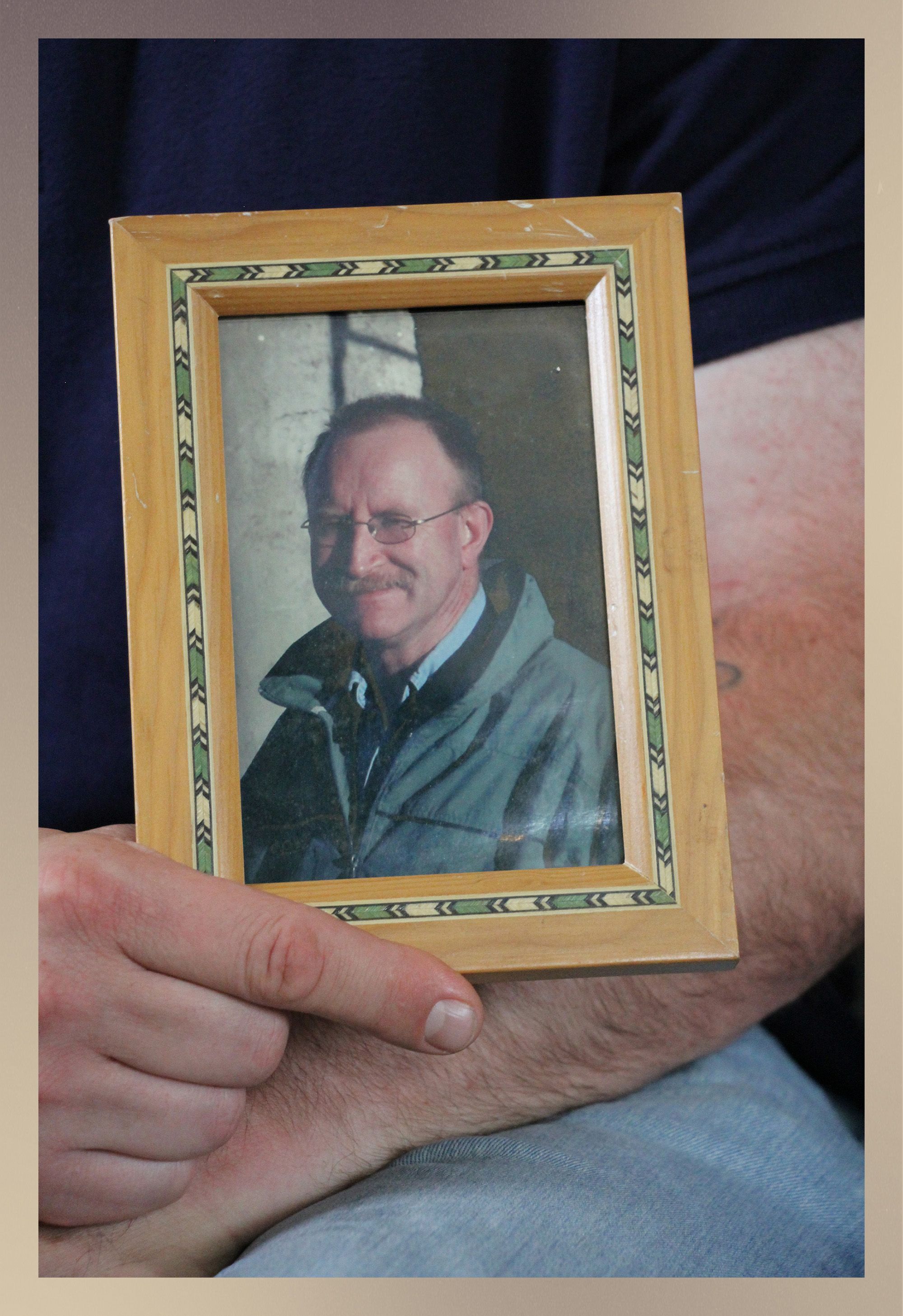
Matthew ‘Matt’ Morrison said he wouldn’t survive in an American immigration holding cell.
“I wouldn’t have my medication,” the 69-year-old told the Irish Independent this week.
“They would take my brace off my legs. They would take my stick. The fact is 12 or 13 people have died this year alone [in US immigration detention centres]. So, you understand the type of fear I had.”
Morrison, a former member of the IRA, had been living in the US for almost 40 years when he decided to “self-deport” back to Ireland over fears that he might be picked up by US Immigration and Customs Enforcement (ICE).

Originally from Derry, Morrison moved to St Louis, Missouri, in 1985 after spending 10 years in prison.
In 1976, he was imprisoned over attempted murder in an IRA raid on a British army barracks.
Morrison got married in the United States after his release, later had two children and worked as a psychiatric nurse.
His immigration status previously made headlines in the late 1990s, when the US immigration service tried to get him and six other former IRA members, who became known as “the deportees”, sent home due to their past convictions.
The deportees were Brian Pearson, Gabriel Megahey, Noel Gaynor, Gerald McDade, Robert McErlean and Mr Morrison. Their deportation was terminated in 2000 when former US president Bill Clinton intervened in the cause and said halting their deportation would “support and promote the process of reconciliation” that was still in its early stages in the North.
However, because they weren’t on a path to citizenship, the six men still had to live with restrictions and regularly check in with the government.
With US president Donald Trump’s return to the Oval Office last January, the threat of deportation loomed even larger.
In May, Gaynor, who had a heart condition, died at home in Olean, New York.As with the other deportees, Gaynor’s status in the United States was dependent on an annual work reauthorisation.
In his final months of life, he had been informed that his case was being reviewed. Waiting months without annual work authorisation approval, his Medicare and social security benefits were cut off.
In June, Megahey received a letter from the US Department of Homeland Security ordering him to leave the country immediately.
Morrison expected a similar letter. Although his work authorisation expires next month, he said he didn’t want to sit around waiting and worrying.
“The walls were closing in slowly but surely,” he said.
“My work authorisation came late in November and because of that I lost my driver’s licence.
“So I booked a test, passed it and when I went to go and get my licence, they told me that my status had been changed from ‘deferred action’ status to ‘visitor’ status. No one had notified me, so when that happened we didn’t know what we were facing.”
Morrison’s fears over ICE detention grew – heightened by stories about immigrants being detained at routine appointments regardless of legal status.
On July 21, he boarded a one-way flight from Cleveland to Dublin with his wife Sandra Riley Smith, leaving behind the life ha had built in St Louis. This included leaving behind grown children, his grandchildren and many friends.
“I wouldn’t last in an ICE detention centre,” Morrison said.
“You have to weigh it all up and that’s what we did.
“I was in nurse management for 19 years. I ran a regular medical ER. I worked in paediatric ER. I worked with the St Louis County Police Academy college programme for seven years. The point I’m trying to make isn’t a matter of going over my work history, it’s the fact that no matter what I did, I was always going to be regarded as a terrorist.
“But it has got incredibly bad for hundreds of thousands of people in the States, and families are being forced to make very difficult decisions.”
It’s estimated there are around 10,000 undocumented Irish immigrants across the US, but exact figures are difficult to come by.
Since January, the Trump administration has intensified the enforcement of its immigration policies, carrying out widespread arrests at immigration courts across the US.
There have been reports that the administration requires at least 1,500 arrests per day by ICE.
No statistics are available for the number of Irish people who have been detained and deported since January.
However, the Trump administration has said more than 152,000 illegal immigrants have been deported since January 20.
Deportations are carried out by ICE.
The US government has tried to encourage migrants to leave voluntarily by threatening steep fines, trying to strip away their legal status, and deporting them to prisons in Guantanamo Bay and El Salvador.
Homeland security secretary Kristi Noem said in a statement: “If you are here illegally, self-deportation is the best, safest and most cost-effective way to leave the United States to avoid arrest.”
Brian O’Dwyer, a veteran Irish-American lawyer and well-known immigration activist, said while there are no figures available on the numbers choosing to self-deport, like Morrison, many undocumented Irish are not willing to wait for that knock on the door.
“The pattern has appeared now very significantly that there is a deliberate campaign of cruelty being waged to get people to self-deport,” Mr O’Dwyer said.
“They are making people so frightened and miserable that they give up and go back to their original countries.
“We have seen a number of the Irish that have been picked up. These are people who are on over-stays who had been on parole, so they had regularly reported, so there is no particular reason to think that they would evade deportation.
“They had complied. There is a number of things in the law where you are allowed to say, ‘OK you got me, give me 10 days for me to get my affairs in order and I promise to leave’.
“In all these instances they have been refused that type of arrangement and they have been put into detention.”
Back home now in Derry, Morrison is facing a fresh set of challenges and he pointed out that others returning home from a life in the US have similar issues.
“Even opening a bank account or getting insurance is a big problem,” he said.
“People from the diaspora are coming home and practical things, like getting a driver’s licence, is a big issue. All this brings up issues for the Irish Government because they are failing to address these issues for people returning. It’s not a decision that is made easily.
“I have a son and a daughter, grandchildren, and leaving them is not easy. I haven’t come back to the Derry that I left behind. It’s been almost 40 years.
“I’m glad to see my family and friends and they have been very supportive, but I feel sad about being separated from my son and my daughter, my grandkids. It’s a mixture of feelings.”
Mr O’Dwyer said he believes people on deferred action are being targeted because they are “low-hanging fruit”.
“Deferred action was where they found they had violated the immigration laws by overstaying their visas, but they had been given through humanitarian reasons, or other reasons, what was called deferred action, which meant they were told ICE would take no action against them,” he said.
“As part of that, they had to report – basically like a parole – to the ICE office every six months, and even during the first Trump administration, no action was taken against them.
“But now when people are doing that, they are complying with the law, complying with their obligations, the cuffs are going on and they are being immediately whisked away.
“They are taken to a prison eight, 10, 14 hours away from their home and that is a complete reversal of what has happened in the past.
“There are people we know that are heading home because the game isn’t worth the gamble.”
New Yorker Dan Dennehy is an advocate for immigration reform and current vice-president of the Council for America-Ireland Relations.
Speaking about the situation in the US, he said that having an Irish accent was once seen as a blessing, but is now a curse for the undocumented.
“ICE agents are looking to get the stats up,” he said.
“There’s certain parts of the country where an Irish accent is not a blessing.
“I would say certainly on trains and buses near the border, your accent could actually be the thing that makes them pick you to be interviewed.
“People have to be careful. The border patrol has been given a far wider range under the current administration and they have a little bit more free rein.
New Yorker Dan Dennehy is an advocate for immigration reform and current vice-president of the Council for America-Ireland Relations.
New Yorker Dan Dennehy – an advocate for immigration reform and current vice-president of the Council for America-Ireland Relations.
Speaking about the situation in the US, he said that having an Irish accent was once seen as a blessing, but is now a curse for the undocumented.
“ICE agents are looking to get the stats up,” he said.
“There’s certain parts of the country where an Irish accent is not a blessing.
“I would say certainly on trains and buses near the border, your accent could actually be the thing that makes them pick you to be interviewed.
“People have to be careful. The border patrol has been given a far wider range under the current administration and they have a little bit more free rein.
“We’re experiencing what I would say the worst of it right now.
“We keep hearing stories about people having threats to their visas, about green cards being ripped up.
“We have people who are self-deporting, because it’s expensive to stay in this country when you’re facing annual interviews with ICE because you have to have an attorney.”
Matt Morrison is not unique
Hats off to the Marshall Project in the USA which part of the resistance to Donald Trump’s racist attack on immigrants in the USA.
Link :
Former Irish Republican Army Soldier Self-Deports, Afraid He’d Die in an ICE Holding Cell
Katie Moore/The Marshall Project
The Marshall Project
By Jesse Bogan
This story is part of “Trump Two: Six Months In,” our series taking stock of the administration’s efforts to reshape immigration enforcement and criminal justice.
Trump administration officials aim to pressure some noncitizens into self-deporting. It worked on Matthew Morrison. In mid-July, the 69-year-old former psychiatric nurse supervisor quietly fled the United States.
Morrison had been threatened by an aggressive government before. When he was a teenager, he fought against what he and others in the Irish Republican Army saw as an occupying British government that discriminated against marginalized Catholics in Northern Ireland.
For his efforts then, Morrison said he was beaten by interrogators and wound up in prison, where some of his comrades died in a hunger strike protesting the revocation of their political status.
Upon his release in 1985, he feared for his safety. He came to St. Louis, married his American pen pal and had two children. Eventually, he overstayed his tourist visa, divorced his pen pal and remarried. He’s had the spectre of deportation hanging over him for decades. His family has endured the highs and lows of his battle along the way.



 Tomás Ó Flatharta
Leave a comment