“Ukraine, an invaded country, has managed to defend its independence in this terrible three-year war with great sacrifices against the formidable army of the imperialist aggressor” – Small countries can defeat big imperial occupiers
A myth is doing the rounds on the left in Ireland and other parts of the globe that small countries are powerless when they have to fight against imperialist invaders. We suggest readers consult this fine passionate article written by Joxe Iriarte, Bikila, a revolutionary socialist activist from the Basque region (Euskadi) situated in the northern part of the Spanish state.
Source :
Europe: The Starting Point for the Remodelling of the New Reactionary International Order – Bikila
See also Vitaly Dudin’s
Five problems with the US-Ukraine mineral deal
which appears below.
Ukraine, an invaded country, has managed to defend its independence in this terrible three-year war with great sacrifices against the formidable army of the imperialist aggressor. Of course, this would not have been possible without the supply of weapons from the West, but the main factor has been the courage and great motivation of the Ukrainian people. This is how the Russian left-wing intellectual Ilya Budaitskis refers to Ukraine’s sacrifice.
Economist Michael Roberts states: “The Russian invasion of Ukraine has caused a terrible impact on the Ukrainian people. 46,000 civilians and perhaps 500,000 soldiers have died. Millions have fled abroad and millions more have been forced to leave their homes. Kyiv has lost 50,000 workers. Ukraine’s GDP has fallen by 25% and 7.1 million Ukrainians currently live in poverty”.
When Russia launched its general invasion in February 2022, the United States initially advised Zelensky to flee the country, believing there was no chance of stopping the Russian army. However, the Ukrainian people managed to push back Russian troops, to the surprise of the United States and Putin. It was then that the United States and NATO began to provide military and economic aid to Ukraine. However, the support was limited, so that Ukraine could resist but not enough to defeat Russia. This objective was never at the heart of the matter.
We should bear all this in mind when properly assessing the change that has occurred since Trump took over the US presidency. Now, in exchange for the aid provided by the US (which has meant enormous business for the arms industry), it wants to impose on Ukraine the exploitation of rare minerals in its lands, and also, as a stab in the back, force it to accept the geographical area stolen by Putin if it wants to achieve peace. That is, the alliance of two imperialisms wants to colonise Ukraine, each according to its own interests.

It is not the first time that a great imperialist power has changed course and aligned with an old enemy. Recall Richard Nixon’s sudden approach to China in the early 1970s, which caused the Vietnam War to drag on for several years (Mao reduced aid to North Vietnam).
But there is an even more surprising precedent: the Hitler-Stalin pact of 1939. The alliance between fascist Germany and Stalinist Russia gave the green light to the Second World War.

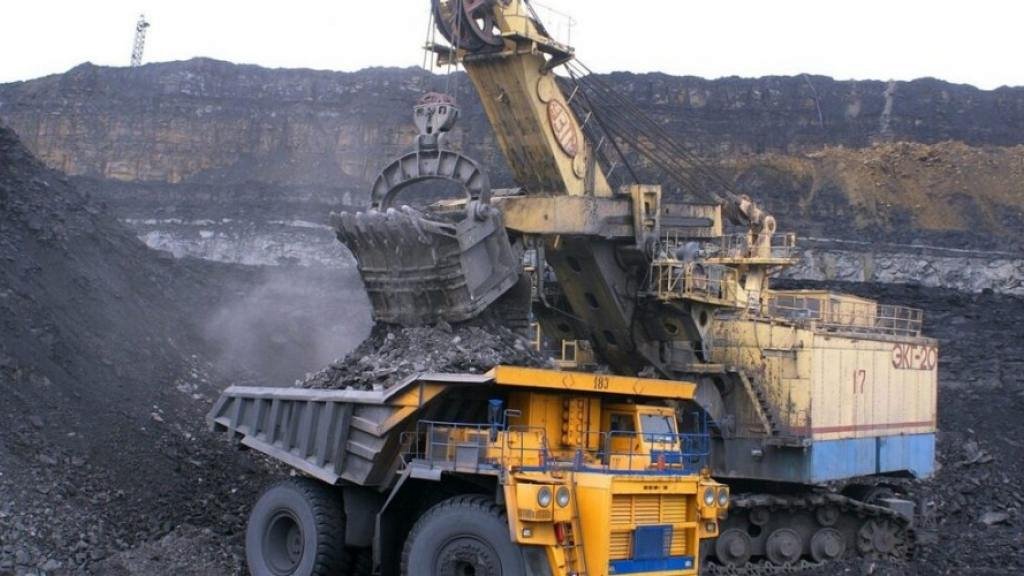
As then, today the fate of Ukraine affects the whole world, as it has put on the table the question of the rights and sovereignty of small states. If Trump’s pact with Putin on the division of Ukraine’s territory and natural resources goes ahead, it will set a precedent similar to the Munich Agreement of 1938 and demonstrate that small states are mere pawns in the game of great powers. This should concern us.
If this so-called peace plan were to go ahead, in one part of Ukraine Putin would secure annexation and gain part of the territory he does not yet control, and the other part would become an economic colony of American imperialism. In addition to securing the annexation, Russia would rebuild its currently relatively reduced military apparatus (Russian forces are almost exhausted due to the great losses they have suffered, especially in soldiers and heavy weapons, such as tanks and artillery pieces) to prepare for new attacks on neighbouring countries in the future. Although the hypothesis that Russia will pursue all of Europe is selfish and false, as it has neither sufficient strength nor interest to do so, it cannot be hidden that it has imperialist interests in relation to its neighbours, especially Finland and the Baltic countries. Moldova and Georgia are also in the crosshairs. The fear of Russia in these countries may seem excessive to us, but they have reasons for it. History bears witness.
The preaching of the oligarchs and militarists of “If you want peace, prepare for war!” cannot be ours. Against this idea we propose, “No to the war that kills us! No to the peace that oppresses us!”, against the false Pax Romana.
Things are clear in that sense. The European Union wants to involve us in the arms race and foster a climate of war under the pretext of helping Ukraine. They want to spend 800,000 million on armaments and armies. Of these, 650,000 million will have to come from each state and the 150,000 million will be pooled debt backed by the Union’s budget.
We must express our total rejection of these intentions and, at the same time, condemn the presence of NATO in our territories and work for its dissolution. Against all military blocs (NATO, CSTO, AUKUS), whether from the Western or Eastern bloc, and in favour of denuclearisation.
However, beyond the Ukraine issue, it is useful to understand what is behind the Trump-Putin pact. For a long time we have condemned the imperialist stance of the current neoliberal European Union or the Democratic Party in the US, but beware! What both Trump and Putin want is a more right-wing and more reactionary Europe!, in which Le Pen, Orban, Meloni, Abascal and similar figures will be the new masters of Europe.
In the short term, this plan aims to suppress Ukraine and protect Trumpist parties and far-right sovereignists in the West.
Ours must be a different path: internationalist, anti-imperialist and anti-racist. Without fossil fuels, without nuclear energy and without agro-industry. A different Europe, democratic, social, feminist, open, generous and ecological. Developing social security, strengthening public services, fighting against inequalities and building a Europe that eradicates poverty. One which would socialise finance, energy, the arms industry (converting it to other tasks) and other key sectors.
This is the best way to achieve true peace. Here and everywhere.
Joxe Iriarte is a militant of Alternatiba
Joxe Iriarte, Bikila
Vitaly Dudin: Five problems with the US-Ukraine mineral deal
The minerals deal signed between Ukraine and the United States reflects US capital’s desire to gain unhindered access to Ukraine’s mineral resources. It also gives the US new leverage over Ukraine’s economic and political situation. In contrast, there are no obvious benefits for Ukraine, despite it ceding sovereignty.

Ukraine’s Verkhovna Rada (parliament) voted on May 8 to ratify the so-called Mineral Deal. The Agreement between the Government of Ukraine and the Government of the United States of America on the establishment of the American-Ukrainian Investment Fund for Reconstruction (hereinafter referred to as the Agreement or the Subsoil Agreement) was signed on April 30.
US imperialism used Ukraine’s vulnerable position to impose a number of disadvantageous conditions. Despite the removal of some of the more oppressive conditions (such as “billing” Ukraine for military assistance already provided), it gives the US new leverage over the economic and political situation in Ukraine.
At present, even its public defenders will not dare say that it promises prosperity or stability for Ukraine. The very question of representatives of a foreign country being able to exclusively determine the terms of exploitation of our subsoil (which is property of the Ukrainian people) is indignant. The beneficiaries of the agreement are US capital and, perhaps, a section of the Ukrainian oligarchy, but not Ukrainian working people.
However, it would be wrong to describe this agreement as an irreversible national catastrophe. Ukraine may yet free itself from the colonial yoke and renounce the Agreement in the future, if it rids itself of oligarchic capitalism and reasserts its sovereignty.
Regarding the Agreement, here are five main problems that should be considered:
1) The deal is based on inequality between parties. The parties agree to create an US-Ukrainian Reconstruction Investment Fund in the form of a limited partnership (hereinafter referred to as the Partnership). In terms of its content, the contract provides significantly more advantages for the US side than for the Ukrainian side.
Article II of the Agreement, which effectively overrides Ukrainian legislation, is indicative: the norm limits the possibility of adopting laws that could negatively affect the Agreement’s implementation. Article III, regarding the need for institutional transformations consistent with “market principles,” can be viewed as veiled pressure to deepen neoliberal reforms.
Profits arising from the deal will be exempt from taxes (Article IV) and companies will be able to send them overseas. Potential compensation for losses (indemnity) is only mentioned in the context of Ukraine’s obligations (Article V). Any investment projects in subsoil use or operation of significant infrastructure facilities can be implemented by notifying the Partnership (Article VII). If Ukraine needs to meet certain additional obligations to the EU, the parties to the Agreement must conduct “good faith consultations and negotiations” on taking them into account (Articles VII, VIII).
2) The proposed model will lead to the further primarization of the economy. The essence of the Agreement in economic terms is, among other things, that Ukraine and the US will jointly seek, explore and extract natural resources, while also attempting to attract investment in critically important sectors of the economy. The main focus in the eyes of US investors is simply extracting Ukraine’s natural minerals.
This will push into the background the possibilities for mutually beneficial cooperation in rebuilding infrastructure or developing high-tech technologies. Social issues (working conditions in the extractive sector, sustainable development) were left out of the Agreement. After all, trade unions or environmental organizations did not participate in its discussion at all.
Reconciling the interests of the development of the extractive industry with social priorities could have positive long-term consequences.
3) Secret diplomacy undermines the legitimacy of the Agreement. The final terms of the Agreement were kept secret until the last moment, which made public discussion on this issue impossible. Negotiations and preparations were done in secret, and the position of the Ukrainian government was kept unknown. The voting process to ratify the Agreement also took place in an atmosphere of non-transparency and in the shortest possible time.
The Ukrainian public still lacks full information about the annexes to the Agreement (the so-called Limited Partnership Agreement). The Main Scientific and Expert Directorate did not express its assessment of the draft Law on Ratification (No. 0309), as not all related documents were attached to the Agreement.
4) The Agreement does not strengthen security, but limits sovereignty. During the war, Ukraine will not receive everything it needs from the US. This is clear from Donald Trump’s statements. But signing the Agreement confirms the idea that Ukraine will not be able to use its existing wealth as before.
The signing of the Agreement is motivated by security considerations, but in reality it will not bring anything useful in this area. The promised military support is illusory (Article VI refers to the possibility of transferring weapons with the subsequent inclusion of their cost as capital contribution by the US).
One cannot help but notice how cautious the wording is regarding the Russian-Ukrainian war: recognition of Ukraine’s contribution to maintaining international peace by countering Russian aggression is not even mentioned.
5) The Agreement is a consequence of the inability of neoliberal authorities to mobilize resources.Ukraine is forced to resort to risky ways to attract investment precisely because of the fear of nationalizing strategic industries, introducing a progressive tax scale, and combating the shadow economy.
The signing of an unequal agreement on future cooperation has been forced upon Ukraine due to its need to protect itself from Putin’s invasion. This Agreement is, after all, a logical result of the fact Ukrainian authorities proposed developing subsoil resources to obtain foreign funds at the end of 2024. The blackmail by the US administration during negotiations over the Agreement shows how difficult it will be to push this process in the direction Ukraine requires.
The most important lessons we should draw from the current situation are the following: the context surrounding the Agreement will objectively contribute to dispelling illusions about the nature of US imperialism, and the idea that Ukrainian people should rely only on themselves will become even more entrenched.
Ukraine’s minerals can benefit the people, but for this to occur authorities must implement a socialist economic model, in which the state controls the economy and redistributes wealth among the different social strata.
In terms of international cooperation, there are opportunities to build equal relationships with the countries of Europe, which themselves are interested in seeing Ukraine strong and protected.
Vitaliy Dudin is a member of Соціальний рух (Social Movement).
Vitaliy Dudin
Sources :
5 main problems with US-Ukraine Mineral Deal – Links
5 main problems with US-Ukraine Mineral Deal – ESSFFirst published in Ukrainian at Соціальний рух. Slightly updated by author and translated for LINKS International Journal of Socialist Renewal.


 Tomás Ó Flatharta
Leave a comment